Axios Future of Energy

July 09, 2026


☕️ Good morning! Today we're revisiting whether the Iran war will really bolster the energy transition, then moving on to...
- A new lens on data center power
- EV charging plans, a new power record, and more, all in 1,256 words, 4.5 minutes
🙏 Thanks to David Nather, Mackenzie Weinger and Chris Speckhard for editing and to our brilliant Axios visuals team.
🎶 RIP to singer and songwriter Bonnie Tyler, who has today's epic intro tune...
1 big thing: The Iran war's limited boost for energy transition
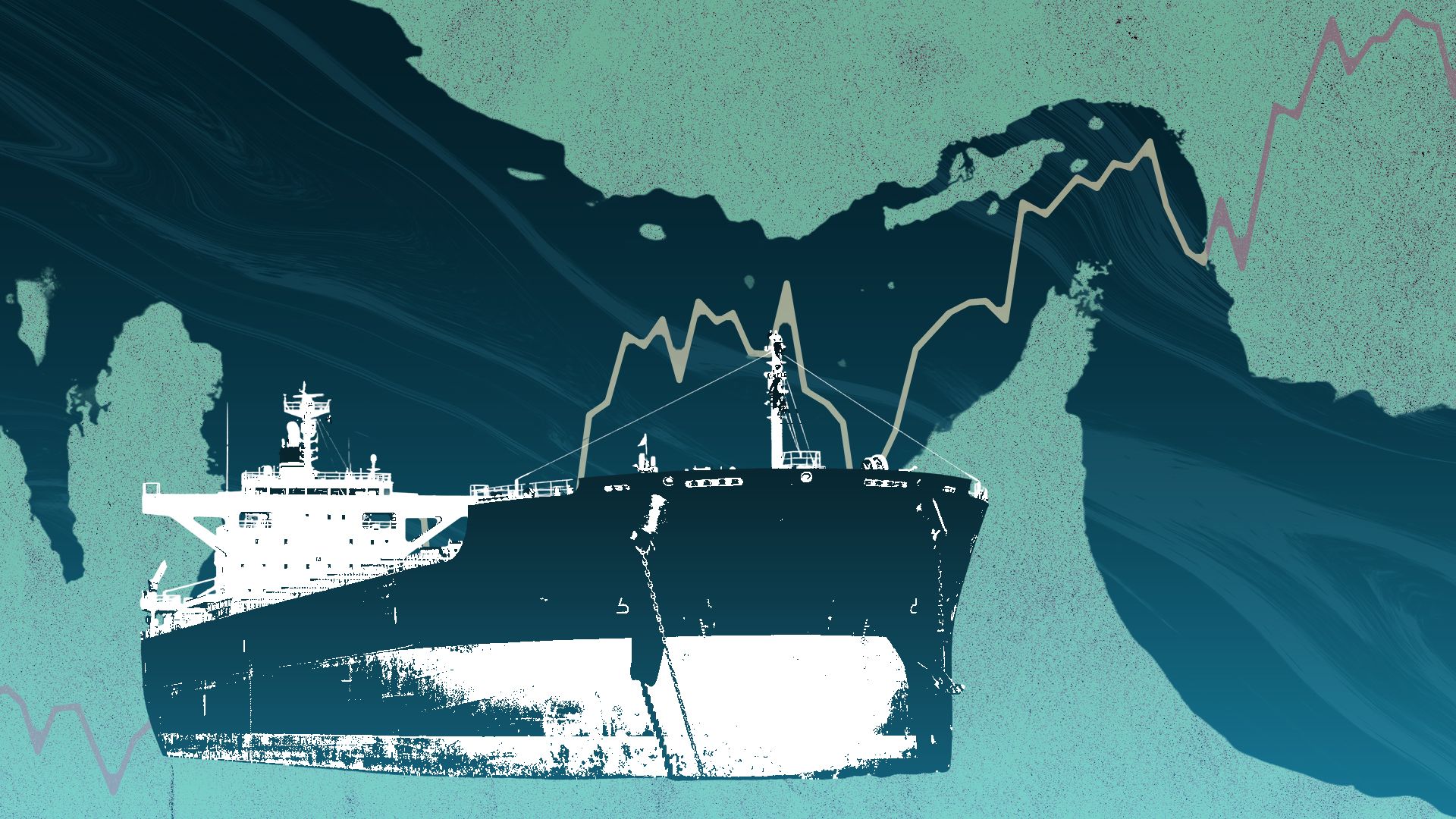
The oil economy's surprising flexibility and countries' plans to cut reliance on the Strait of Hormuz could together limit how much the war boosts the global energy transition.
Why it matters: Energy crises have long-term consequences — like the 1970s oil shocks that brought U.S. gasoline mileage rules for cars, and the country's turn away from burning oil to make electricity.
- The U.S. has been relatively insulated this time, though the crisis raised gasoline prices.
- But in some countries that are highly reliant on oil and gas imports, it has brought early signs of turning more to renewables, coal, and electric vehicles.
Driving the news: A new Bloomberg Intelligence report lays out reasons the crisis will speed efforts to cut reliance on the Strait of Hormuz while meeting global fossil fuel demand.
- "[T]he market's ability to adapt may have marked peak dependency on Hormuz as investments that could reach tens of billions of dollars accelerate in export flexibility, non-Gulf supply systems and infrastructure beyond the vital waterway," it states.
What's next: The United Arab Emirates, for instance, is investing to double its pipeline capacity to bypass Hormuz, from 1.5 million barrels per day now to 3 million by 2027, according to the report.
- Other new or expanded pipelines and related infrastructure in the region are planned, and the report sees even more investment in North American supplies, Guyana and elsewhere.
- Overall, the report says future crude oil and petroleum product traffic through the strait could fall to 7 to 9 million barrels per day, compared to 20 million pre-war.
On the gas side, the war is "reinforcing demand for diversified LNG sources and supporting the growing role of US LNG in Europe and Asia," though coal is also getting a "second wind" in countries including Japan, where use has surged.
- Still, "renewable-energy demand is getting a big bump from security concerns fueled by the war," the report notes, citing the recent surge in solar equipment exports from China.
Catch up quick: While the Iran war has increased oil prices, they never got close to the $150 to $200 per barrel that some analysts predicted.
- The market had plenty of shock absorbers, including China slashing crude purchases, higher U.S. exports, nations' drawdown of strategic reserves and greater use of Middle East pipelines.
What they're saying: "Many have argued, including some hopeful climate advocates, that an oil shock would spur a rapid shift away from oil toward electrification and renewables," energy analyst Jason Bordoff wrote in commentary last month.
- "Yet for some, the evidence from the last three months may cut the other way, revealing the resilience of the global oil system," added Bordoff, the founding director of Columbia's energy think tank.
- The price spike was "probably not high or sustained enough to alter demand behavior" the way the 1970s crises did.
Reality check: The war's economic damage could prove worse than it was looking just days ago.
- The last few days have brought renewed hostilities, another price spike, and even more uncertainty about the revival of oil tanker traffic through the strait.
The bottom line: The most likely outcome? Some greater movement toward low-carbon tech, alongside re-tooled fossil fuel networks that make ongoing — and rising — use less dependent on a single waterway.
2. 🛣️ A new roadmap for data center climate dilemmas

A wonk-tastic collaboration offers a new window into how various data center power options help or hurt the wider energy transition.
Why it matters: Tech companies and investors face competing tensions around needing new power ASAP, available sources, and climate impact.
- Yet conventional emissions accounting provides little help sorting this out, per the Rhodium Group, an energy research firm.
Driving the news: Meet the "Transition Acceleration Framework."
- It's a new tool Rhodium developed with California's giant teachers' pension fund and the infrastructure investment firm Generate Capital.
- It provides scores around which options accelerate transition, merely participate in trends taking place already, or undermine progress.
The big picture: U.S. data centers are just the first sector analyzed with the new tool designed to aid investment decisions across many regions and technologies worldwide.
State of play: The highest ranking option, at +7.1 on their scale, is a grid-connected data center paired with a power purchase contract or direct investment in a clean, continuously running source like new enhanced geothermal or nuclear projects.
- This "adds firm, low-carbon capacity that would otherwise not get built."
- The lowest, at -9, is data centers paired with gas-fired plants that will never connect to the wider grid.
The bottom line: The Transition Acceleration Framework provides "forward-looking analytics needed to direct capital, policy, and institutional attention where they will matter most," the groups said.
3. 🏃 Catch up quick: Transmission, EU, IEA
💵 The Energy Department's loan office finalized up to $3.26 billion in finance for power giant American Electric Power to upgrade and expand transmission in Texas. Latitude Media has more.
🔌 Via Bloomberg, EU officials will soon unveil new electrification goals — a topic higher on the political radar following Russia's invasion of Ukraine and, more recently, the Iran war.
💬 International Energy Agency head Fatih Birol has a new op-ed that offers his take on what today's top item is about, and it doesn't mince words, noting confidence in the Strait of Hormuz has been "shattered."
- "In my conversations with government leaders and heads of companies, the prevailing view is that there is no going back to the way things were before the war began on Feb. 28," he writes in Foreign Policy.
4. 🔌 Big Auto-backed charging player pushes ahead


Electric vehicle sales momentum may have slowed in the U.S., but for charging company Ionna, it's full speed ahead.
Why it matters: Ionna is on track to open 30,000 high-speed charging bays across the U.S. by 2030, a network its founding automakers see as a key to EV adoption.
- "The faster we can get to market, the faster we feel we can unlock vehicle sales for [automakers]," Ionna CEO Seth Cutler said.
Catch up quick: Ionna was founded in 2023 by BMW, General Motors, Honda, Hyundai, Kia, Mercedes-Benz, Stellantis and Toyota. In 2025, Rivian began partnering with Ionna, too.
- Ionna's goal is to raise the game for EV charging with convenient, affordable fast chargers and amenities like restrooms, trash bins and food.
- Its 400 kW chargers are the fastest available today in the U.S. and provide access to both NACS and CCS plugs.
State of play: Ionna has opened 120 "Rechargery" locations in 31 states, with 60 more locations under construction.
- Ionna's charging fees are significantly less than other networks.
The bottom line: Clearly, carmakers are subsidizing the costs, but let's face it — they have a strong interest in removing barriers to EV ownership.
5. ⚡ Number of the day: 100,996 gigawatt-hours
That's U.S. electricity output the week of June 28-July 4 as a heat wave descended on the country, shattering the record set in 2022, per the Edison Electric Institute.
Why it matters: The tally is a "preview of what the grid of the future must be built to handle," Drew Maloney, president and CEO of the trade group for investor-owned utilities, said in a statement.
- It shows the need for more investment to handle rising demand and extreme weather, he said.
📫 Did a friend send you this newsletter? Welcome, please sign up.
Sign up for Axios Future of Energy