Axios Future of Energy
May 06, 2026

๐งโ๐ณ Do we have a wide menu today? Yes chef! Today's offerings include...
- Checking in on the war's clean energy spillovers
- Wild oil moves, Ford's EV plans, robots and more, all in 1,314 words, 5 minutes.
๐ Thanks to David Nather and Chris Speckhard for editing and to our brilliant Axios visuals team.
๐ธ Happy birthday to the legendary Bob Seger, who has today's intro tune...
1 big thing: The Iran war's clean energy boost, revisited
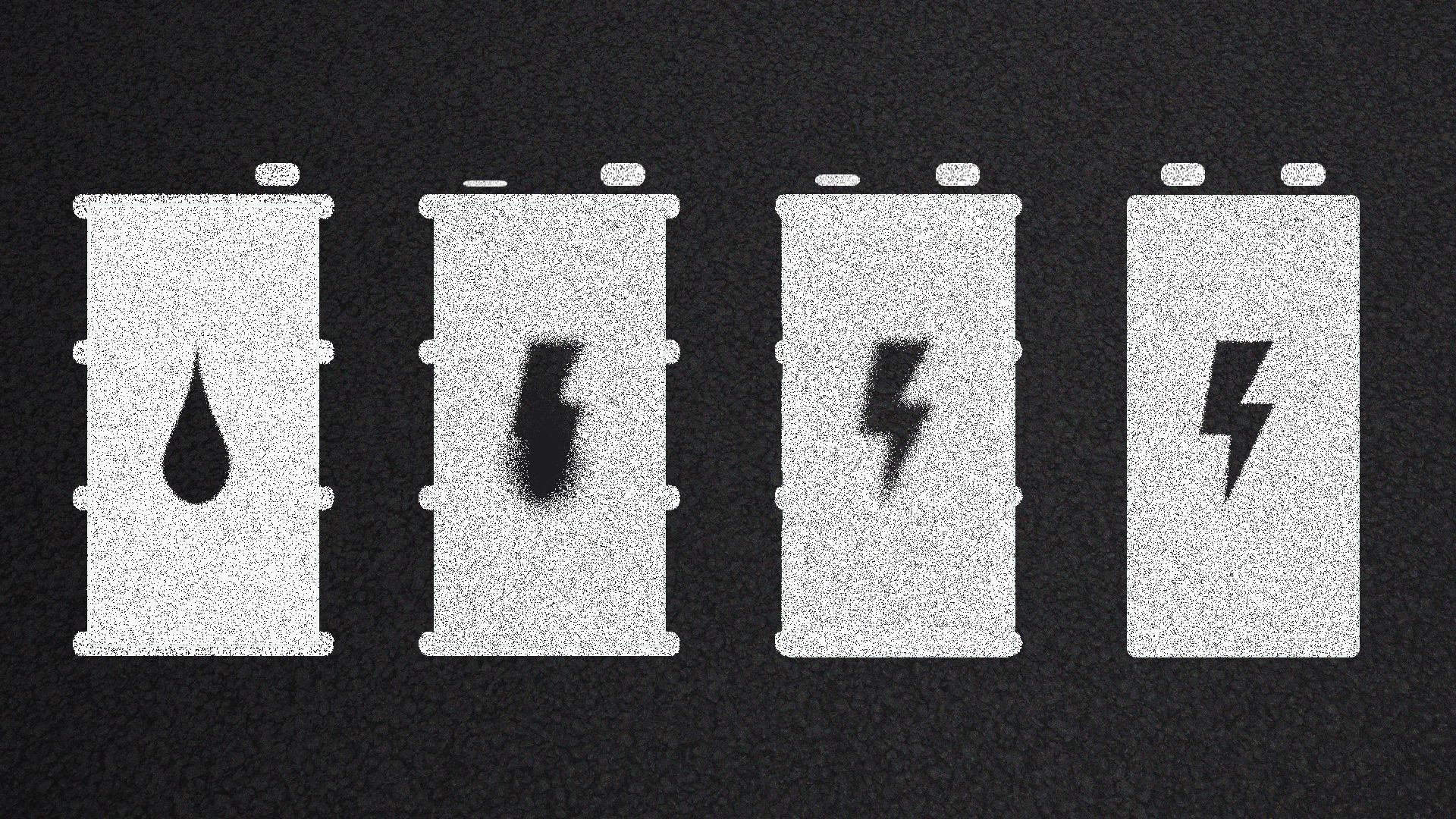
Nearly 10 weeks into the Iran war, there's new โ if still anecdotal โย evidence that it could bring tailwinds for global uptake of clean energy tech.
Why it matters: The energy shock highlights many nations' vulnerability to the expensive disruption of oil and gas imports โ and the security case for diversifying.
Catch up quick: We've explored this concept a few times, so let's dive right into latest hints of whether cleaner power and vehicles are really getting a boost from the war.
A few examples of data points that back the bull case...
๐จ๐ณ China's solar exports soared in March, per the think tank Ember and the energy research firm BloombergNEF.
- But they both note that it was partly in anticipation of domestic tax changes, which took effect in April, that make exports a little less lucrative.
- "What will be really interesting to see is the April export figures from China," BloombergNEF's Ethan Zindler said via email.
๐ฐ๐ท South Korea's domestic EV sales more than doubled last month compared to March 2025, while solar panel imports were up 137%, per Bloomberg.
๐ช๐บ European Union EV sales surged in March, per data from the European Automobile Manufacturers' Association, with the year-over-year growth larger than in January or February.
- Again, keep an eye out for April's data that lands later this month.
What we're watching: EU leaders say they're going to get even more aggressive on electrification plans as a result of the expensive crisis.
- Over $3 billion flowed into exchange-traded funds linked to renewables in April, the FT reports based on Morningstar data, the biggest inflow since January 2021.
Reality check: I have a few.
- One is that coal is also seeing a boost in some countries โ including South Korea.
- And remember that solar and EV deployment is already growing fast in many nations, so isolating the Iran signal from the transition noise is tricky.
Still another is that diversification can also mean oil and gas from other regions.
- Think Norway's energy minister citing the Iran crisis when announcing the reopening of North Sea gas fields yesterday, or the U.S. oil and petroleum production export surge since the war began.
What they're saying: Former Bank of England and BP chief economist Spencer Dale, writing in the FT yesterday, ticks off forces that could thwart or slow a war-driven shift to low-carbon energy.
- One is that slower economic growth from the energy shock and more demands on governments to cushion the blow could crowd out the fiscal space for financing clean energy.
- BloombergNEF, in a report today on the battery storage market, cautions that despite higher oil and gas costs, businesses "may delay switching to low-carbon options ... unless they expect a structural shift away from fossil fuel dependence."
The bottom line: "[I]t is still too early to say that the Iran war is clearly accelerating the whole transition," said Tatiana Mitrova, a fellow at Columbia's Center on Global Energy Policy, in an email exchange
- "But there are already concrete signs that it is making solar, storage, and electrification-related choices more attractive through an energy-security lens," she adds.
2. ๐๏ธ The latest on Iran: Prices and politics


๐ Crude oil prices plummeted today amid signs of progress on a U.S.-Iran deal.
- The big picture: The White House believes it's getting close to an agreement with Iran on a one-page memorandum of understanding to end the war and set a framework for more detailed nuclear negotiations, Axios' Barak Ravid reported.
- The latest: WTI, the U.S. benchmark, fell below $90, and Brent, the international reference, dropped under $100 before both regained ground.
๐ U.S. gasoline prices rose again to average $4.54 per gallon, per AAA, the highest point yet since the Iran war started.
๐ณ๏ธ 2028 watch: Kentucky Gov. Andy Beshear (D), a potential White House hopeful, is cutting the state's gasoline tax temporarily by 10 cents per gallon.
- The intrigue: He's also urging Capitol Hill leaders to suspend the federal gas tax in a letter that's very meant for public consumption.
- Friction point: "Because of President Trump's war in Iran, Americans are feeling the pain of rising gas prices and Congress should act," it states.
3. ๐ค One tech thing: $60 million for powering robotics and data centers

Nyobolt โ a startup developing fast-charging, power dense battery tech and electronics with robotics and data center uses โ raised $60 million in Series C funding.
Why it matters: The British startup has a valuation of $1 billion, and the funding shows how advanced batteries are needed for a slew of emerging industries.
- Symbotic, a Massachusetts-based warehouse robotics and software company, led the round.
- Scania, an arm of the Volkswagen Group that provides heavy vehicles and power solutions, is also among the investors.
The big picture: "The enterprises deploying autonomous systems at scale can't afford downtime, swap time, or power flickers," Nyobolt co-founder and CEO Sai Shivareddy said in a statement.
4. ๐ Inside Ford's secretive EV project
A former Tesla exec leading Ford's secretive West Coast effort to design an affordable EV has a bigger, unspoken mission: help Ford reinvent the way it designs and builds cars around the world.
Why it matters: If VP Alan Clarke's team gets it right in southern California, they will create a system Ford can replicate across the globe to stay competitive in a rapidly shifting market.
Driving the news: Clarke gave reporters an inside look at the innovation labs inside the EV skunk works in Long Beach, which until recently had been strictly off-limits โ even to CEO Jim Farley and other top execs.
- The idea was to isolate a small team โ a mix of outsiders and Ford veterans โ so they could explore fresh ideas and collaborate freely.
- They spent four years experimenting and iterating as they rethought every design and manufacturing process.
What's next: Their first product, a mid-size electric pickup truck, will be built in Louisville, Kentucky, and go on sale in 2027.
Zoom out: The mission is much bigger than delivering a new pickup truck.
- "We know that for it to be successful, it needs to be able to be produced at multiple factories throughout the world," Clarke said. "Scale wins."
- Eventually, Ford expects the EV platform to anchor a whole family of EVs, from compact cars to full-size vans.
Reality check: Ford has already written off $19.5 billion in EV investments and faces a huge challenge to compete with China's rise in global EV markets.
5. ๐ฎ Charted: Virginia's power surge and AI's role
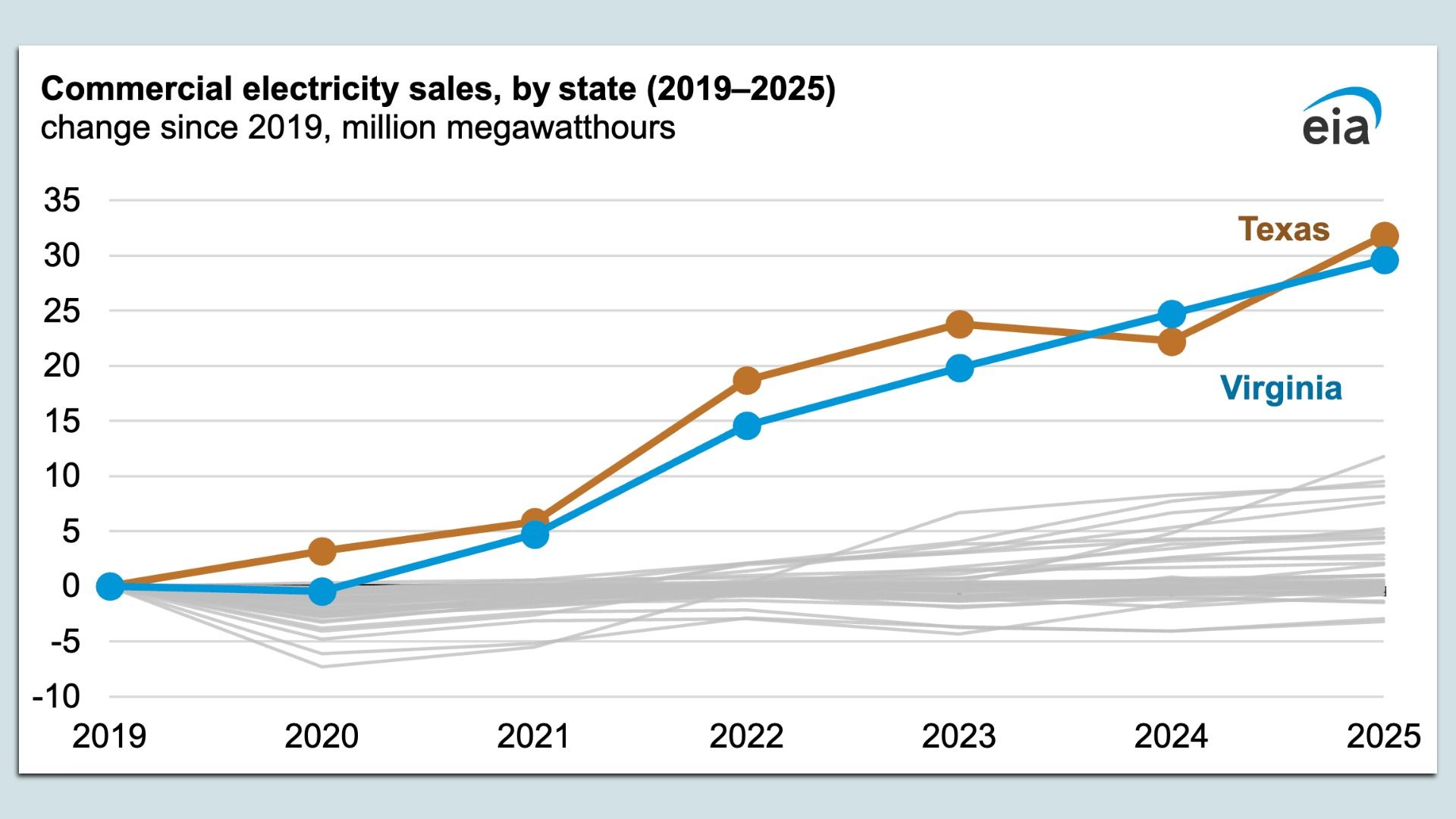
Commercial electricity sales growth in Virginia over the last six years is rivaled only by Texas, a far larger state, per the U.S. Energy Information Administration.
Why it matters: This primer from EIA's handy "Today in Energy" series is another way of looking at the rise of AI.
- "The growth in sales of electricity in Virginia is largely driven by a concentration of data centers, as well as electric vehicle adoption and building electrification," it states.
- Full analysis
6. ๐บ๐ธ Number of the day: 13th place
That's where the U.S. ranks in the Council on Foreign Relations' new, interactive "Global Energy Innovation Index."
Why it matters: The index โ weighted partly by GDP and population โ blends 16 diverse metrics to score nations on clean energy.
- They're grouped into three buckets: creating and diffusing scientific and technical knowledge; building markets that translate knowledge into deployable technologies; and public policy support.
The bottom line: The U.S. ranks 29th of the 39 countries analyzed in the knowledge category, third in the markets bucket, and 15th in policy.
- We score quite well when it comes to having lots of high-impact clean energy startups, but poorly on having climate policies โ like emissions trading or taxes โ that "induce innovation."
- Take it for a spin.
๐ซ Did a friend send you this newsletter? Welcome, please sign up.
Sign up for Axios Future of Energy