Axios Future of Energy
November 16, 2026

🥞 Welcome back! We're starting the week with a look at hydropower in a warming world, then moving on to...
- Diesel prices, tech finance, and data centers, all in 955 words, 3.5 minutes
👀 Situational awareness: A draft COP31 agreement landed today that calls for raising electricity's share of global energy use to 35% by 2035, but the prospects are uncertain.
🏈 Today's intro tune is Garth Brooks' "We Shall Be Free," which Amy heard him play in Seattle this weekend. Fun fact: He nearly skipped singing the national anthem at the 1993 Super Bowl until NBC agreed to air the song's video.
1 big thing: Shrinking snowpack is reshaping U.S. hydropower

Shifting mountain snowpack patterns are prompting hydropower operators across the western U.S. to rethink how they store water and generate electricity.
Why it matters: Snowpack acts as a vast natural reservoir, storing winter precipitation that gradually melts into rivers and reservoirs during warmer months.
- But research shows climate change is warming winters, disrupting that natural storage cycle.
The big picture: Hydropower relies on flowing water to generate electricity. Warmer winters are causing more precipitation to fall as rain rather than snow in parts of the West, complicating how utilities balance power generation, water storage and flood protection.
What they're saying: "The actual question from the utility is going to be when the hydropower is going to be available, and is it aligned with when the demand for electricity is there?" Nathalie Voisin, a hydropower researcher at the Pacific Northwest National Laboratory, tells Axios.
State of play: The winter of 2025–26 underscored the challenges hydropower operators face.
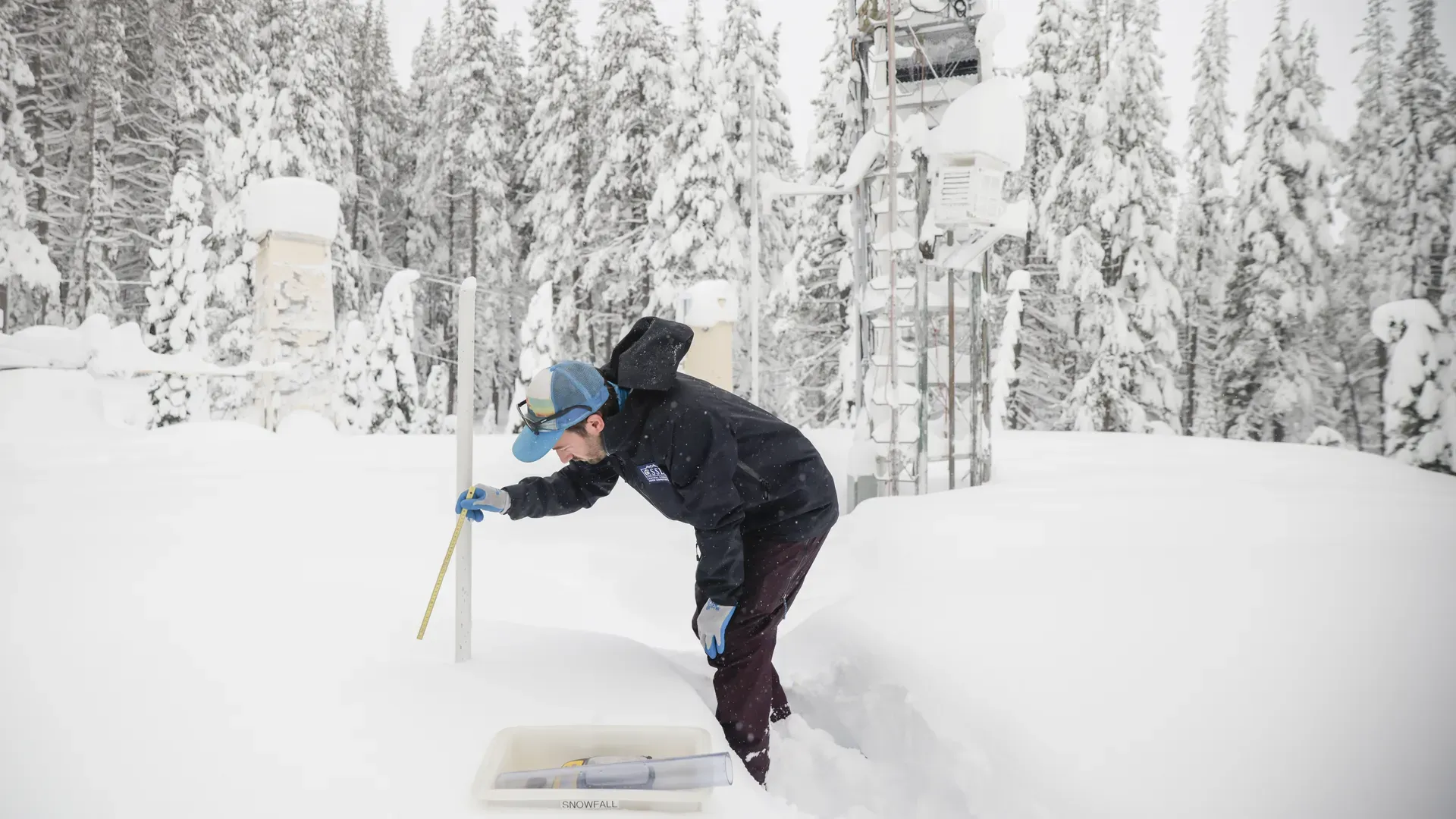
- In California, snow-water equivalent at UC Berkeley's Central Sierra Snow Lab peaked on Feb. 25 this year — more than eight weeks ahead of the lab's historical median peak of April 23, researcher Gabe Lewis tells Axios.
- Meanwhile, in Washington state, a powerful atmospheric river struck in December, producing one of the biggest one-day inflow surges recorded at Tacoma Power's hydroelectric project on the Cowlitz River.
Unusually warm conditions meant much of the precipitation fell as rain rather than snow. Mountain snowpack subsequently stood at just 20% to 50% of normal, according to NASA.
- By April, Washington had declared a statewide drought emergency, with spring runoff expected to be well below average.
How it works: Tacoma Power responded by keeping its reservoirs higher than usual to preserve water for summer electricity generation, rather than drawing them down in anticipation of spring snowmelt.
- Tacoma Power's toolkit includes Upstream Tech's HydroForecast technology, which combines NASA satellite observations with weather and river data to produce forecasts updated every two hours.
Zoom out: Adapting to changing water supplies involves more than improving forecasts.
- Voisin says operators face physical, regulatory and financial constraints, including infrastructure investments that can last decades.
- While accustomed to managing drought, operators must also navigate changing electricity markets, competing water demands and long-term climate trends.
What we're watching: The National Oceanic and Atmospheric Administration's latest seasonal outlook says a strengthening El Niño favors warmer-than-normal conditions across the Pacific Northwest and above-normal precipitation across much of California from November through January.
2. ⛽ Diesel just dipped below $6 per gallon


Average diesel prices today inched below $6 per gallon for the first time since Sept. 10 amid lower oil prices recently, per AAA data.
Why it matters: Diesel soared even more than gasoline during the Iran war, and those costs rippled throughout the economy.
- Democrats featured high prices, especially for farmers, en route to midterm wins in typically red agricultural states.
Zoom out: The worldwide diesel supply crunch remains acute even as the broader oil market is starting to fitfully stabilize.
- Ukrainian attacks on Russian refineries, damage to Middle Eastern production and shipments, throttled oil supplies, and expanded U.S. exports to meet overseas demand helped raise domestic costs.
The bottom line: Prices are now far below the Sept. 22 record of nearly $6.53 per gallon. The recent relief is real, but it's limited.
- Average U.S. prices remain well above the prior record $5.82 per gallon set in 2022.
3. 🤝 The latest in energy finance news and analysis

🛢️ Diamondback Energy is buying assets of privately held Double Eagle in a $5 billion deal that would expand the shale heavyweight's Permian Basin holdings.
- Why it matters: The $5 billion cash and stock deal unveiled this morning is the latest step in the multiyear consolidation wave in the most prolific U.S. oilfield.
♻️ Building materials startup Supersede has raised a $13 million Series A led by APV Ventures to expand manufacturing and reach new industries, Axios Pro was first to report. Go deeper
🗳️ Anthropic's growing push to secure gas generation for its data centers could face new obstacles following Democratic victories in the midterm elections. Go deeper
🗳️ Not everyone is convinced that Democrats' sweeping election wins last week will lead to a meaningful rebound in corporate climate spending. Go deeper
⚛️ Project Omega, which is developing battery-like power systems from used nuclear fuel, closed $80 million in Series A funding, Axios Pro first reported. Go deeper
🛰️ Reflect Orbital, a California-based space energy startup, raised $73.5m from insiders Sequoia Capital, Lux Capital, Starship Ventures and new investors Buckley Ventures, Convective Capital, The Uncommon Group, and Salesforce Ventures. Go deeper
For a steady diet of scoops and smart analysis, talk to our sales team about Axios Pro Deals
4. 🧮 Number of the day: 44%


That's the Nov. 12-13 share price rise of Fermi, Inc. after it announced a 600-megawatt deal with an unnamed tech giant that the FT later identified as Amazon.
Why it matters: It's a bright spot for the troubled data center and energy developer co-founded by former Texas Gov. and ex-Energy Secretary Rick Perry.
- Amazon and Fermi did not respond to a request for comment on the FT report.
🙏 Thanks to David Nather, Mackenzie Weinger and Chris Speckhard for editing, and to our brilliant Axios visuals team.
📫 Did a friend send you this newsletter? Welcome, please sign up.
Sign up for Axios Future of Energy