Axios Future of Energy
August 20, 2026


🧑🌾 Farmers are getting hit hard by the diesel crunch. We explore what's next, and then move on to...
- EV charging progress, oil markets, private equity deals and more, all in 1,132 words, 4.5 minutes.
😬 Situational awareness: Latitude Media scoops that BlocPower, a prominent building decarbonization startup, is "shutting down and liquidating its assets."
🎶 This week in 1975, Linda Ronstadt released a beautiful single that's today's intro tune...
1 big thing: The farm belt's next pain point is about to arrive
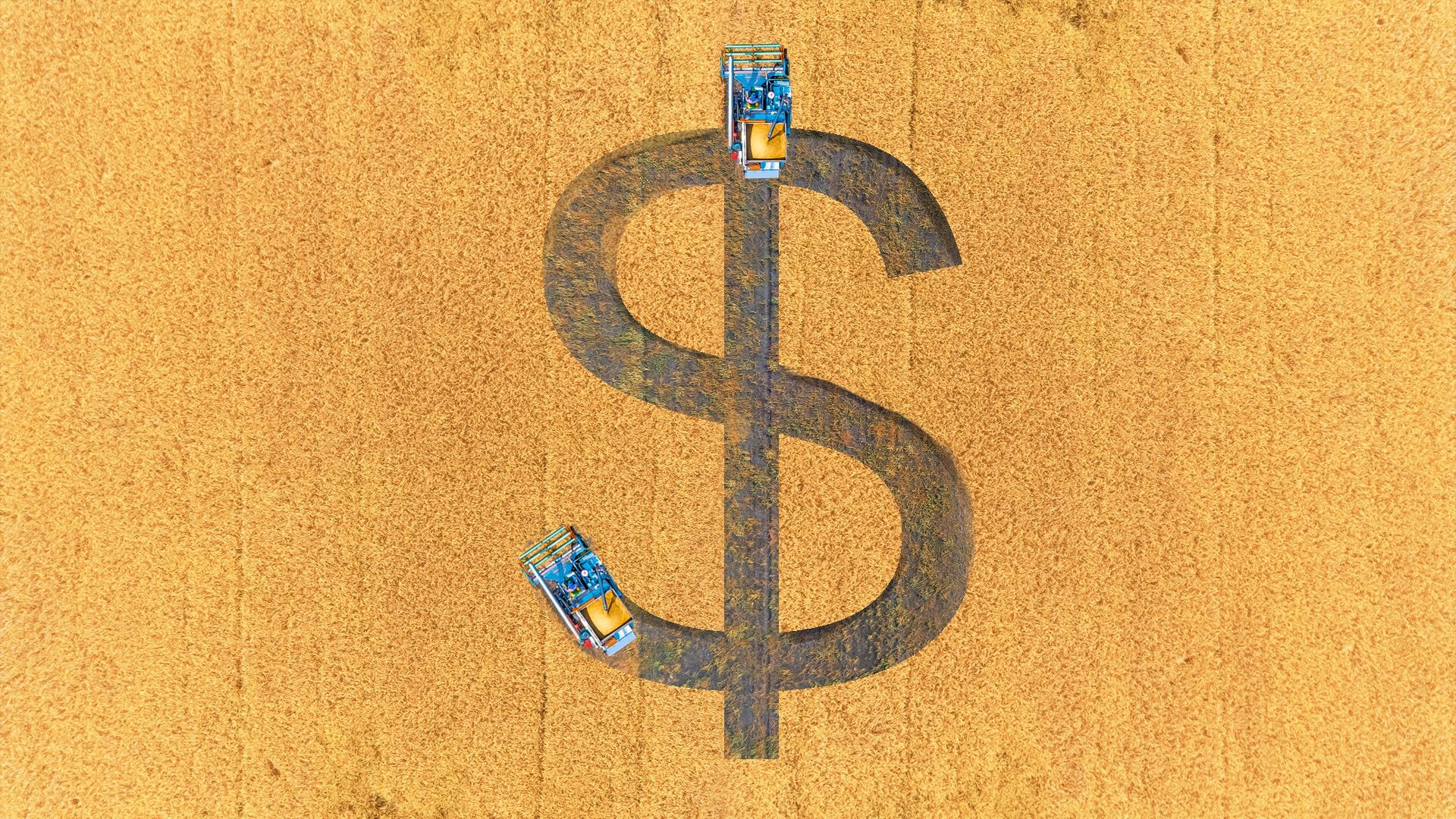
Diesel prices are soaring just as the energy-thirsty peak of harvest season looms for many of the country's largest crops.
Why it matters: It's a double whammy for farmers, with the Iran war also causing much higher fertilizer costs that hit months ago.
- "At the end of the day, unfortunately, the high prices have hit both in the spring during planting, and then they're going to hit again in the fall during harvest," said Jed Bower, an Ohio corn and soybean farmer.
Zoom out: The diesel market is tight and expensive for two main reasons: the throttled Strait of Hormuz, and the Ukrainian attacks on Russian refineries that have prompted Moscow to reduce exports.
- Fuel is a major input cost for farmers, who use diesel for combines, preparing fields, transporting crops to storage, irrigation and more.
- And farmers typically can't pass those costs along to crop buyers.
"[For] farmers, there's an old saying in agriculture: they buy retail and sell wholesale," said John Newton, VP of public policy and economic analysis at the American Farm Bureau Federation.
What's next: Peak harvesting starts next month for corn and soybeans — the country's two largest farm commodities — and several other crops, though specifics vary by location and product.
- "Harvest is the single operation that uses the most fuel and runs from now through November for most of the country," said Drew Kientzy, a University of Missouri agricultural analyst.
Zoom in: Fuel costs vary, but they're around 3%-5% of production expenses for corn, soybean and wheat, per the Farm Bureau, and higher for some other major crops.
- Diesel is the bulk of farms' total fuel costs.
- It's an important and now rising expense, though typically smaller than costs like labor and other services, seeds, and fertilizer, per Newton and Agriculture Department data.
- Most Midwestern farms use around 3-5 gallons of fuel per acre of soybeans and 5-8 gallons per acre of corn, Kientzy said via email.
Context: Farmers have tools for managing price risks, like pre-paying with bulk suppliers.
- Newton notes that Agriculture Department insurance programs can help protect against changes in major input costs, including fuel and fertilizer.
- But most farms lack the size and storage space to directly hedge prices through futures markets, where contract sizes are much larger than what individual farms typically need, Kientzy notes.
State of play: Bower, who holds the rotating presidency of the National Corn Growers Association, farms around 1,100 acres.
- He expects to pay an extra $20,000 to $25,000 in diesel costs this year compared to where prices were in January.
- And this comes as other costs have climbed, too, in the low-margin business.
The bottom line: "The way our input prices have been, there's no way I can make a profit this year, and all this is going to do is bury me further," he said.
2. 🧁 Bonus: Diesel costs as peak harvest seasons approach


Mid-August diesel prices are at their highest levels in the last decade, per AAA data.
Why it matters: While 2022 had the all-time highest average recorded ($5.82 on June 19), prices are higher this year heading into harvest time for some key crops.
Context: Farmers pay less than what you're seeing above, because off-road diesel isn't subject to the same taxes.
- But these off-road prices move in tandem with costs for diesel used on highways.
3. 💪 An EV road trip without charging anxiety

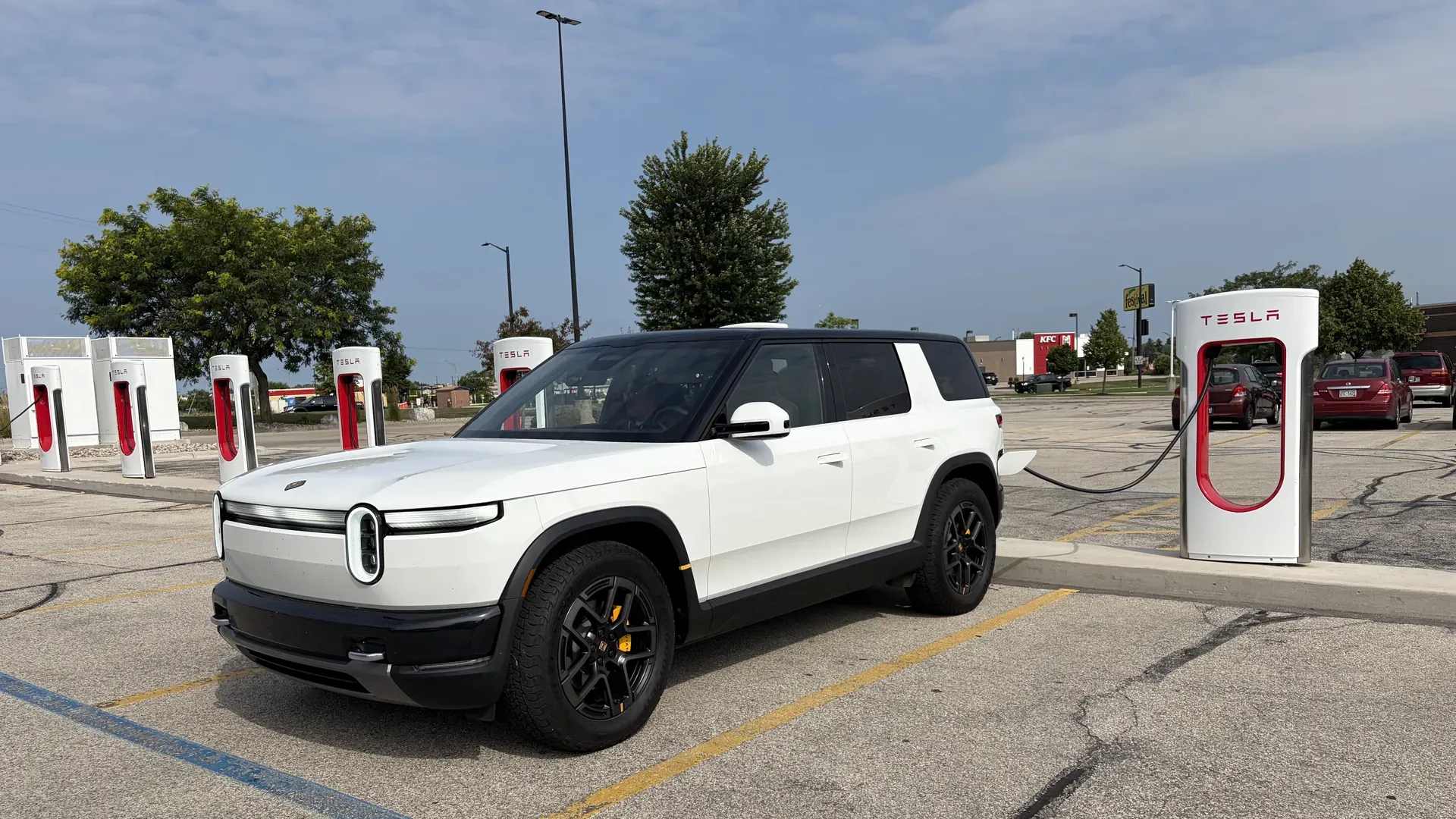
The best thing about my latest EV road trip was how little I thought about charging.
- I've taken enough of them to know that charging can dictate the journey.
- But driving a Rivian R2 from Michigan to Wisconsin and back, something was conspicuously absent: charging drama. And I have Tesla to thank.
The big picture: With Tesla's NACS plug built into the Rivian and plenty of Tesla Superchargers available along the way, charging increasingly felt like infrastructure rather than an obstacle.
Catch up quick: Tesla opened portions of its Supercharger network to other EV brands starting in 2022, and the rest of the industry has gradually moved to adopt its proprietary North American Charging Standard, or NACS.
- The R2 is among about a dozen non-Tesla models currently available with a native NACS port. Others must use adapters for now.
State of play: I test-drove an R2 on loan from the automaker about 800 miles, not including the 78-mile journey each way across Lake Michigan aboard the Lake Express ferry.
- Charging at Tesla Superchargers made for a smooth experience.
- Not only does the R2 use the same NACS connector as Tesla, it supports seamless plug-and-charge capability at Tesla Superchargers.
- That means you just have to drive up, plug the Tesla cable into the car, and the session is automatically billed to your Rivian account.
Go deeper via Axios Future of Mobility
4. 🏃 Catch up quick on oil: Trump's threat, Hormuz transit, shale spending

💵 Oil prices are at multi-week highs this morning, with the latest rise following President Trump's vague pledge to impose economic pressure against Iran on an "unprecedented scale."
- State of play: The global benchmark Brent crude was trading at $94.45 as we sent this edition.
- What we're watching: Trump's social media post last night said "any country" that provides "any type of lifeline to Iran" will face "tremendous consequences." China is the largest buyer of Iranian oil, but Trump didn't name-check any nations.
🛡️ The U.S. military has quietly established a shipping corridor in and out of the Strait of Hormuz to transport millions of barrels of oil each day, two U.S. officials told Axios' Barak Ravid. Full story
- Yes, but: Multiple analysts are skeptical of oil volumes moving through the strait at the levels that Trump officials are claiming.
🇦🇷 Via the FT, "US oil magnate Harold Hamm is partnering with Swiss trading house Mercuria to spearhead a multibillion-dollar drilling campaign in one of the world's largest shale basins in Argentina."
5. 🧮 Number of the day: $14.7 billion
That's 2026 global private equity and venture capital investment in oil, gas and coal through the end of July, already far above 2025's full-year level, per S&P Global Market Intelligence.
Why it matters: "Higher commodity prices, energy security concerns, and rising power demand from data centers and AI infrastructure are spurring renewed investment in traditional energy assets," the firm's analysis states.
Editor's note: Wednesday's lead story on the grid's extreme heat problem has been corrected to reflect that Michael Webber is a partner at IdeaSmiths (not CTO of Energy Impact Partners).
📫 Did a friend send you this newsletter? Welcome, please sign up.
🙏 Thanks to Mackenzie Weinger, David Nather and Chris Speckhard for editing and to our brilliant Axios visuals team.
Sign up for Axios Future of Energy