Axios Future of Energy

October 30, 2025


😮 Climate drama, energy exports, nuclear plans, oh my! We've got lots of news in a quick 1,376 words, 5 minutes.
🤖 Axios' AI+ Summit will return to San Francisco on Dec. 4 to hear from the biggest names in the industry who are shaping the world's approach to AI. Secure your spot here.
🎧 This week in 1996, the genre-bending group Luscious Jackson released the album "Fever In Fever Out," which provides today's killer intro tune...
1 big thing: Bill Gates kicked a climate hornet's nest

Bill Gates' shift from "doomsday" climate warnings to a focus on improving human lives is triggering sharp reactions from scientists and activists.
Why it matters: As one of the world's most prominent funders of both climate and global health efforts, Gates' positioning influences the political and philanthropic center.
The big picture: In his memo released Tuesday, Gates urged leaders to focus less on emissions targets and more on tangible improvements in human welfare — echoing his dual role leading the Gates Foundation and Breakthrough Energy.
What they're saying: Some high-profile scientists say the memo risks framing climate action as a rival to poverty alleviation.
"The content was mostly really great, but I would have framed it radically differently," says Katharine Hayhoe, chief scientist at The Nature Conservancy.
- "People often think of climate change as a separate bucket at the end of a long row of other buckets of problems we're trying to fix that are wrong in the world," Hayhoe told Axios.
- This includes poverty, disease and access to clean water.
- "Climate change is not a separate bucket," Hayhoe said. "The reason we care about climate change is that it's the hole in every bucket."
Between the lines: Others say Gates is highlighting an "overdue" political reality.
- "Without ensuring people benefit from climate action, people won't act," says Julio Friedmann, chief scientist at Carbon Direct, in a text to Axios.
- His memo, Friedmann adds, "places the emphasis on specific actions that reduce emissions, improve human welfare and preserve ecosystems."
Friction point: Gates defended his stance in a CNBC interview, saying: "I'm a climate activist, but I'm also a child survival activist."
- He added: "If we stop funding all vaccines and that saved you 0.1 degree, would that be a smart tradeoff?"
Context: Gates is one of the planet's richest people with a net worth of more than $100 billion, so the average person might think he has enough money to do both simultaneously. But economics 101 bolsters Gates' case.
"The fundamental proposition of economics is, you have unlimited wants and scarce resources," said Kevin Book, who leads the independent research firm ClearView Energy Partners.
- "It doesn't matter how many commas you have in your net worth, that principle still applies. And it applies at the government level, too. You can't get around it."
What we're watching: The memo landed as one of the Atlantic's strongest storms in history made landfall in Cuba — a devastating reminder of rising climate risks.
Disclosure: Amy Harder is a former employee of Breakthrough Energy in her role leading Cipher News, an independent news outlet supported by Breakthrough Energy. Amy is also a volunteer board member of The Nature Conservancy's Washington state chapter.
2. 🗞️ The newest step to make nuclear a New York story

New York state officials are taking fresh steps toward Gov. Kathy Hochul's goal of developing at least 1 gigawatt of new nuclear power upstate, per announcements shared with Axios ahead of their release.
Why it matters: Nuclear power has growing and cross-aisle momentum, and New York's move follows this week's new U.S.-industry partnership aimed at building $80 billion worth of projects.
Driving the news: The New York Power Authority will today release a formal solicitation inviting input from upstate communities with interest in hosting a project.
- It will help officials weigh sites that have both community support and needed size, water access and "protection from external hazards."
State of play: A second NYPA "request for information" today will seek info from project developers and partners on tech recommendations, siting, costs, and much more.
The big picture: "[T]he success of this transformative advanced nuclear initiative hinges on our ability to collaborate with communities, governmental agencies at the state and federal level, and the private sector," NYPA president and CEO Justin Driscoll said in a statement.
What we're watching: Power giant Constellation Energy, which already operates three large New York nuclear plants and has expressed interest in Hochul's initiative.
3. 👀 Trump claims China to boost U.S. energy buys after Xi meeting
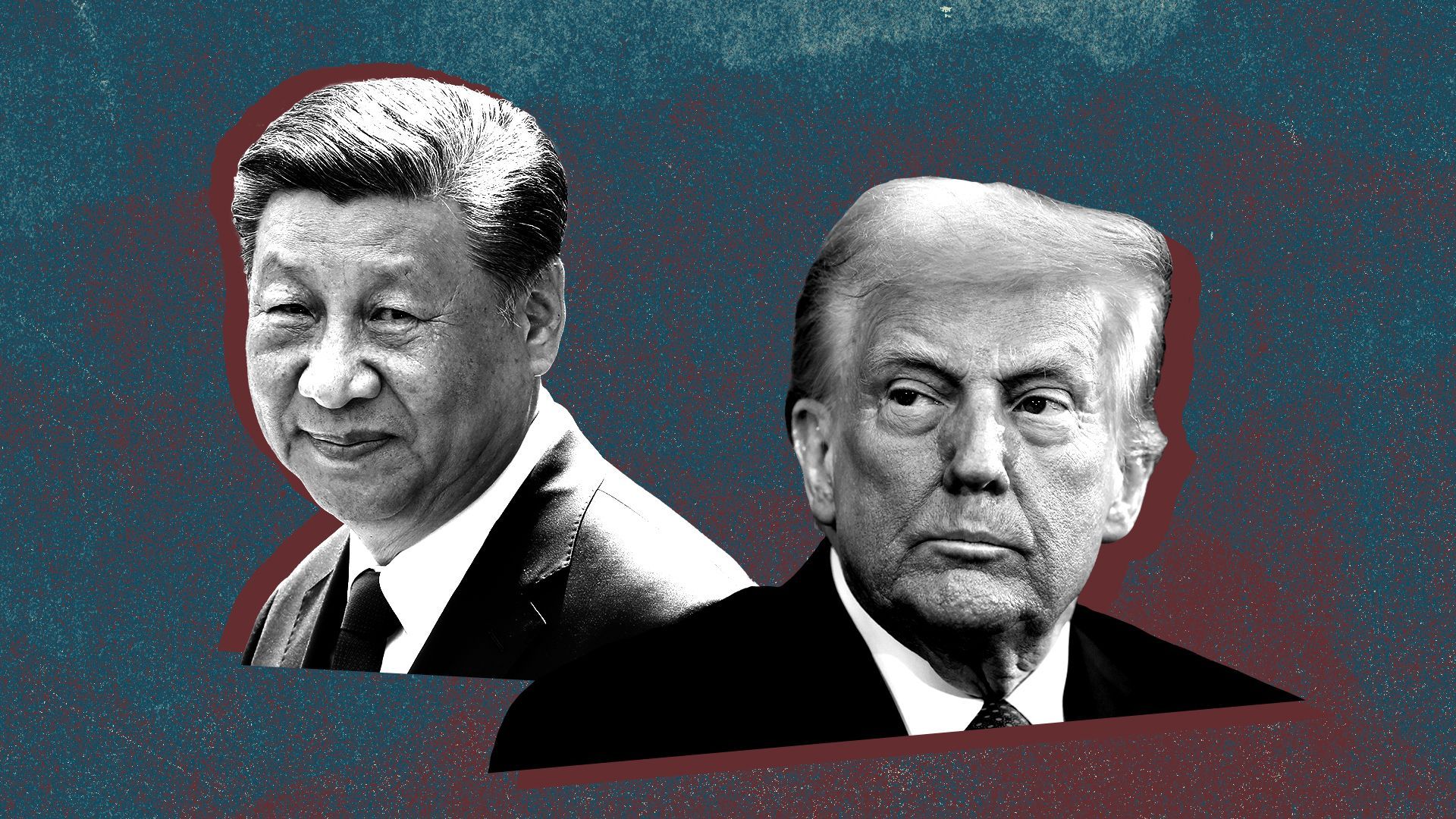
China "agreed that they will begin the process of purchasing American Energy," President Trump claimed after his meeting today with Chinese President Xi Jinping.
Why it matters: China's purchases of U.S. LNG have dropped to zero for most of 2025 amid trade friction, and its U.S. petroleum imports have also fallen sharply.
State of play: "In fact, a very large scale transaction may take place concerning the purchase of Oil and Gas from the Great State of Alaska," Trump said in a Truth Social post.
- The comment likely refers to the big proposed Alaskan natural gas pipeline and LNG export terminal that has White House backing.
Reality check: The costly project remains in the planning stages, and it's not clear when or if it will move forward.
- And China's statements after Xi and Trump met in South Korea don't describe an energy deal, but do note energy came up in the talks.
- "The two presidents agreed to enhance cooperation in economic, trade, energy and other fields and to encourage more people-to-people exchanges," a readout from China's foreign ministry states.
Catch up quick: China's commerce ministry did promise to suspend its latest export restrictions on rare earths for at least a year.
- But its previous rare earths restrictions, announced in April, are set to stay in place.
What's next: "[Energy Secretary] Chris Wright, [Interior Secretary] Doug Burgum, and our respective Energy teams will be meeting to see if such an Energy Deal can be worked out," Trump posted.
4. 🚘 Lucid eyes home power, new European sales

Lucid Motors will soon unveil a vehicle-to-home power product, and the luxury EV startup is also talking with third-party dealerships in Europe — a departure from its direct-to-consumer model.
Why it matters: Those steps, shared by interim CEO Marc Winterhoff in an interview, illustrate how Lucid is adapting on the fraught, expensive road from buzzy startup to commercial-scale automaker.
Driving the news: Vehicle-to-home tech allows EV owners to send power back into their residence.
- The bidirectional capability, increasingly available in EVs, can provide emergency backup power or help lower bills when electricity is expensive.
What we're watching: The luxury EV maker is evolving its sales model in Europe, which now is a small share of its U.S.-dominated sales, but a growth market.
- Showrooms would still have a "Lucid look and feel" but would not be owned by the automaker, Winterhoff said, calling it a way to add "additional channels" for sales.
- It's a way to work with people who have "established connections" in various markets there, he said.
Driving the news: Winterhoff was in Washington, D.C., for the announcement of a new tech partnership with Nvidia.
- Lucid plans to eventually sell midsized EVs with truly self-driving, or "L4," autonomy via integration with Nvidia tech.
What's next: Lucid reports quarterly earnings on Nov. 5.
5. 🏃 Catch up quick on business: Oil, cars, coal
🛢️ Russian oil giant Lukoil "has agreed to sell most of its international assets to Swiss commodity trader Gunvor after the US imposed sanctions on the company last week," the Financial Times reports.
✂️ Via the NYT, "General Motors plans to lay off 1,750 workers indefinitely in the coming months and an additional 1,670 temporarily as it reduces electric vehicle production."
🚜 The Energy Department will provide a $1.5 billion loan to Wabash Valley Resources for an Indiana fertilizer project that uses coal.
- "The project will restart and repurpose a coal gasification plant idled since 2016 to produce 500,000 metric tons of anhydrous ammonia per year by using coal from a nearby Southern Indiana mine and petcoke as feedstock," DOE said.
6. 🌍 Number of the day: $284 billion to $339 billion
That's the projected annual gap between what developing nations need for climate adaptation through 2035 and current financial flows, a new UN report finds.
Why it matters: The "adaptation gap" study lands shortly before next month's COP30 summit, where finance — or lack thereof — will be a huge topic.
🙏 Thanks to Chuck McCutcheon and Chris Speckhard for edits to today's edition, along with the brilliant Axios Visuals team.
📬 Did a friend send you this newsletter? Welcome, please sign up.
Sign up for Axios Future of Energy