Axios Future of Energy

April 22, 2026

🐪 Halfway. We're getting over the hump with a quick but wide-ranging read covering...
- A renewables milestone
- The latest on Iran
- Lobbying notes, the limits of Trump's Defense Production Act memos, and more, all in 1,112 words, 4 minutes.
🙏 Thanks to David Nather and Chris Speckhard for editing and to our brilliant Axios visuals team.
🪩 This week in 1979, the late great Donna Summer released the legendary album "Bad Girls," which provides today's intro tune...
1 big thing: Solar drives renewables inflection point


Global electricity generation from renewables edged past coal in 2025, per new analysis by Ember, a clean energy think tank.
Why it matters: The inflection point with renewables — mostly hydro, solar, wind and bioenergy — helped to keep CO2 emissions from power essentially flat even as consumption rose, it found.
State of play: A separate report Monday from the International Energy Agency reached a similar conclusion.
- It showed coal, long the world's largest power source, barely hanging onto the title last year.
- Coal and renewables both had about a 34% share, with the former an inch ahead, IEA found.
Zoom out: Both reports show solar's growth is doing lots of heavy lifting in 2026, even though it remains a small share of total global generation (8.7% last year by Ember's tally).
- It "cemented its role as the dominant driver of change," meeting three-fourths of last year's demand rise, Ember finds.
- "Solar's rise was 18 times larger than that of gas," per Ember.
- Coal-fired generation rose very slightly last year, IEA notes, though Ember's analysis found a slight dip.
What we're watching: Keep an eye on coal usage this year and beyond.
- As we've been writing about, tighter gas supplies and higher prices could be giving coal a boost, especially in Asia.
- But more countries are looking to expand renewables, too.
2. 🗞️ The latest on Iran: Markets, Jones Act, Hormuz summit, oil spills
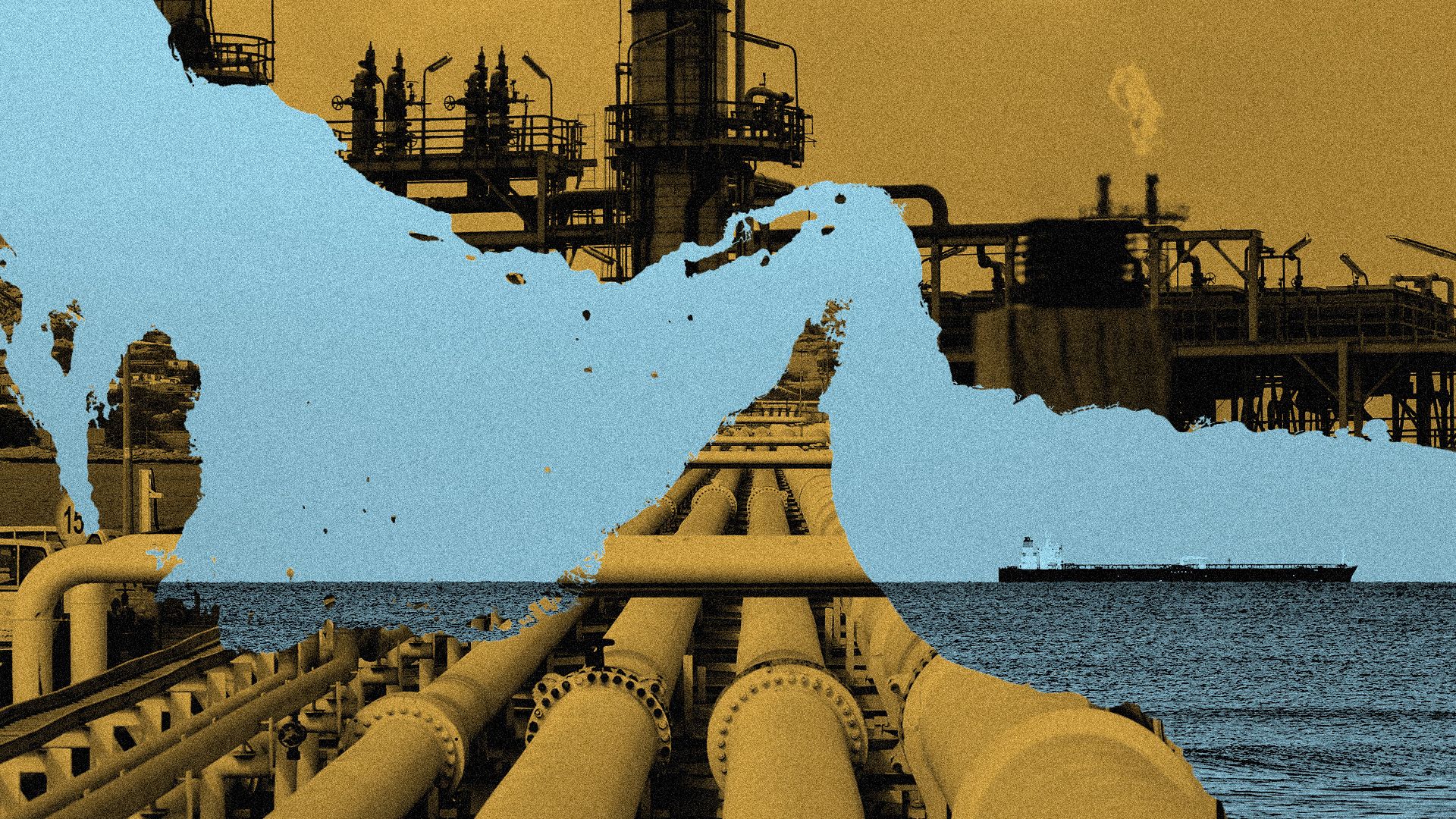
🛢️ Brent crude is hovering below $100 per barrel — it's $99.05 as we sent this edition — following President Trump yesterday announcing extension of the ceasefire.
- Yes, but: The situation remains fluid. Reuters and AP report on container ships coming under Iranian fire.
- What we're watching: Trump is giving Iran's warring factions a short window to unify behind a coherent counteroffer, U.S. officials tell Axios' Barak Ravid.
🚢 President Trump is keen to extend his waivers of the Jones Act, the law that requires use of U.S. ships to move goods between domestic ports, Axios' Marc Caputo reports.
- Catch up quick: Trump issued a 60-day waiver from the law on March 18 to make it easier to ship oil and fuels in response to rising prices from the Iran war. Full story
🇬🇧 The U.K. and France are heading a two-day summit with military planners from over 30 nations to explore how to keep the Strait of Hormuz accessible after the current conflict.
- State of play: The event opening today will "advance military plans to reopen the Strait, as soon as conditions permit, following a sustainable ceasefire agreement," an announcement states.
😢 Via CNN, "Multiple oil spills are visible from space after Iranian and US-Israeli strikes hit oil facilities and ships in the region, with experts warning of an impending environmental catastrophe."
3. 💼 Lobbying notes: Venezuela, Exxon, geothermal
Venezuela is increasingly surfacing in lobbying reports, filings show.
Why it matters: It's a sign of how energy and minerals companies are looking to tap expanded opportunities there following the ouster of Nicolas Maduro.
- Venezuelan officials, under U.S. pressure, have been moving to liberalize investment conditions as the Trump administration eases sanctions.
Driving the news: First-quarter reports show companies including BP and oilfield services giant Baker Hughes are beginning to list Venezuela among lobbying topics in their filings.
- The trend also extends to less well-known players that have recently registered outside lobbyists for Venezuela-related work.
- Examples include Salamander Solutions, which makes heater cables for the oil and gas industry; EthosEnergy, which repairs and overhauls gas turbines and other energy equipment; and Knob Petroleum.
Yes, but: Documents in the Lobbying Disclosure Act database vary in detail, so the scope of Venezuela-related lobbying almost certainly extends beyond what's explicitly name-checked in these public filings.
What we're watching: A few other tidbits beyond Venezuela caught my eye in the flurry of Q1 reports that arrived on this week's filing deadline:
4. 🏃➡️ Catch up quick on policy: Defense Production Act limits and renewables court ruling

🤔 President Trump's use of a Cold War-era law to boost energy supply chains and projects will only unlock "modest" capital and "leave real constraints intact," Rapidan Energy Group analysis finds.
- Why it matters: The advisory and research firm's note is the most complete thing I've seen about what Trump's memos this week can — and can't — accomplish.
- The big picture: "Permitting and state-level opposition remain the binding constraints across the oil, gas and refining sectors, not access to capital," the analysis states.
- How it works: Trump didn't invoke the portion of the law that can impose requirements on manufacturers. The section he did use — Title 3 — provides financial incentives, but that's a "multi-year capital investment strategy which does little to reorder a currently constrained supply chain."
- What they're saying: "The memoranda suggest the White House is still approaching energy cost concerns from the supply side, rather than demand-side interventions such as export constraints," the research firm ClearView Energy Partners said in a client note.
🛑 A federal district judge in Massachusetts issued a preliminary injunction to stop the Interior Department from implementing restrictions on wind and solar projects.
- Why it matters: The litigation from renewables advocates and trade groups challenges a wide array of Interior policies they allege are "unlawfully picking winners and losers among energy sources."
- The big picture: Judge Denise Casper, seated in the Obama era, wrote in the injunction yesterday that the groups are "likely to succeed on the merits of their claims."
5. 🚗 Number of the day: 932 miles (1,500 kilometers)
That's how far an EV can travel with a new battery announced by Chinese battery giant CATL, the company said in Beijing yesterday, per reports in the FT and other outlets.
Why it matters: If true, the vast distance is another data point that underscores China's strength in EV tech — and EVs' growing capacity to offer conveniences of gas-powered cars.
- On that note, CATL also reportedly unveiled a separate battery, an update of its Shenxing battery that can charge in six minutes, per reports from its presentation.
6. 💬 Quote du jour: Canary in the AI coal mine edition
"Fermi's turmoil is an alarm bell for the overhyped hyperscaler thesis juicing power forecasts and valuations across the sector."— Bloomberg columnist Liam Denning on Fermi America's tumult and stock plunge
His column is a good read if you want to follow up on Amy's reporting on the ambitious but troubled data center developer Fermi America.
📫 Did a friend send you this newsletter? Welcome, please sign up.
Sign up for Axios Future of Energy