Axios Future of Energy

March 11, 2026

🔍 Oil might start flowing from emergency reserves, and it's already flowing into U.S. politics. We've also got coverage of...
- White House solar panels
- Russia's gains from the Iran war
- Data center jeopardy and more, all in 1,549 words, 6 minutes.
🙏 Thanks to Chuck McCutcheon and Chris Speckhard for edits to today's newsletter, along with the brilliant Axios Visuals team.
📻 At this moment in 1995, Soul for Real ruled Billboard's R&B chart with today's intro tune...
1 big thing: The Iran war is spilling into U.S. energy politics

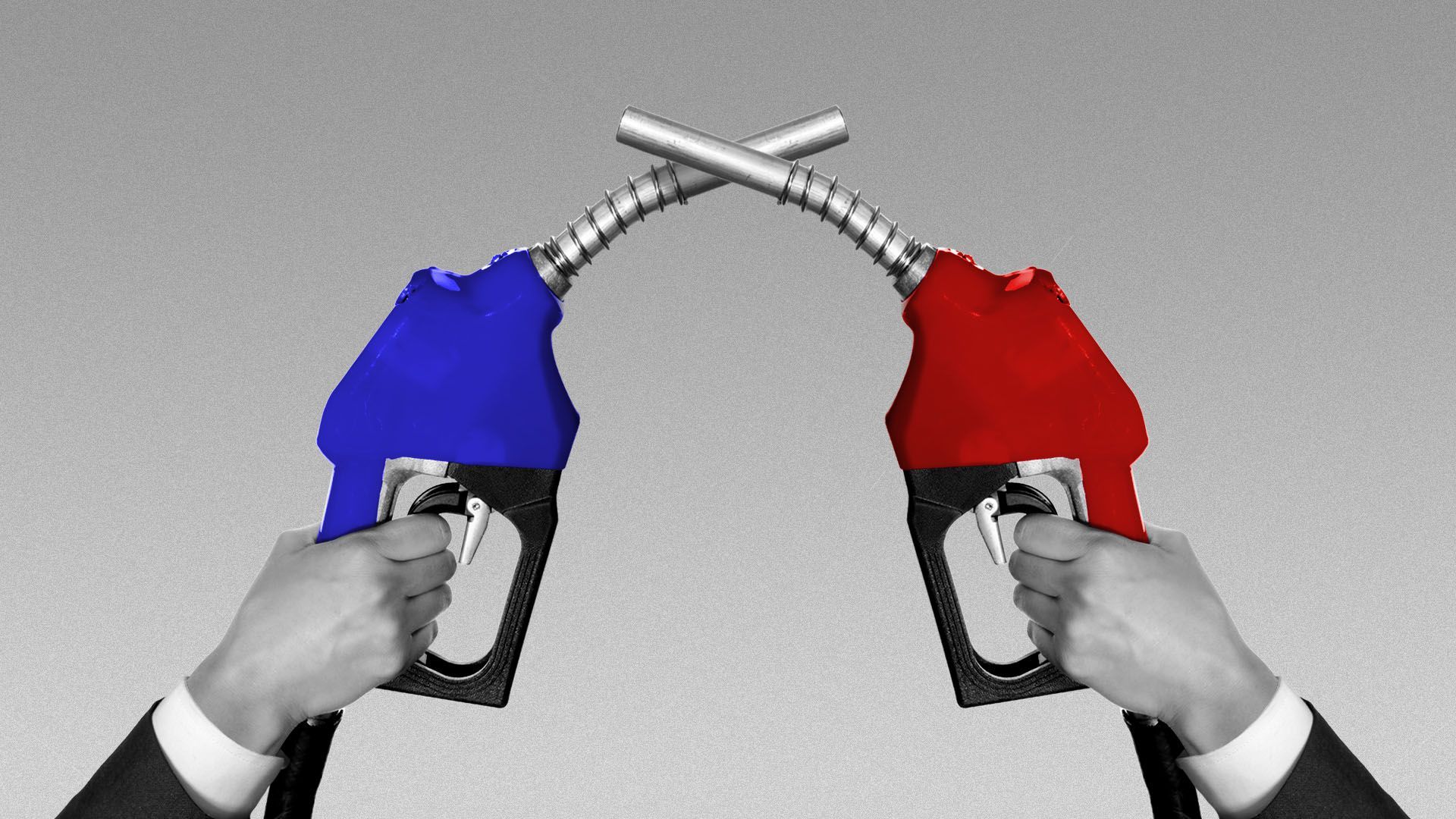
The energy shock of 2026 is already finding its way into this year's midterms and even the early jostling in the 2028 White House race.
Why it matters: While the political salience of foreign policy is often debatable, the economy always matters — and that means energy costs do too.
The big picture: Higher fuel prices are hitting states that could decide Senate control in November, a potential headache for Republicans defending their majority.
- Some of the largest diesel price increases are hitting states with key midterm Senate races.
- Battleground states like Michigan and Ohio have also seen gasoline price spikes.
State of play: The price spikes are already surfacing on the stump.
- The Senate Democratic Campaign Committee and Democratic National Committee, in social media posts and press comments, are highlighting prices at the pump in swing states and overall.
- In specific races, former North Carolina Gov. Roy Cooper (D), for instance, is citing diesel costs in his campaign for the seat that Sen. Thom Tillis (R) is vacating.
Threat level: "Republican lawmakers are beginning to voice concern that rising gasoline prices could become a problem for the party heading into the midterm elections," the Wall Street Journal reports.
The other side: "President Trump has been clear that these are short-term disruptions and that Americans will see oil and gas prices drop rapidly again once the necessary objectives of Operation Epic Fury have been achieved and the regime's capabilities are neutralized," White House spokeswoman Taylor Rogers said in a statement.
- Trump's agenda has "saved American families hundreds of dollars at the pump last year, and he will continue to double down on these successful efforts to lower prices in the weeks and months ahead," she said.
The intrigue: Watch the calendar and voters' memories.
- Gasoline prices have been generally lower than they were in the Biden years, which saw a $5 per gallon peak in mid-2022.
- A lot could depend on how long the current conflict lasts — and Trump has been signaling this week that he's seeking a relatively quick end.
Zoom out: There are tons of variables around prices going forward, and crude prices have already eased off prior highs.
But at a 30,000-foot level...
- If the war ends without major damage to regional oil-producing, processing and export infrastructure, the spikes would take weeks to perhaps two months to filter out of retail costs, market analysts say.
What we're watching: Some potential 2028 White House candidates have joined the fray criticizing Trump on energy costs and other oil topics.
- California Gov. Gavin Newsom (D) issued a lengthy release that also looks to burnish his own record in the state with the nation's highest gasoline prices.
- Senate Democrats including Chris Van Hollen and Ruben Gallego joined a statement knocking the administration for easing sanctions on Russian barrels supplied to India.
2. ☀️ One sun thing: Trump's White House still has solar panels
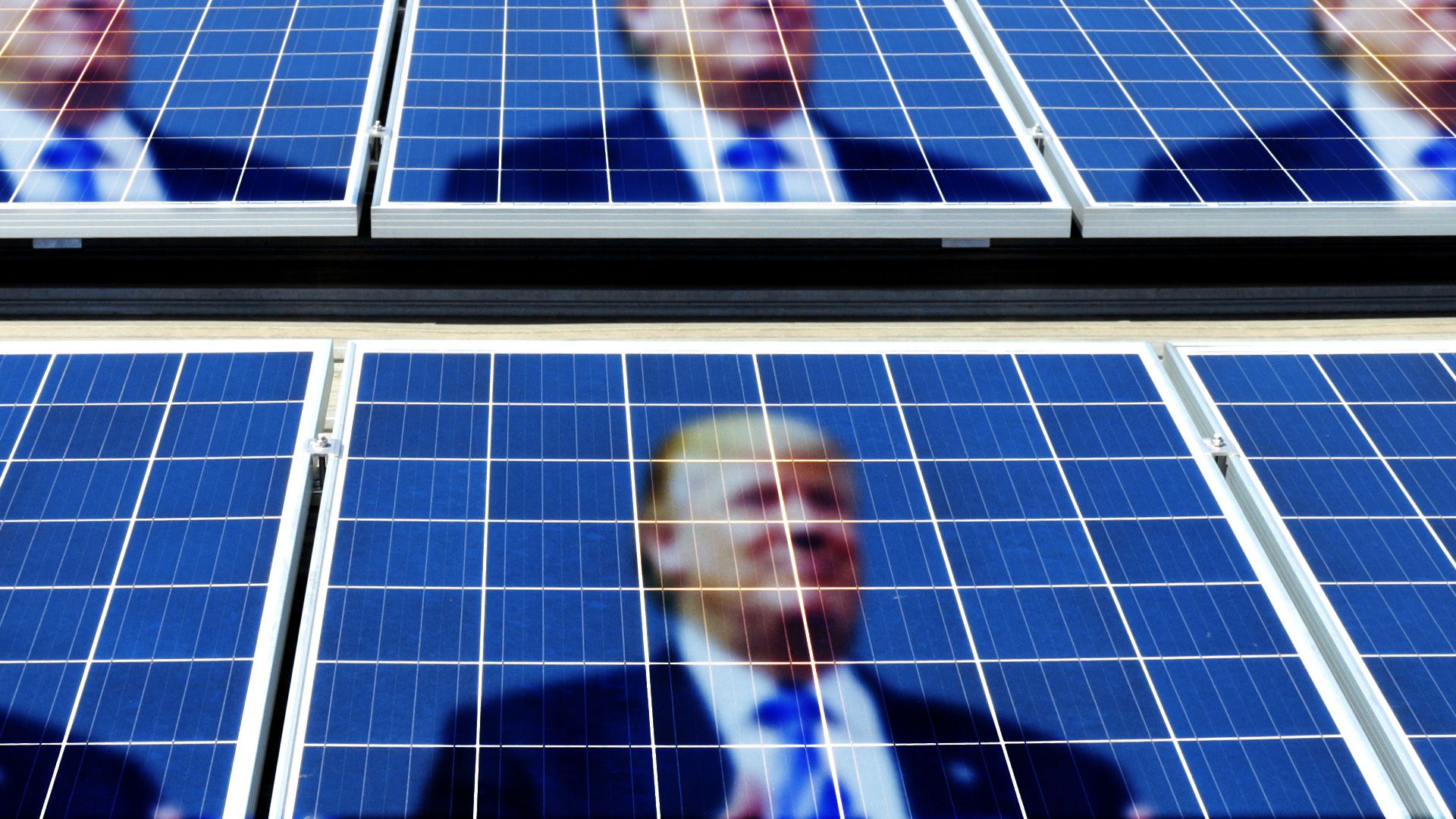
The White House is (still) getting energy from solar panels that President Trump's predecessors put on its roof, Axios has learned.
Why it matters: The solar panels have somehow endured through Trump's criticism of renewable energy and his Democratic predecessors.
Driving the news: Axios reached out to the White House as part of a story about how oil-price spikes — like those following the Iran war — typically set off debates about consumers moving toward electric cars and solar panels.
Flashback: President Jimmy Carter first put solar panels on the White House following the 1970s oil crisis in a direct nod to domestic energy security.
- His successor, Ronald Reagan, removed them a few years later.
- Fast forward a few decades. President George W. Bush's administration added solar back to heat water and a swimming pool. When President Barack Obama moved in, another set went up on the roof.
State of play: Trump didn't remove them during his first administration. And they remain there today.
- In addition to confirmation from the White House, they're visible from Google satellite images.
- A White House spokesperson wouldn't comment on whether there are any plans to remove them or otherwise update them.
Between the lines: Although Trump has been critical of solar power, he has directed most of his — largely unfounded — criticism toward wind power, especially offshore wind.
The intrigue: Solar has recently gained some new supporters among MAGA influencers, including Katie Miller, wife of deputy chief of staff Stephen Miller.
What we're watching: Whether the rooftop of the new ballroom might sport any panels.
3. 🏃 Catch up quick on Iran: Releases and retractions
🫗 The International Energy Agency will propose a large, coordinated release of oil from member governments' strategic stockpiles, according to multiple reports.
- Why it matters: It could total up to 400 million barrels, the largest ever, per the WSJ, which first reported the plan. It would be the most aggressive response yet to the Iran war that's bottling up massive volumes.
- The latest: "Prime Minister Sanae Takaichi said Japan would take the lead and release oil from its national reserves as early as next week," the FT reports.
- What's next: Group of Seven heads of state are slated to discuss the topic later today, reports say.
- What we're watching: Specifics beyond whatever the headline number might be. "The key is the flow," in barrels per day, and whether there's a "regional skew" to the release, Bloomberg oil scribe Javier Blas said on X.
😬 Energy Secretary Chris Wright's X account briefly and inaccurately stated yesterday that the U.S. Navy had successfully escorted an oil tanker through the Strait of Hormuz.
- Why it matters: The retracted claim was market-moving, helping push oil prices down during another day of volatile trading.
- Catch up quick: "A video clip was deleted from Secretary Wright's official X account after it was determined to be incorrectly captioned by Department of Energy staff," a DOE spokesperson said.
- What we're watching: Whether military escorts from the U.S., which President Trump has offered, or a wider coalition become reality as nations scramble to get barrels moving.
- What they're saying: There's "growing momentum to establish a naval protection system," but it would likely take until the end of March or early April to set up, Eurasia Group analysts said in a note.
4. 🇺🇸 Weighing U.S. oil producers' crisis response
The Energy Department's stats arm reversed its prediction of a slight decline in U.S. crude oil production next year and now expects a modest increase instead on the strength of higher prices.
Why it matters: The Iran war's price effects could change the calculus — at least a little — for domestic producers who had been grappling with oil at middling levels.
Driving the news: The Energy Information Administration projects U.S. production climbing to yet another record annual average of 13.8 million barrels per day next year, up slightly from 13.6 mbd in 2026.
- February's version of the monthly outlook had forecast a slight decline to around 13.3 mbd next year as producers respond cautiously to modest prices and global supply outpacing demand growth.
- EIA has upped its estimate for the Permian basin and some other regions.
What we're watching: The near term as the White House grapples with the energy price fallout from U.S. strikes on Iran.
- TD Cowen analysts, in a note, said Trump's team "needs to signal 'action' to voters," and that one piece of the response could be pressure on domestic producers to boost output.
The bottom line: There's a reason these EIA outlooks surface monthly. Conditions change. All. The. Time.
- The higher price outlook — which spurred the U.S. production revision — is "highly dependent" on the duration of the conflict and how much Mideast output it shuts in, EIA states.
5. 🇷🇺 How Russia benefits from the Iran war


Russia and other oil exporters outside the Mideast — and not ensnared in the conflict — are emerging as the economic winners in the Iran war.
Why it matters: The market mechanisms are perhaps obvious here — higher oil prices are good for nations that sell oil — but are worth underlining, as the energy market shift plays into the geopolitical calculations.
How it works: Oil price changes are "a powerful mechanism of income redistribution across countries," Qian Wang, chief economist for Asia-Pacific and head of capital market research at Vanguard, wrote in a note yesterday.
- The winners are those with large oil reserves that can export product and are located far from the war, such as Norway, Canada and some emerging market countries like Nigeria and Colombia.
- "They will experience inflation, but exports and GDP growth will stay robust," Wang wrote.
The big picture: While there are positives for countries like Canada or Norway, Russia is emerging as the clearest economic winner.
6. 🧮 Number of the day: Up to 18 gigawatts
Morgan Stanley analysts project that U.S. data center developers face a power shortfall of 9-18 gigawatts through 2028 — around 12%-25% of needed electrons.
- That's even factoring in "innovative 'time to power' solutions" like conversion of Bitcoin mining sites to AI uses, onsite fuel cells and more.
Why it matters: Access to electrons is a key constraint on the mushrooming industry.
📬 Did a friend send you this newsletter? Welcome, please sign up.
Sign up for Axios Future of Energy