Gas price spikes are slamming Senate battleground states


Add Axios as your preferred source to
see more of our stories on Google.
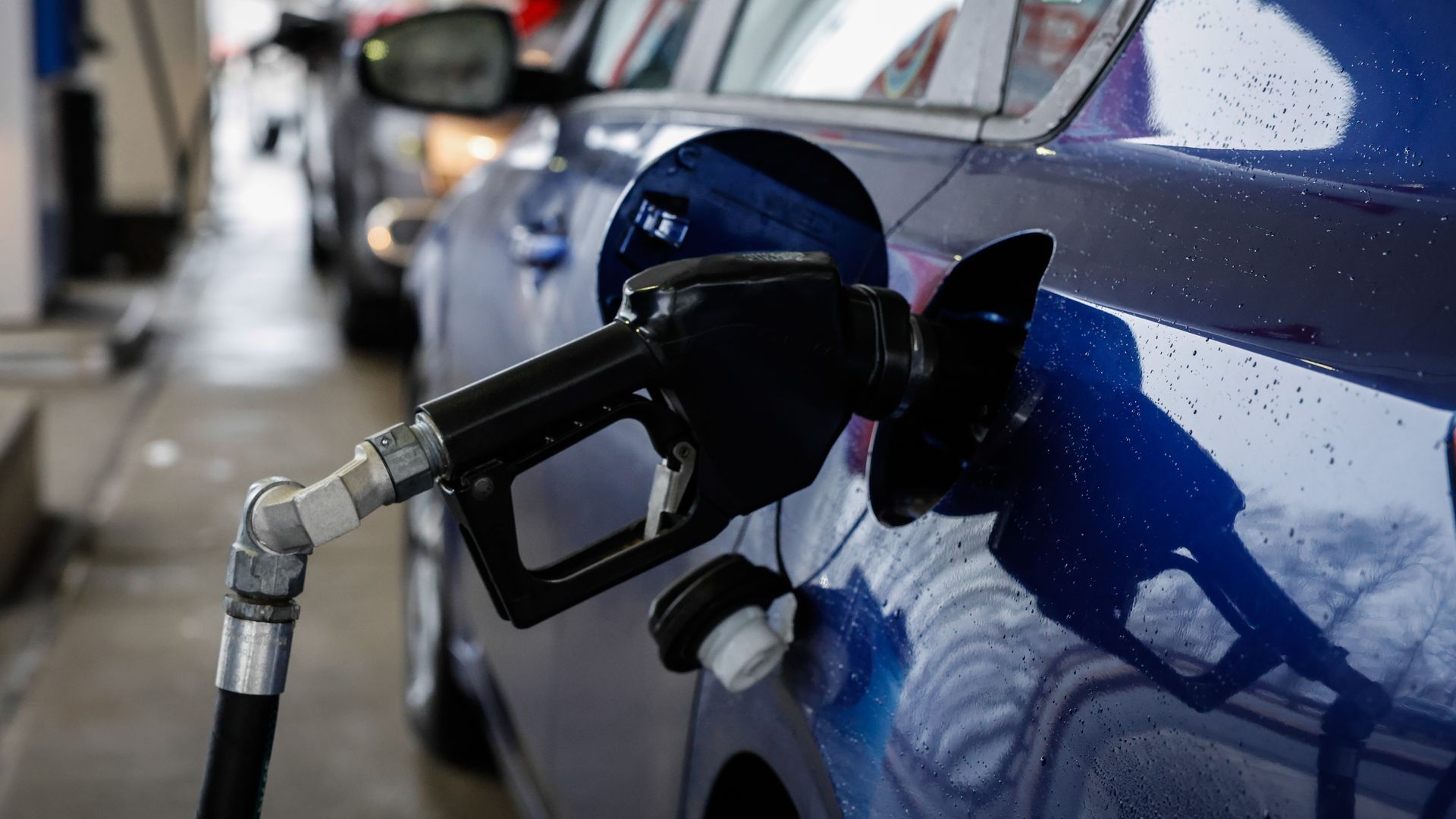
A driver fuels up at a Mobil gas station in Englewood Cliffs, N.J., on March 5, 2026, as oil prices head for their biggest weekly surge since 2022 amid Middle East war disruptions. Photo: Kena Betancur/Bloomberg via Getty Images
The Iran war's fuel-price shock is slamming states that could decide Senate control in November, a potential headache for Republicans defending their majority.
Why it matters: Affordability was already Democrats' central midterm message, and now the cost of President Trump's unpopular war is on display at the pump.
- Just 29% of Americans approve of the strikes, and two-thirds — including 44% of Republicans — expect gas prices to keep rising, according to a Reuters/Ipsos poll conducted through Monday.
By the numbers: Three of the top four weekly jumps in diesel prices hit key midterm Senate races: Texas (+111.6¢), North Carolina (+110.5¢) and Georgia (+107.9¢), according to GasBuddy's Patrick De Haan.
- Regular gasoline spikes also hit battlegrounds. Ohio and Michigan tied for the third-largest jumps at 55 cents.
- A month ago, just nine states averaged gas prices above $3 per gallon, according to GasBuddy. Now that number is 48.
State of play: Prices vary by state, based on factors like local competition or because producers can sell overseas at surging global prices, De Haan explains to Axios.
- That's why Texas, the nation's top oil-producing state, saw the biggest diesel spike in the country, which may be good news for producers but bad news for everyone filling up.
- The national average for regular gasoline hit $3.55 on Tuesday, up 61 cents from a month ago, according to GasBuddy.
What they're saying: Trump dismissed the fuel price surge on Truth Social, calling it a "very small price to pay for U.S.A., and World, Safety and Peace."
- That's a tough sell without a clear threat that "demanded immediate action," says Jon Krosnick, a Stanford political science professor.
- No rally-around-the-flag effect has materialized, Axios' Zachary Basu writes.
Meanwhile, Democrats are hammering Trump, who touted low gas prices in his State of the Union just days before launching strikes, on cost-of-living concerns.
- Krosnick says gas prices are uniquely visible. The "price of milk," he notes, "is not on a sign outside of grocery stores."
- And the spike presents an unusual case of "attributional clarity," he says: "It's so clear what just happened."
Between the lines: Karen Young, a senior research scholar at Columbia's Center on Global Energy Policy, tells Axios the market can't reorient until traffic resumes through the Strait of Hormuz.
- "For the American consumer, yeah, maybe gasoline prices are jumping a bit, but that's kind of the least of your problems," Young says.
- Oil is the invisible cost inside nearly everything Americans buy. It ships the goods, makes the plastics, feeds the fertilizer and fuels the flights.
The bottom line: De Haan says the eight months until November could be enough time to put pump-price shock in the rearview mirror.
- But if Trump "doesn't reverse course, he certainly could start to bring about a situation that will be more memorable to Americans ahead of the midterms."
Go deeper: Trump vows to step up Iran bombing, as gas price surge worsens
