Axios Future of Energy

September 11, 2026


📊 Oil markets are having a week. We look at new metrics of the Iran war's fallout, then move on to...
- A diesel record, permitting and AI policy news, weekend reads and more, all in 1,268 words, 5 minutes.
🕯️ Today marks 25 years since the Sept. 11 attacks, a day we remember for the nearly 3,000 people who were killed and the countless lives forever changed.
📻 At this moment 55 years ago, the late Aretha Franklin was No. 1 on Billboard's soul chart with today's beautiful intro tune...
1 big thing: The Iran war's long tail

The latest energy price surges are hitting alongside fresh evidence that the crisis will have long-lasting effects on consumer costs and the shape of the oil market.
Why it matters: The escalating battles between Yemen's Houthi rebels and Saudi Arabia, combined with fresh hostilities in the Strait of Hormuz, are sending oil upward again.
- Crude's at its highest price since May, with Brent touching $108 per barrel yesterday before easing this morning to around $104. Average U.S. diesel prices just hit $6 per gallon.
- Just as important as the spikes: growing analyst sentiment that there's no clear path toward getting oil flows consistently back to normal levels — and who knows what normal even means anymore.
What a week. Here's the latest evidence of the changed landscape...
🛢️ Supply will stay down: For the first time since the Iran war started, the consulting firm S&P Global Energy no longer projects Middle Eastern crude production returning to prewar levels by the end of 2027 (not a typo!).
- Its analysis yesterday also sees the region's exports staying depressed by 4-10 million barrels per day through 2027. These are wild numbers.
- Saudi Arabia's now pumping its smallest amount since 1990, OPEC data this week showed, though Iraqi output has recovered somewhat. Production growth from outside the region is offsetting some of the losses in the Middle East.
- Yesterday, the U.S. Energy Department's stats arm again boosted its U.S. outlook, now forecasting an average of 14.3 million barrels per day in 2027 vs. a pre-war projection of 13.3 million.
💵 Prices will stay high: This winter could be expensive. Airfares are poised to stay elevated for longer after oil rose above $100 a barrel, dashing hopes of travelers expecting lower ticket prices over the Christmas holiday period, Bloomberg reports.
- And as we reported yesterday, the U.S. Energy Information Administration just upped its 2027 average diesel price forecast to $4.40 per gallon.
🚗 Demand is in check: High prices and throttled supply are acting as a brake, for now, on oil consumption growth.
- The International Energy Agency this morning forecast a whopping 2.5 million-barrel-per-day decline in global oil demand this year, which is over 900,000 more than its prior estimate.
- It sees recovery by about the same amount next year.
- OPEC in contrast projects very modest growth this year, but this week downgraded its estimate yet again.
🇨🇳 The China factor: Its falling need for oil to power cars and trucks looks slated to persist after the Iran war's price shock wanes, the market intelligence firm Kpler finds.
- The country is the world's largest oil importer (though levels fell steeply during the war), so its pathway sways market balances. Electric passenger cars, and trucks using batteries or LNG, are displacing 1.3 million barrels of oil demand this year, Kpler's Elif Binici writes.
- "China's road-fuel demand downturn is becoming increasingly structural as elevated prices accelerate the shift toward electric passenger cars and alternative-powertrain trucks this year," she writes.
- All that said, in the near term, China could put more upward pressure on prices, because its oil imports have been creeping back over the last two months — though they remain far below pre-war levels.
2. ⛽ Bonus: The consequences of $6 diesel



The national average price of a gallon of diesel jumped over $6 for the first time ever, AAA said today.
Why it matters: The fuel that runs the economy is getting more expensive by the day, costing businesses and consumers alike billions of dollars.
The big picture: Diesel is about 14% more expensive than it was a month ago and over 60% more than a year ago.
- That is starting to show up in other prices, as has long been feared; inflation data out yesterday showed sharp spikes in transportation and warehousing costs, for example.
3. 🗳️ Thune's permitting hope and House data center plans
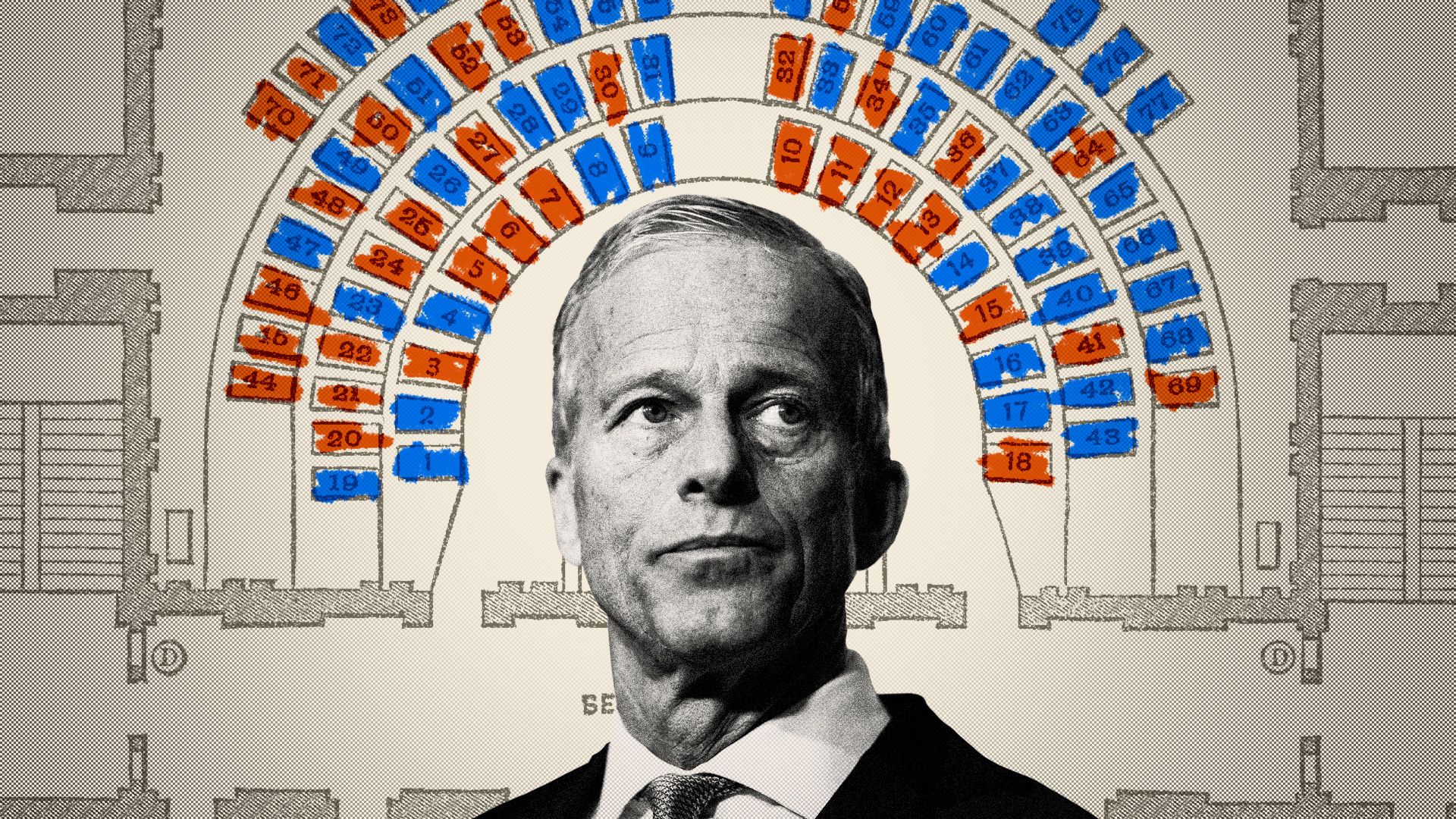
Does permitting have a pulse? Senate Majority Leader John Thune (R) sees a political window for votes on a major overhaul.
Why it matters: Easing bureaucratic hurdles for infrastructure is a big priority for backers of legacy and clean energy alike.
Driving the news: "[T]he other thing I'd like to get a vote on, in this time we have before everybody breaks to go campaign for the fall elections, is permitting reform," Thune told conservative commentator Scott Jennings yesterday when describing his wider fall agenda.
Reality check: Getting a big bipartisan deal is a heavy lift. Many Democrats don't trust the White House to ease off its restrictions on renewables.
Speaking of policy, Axios' Kate Santaliz scooped yesterday that House Republicans will bring legislation to the floor next week that aims to prevent data centers from boosting power bills.
The bottom line: The bipartisan bill is modest — basically just urging state action — and largely reflects ongoing work.
- But the planned vote shows how the data center backlash is atop the political radar.
4. 🚖 The entrepreneurs who could make or break Tesla's Cybercab plans


Tesla's traditional do-it-yourself instinct could be tested by its nationwide robotaxi ambitions.
The big picture: Manufacturing self-driving taxis is one thing. Financing, parking, charging, cleaning and maintaining enough of them to blanket the country is another.
- Tesla is signaling that it might want entrepreneurs to help shoulder the load.
Driving the news: Alongside last week's driverless Cybercab launch, Tesla began soliciting interest from people who want a piece of the action.
- Prospective partners interested in "Cybercab fleet vehicle purchasing" as well as "mobility hubs and infrastructure" are invited to fill out a form.
Zoom out: One possible model comes from Amazon, whose Delivery Service Partner program relies on more than 4,000 independent businesses to perform the expensive, labor-intensive work of delivering its packages.
- Amazon provides the customers, technology, logistics network and other support, while local entrepreneurs operate fleets of Amazon-branded vans and hire the drivers.
5. 👓 Hot Reads: COP31, Venezuela, health care

The climate problem COP31 won't address (Politico)
Amy says: This is how the elephant in the room goes unaddressed: Data centers aren't on the agenda for this year's upcoming United Nations climate summit because no country has asked for it to be, per a top UN official in this story.
- The United States is the world's leader in data center development, but it's largely absent from these negotiations.
The US-Venezuela Oil Deal Might De-Risk Oil Company NABEP But Not Venezuela (Columbia's Center on Global Energy Policy)
Ben says: There's tons of confusing info flying around, and researcher Luisa Palacios sharply cuts through it. Come for the lucidity, stay for the analysis of risks and challenges.
Europe's Summer Felt Like a Gamechanger. Will Next Year Be Any Different? (Bloomberg)
Amy says: The stats about how hot it is in hospitals are so wild and disturbing. You're supposed to get better, not worse, when you're in a health care facility, and yet warming temperatures in places that aren't equipped with AC are making the opposite reality.
6. 🚚 One tech thing: Amazon's new electric trucks

Mercedes-Benz has delivered 27 of its electric eActros 600 trucks to Amazon for use in Germany.
Why it matters: It's part of a wider contract for over 200 of them, which Amazon called its largest-ever electric truck deal. Go deeper
🙏 Thanks to Mackenzie Weinger, David Nather and Chris Speckhard for editing, and to our brilliant Axios visuals team.
📫 Did a friend send you this newsletter? Welcome, please sign up.
Sign up for Axios Future of Energy