Axios Future of Defense Thought Bubble
September 18, 2024

🚨 Breaking this morning: More reports out of the Middle East of 007-style attacks hitting walkie-talkies and solar-energy systems.
- I'm back in your inbox to unpack these clandestine moves.
- Don't miss Axios AM, featuring Mike Allen's first look at "death by device," what Washington Post foreign-affairs columnist David Ignatius called a "new and very dangerous era in cyberwarfare."
Smart Brevity™ count: 399 words ... 1½ mins.
1 big thing: Supply chain terror
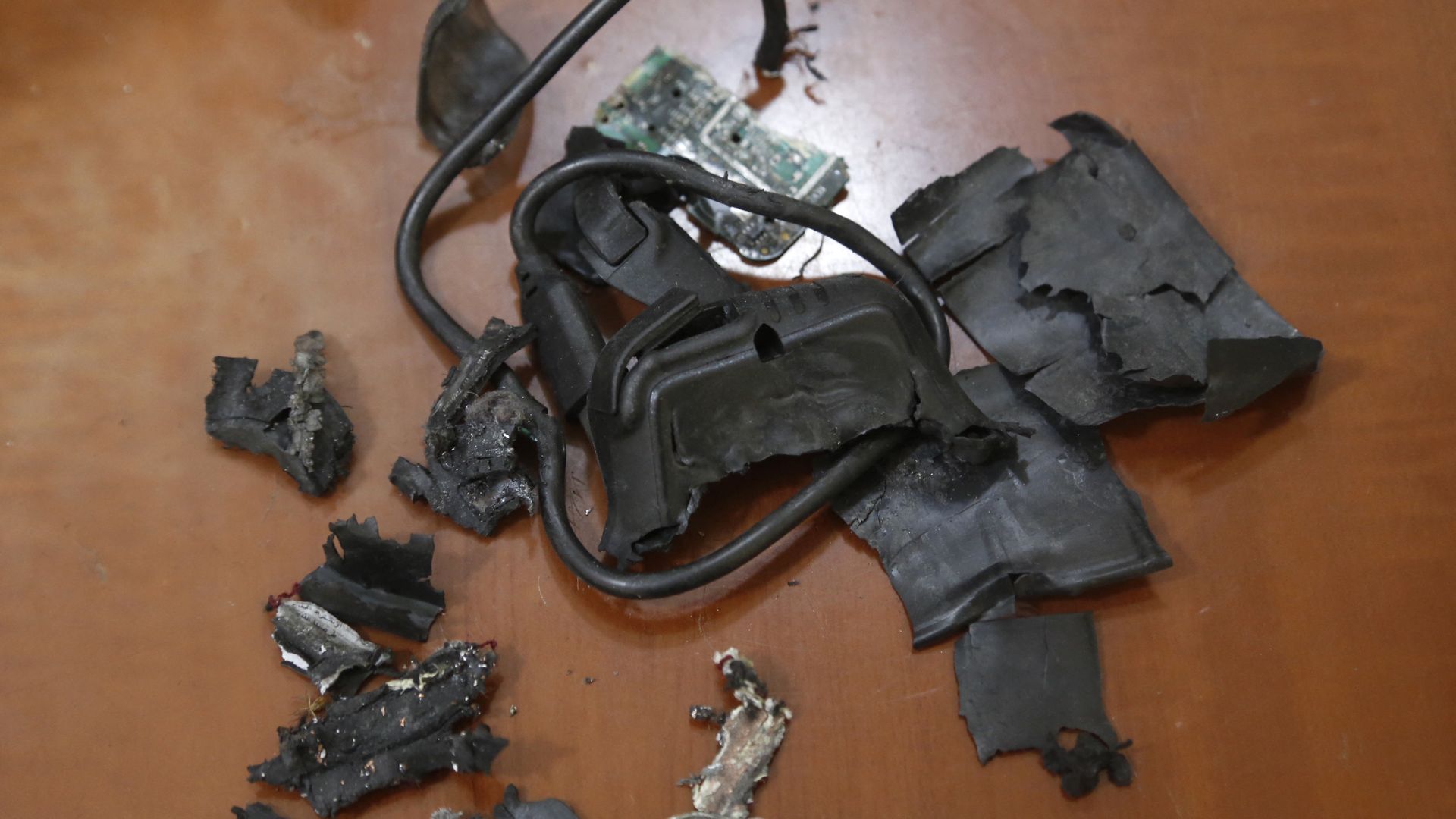
IEDs created from pagers and walkie-talkies and reports of exploding solar-energy systems herald a possibly limitless front in future war, where everyday items can't be trusted.
Why it matters: Supply chain warfare is here to stay. And the targets are soft.
- Blowing up factories and raiding supply lines is nothing new. What's unprecedented here are the spy-thriller-style backdoors and execution.
Driving the news: Fresh footage is streaming out of the Middle East, providing a closer look at attacks attributed to Israel. Yesterday, one clip showed a device blowing up in a market, incapacitating a person and spooking passersby.
- Hezbollah said the casualties — at least 8 killed and thousands more hurt — included many members of its military units and institutions.
- The detonations inside the group's strongholds will psychologically cripple its fighters as well as paralyze command and control. That suggests the boobytrapped tools were meant to preempt a broader conflict.
- It's a military truism: If you can't talk, you can't win. Hezbollah adopted low-tech tools to evade such deadly compromise.
- Separately, Lebanon's official news agency reported that solar-energy systems exploded in several areas of Beirut.
What we're hearing: Experts Axios consulted said the pager attacks are likely a mix of physical sabotage and cyber exploitation.
- One person said comparisons to Stuxnet, the first publicly known hack to cause real-world damage, were not on the money.
- Hiding explosives in electronics is one thing. Making them go boom from afar, and in sync, is another.
Zoom out: The specifics of this attack are unique to Israel's intelligence capabilities and to the financial and logistical limitations of a group like Hezbollah.
- Put simply, the Pentagon is unlikely to buy thousands of C-4-laden pagers for top brass.
- The wider concern, of course, are products sold to the public.
What's next: These attacks will be globally scrutinized. They will drive new calls for supply chain surety, as dependence on foreign parts kneecaps military prowess.
- 📩 What are you thinking? Reply to this email and let us know.