Axios Future of Defense
August 07, 2024

Hello, hello. Ready for the future?
- Defense Innovation Unit boss Doug Beck and I will discuss commercial tech and its defense applications at the NDIA conference tomorrow. We hit the stage at 2:20pm.
- Got spicy questions? Send them my way!
What's ahead? Satellites and space, Army artificial intelligence, and a conversation with the Palantir Technologies chief technology officer, Shyam Sankar.
Today's newsletter is 1,368 words, a 5-minute read.
1 big thing: The end of hiding

A ballooning number of spying technologies inside and outside Earth's atmosphere are making military maneuvers and materiel nearly impossible to hide.
Why it matters: Concealment and surprise have long been winning tenets of warfare. But these ever-watching eyes complicate the calculus of what gear to buy, how to move and where to dig in.
- Overhead imagery exposed Russia's buildup on its border with Ukraine, for example, and later aided the identification of electronic eavesdropping stations in Cuba.
Driving the news: New photos from Maxar's first pair of WorldView Legion satellites, launched in May, catalog on-the-ground details, such as the amount of people in a given area, open cargo holds on a ship and the height of buildings.
- The resolution is known as 30-centimeter, meaning each pixel is equal to a square foot in the real world. That metric is considered an industry gold standard.
- At least four more satellites are slated to come online by the end of the year. Legion is already months behind schedule, though.
My thought bubble: More systems means more invaluable monitoring of hot spots, including the Korean peninsula, greater Middle East, South China Sea and Eastern Europe.
Dan Smoot, Maxar Intelligence's chief executive, in an interview said the company is pursuing real-time insights, meaning as little lag as possible between satellite assignment, image capture, data relay and expert analysis.
- When Legion is fully up and running, the company will be able to collect more than 6 million square kilometers of imagery daily.
- The cluster will also feed Maxar's 3D models of the world. The company works on One World Terrain, an Army program that compiles realistic and precise digital maps, as well as environments for the F-35 Full Mission Simulator.
State of play: This voracity for faraway insights is not exclusively felt stateside, and myriad companies are jockeying to fulfill orders.
- The National Reconnaissance Office in 2022 awarded BlackSky, Maxar and Planet satellite imagery contracts totaling billions of dollars.
- Capella Space in July secured a nearly $15 million deal with the Air Force. Chief executive Frank Backes told me: "More than ever before, the intelligence community and DOD are looking to rapidly capitalize on the novel capabilities that new space companies" bring to market.
- Countries that lack space expertise and infrastructure, such as launch facilities and rockets, are turning to the commercial sector to fill the gap, according to Jason Mallare, a vice president at Umbra.
- "Pennies on the dollar, we can go lease a fraction of a satellite, get imagery we need, the products we need, the services we need from space, whatever," he said.
Between the lines: What has made this possible is an increasing tempo of launches paired with decreasing costs.
- "The real pivot point," Mallare said, "was launch going from $100 million a ride to $1 million a ride."
Bottom line: Space is the "ultimate high ground," HawkEye 360's vice president of marketing, Adam Bennett, said. The company, which hunts and maps electronic signals, launched six new satellites this year.
- "National governments are hungry for any space-based information that can help them anticipate problems and protect their sovereignty."
2. Can't spell TITAN without AI
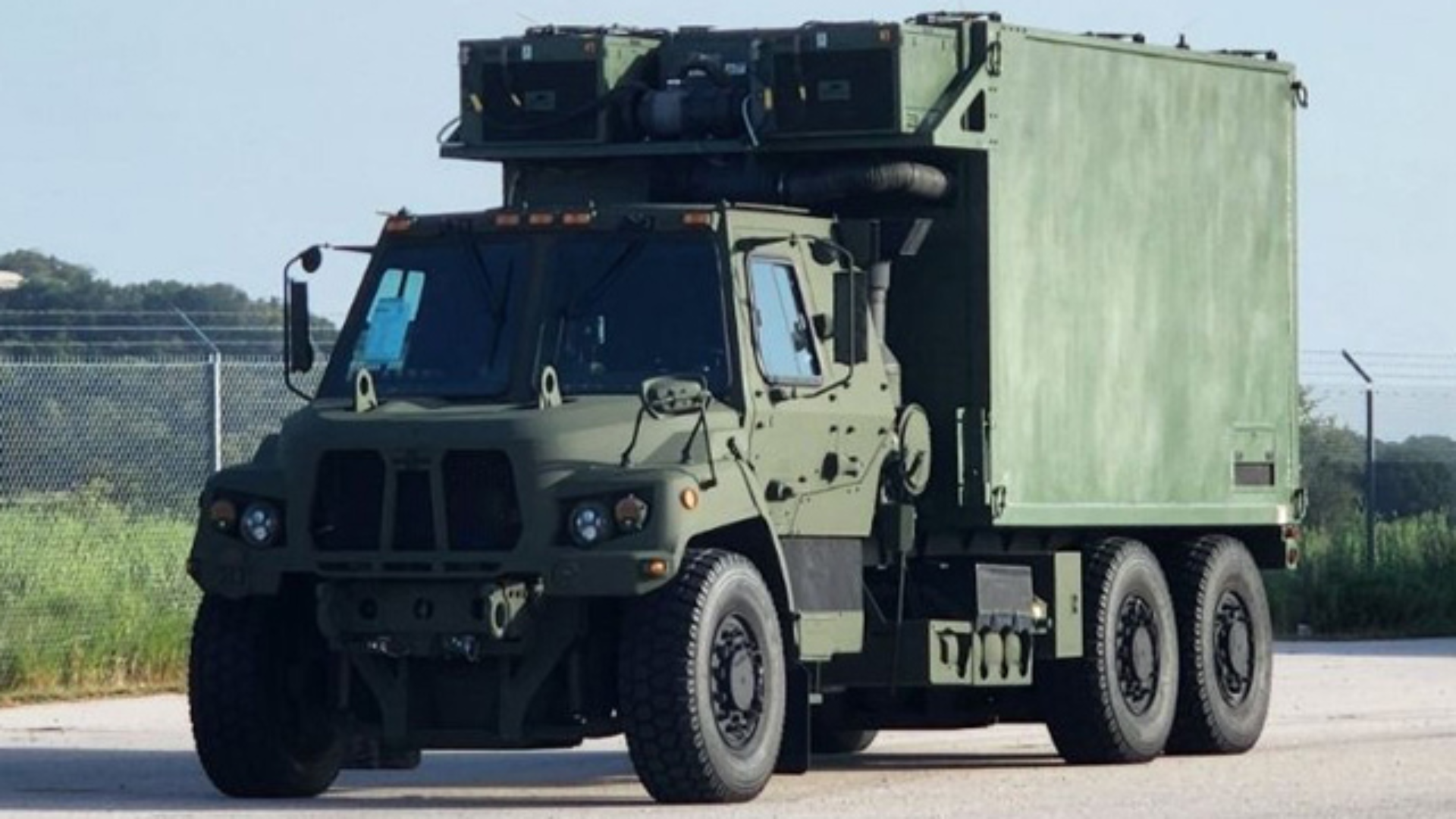
The first Tactical Intelligence Targeting Access Node was delivered to a base in Washington state, just months after Palantir Technologies won a $178 million contract to build prototypes.
Why it matters: TITAN is key to the U.S. military's connect-everything-everywhere campaign and is a dramatic move away from spreadsheets and sticky notes of the past.
- TITAN lets troops hoover up data from space, air and land and employ artificial intelligence to quickly and accurately parse it, ultimately reducing the time it takes to pull the trigger.
Context: Palantir is expected to build 10 prototypes after besting RTX in a yearslong faceoff.
- Palantir's subcontracting team includes heavyweights Northrop Grumman, Anduril Industries and L3Harris Technologies.
What they're saying: "Having a software prime win a hardware contract, I think, has not gone unnoticed, both from the existing industrial base but also the defense-tech players, as a signal of how serious the department is about doing these things differently," Shyam Sankar, Palantir's chief technology officer, told me.
What's next: Soldiers will put TITAN prototypes through rigorous testing. Feedback will shape how the project proceeds.
For more about Sankar, keep scrolling ...
3. Quick hits

🇺🇦 F-16s are now in Ukraine. But they will not be a "golden bullet" and grant miraculous air superiority, the U.S. Air Force's top general in Europe, James Hecker, said at a Mitchell Institute for Aerospace Studies event.
- Why it matters: Hecker's comments are a check against popular opinion that the aircraft will be a cure-all and dramatically sway the Russia-Ukraine war.
- 💭 My thought bubble: This will be another solid data point in the study of how Western arms and training stack up against Russia's war machine. The prior point? Sidelined Abrams tanks.
📡 RTX won a $2 billion contract for initial production of the Lower Tier Air and Missile Defense Sensor, which promises to spot missiles, aircraft and other threats in 360 degrees.
- Why it matters: The LTAMDS is slated to replace the aging Patriot radar and can push information across the military's web of networks.
- 💭 My thought bubble: Ongoing fights in Ukraine and the Middle East underline the need to spot multiple overhead attacks that employ multiple kinds of ordnance.
4. Axios interview: Shyam Sankar

This week's conversation is with Shyam Sankar, the chief technology officer at Palantir Technologies.
- We recently sat down at the company's offices in Georgetown. A Chewbacca statue greeted me in the lobby; the Olympics were blasting on a massive screen farther in; and a TITAN model was lurking behind Sankar during the interview.
Why he matters: Palantir's digital tendrils touch everything from vaccine logistics to demining efforts in Ukraine. The Denver-based company has been billed as a "software prime."
Q: When you hear future of defense, what comes to mind?
A: It's a return to the American industrial base, not the defense industrial base. Production does matter. You're not going to win the war with bits alone. But we can use the bits to bend atoms in new ways.
Q: When will wars be waged solely by robots?
A: I'm on the "never" side of that. War is politics by other means, as Clausewitz said. And you know, politics today don't have a lot to do with robots. I think there are going to be people involved.
- And if you really think about national security, it's not an end unto itself. It exists to underwrite economic prosperity, which is for people.
Q: What's the biggest challenge defense industry faces at the moment? What can be done to alleviate it?
A: The biggest challenge is speed, actually. Speed is a quality all its own. I think the Department of Defense would be better off spending half as much money twice as quickly, and we seem to have lost our ability to value time.
Q: What region of the world should we be watching? Why?
A: America would be my answer to that, actually. We probably don't spend enough time thinking about the assets we do have and how we leverage it. Deterrence is a whole-of-society effort.
Q: What's your secret to a successful overnight flight?
A: Don't do it. If you have to do it? Then lots of Celsius energy drinks.
Q: What's a piece of gear or tech you can't go without?
A: It's a toss-up between the AirPods and my Whoop — this fitness band here. Mostly it reminds me how poorly I slept and how much more I need to work out.
Q: What are you currently reading, or what's a book you'd recommend?
A: I'm in the midst of "This Kind of War," a classic about the Korean War. The book I read right before that, which I would highly recommend, is Annie Jacobsen's "Nuclear War."
5. Check this out
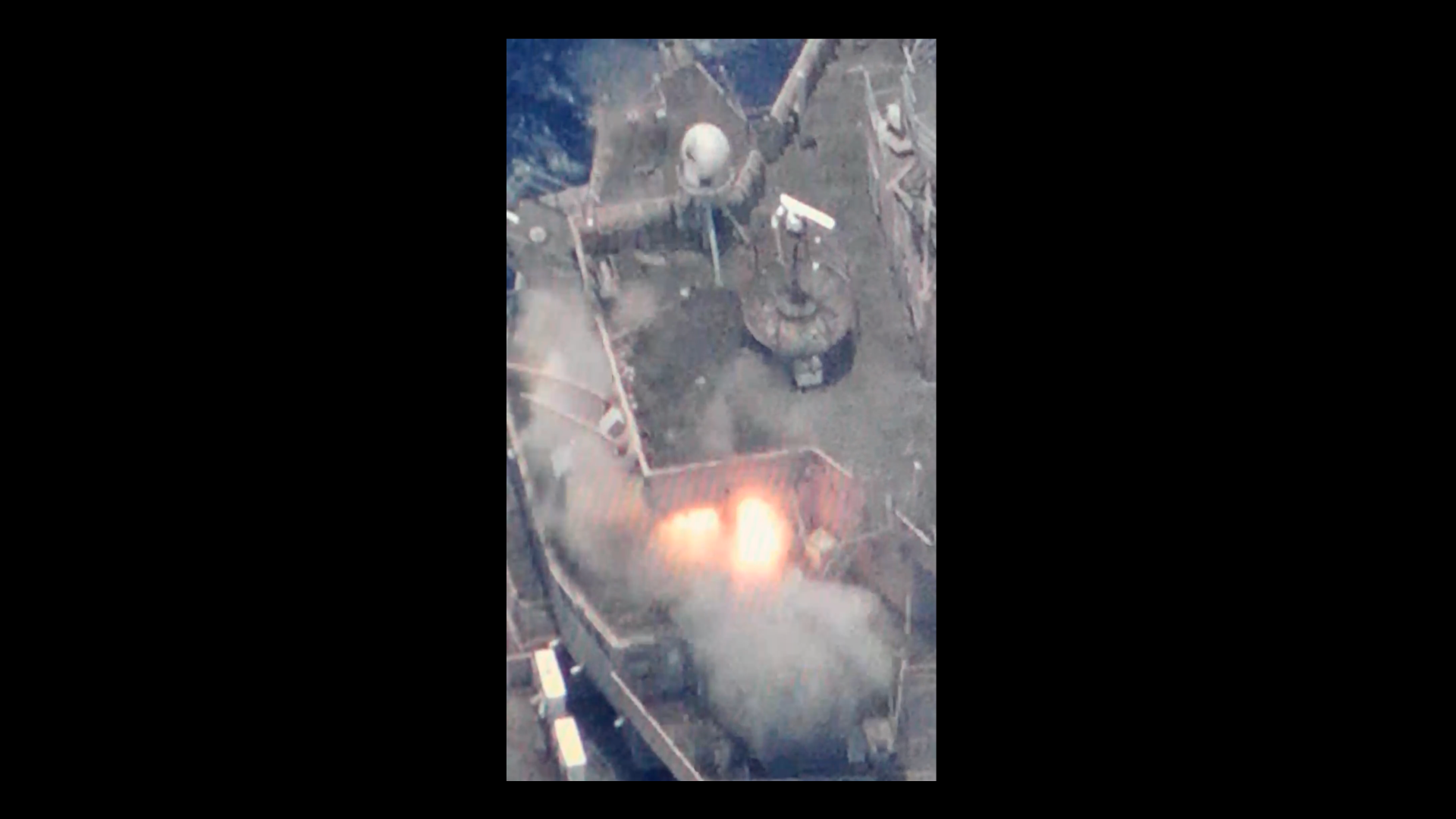
Explosive Air Force footage shows an AC-130J gunship pummeling the decommissioned USS Dubuque during the Rim of the Pacific drills.
- Watch the full clip here. The clatter of the guns can be heard, as well as some background chatter.
Why it matters: RIMPAC assembles tens of thousands of personnel and dozens of surface ships, submarines and aircraft — and offers some unique training opportunities, as seen here.
Shoutout to Nicholas Johnston for editing and Matt Piper for copy editing.
Did I miss something? What did you like or dislike? Shoot me a message by replying to this email.
Sign up for Axios Future of Defense