Axios Future of Defense
March 25, 2026

Hello, hello. Busy week. Let's not linger.
- Got plans today? See you at AI+DC?
- I'll be interviewing Craig Martell, the Lockheed Martin chief technology officer and former Pentagon chief digital and AI officer.
❌ Situational awareness: The Pentagon is shuttering reporter workspaces inside the building and replacing them with an annex elsewhere, after a federal judge ruled against parts of its prior press policy.
Check in: U.S.-China AI, diamonds dancing and AeroVironment's new laser.
Today's newsletter is 1,807 words, a 7-minute read.
1 big thing: Exclusive ... War machines
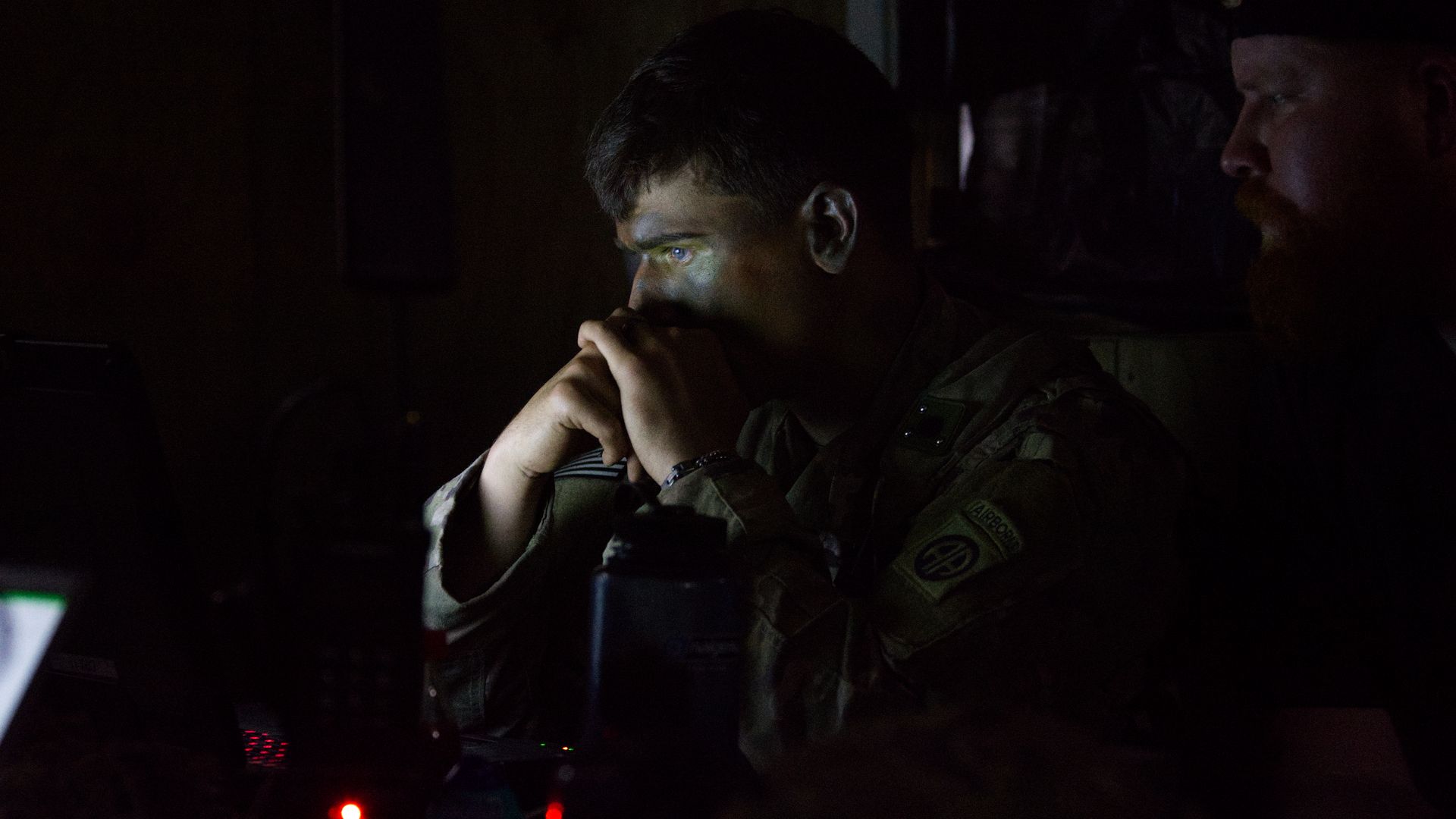
FORT POLK, La. — The windows of the Multi-Functional Reconnaissance Company command post were plastered with black trash bags. The table at the center was littered with hot sauce, maps, cables and Nalgene bottles. Around it gathered a few men, faces painted, staring at small screens.
- The plan for the night was simple: Use drones to spot, harass and kill the enemy. Taking out the mine-clearing line charges from afar would be critical to the defense of Dara Lam, a make-believe city in this sandy section of Louisiana.
- "It kind of feels like cheating," one of the men said of the drones.
- "Switchblades are artillery on easy mode," said another.
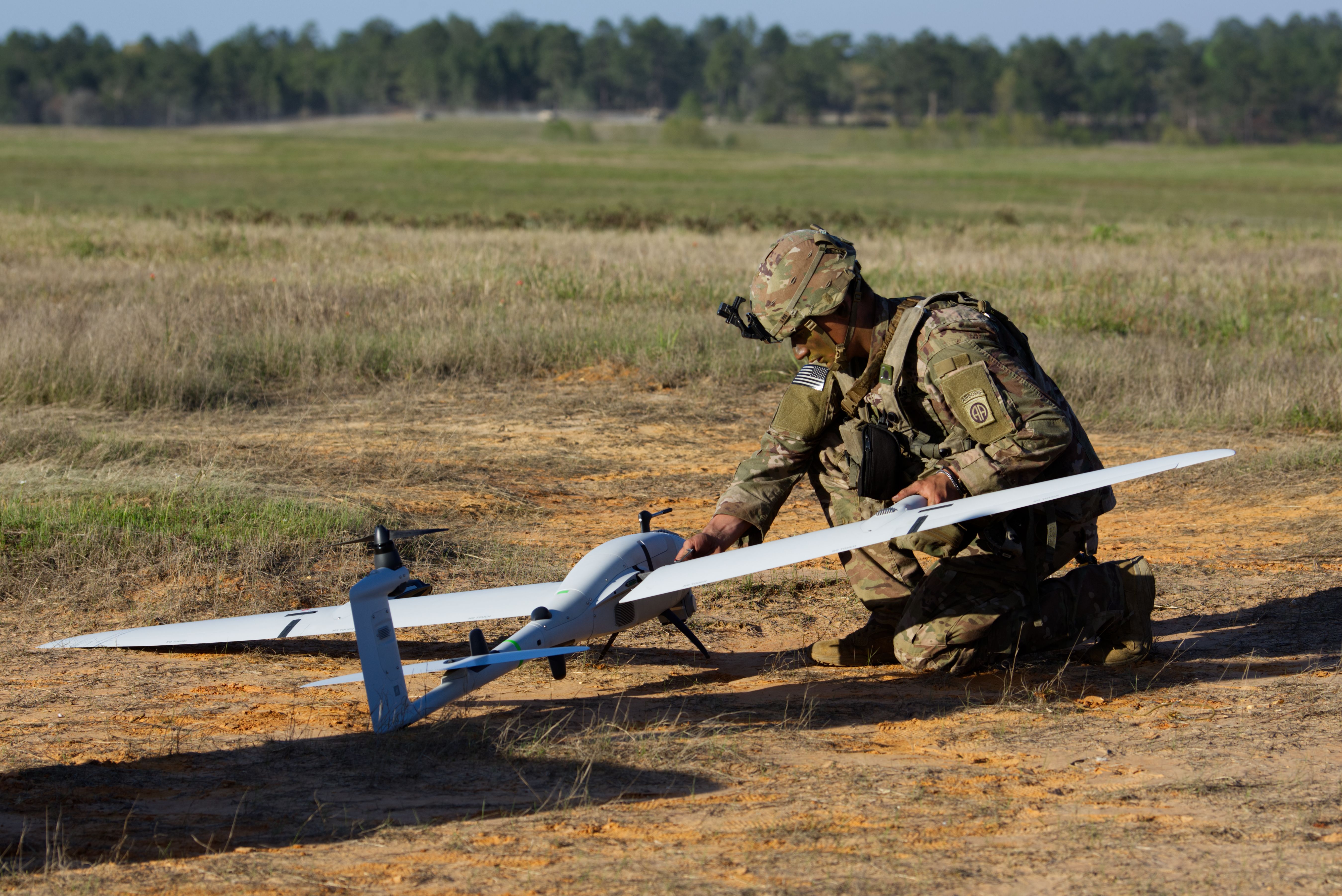
The big picture: Portions of the 82nd Airborne Division have spent the past few days at the Joint Readiness Training Center (JRTC), honing how they infiltrate, surveil, fight and resupply.
- Increasingly, it's done with smart machinery.
- "The long-range reconnaissance unmanned aerial system? Very capable," said Col. Daniel Leard, the 3rd Brigade Combat Team commander.
- "The second piece that I think shows a lot of promise is our autonomous land vehicles," he said. "They're legitimately getting where they need to go."
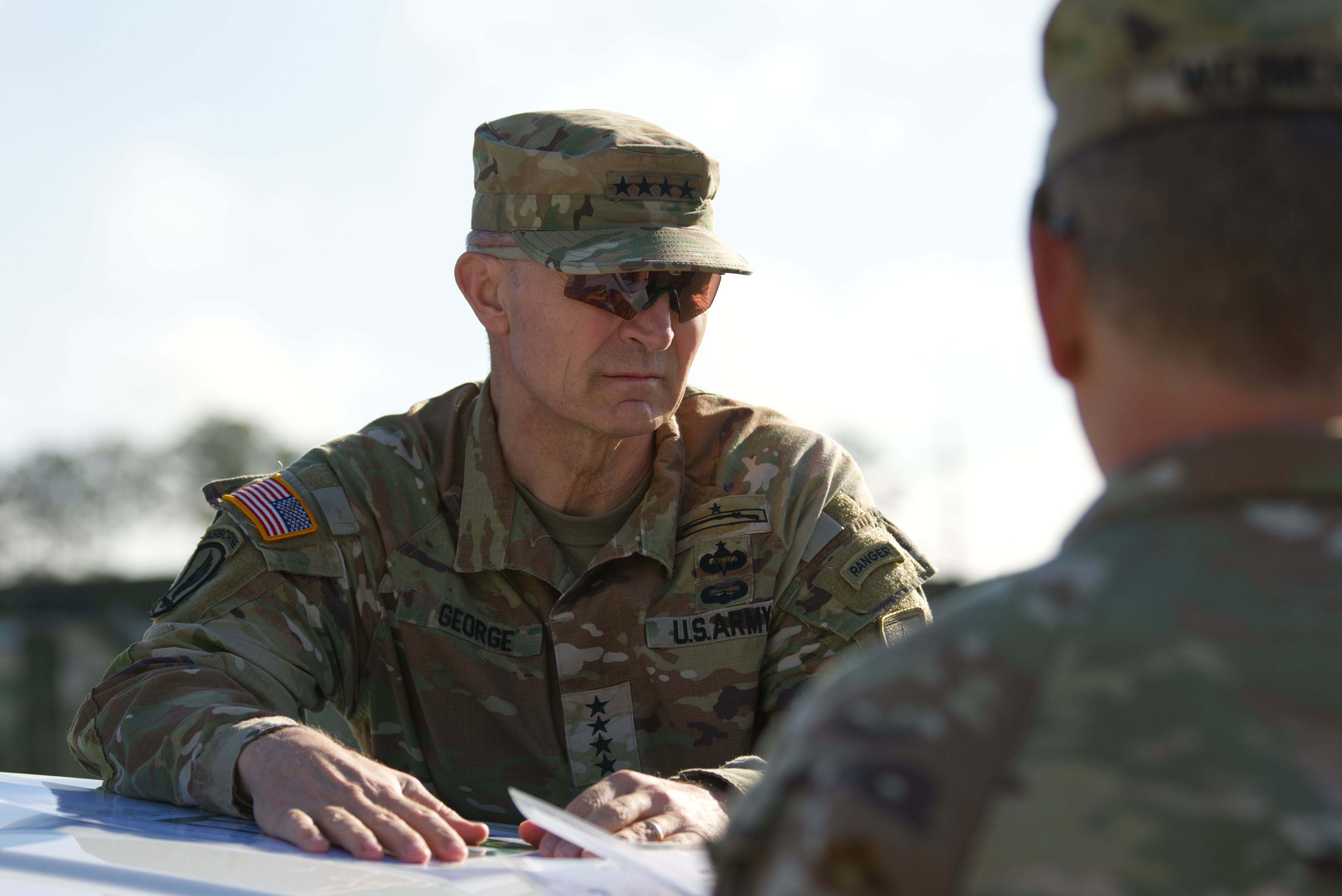
Driving the news: I spent March 19-20 in Louisiana, alongside Army Chief of Staff Gen. Randy George, observing what the 82nd Airborne is up to — and how unmanned tech is reshaping war.
- "These combat training centers ... are worth every penny that the taxpayer spends on them," Leard said. "It takes a special person to be a paratrooper. And I've got 3,000 of them, and they're eating it up right now."
- Shortly after my trip, different elements of the 82nd Airborne were slated to deploy to the Middle East amid the Iran war.
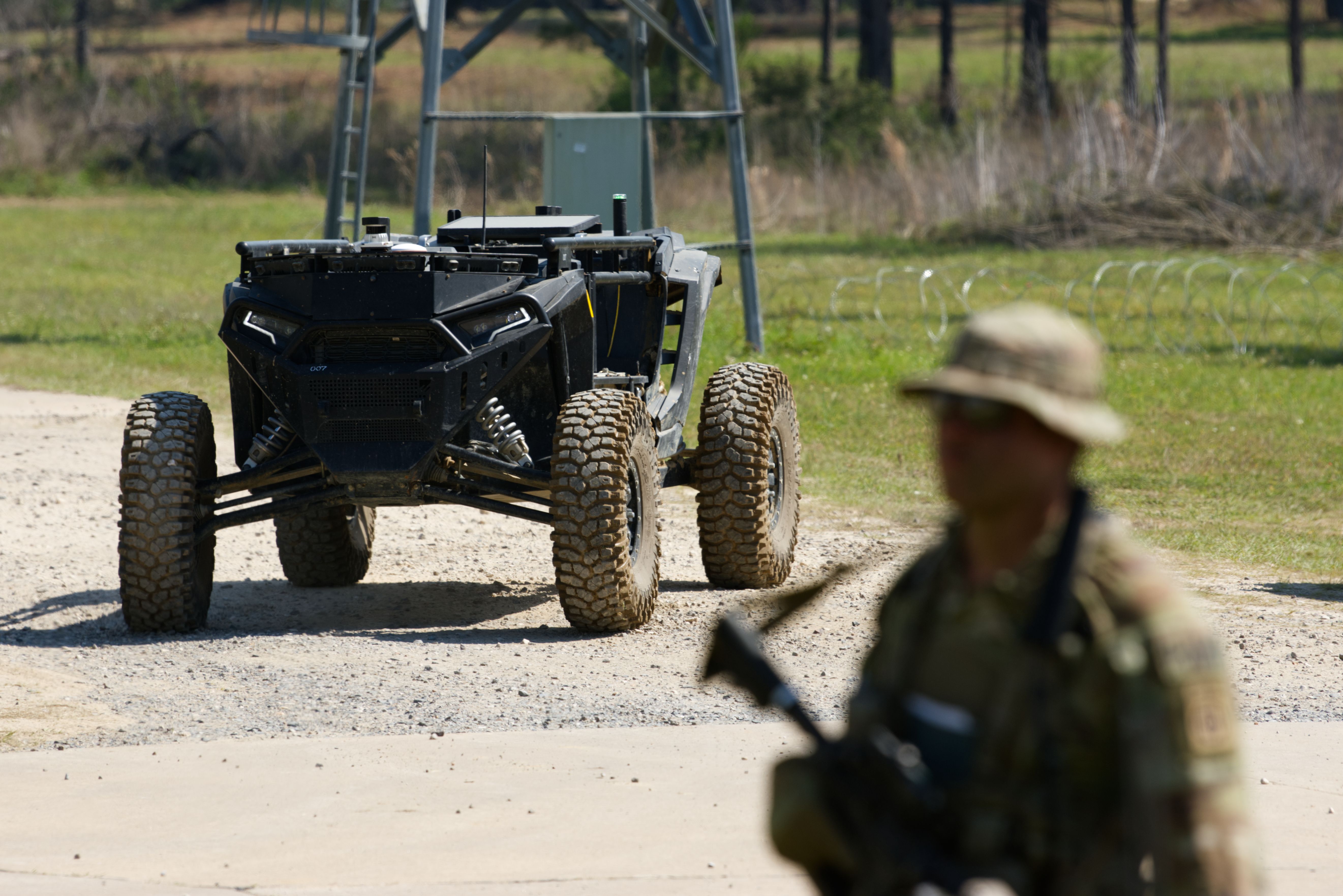
Zoom in: On the same day this Multi-Functional Reconnaissance Company (MFRC) was executing drone one-two punches, robo-resuppliers made by Overland AI whipped around the city and its unpaved roads.
- These Ultras, as they're known, can haul 1,000 pounds and cruise for 100 miles. One variant launches a tethered drone. Another's outfitted with a counter-drone system.
- "When we jumped in on the first night, one of our responsibilities was to consolidate cargo bundles that we drop on the drop zone. And typically we had to do that by hand, driving a Humvee in the middle of the night," Lt. Col. Peter Van Howe told me.
- But these automatons "cut our resupply on the drop zone by half," he said. "That really had a big impact on our ability to keep moving." Several other people said they had yet to see one tip over.
Zoom out: The U.S. military has for years talked about man and machine working together seamlessly. Take, for example, the Army's human-machine integrated formations, the Navy's hybrid fleet and the Air Force's collaborative combat aircraft.
Friction point: It's easier said than done.
- Battlefield connectivity is spotty at best. Messy electronic signatures are death sentences. Autonomy is still maturing. Trust must be built.
- And the price-point debate — expendable, attritable, exquisite — rages on. (One person told me what they really need is "the Honda Civic" of drones. Widely available. Effective. Reliable.)
What they're saying: "I think we're doing really well in the Group 1-2 UAS," George, the Army's top uniformed official, told me, referring to relatively small and mobile drones.
- Plus: "I've seen a lot of advancements in the last year in ground autonomy. You don't get that in simulation."
State of play: The Army is trying and buying unmanned tech for a range of tasks, including route reconnaissance, contested logistics, breaching and missile launching.
- "What we have found is our units are much more lethal. We have collected the data. We had a rotation that was 300% more lethal using the machines," George said.
What's next: MFRCs, a relatively recent addition to the Army, will continue to evolve. Their doctrines are being drafted today by those in the field tinkering. The Army last year conceded "every MFRC is different."
- "We're trying to take out the middleman, as much as we can, to expedite the sensor-to-shooter process," one 82nd Airborne officer told me.
- "We're just figuring out what works."
Go deeper: Army and Treasury team up to pull in defense-tech investments
2. Exclusive: Airbase emerges

Airbase exited stealth today backed by Founders You Should Know, Squadra Ventures and Andreessen Horowitz.
Why it matters: The New York startup is seeking to modernize the wonky — but incredibly important — world of wireless infrastructure and radio-frequency spectrum.
- That has commercial, financial and military consequences, including for electronic warfare and tactical communications.
Driving the news: Airbase already has a federal contract, involving automation of spectrum coordination, and is negotiating its first Defense Department deal, according to CEO Ari Rosner.
- "We are dual-use by design, building for both commercial and government spectrum in parallel because the underlying physics and coordination challenges are similar," he said.
- "To actually modernize this infrastructure, we had to develop entirely novel AI pipelines to ingest, connect and translate decades of fragmented, unstructured records into a unified, real-time data layer," he added.
- "That was the missing link, and the technology to do it reliably simply didn't exist until very recently."
Follow the money: Airbase has thus far raised $5 million.
Zoom in: The startup employs seven, including co-founder and CTO Millen Anand. The money will be used, in part, to grow the team.
Zoom out: Militaries around the world rely on the electromagnetic spectrum to communicate, identify friends and foes, and guide weapons toward their targets.
The bottom line: "We can't continue innovating at speed across aerospace, telecommunications and defense without modernizing our spectrum infrastructure," Erin Price-Wright, an Andreessen general partner, told me.
Go deeper: American Dynamism and its defense tech descend on D.C.
3. Exclusive: AI rules of the road
It is "absolutely" possible that the U.S. and China reach an agreement on rules governing the future use of artificial intelligence, former Deputy Defense Secretary Kathleen Hicks told me.
Why it matters: The technology is rapidly reshaping how people communicate, how companies do business and how militaries operate.
Driving the news: Hicks spoke Monday at an Axios defense event kicking off the AI+DC Summit in Washington.
What they're saying: "What we did in our administration was pursued, obviously, bilateral talks with them," Hicks said. "Because AI is at this place where there's real competition, there's opportunity in that, to set some rules. I think they may be more inclined to do so."
- "There are UN and other venues where there are ongoing conversations the U.S. has been very active in that the Chinese could come forward to."
Friction point: Agreement between Washington and Beijing is rare.
- The latter has resisted arms control talks in the past.
Zoom out: More than 50 states endorsed the Political Declaration on Responsible Military Use of AI and Autonomy, rolled out in 2023 at The Hague.
Go deeper: Senator pitches Chinese AI questions in Hegseth letter
4. Diamonds are forever
Northrop Grumman is growing and testing diamonds, capable of withstanding power and heat spikes, for use in microelectronics.
Why it matters: Outside the lab, this could improve the performance of larger, multimillion-dollar systems, like satellites and radars.
Driving the news: Northrop yesterday announced the successful test of a "diamond-based receiver-protection component."
- It handled more than 100 watts of power — "more than double the current wattage today's devices can withstand," the company said.
- Many more tests of the material are expected.
Context: Diamond development kicked off in 2019 as a research-and-development effort.
- "Diamond's vast potential as a material is undeniable, and we're moving ever closer to taking it from design and development to full scale deployment," Ugonna Ohiri, a staff systems engineer at Northrop's Microelectronics Center, said in a statement.
- The gemstones, he added, "can function in outer space and survive traveling at warp speed."
The bottom line: Diamonds are more than a girl's best friend.
Go deeper: Northrop eyes Norway as it works on Tritons for Australia
5. Quick hits
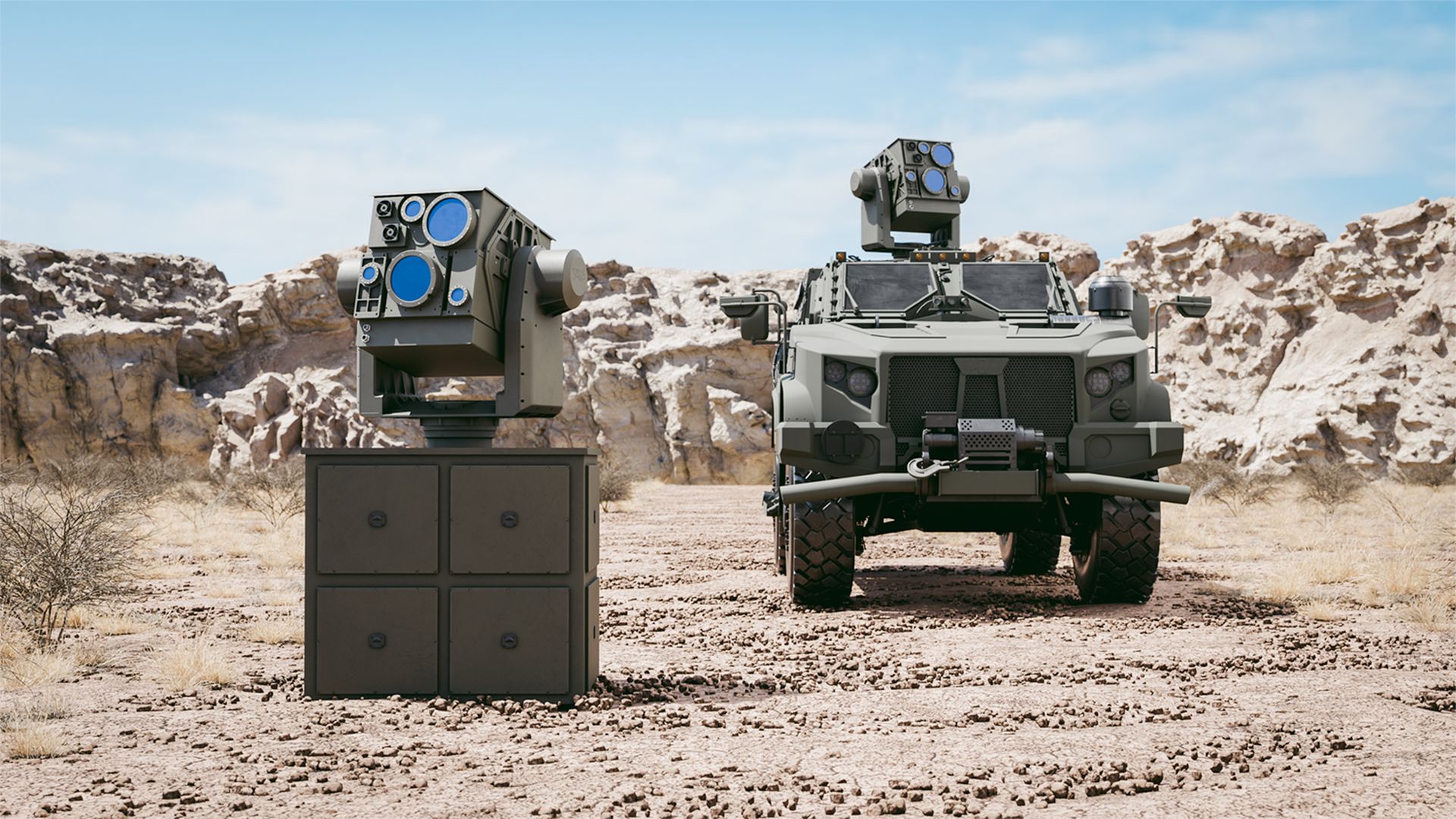
🔋 AeroVironment revealed LOCUST X3, the company's latest high-energy laser weapon. It can be mounted on Joint Light Tactical and Infantry Squad vehicles, among others.
- Why it matters: "LOCUST X3 transforms how defenders respond to the challenge of massed drone attacks," AV's Mary Clum said in a statement.
- 💭 My thought bubble: Yes, that LOCUST.
⚡ Japan's EC-2 electronic warfare aircraft, derived from the C-2 transporter, flew for the first time. Few payload details have been shared.
- Why it matters: Its looks are stealing the spotlight from the more important EW conversation. Is it a platypus lookalike? A Psyduck aspirant?
- 💭 My thought bubble: Stop hating. It's cool looking.
🗺️ Advanced Navigation raised $110 million. The Series C was led by Airtree Ventures. Other backers include In-Q-Tel and Main Sequence.
- Why it matters: "As autonomous vehicles scale into contested and high-stakes frontiers, the world's reliance on any single navigation technology has evolved from a technical limitation into a systemic vulnerability," CEO Chris Shaw said in a statement.
- 💭 My thought bubble: Positioning, navigation and timing tech is the unsung hero of modern warfare.
🇺🇸 Rebuilding deterrence "is going to be painful" and demands economic and cultural changes, Shyam Sankar, the Palantir Technologies CTO, told reporters. "We survived for 250 years. How will we continue to thrive for the next 250 years?"
- Why it matters: Sankar's take coincides with the publication of his book, "Mobilize," which explores American industrial health and national-security iconoclasts.
- 💭 My thought bubble: Another standout statement? "GM produces a new Escalade every 90 seconds," Sankar said. "I'd like a new JASSM every 90 seconds, too. A new Tomahawk every 90 seconds."
6. Check this out
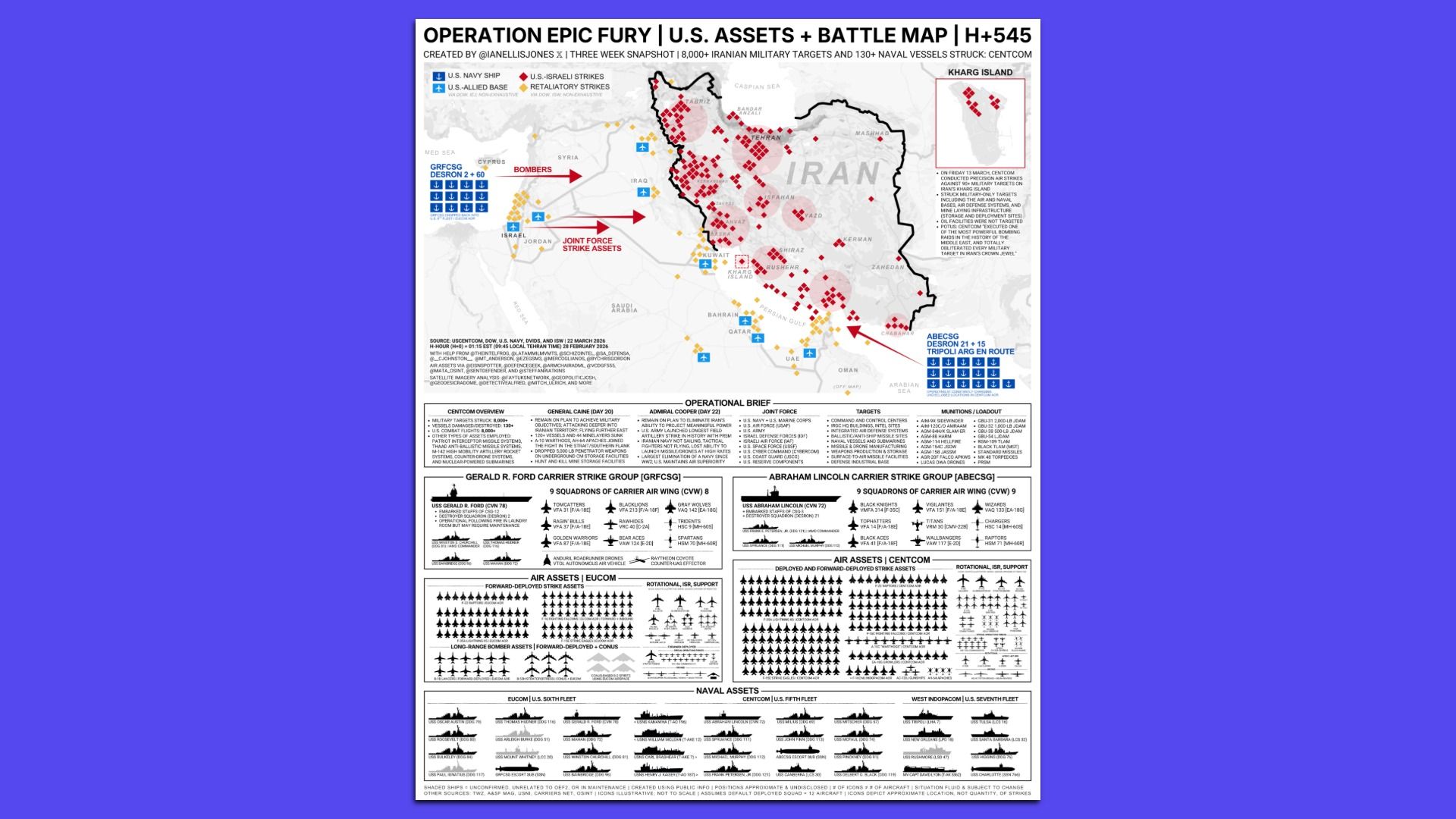
Here's what three weeks of Operation Epic Fury look like, courtesy of Ian Ellis and his contributors.
Why it matters: The U.S. is — again — committing tons of resources to the Middle East. Some aren't returning. And the Iran war shows little sign of abating.
- "I think the military objectives are being accomplished. Now, of course, it's unclear what the political objectives are," former Defense Secretary Mark Esper told me Monday.
- "The president has moved around and said different things at different times."
Inside the room: A U.S. source told my colleague Barak Ravid that Turkey, Egypt and Pakistan are passing messages between Washington and Tehran.
My thought bubble: Give Ellis a follow.
- He's been all over it: Midnight Hammer, Southern Spear, Absolute Resolve, et cetera.
Go deeper: U.S. dismissed Ukraine deal for anti-Iran drone tech last year
Shoutout to Dave Lawler for editing and Matt Piper for copy editing.
👋🏼 Thanks, as always, for reading and sharing. Tell your friends to subscribe here.
Sign up for Axios Future of Defense