Axios Future of Defense
May 27, 2026

Hey, y'all. I'm back in D.C. — but only briefly.
- I'm soon headed to New York City for the next AI+ event. Let's grab drinks?
💼 Situational awareness: Mike Needham, a longtime aide to Secretary of State Marco Rubio, was promoted to a top national security post at the White House, my colleague Marc Caputo scooped.
Scroll, baby, scroll: The latest at Rivet Industries, South Korean submarines and IonStrike trials.
Today's newsletter is 1,611 words, a 6-minute read.
1 big thing: Wondering about weapons

TAIPEI — A $14 billion weapons package for Taiwan already approved by U.S. lawmakers is stuck in Trump 2.0 purgatory. Officials here are sweating the circumstances.
Why it matters: The Indo-Pacific is a tinderbox. Taiwan's government argues arms deliveries help maintain regional peace.
Driving the news: President Trump's vacillation and acting Navy Secretary Hung Cao's insistence that the Iran war has forced a reevaluation of available munitions are sparking concern in Washington and throughout the global defense community.
- Meanwhile, thousands of people marched through Taipei last week advocating for greater investment in the domestic defense industry.
- That came after the opposition Kuomintang (KMT) managed to water down a budget proposal for additional weapons spending — a sign of how contentious this issue can be, even locally.
What they're saying: "The Chinese military ambition goes way beyond Taiwan," Chen Ming-chi, a deputy foreign affairs minister, told me over lunch at the island's ministry. "If you ask our Japanese friends, if you ask our friends in the Philippines, they also feel the China threat."
- After Trump and his Chinese counterpart, Xi Jinping, met in Beijing this month, there was an outpouring of "statements reminding the administration of the importance of arms sales."
- "We have our priorities, and they have their delivery priorities," Chen added. "I think we can align this effort."
Zoom in: Washington has long armed Taipei over outside objections.
- Trump in December blessed an $11 billion arrangement.
- Previous deals have included F-16 fighter jets, AH-64D attack helicopters, Patriot air defenses and variants of the Altius drone.
Yes, but: There's a backlog. As of April, it stood shy of $30 billion, following the latest delivery of M1A2T Abrams tanks. Prior batches arrived in late 2024 and mid-2025, according to the Taiwan Security Monitor.
- "We are in close consultation with our American counterparts regarding prioritization. It's considering the U.S. need and its capacity," Chen said.
- "We all need to invest in the defense-industrial base," he added. "We have been enjoying the peace dividends for too long, and we forgot to invest."
What we're watching: Cheng Li-wun, the KMT chairwoman, is expected to visit Boston, New York and Washington next month, Focus Taiwan reported. She rendezvoused with Xi in April.
The bottom line: "If war occurs here, everything will be too late. The best is to not let war occur," François Chihchung Wu, another foreign affairs official, told me over the same lunch.
- "Your question concerns if this most-advanced American weapon is crucial or absolutely necessary for our defense. Yes. But it's not the only element," he said.
- "We are not as weak as the world imagines."
More from Axios:
Taiwan soldiers on through Xi's threats and Trump's ambivalence
Tech race with China is top intel priority, deputy CIA director says
"The house is on fire": U.S. officials confront Russia, China threat to West
Editor's note: This trip, attended by more than a dozen members of the media, was organized and partially funded by the Taiwanese government.
2. Exclusive: Rivet, Gen. Mingus and SBMC
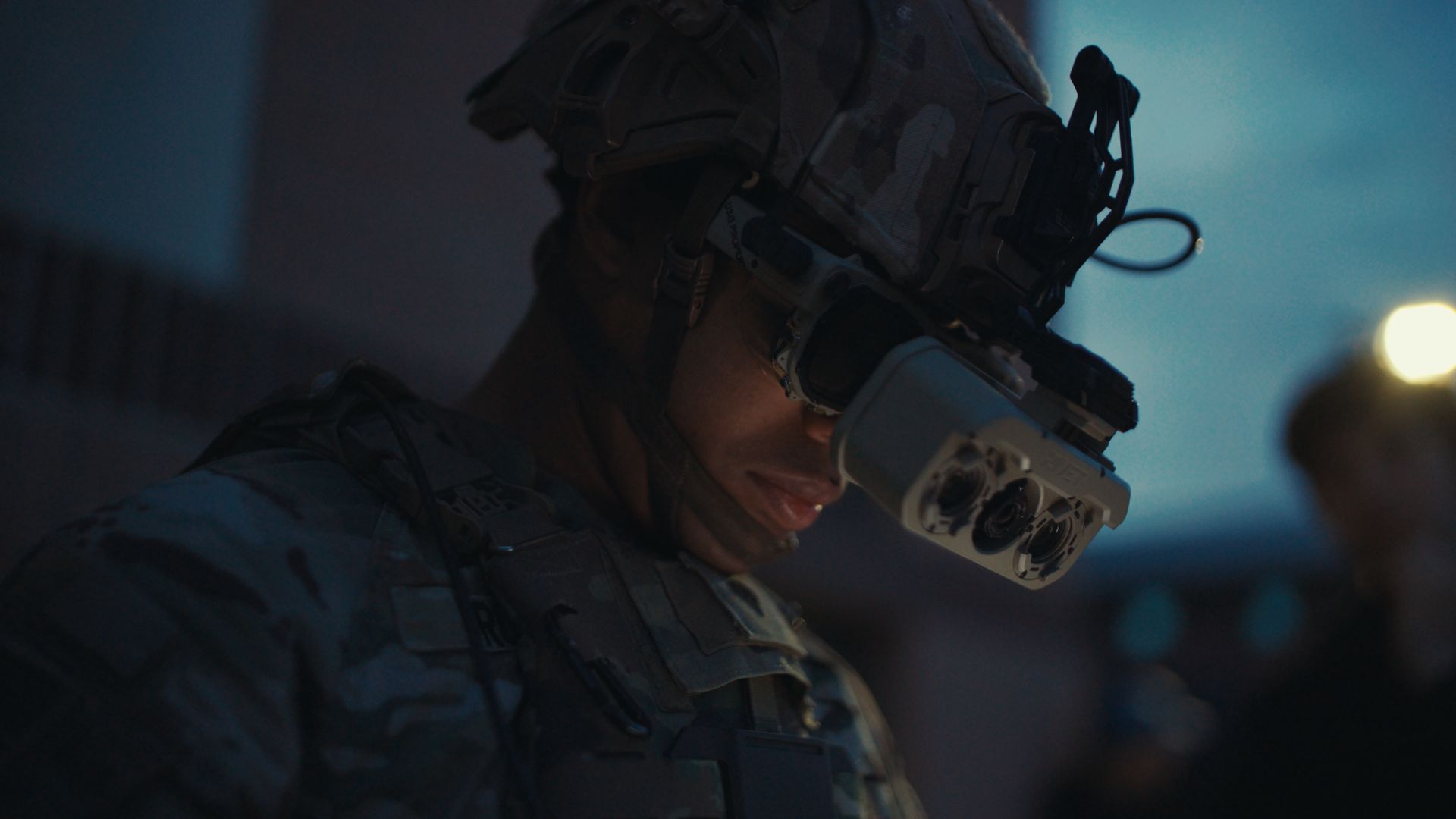
Rivet Industries has delivered 70 Soldier Borne Mission Command systems to the U.S. Army and expects to deliver hundreds more in less than a year.
- The startup has also brought on retired Gen. James Mingus, a former Army vice chief of staff, as an adviser.
Why it matters: The SBMC competition, also involving Anduril Industries, is being closely watched. Its predecessor, the Integrated Visual Augmentation System, was a multibillion-dollar punching bag.
The latest: Soldiers with the 4th Infantry Division have tested Rivet's offering extensively, according to CEO David Marra.
- Feedback was overall positive. Some sought better performance from its low-light sensor. Others wanted cleaner cable management and user interface tweaks.
- "They used the shit out of it, constantly," Marra told me.
- "From the clean sheet of paper, it was: How am I going to don the system? How am I going to doff the system? How am I going to carry it? Where do I want my gear? Et cetera."
Follow the money: The Army last year awarded Rivet a $195 million SBMC contract. It has separately raised millions of dollars.
State of play: Rivet is about 60 people, spread across East and West coasts. The startup works closely with Palantir Technologies. (Both have offices in Georgetown.)
The bottom line: "We don't build anything else but this sort of AI-driven face computer," Marra said.
- "I've been doing nothing but this work in this category of tech for the last 18 years. Nothing."
3. Shahed fever
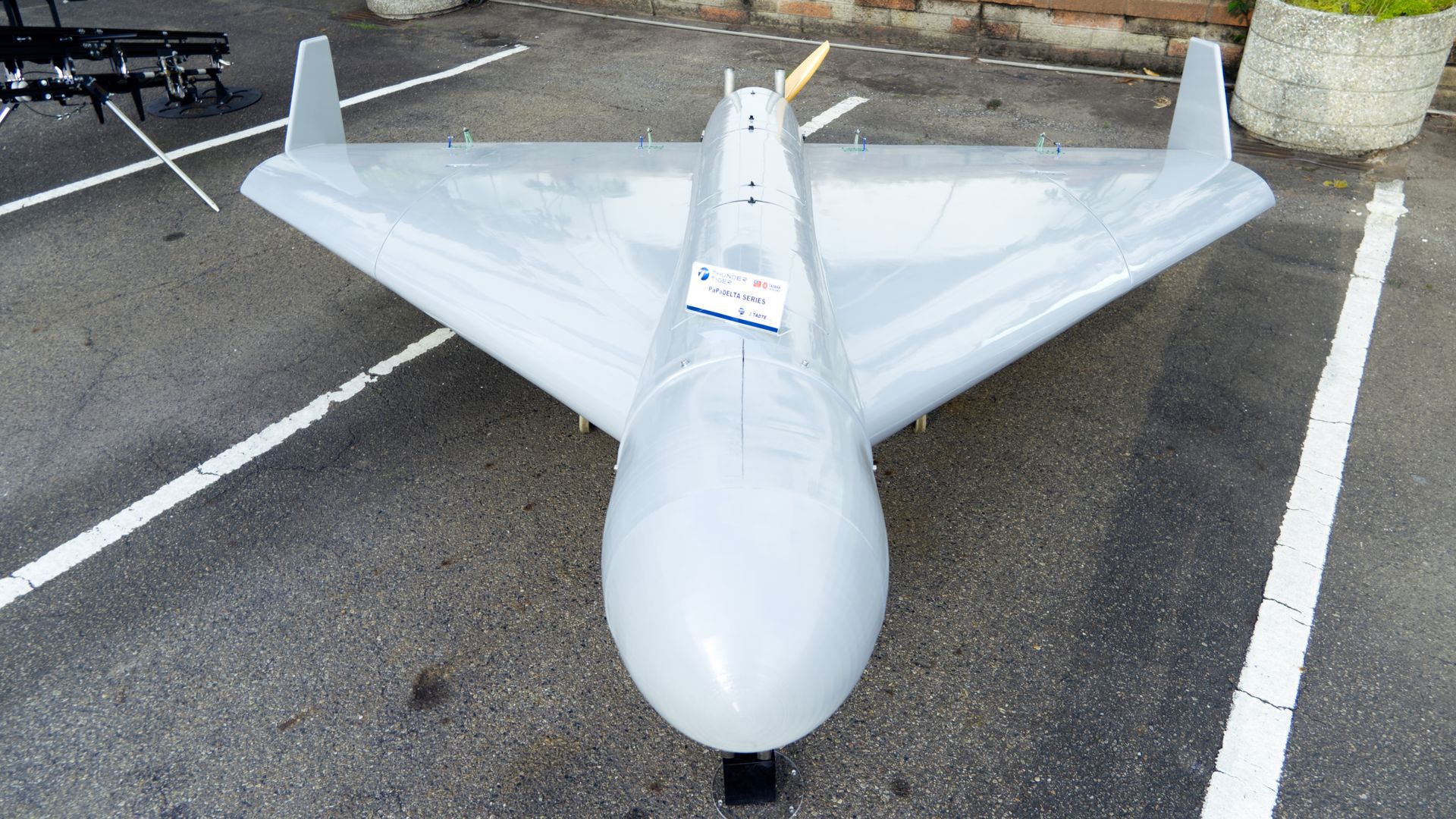
TAICHUNG, TAIWAN — Thunder Tiger Corp. is developing an attack drone dubbed Papa Delta that looks and feels like Iran's ever-popular Shahed.
Why it matters: In the quest for cheap-but-deadly weapons, a growing number of countries are adopting this delta-wing design that's been proven in combat across the Middle East and Eastern Europe.
What they're saying: "We know that Taiwan needs something like long-distance attack drones that can attack cities in China from Taiwan. It has to travel a long distance," Allan Chi, a Thunder Tiger representative, said.
- "A lot of people have noticed drones are used for asymmetrical warfare," he added. "We learn a lot of lessons from Ukraine."
I got the chance to inspect Papa Delta last week at the Thunder Tiger headquarters, alongside several other reporters.
- It was displayed near the company's other drones, including 7- and 10-inch Overkill FPVs.
Zoom in: Each Papa Delta costs tens of thousands of dollars; company presentations describe it as aluminum-stamped. Mass production, Chi said, is on the horizon.
- "It can hit personnel or armor or buildings — that's multipurpose," he said. "Our customers are mainly in defense of Taiwan."
Zoom out: Thunder Tiger has worked with Auterion and Shield AI. Both autonomy specialists have a significant presence in the U.S.
- "Software is not our forte," Chi said. "We are more focused on hardware."
4. Subs for South Korea

South Korea plans to build and launch its first nuclear-powered submarine by the mid-2030s, a move in part meant to counter the growing arsenal of its neighbor, North Korea.
Why it matters: This massive undertaking will test the country's shipbuilding sector — often lauded in the U.S. — as well as international nonproliferation obligations.
- If successful, it could reshape the security status quo in Asia. Only a handful of countries today operate nuclear-powered subs.
Driving the news: South Korea's defense ministry on Tuesday rolled out the "Basic Plan for the Development of Nuclear-Powered Submarines."
- The blueprint lays out decades of commitment as well as the creation of more than 40,000 jobs.
Zoom in: Seoul is expected to use low-enriched uranium fuel.
Flashback: The U.S. in November announced it had "given approval for the ROK to build nuclear-powered attack submarines."
- That followed a meeting of American and South Korean presidents.
Go deeper: Navy retires Boise nuclear sub after decade on sidelines
5. Quick hits
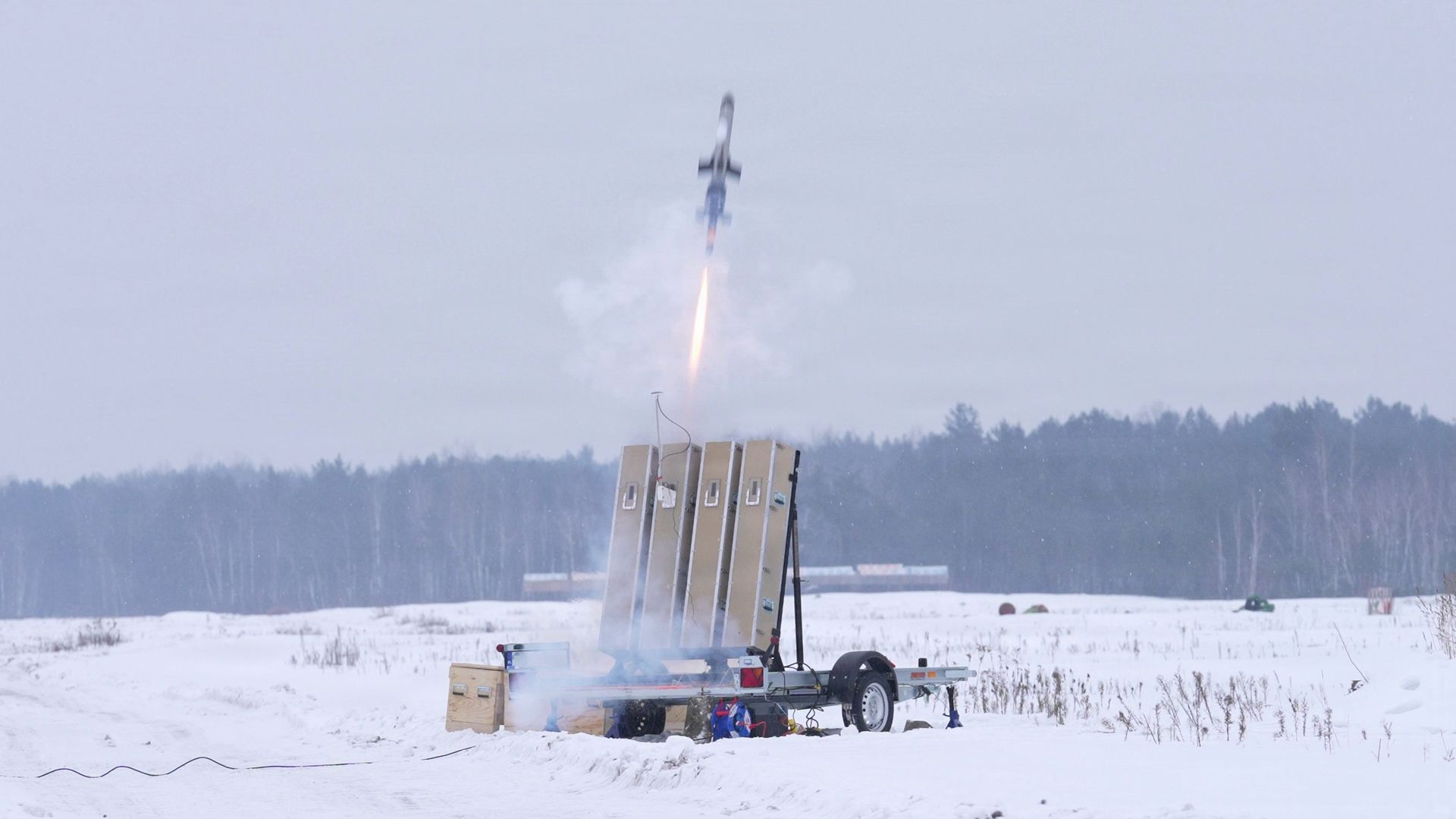
🚀 The U.S. Army is testing IonStrike, a drone interceptor designed by Dzyne Technologies. Recent trials relied on a four-pack launcher. A 12-pack is now in the works, according to the service.
- Why it matters: "IonStrike is important because it does not require soldiers to learn a new kill chain," Maj. Cody Davis, an operations officer, said in a statement. "It integrates with approved C2 systems, cues on existing radar feeds, and provides commanders another kinetic option within the air defense architecture."
- 💭 My thought bubble: I, admittedly, hadn't heard of this until now. You?
📉 At least 42 American aircraft have been damaged or destroyed in Operation Epic Fury, according to the Congressional Research Service, citing media reports and the Defense Department.
- Why it matters: The Iran fight is costing tens of billions of dollars — and more than a dozen American lives.
- 💭 My thought bubble: Air Force Chief of Staff Gen. Kenneth Wilsbach (who I interviewed in December) said the General Atomics-made MQ-9 Reaper was the Iran war MVP.
🪽 Tycho.AI unveiled Halley, a Group 1 vertical-takeoff-and-landing drone. The company said it features zero-tool assembly and can go from storage to flight in less than 30 seconds.
- Why it matters: Halley was recently tested at Technology Readiness Experimentation 26-2 in Indiana, where it hit 165 miles per hour and flew a maximum 22 miles.
- 💭 My thought bubble: Tycho exited stealth late last year, raising $10 million. Cal Biesecker with Defense Daily has more, here.
🗺️ The number of personnel involved in international peacekeeping operations hit its lowest point in almost three decades by the end of 2025, according to Stockholm International Peace Research Institute analysis.
- Why it matters: "The result is likely to be more conflicts, and these conflicts are likely to have even graver impacts on civilians as states abandon long-established norms," Jaïr van der Lijn with SIPRI said in a statement.
- 💭 My thought bubble: SIPRI's work is always worth reading.
6. Check this out

Here's the view from atop Taipei 101 as the sun sets.
- Easily recognizable is the Taipei Dome, bottom right. But squint and you can make out the Taipei Songshan Airport as well as the Tamsui and Keelung rivers.
My thought bubble: Go to the 88th floor. Sit down at Simple Kaffa Sola. Order a flat white. Get a dessert or two. Take a selfie by a window like a real tourist.
Shoutout to Dave Lawler for editing and Matt Piper for copy editing.
👋🏼 Thanks, as always, for reading and sharing. Tell your friends to subscribe here.
Sign up for Axios Future of Defense