Axios Future of Cybersecurity
May 13, 2025

Happy Tuesday! Welcome back to Future of Cybersecurity.
- 📬 Have thoughts, feedback or scoops to share? [email protected].
- 📲 Need to reach me securely? Find me on Signal: @SamSabin.01.
🗓️ Join Axios on May 21 in Washington, D.C., for an event on AI, trade, and the new economic playbook. Speakers include Secretary of the Army Dan Driscoll, Sen. Jeanne Shaheen (D-N.H.), House China Committee Chair Rep. John Moolenaar (R-Mich.) and more. RSVP here.
Today's newsletter is 1,566 words, a 6-minute read.
1 big thing: Mandiant founder warns of AI-powered cyberattacks

Kevin Mandia, one of the most prolific cyber entrepreneurs and investors, predicts the world is only a year away from an AI-agent-enabled cyberattack.
- 🔮 I spoke with Mandia on the sidelines of the RSA Conference last month as part of our ongoing, monthly-ish series where high-profile cybersecurity figures share one prediction for the next year.
Why it matters: Mandia warned that chances are the world won't even know an AI tool was the perpetrator.
- "Everybody's going to look at that, wonder how that got done, and it's probably AI behind it," he said.
The big picture: AI doomsday scenarios have haunted cyber pros for decades, but the introduction of generative AI hypercharged their fears.
- Some have predicted we'll see autonomous cyber weapons that can evade security tools in the wild by 2027.
- Others predict that one day the robots will be fighting robots.
Catch up quick: Mandia founded famed cybersecurity incident response company Mandiant in the early 2000s.
- Although he stepped down as CEO last year, his company has been at the frontlines of major nation-state attacks and cybercriminal investigations.
- Mandia is also now a founder and general partner at Ballistic Ventures.
Zoom in: The type of attack Mandia is predicting will likely come from the cybercriminal side of the world, rather than nation-states, he said.
- Mandia added that the first iteration of any new attack style is typically "a bit sloppy" and that foreign adversaries like China are more likely to take their time before rushing to follow suit.
- "There is enough R&D happening right now on how to use AI [at legitimate organizations] that the criminal element is doing that R&D as well," he said.
Yes, but: Models from OpenAI, Anthropic and other popular AI companies aren't likely to be involved in the attack that Mandia is predicting.
- Those models are "pretty darn good" at blocking such blatant violations of their safety parameters.
- "It's going to come from some model that's somewhere out there that's less controlled," he said.
Reality check: Chester Wisniewski, global field CISO at Sophos, told Axios that cybercriminals may already have the capabilities — but many of them don't have a real incentive to tap into them yet.
- "Fortunately today, cybercriminals are really lazy, and because we keep leaving our wallets open with large sums of cash in them, they're happy to just steal the money and move on and not do anything fancy," Wisniewski said.
Flashback: Mandia pointed to a 2001 case where the FBI arrested two Russian hackers who had programmed scripts to automate eBay purchases using stolen credit cards.
- "If they would automate all these eBay selling motions" in the early 2000s, he said, "trust me, there's already an AI agent doing this."
What to watch: Cyber defenders have been bullish on the promise of AI to help them better protect their networks and datasets.
- But their success will hinge in part on whether they can fend off the type of AI-powered attack Mandia is describing.
2. Exclusive: China's role in DPRK IT worker fraud

North Korean IT workers are setting up front companies across China as part of their global operation to trick Western companies into hiring them, according to a new report shared first with Axios.
Why it matters: Nearly every Fortune 500 company has struggled with the problem of North Korea-based IT workers trying to get hired at their firms.
- But few talk about the problem publicly due to fears of law enforcement retaliation and embarrassment.
Driving the news: Strider Technologies, a cyber intelligence platform that works with eight of the Fortune 10 companies, released a report today saying it's identified 35 China-based companies linked to North Korean IT worker operations.
- Strider strongly believes those 35 companies to be affiliated with Liaoning China Trade Industry Co., a U.S.-sanctioned company that has shipped IT equipment to a North Korean government agency.
Zoom in: Strider specifically calls out three of those 35 organizations that may be helping Liaoning China Trade fund North Korea's operation:
- Dandong Deyun Trading Co., a registered textiles and electronics wholesaler and retailer.
- Guangzhou Aiyixi Trading Co., a cosmetics and clothing wholesaler that advertises itself online as a producer of commercial induction cookers and bathroom cabinets.
- Yongping Zhuoren Mining Co., a company registered as a wholesaler of mineral products and building materials.
The big picture: For years, North Korean IT workers have been scamming U.S.-based companies into hiring them with the goal of using the higher salaries to help fund the country's missile program.
- But a part of those operations has shifted to focus on gathering intelligence about the companies they're working at, including intellectual property and any other company secrets, Strider CEO Greg Levesque told Axios.
The intrigue: Cybersecurity vendors have been stepping up their efforts to raise awareness about the problem over the last year.
- An FBI notice sent to companies this year significantly raised awareness about the scope of the problem, Levesque said.
- Google said during a media roundtable on the sidelines of the RSA Conference last month that it had seen North Korean IT workers applying for jobs at the company.
- Cyber vendors SentinelOne and KnowBe4 have said they've accidentally hired these workers themselves.
What they're saying: "Right now, what we're all realizing is that the scope and scale of that enterprise is far greater than people originally knew," Levesque said.
Between the lines: Much of the remote hiring process is siloed, and HR professionals aren't necessarily equipped to spot a fraudulent application.
- New mitigation and detection tools that automatically spot applications that could have fake or misleading information will be the key to stopping this problem, Levesque said.
What to watch: Strider is releasing a tool this week that will help automatically detect falsified resumes, which North Korean IT workers are using in their job applications all the time.
3. Threat spotlight: LockBit gets hacked
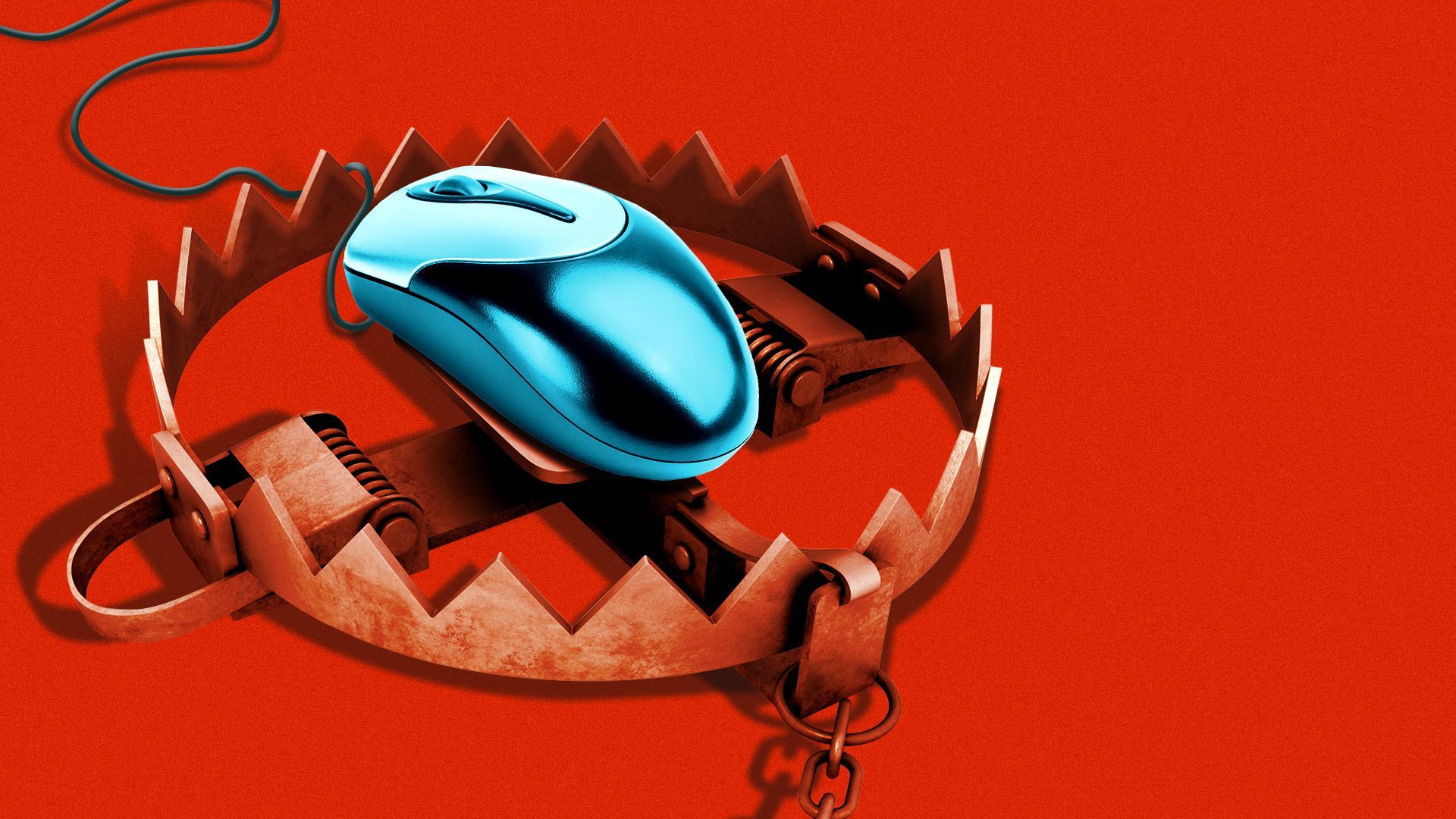
An unidentified group hacked the notorious LockBit ransomware gang and released thousands of records detailing its internal operations.
Why it matters: Hacks-and-leaks are often the last nail in the coffin for major ransomware gangs.
- Not even cybercriminals will trust a ransomware gang that faces its own hack — and it's hard for a gang to recover from the public release of its internal operations.
Zoom in: Someone defaced LockBit's affiliate login panels Wednesday with a message that said, "Don't do Crime CRIME IS BAD xoxo from Prague."
- The hacker also published a database that included usernames and passwords for about 75 LockBit affiliates, names of potential victim companies, 60,000 cryptocurrency addresses, and more than 4,400 messages sent between LockBit and its victims.
- LockBit claimed in its Telegram channel after the website defacement that the source code for the gang's ransomware strain was not stolen — and neither were the decryptors that could help victims unlock any files LockBit encrypts during an attack, according to researchers at FlashPoint.
Flashback: LockBit was once one of the most prolific ransomware gangs, known for hacking more than 2,500 organizations worldwide, including 1,800 in the U.S.
- Last year, a group of international law enforcement agencies arrested two members of the gang and seized its web infrastructure.
The big picture: Internal leaks aren't new for ransomware gangs.
- The Black Basta gang's internal logs leaked in February.
- A Ukraine-based researcher leaked the Conti ransomware gang's chat logs in 2022, shortly after the group sided with Russia over the invasion of Ukraine.
The intrigue: Someone also defaced the Everest ransomware gang's blog last month with the same message, according to Flashpoint.
- However, those actors did not publish any information stolen from Everest.
What to watch: It's possible investigators use these leaks to inform their ongoing probes and future arrests.
4. Catch up quick
@ D.C.
⚠️ Defense Secretary Pete Hegseth has reused passwords that have been exposed in data breaches. (The New York Times) And so has Director of National Intelligence Tulsi Gabbard. (Wired)
👀 Bryan Vorndran, assistant director of the FBI's cyber division, is planning to retire from the agency "in the near future." (The Record)
🤔 The Justice Department and the Securities and Exchange Commission are investigating a deal between CrowdStrike and tech distributor Carahsoft to supply security software to the IRS that never arrived. (Bloomberg)
@ Industry
👨🏻⚖️ A jury ordered spyware firm NSO Group to pay $167 million in damages to WhatsApp for enabling the hacks of about 1,400 WhatsApp users' devices. (Axios)
💸 CrowdStrike CEO George Kurtz has gifted more than $1 billion worth of his own company's stock, bringing his voting power to just 2.5%. (Bloomberg)
🏛️ OpenAI has met with the Food and Drug Administration and two DOGE associates about a project to regulate over-the-counter and prescription drugs. (Wired)
@ Hackers and hacks
📚 PowerSchool, a popular ed-tech vendor that works with 75% of U.S. school districts, said last week that it paid a ransom to hackers during its December cyberattack. (Axios)
🔍 The FBI has opened an investigation into about 250 individuals affiliated with online sextortion network 764, which is known for coercing minors into creating and sharing sexually explicit materials. (The Guardian)
🚔 The FBI and Dutch police also seized two online services known for supporting a botnet of hacked routers. (TechCrunch)
5. 1 fun thing
📲 For all the iPhone users out there: Have you ever tried sending a voice memo to another iPhone with the phrase "Dave & Buster's" in it? Did it work?
- 🎙️ The podcast "Search Engine" called SentinelOne's Alex Stamos for help as they dug into why these memos never seem to go through. Give it a listen at lunch.
☀️ See y'all Tuesday!
Thanks to Dave Lawler for editing and Khalid Adad for copy editing this newsletter.
If you like Axios Future of Cybersecurity, spread the word.
Sign up for Axios Future of Cybersecurity