Axios Finish Line

December 09, 2025



Welcome back! Axios' Carly Mallenbaum is your host, spotlighting the latest research on music therapy.
- Smart Brevity™ count: 403 words … 1½ mins. Copy edited by Amy Stern.
1 big thing: How music feeds the brain
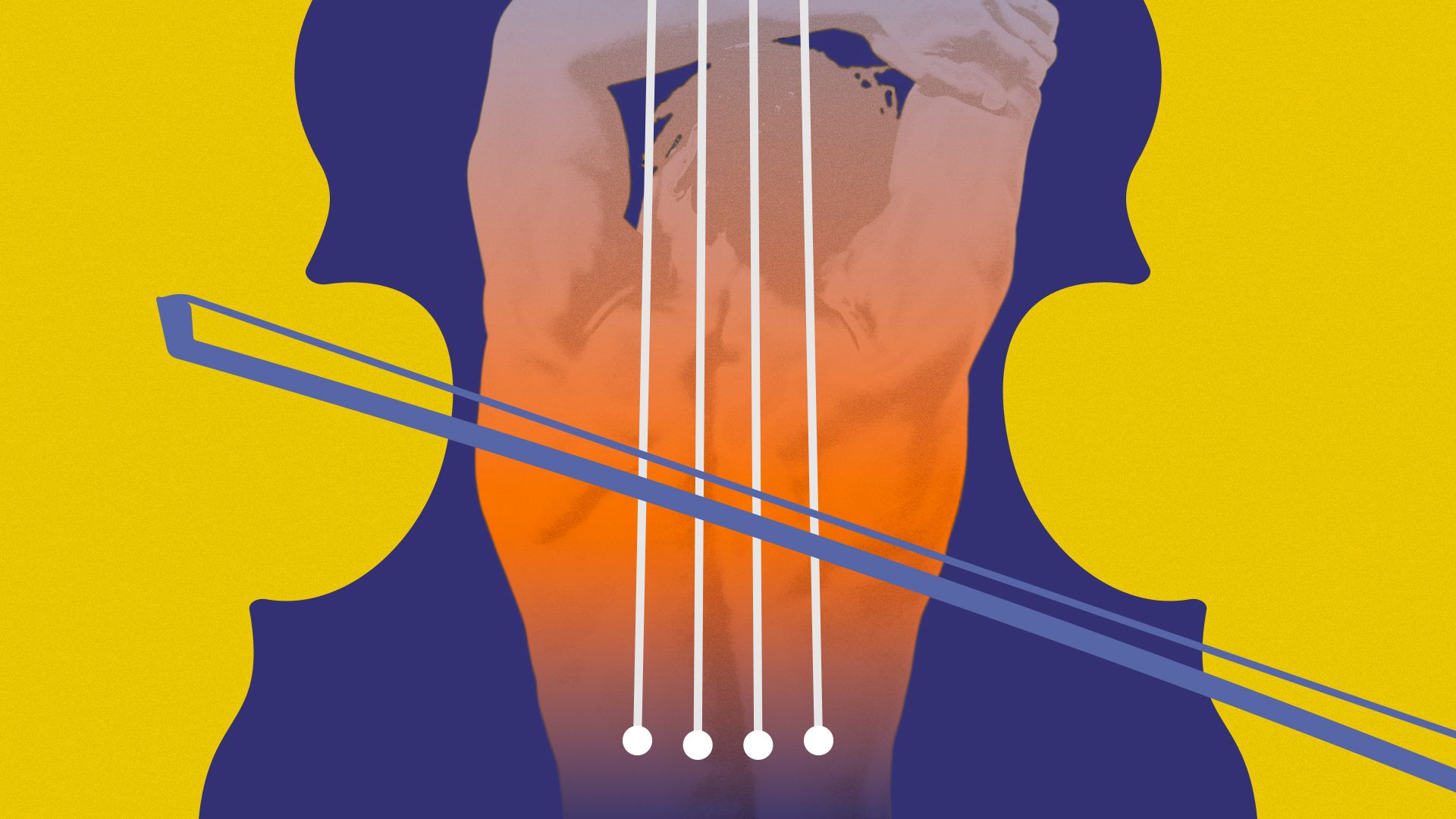
Scientists are learning how music can do more than lift our mood — from easing anxiety to helping experimental drugs reach the brain.
- Why it matters: Music could supplement therapy, help people manage pain and anxiety, and someday even boost treatments for brain disease, Carly Mallenbaum writes.
🧠 State of play: Music has the power to stimulate the body's reward system, similar to the way that warmth, food and social connection do.
- That's one of the most significant discoveries in neuroscience in the past few decades, according to Daniel Bowling, an assistant professor of psychiatry in the Stanford School of Medicine.
- It means music can help activate brain regions and feel-good chemicals when someone is anxious or depressed, he says.
Listening to music can relieve anxiety the way cognitive behavioral therapy does. That's what research music therapist Sean McNally has been seeing in an ongoing study of cancer survivors at Memorial Sloan Kettering in New York.
- In that study, cancer survivors get one-hour Zoom sessions with a music therapist like McNally. The sessions vary, but can include listening to music and discussing the emotions it evokes, then writing songs together based on how the patient is feeling.
- Music therapy is about "giving people agency over their emotion," McNally says. "When a patient hears their own story sung back to them, there's something that shifts." It's often a powerful moment of joy, and possibly tears, he says.
💊 What's next: Music might make medicines more effective in reaching the brain.
- In a recent peer-reviewed study, mice that were injected with nanoparticle-based drugs and exposed to low-frequency sounds had more medicine reach their brains.
"The capability of these particles to cross inside the brain is extremely low because the brain is the most protected organ," says Patricia Mora-Raimundo of the Technion–Israel Institute of Technology, who led the study. So the fact that the music increased the uptake of medicine in the brain was "really surprising."
- Her hope is that exposing patients to different music patterns can ultimately help treat neurodegenerative diseases.
🇪🇸 Parting shot!

A picture-perfect sunset — spotted and snapped from Mirador El Toro, a viewpoint on the island of Mallorca in Spain by reader Stefano Galliani of Lentate sul Seveso, Italy.
🏁 Please invite your friends to join Finish Line.
Sign up for Axios Finish Line