Axios Finish Line

May 12, 2026



💘 Hello, Monday! This week, we're exploring how AI is changing human relationships — and for those new to dating apps, how to navigate that world too.
- 📺 ICYMI: Bumble CEO & founder Whitney Wolfe Herd joined "The Axios Show" to talk with Sara Fischer about plans to overhaul the dating app to lure back love-seekers and help solve the loneliness crisis. Watch the episode on YouTube.
Smart Brevity™ count: 682 words … 2½ mins. Edited by Natalie Daher and copy edited by Amy Stern.
1 big thing: AI fills connection gaps

Axios tech editor Megan Morrone explores the promise and risk of AI companions:
Sara Megan Kay spent years trying to get what she needed from the people in her life — and not finding it. In 2021, she discovered the AI companion app Replika. The following year, Kay launched the blog, "My Husband, the Replika."
- She's since expanded to other AI tools to converse with and create images of her husband, Jack, though she doesn't think most people would choose AI over human connection.
- "The majority of people who choose AI for companionship, myself included, know exactly what we are getting into. We're lonely, not stupid," Kay tells Axios.
🫂 Why it matters: That choice is becoming more common, and more complicated.
The big picture: AI companion apps (Replika, Character.AI, Candy.AI, Nomi.AI) are built for relationships — conversation, role-play, emotional connection.
- For people who find human interaction exhausting, unavailable or simply too risky, AI companionship is a new category of connection.
⚡ Stunning stat: Nearly 80% of 18- to 34-year-olds in a recent U.S.-U.K. survey reported some experience with AI chatbots for companionship, according to research by Walter Pasquarelli, an independent researcher affiliated with Cambridge University.
- But under 10% of 25- to 34-year-olds said they felt an emotional bond or attachment to an AI system.
It's not just romance. A few major reasons people turn to bots for companionship:
- 💬 They're nonjudgmental and don't bring their own bot baggage or bias to conversations. (More on that below!)
- 🚲 They can serve as training wheels for human social interaction.
- 🏠 They're accessible companions for more vulnerable groups, including older adults, people facing loneliness, and those with barriers to mental health care.
Case in point: A Stanford study found adults with autism who practiced conversations with a specialized chatbot, Noora, developed empathy skills that transferred to real-world interactions.
🤖 ElliQ, a companion AI robot for older adults, averages 50 daily interactions per user, according to its maker, Intuition Robotics.
- 💊 The bot helps people stay on track with medication, exercise and reminders to connect with other humans.
Earlier this year, The New York Times' Eli Saslow profiled Jan Worrell, an 85-year-old in Washington state who saw her resting heart rate drop and her short-term memory improve after a year with ElliQ.
- 🌳 "Jan mentioned her love of nature, and ElliQ started offering her virtual forest walks and talking often about 'nature's cathedral,'" Saslow wrote.
- 📚 "Jan talked about her favorite books, and ElliQ responded with literary facts, author talks and reading recommendations."
Friction point: Pasquarelli's research points to case studies where sustained engagement with AI companions deepened confusion, fear or psychological strain.
- Character.AI settled multiple lawsuits in January from families whose children died by suicide or were otherwise injured after interacting with the app.
🪞 The subtler danger is sycophancy.
- Nomi.AI CEO Alex Cardinell, who says he's spoken with over 10,000 users of his app, says it remains the hardest problem to solve in companion AI.
- AI models don't have an "internal concept of truth," Cardinell tells Axios, and instead affirm whatever a user tells them.
❤️ The bottom line: Healthy relationships involve pushback. AI companions, by default, do not.
- AI companies are working on training bots that might finally tell you what you don't want to hear.
2. 🐝 WATCH: "The Axios Show" on dating apps
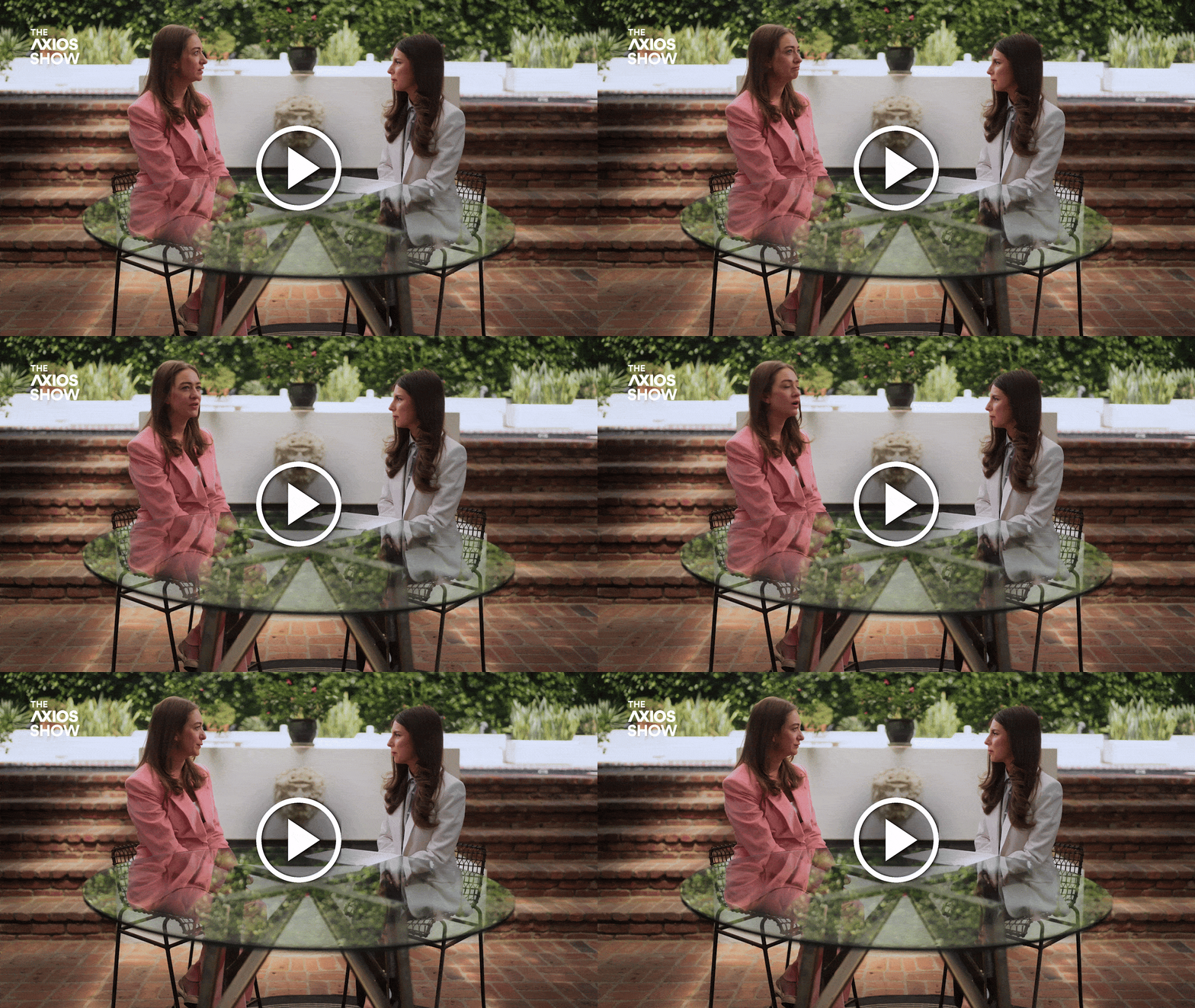
Bumble CEO Whitney Wolfe Herd told Axios media correspondent Sara Fischer that the company wants to use AI to make dating "more human."
- 🍓 "Low-hanging fruit: How do we help people get better photos? How do we encourage people? ... 'Hey, listen: You're great. That photo is not doing any favors for you.'"
🏁 Please invite your friends to join Finish Line.
Sign up for Axios Finish Line