Axios Finish Line

November 05, 2024



Welcome back! Smart Brevity™ count: 443 words … 2 mins. Copy edited by Amy Stern.
1 big thing: Early risers vs. everyone else

Every year the end of daylight saving time sparks a debate, pitting early risers against everyone else.
- Why it matters: Daylight saving time (DST) is popular. Nearly half of U.S. states have made moves to make it permanent. But they can't abandon "fall back" without an act of Congress. So time changes aren't going anywhere for now.
🔎 Zoom in: Many of us are most productive in the morning. But there are night owls among us, and there are also plenty of people who don't love mornings.
- For those whose energy builds as the day progresses, losing an hour of daylight in the late afternoon can be quite disruptive.
- Studies have linked earlier sunsets — and the lack of exposure to sunlight — to seasonal depression.
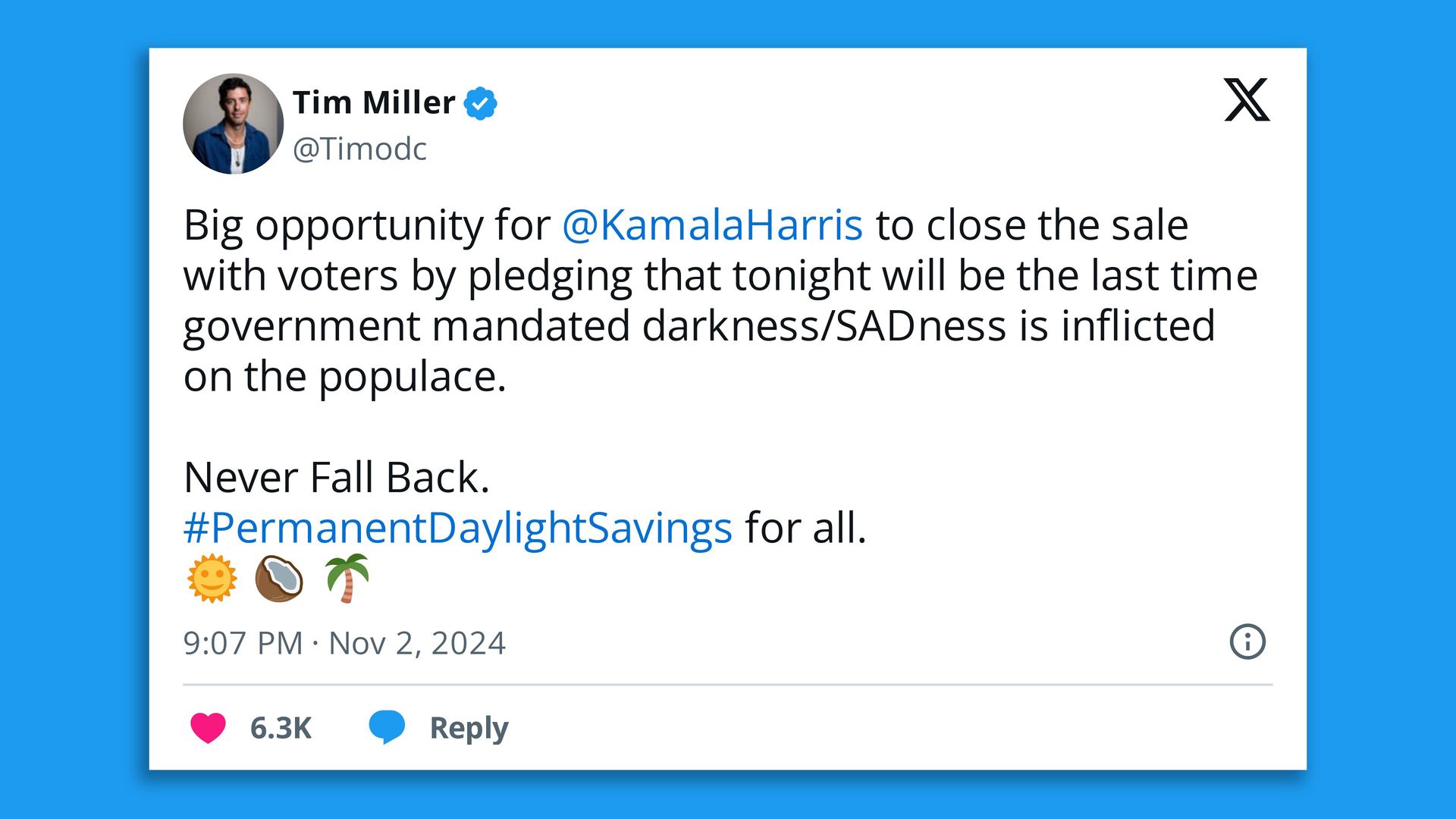
"There's so much more that can be done with an early evening hour of sunlight," says Tim Miller, writer-at-large at The Bulwark, host of "The Bulwark" pod and a supporter of permanent daylight saving time.
👀 The other side: Most sleep experts are proponents of ditching daylight saving time, and making the earlier sunrises and sunsets of standard time permanent.
- Humans are wired to rise with the sun. So daylight is more important for waking up, they say.
- Plus, with permanent daylight saving time, many adults and kids would be starting work and school in the dark.
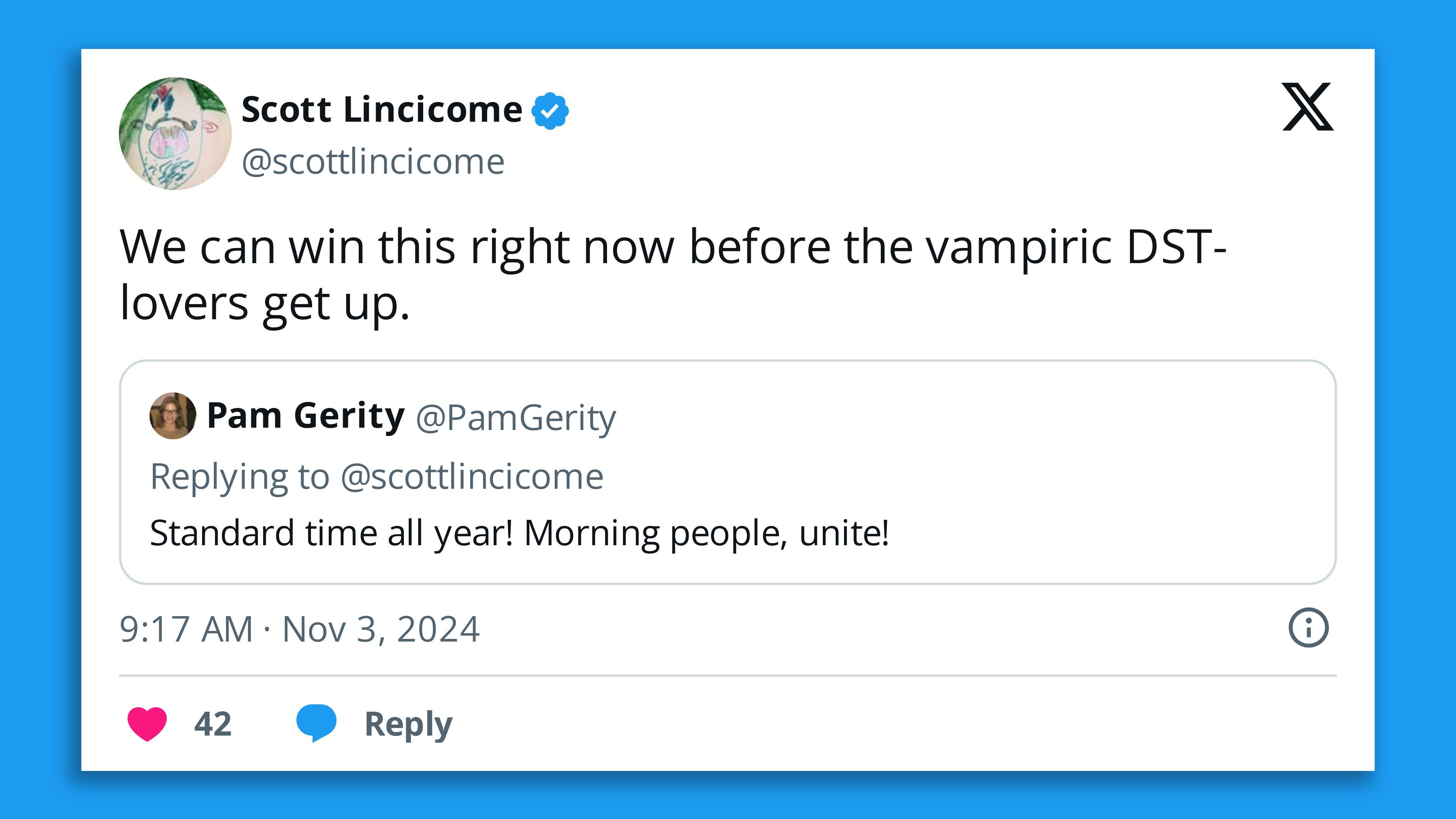
"I'm actually not a morning person," says Scott Lincicome, a Cato Institute senior fellow, who backs permanent standard time. "I'm a morning person by total necessity" due to work and kids' schedules.
- "It's a lot easier to get up when the sun is up than when it's pitch black outside."
⏰ Zoom out: The polling is mixed on what Americans want. But we agree on one thing: We're tired of the switch.
- 62% of U.S. adults said in an Economist/YouGov poll that they want the clocks to stay the same year-round.
- Of those, 50% wanted permanent DST (later sunrises and sunsets all year). 31% wanted permanent standard time, which we're in right now. The rest had no preference or weren't sure.
According to a 2019 AP-NORC poll, 71% of respondents wanted to keep the same time all year. But standard time got more support (56%) than DST (44%).
- 📬 What's your view on the daylight debate? Email us a couple of sentences, along with your name and hometown, to be part of the Finish Line conversation!
🏁 Please invite your friends to join Finish Line.
Sign up for Axios Finish Line