Axios Finish Line

May 09, 2025



Welcome back! Axios' Carly Mallenbaum is your host this evening — reporting on some fascinating research to chew on heading into Mother's Day weekend.
- Smart Brevity™ count: 443 words … 1½ mins. Copy edited by Amy Stern.
1 big thing: Science behind the mom-baby bond
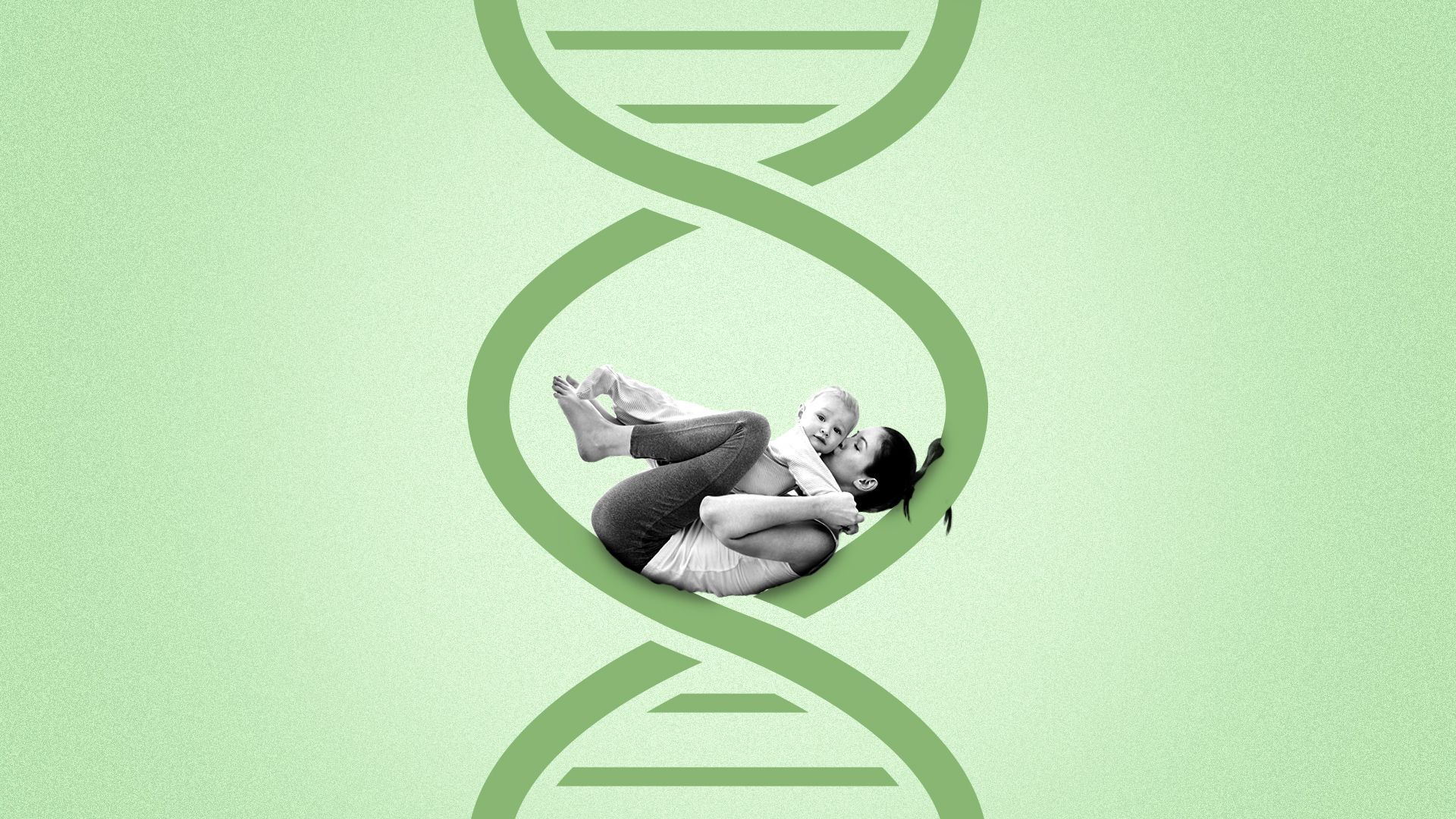
My son has been out in the world for as long as he's been in my womb — but it still feels like he's physically connected to me, Carly Mallenbaum writes.
- To make more sense of my postpartum emotions, I'm looking to science.
🔬 Emerging research shows that babies' DNA stays with their mothers decades after birth.
- Why it matters: We've shared stories about the deep, powerful bond between parents and their babies, going back to the beginning of human history. New science tells us this connection could be rooted in biology.
The big picture: Starting as early as six weeks into pregnancy, some fetal cells migrate to a mother's body, and could stay there for a lifetime.
- That's according to Amy Boddy, an associate professor at UC Santa Barbara who studies microchimerism — when "a small amount of genetically different cells or DNA is in someone's body," as she explains it.
🔎 Zoom in: Those fetal cells work like stem cells that specialize in whatever tissue they land in, Boddy tells Axios.
- For example, fetal cells could become a mother's heart cells that help pump blood through her body.
- And some of the mother's cells transfer to the baby.
The intrigue: Because of fetal microchimerism, researchers "have found grandmother cells in the cord blood of babies, suggesting this longer, deeper generational transfer," Boddy tells Axios.
❤️ Even after miscarriage, fetal cells can remain.
- For women who experience pregnancy loss, "it's not just in their head that they're forever changed by that pregnancy," Boddy says. "Those cells may exist and influence their biology."
Zoom out: Scientists still don't fully understand why fetal microchimerism occurs, but we do know that …
- Fetal cells could lead to both autoimmune benefits and concerns for the mother.
- The presence of fetal cells in blood has made noninvasive prenatal genetic tests possible. These tell parents-to-be everything from their baby's gender to their baby's level of risk for certain conditions and disorders.
🤱 Breastfeeding is another source of biological mother-baby connection.
- It's not just that a baby's suck spurs a mom's milk production — there's also "flow back" into the mother, Boddy says.
- If a baby has an infection, a mother's body could respond by producing specialized immune cells in milk to fight it.
🚣 Parting shot!

A colorful sunrise in Nekoosa, Wis., earlier this week, snapped by reader Stewart Verdery.
- Happiest weekend!
🏁 Please invite your friends to join Finish Line.
Sign up for Axios Finish Line