Axios Finish Line

May 30, 2025



Welcome back! Smart Brevity™ count: 470 words … 2 mins. Copy edited by Amy Stern.
- 🏁 Please invite your friends to join Finish Line.
1 big thing: All eyes on Big Food
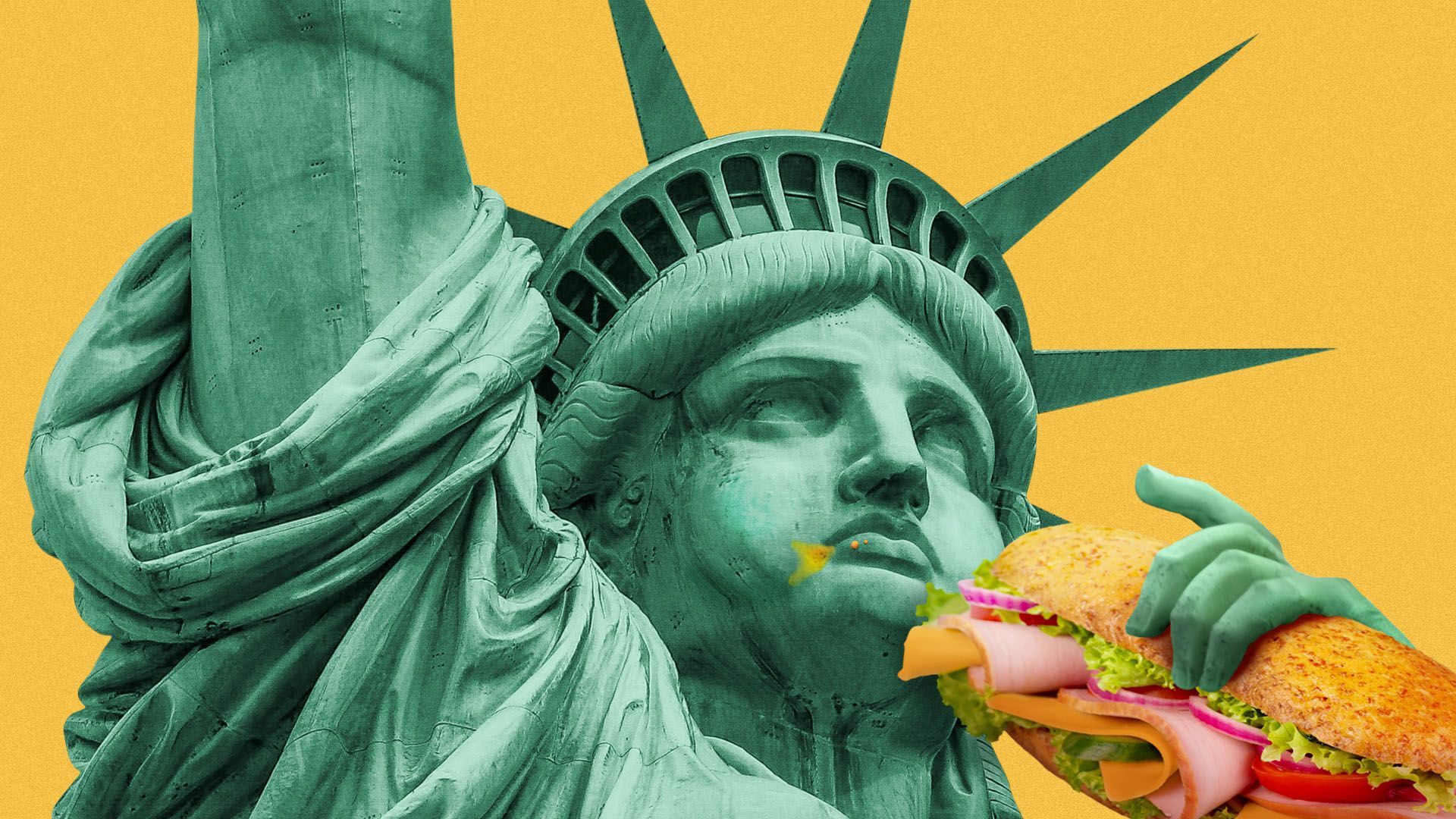
Conversations about what America eats are getting louder — in doctors' offices, in statehouses and on social media.
- Why it matters: Some 70% of America's food supply is ultra-processed. Now there's new momentum to change that.
🚬 The money quote: "We are entering Big Food's Big Tobacco moment," Arianna Huffington, CEO and founder of Thrive Global, writes in Fortune.
Flashback: In the '60s, 42% of Americans smoked. Today it's 12%, per Gallup.
- The push against Big Tobacco took decades of lawsuits and advocacy. But after some key moments, like a ban on marketing cigarettes to young people, changes to Americans' behavior came quickly — and lasted.
🍟 Now there are signs that a similar fight is brewing against ultra-processed foods, sugary drinks and artificial food dyes, Huffington notes.
- There are even ties between the two industries. During the '80s, tobacco giants Philip Morris and R.J. Reynolds expanded into the food industry by acquiring well-known brands such as Kraft, General Foods and Nabisco.
- The food companies were spun off in the 2000s, but recent research showed that during those interim years, the foods coming from tobacco-owned brands were more likely to be hyper-palatable.
- "[M]any of the ultra-processed foods that we eat today were engineered by an industry that wrote the playbook on products that are highly palatable, addictive and appealing to children," The Washington Post's Anahad O'Connor writes.
Case in point: A first-of-its-kind lawsuit was filed on behalf of a Philadelphia teenager in December. It claims that he developed Type 2 diabetes and fatty liver disease after eating ultra-processed foods.
- The lawsuit calls out companies like General Mills, Kraft Heinz and Coca-Cola.
🚨 At the same time, politicians on both sides of the aisle — along with scientists, nutritionists and social media influencers — are sounding the alarm, Axios' Tina Reed reports.
- "This convergence of forces makes me very optimistic that this is a new moment" Huffington tells Axios. "It's in the zeitgeist now. Things are changing."
Reality check: As content about food has spread online, misinformation about health and nutrition has also become rampant, The Guardian reports.
- That can be particularly dangerous for young people, who often rely on social media for information, potentially leading to unhealthy diets or eating disorders.
🩺 Zoom out: New scrutiny of what we eat comes amid a larger movement to focus on lifestyle factors — like diet, sleep and social connection — when discussing health and longevity.
- "There aren't just warm and fuzzy additions anymore," Huffington tells Axios.
- One example: Doctors are prescribing behavioral changes as part of patients' treatment plans.
📸 Parting shot!

Sunset on the shores of Isla de Mezcala, Jalisco, Mexico, captured by Finish Line reader Ivy Ge.
- Happy weekend!
Sign up for Axios Finish Line