Axios D.C.

June 23, 2026

Happy Tuesday!
🌧️ Today's weather: Isolated rain showers. High 82, low 62.
🎂 Happy birthday to our member Bonnie Casper!
Today's newsletter is 937 words — a 3.5-minute read.
1 big thing: Starter homes now top $1 million
The DMV is home to four cities where the typical starter home costs $1 million or more, according to new Zillow data shared with Axios.
The big picture: A record 242 American cities are now faced with seven-figure purchases for entry level homes, per a new Zillow report.
- That's up from 226 last year, and 80 pre-Covid in February 2020.
State of play: The four $1 million-plus cities in the Washington metro area as of April are:
- Great Falls, Virginia: $1,233,946
- Chevy Chase View, Maryland: $1,179,596
- Glen Echo, Maryland: $1,042,465
- Potomac, Maryland: $1,013,216
That's up from zero cities five years ago.
Zoom out: Meanwhile, the typical starter home nationwide is $198,649, per Zillow.
Reality check: Washington's number pales to other metros like New York City (63), San Francisco (37) and Los Angeles (33).
Between the lines: Zillow defines a typical starter house as "a home in the lowest third of home values in a given region."
The bottom line: "Our list of $1 million starter homes is a cautionary tale of what happens when we don't build enough to meet demand," Zillow senior economist Kara Ng tells Axios.
2. ✂️ Council could make $150M cut
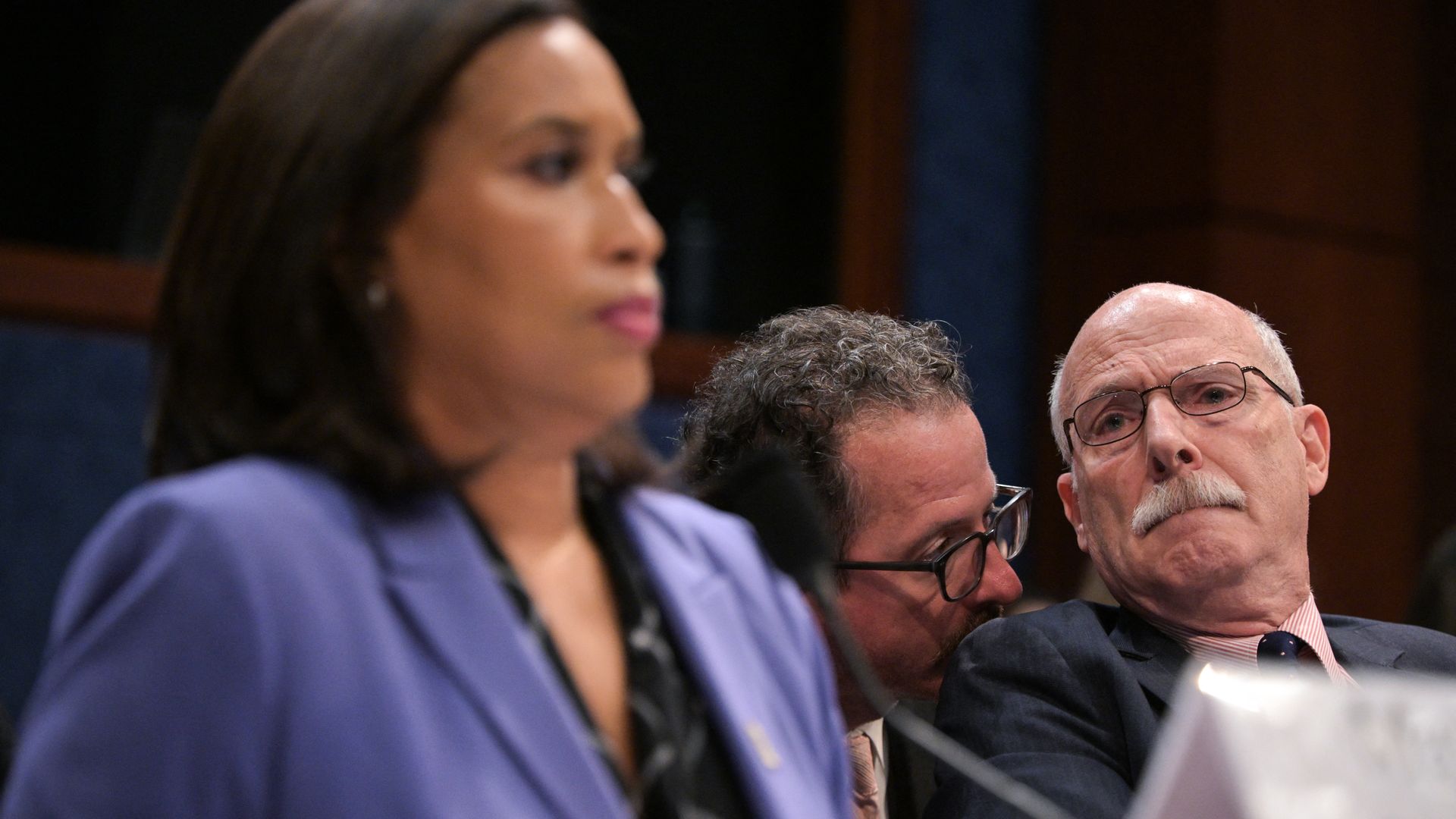
D.C.'s chief financial officer is warning that council members will create an "unbalanced" budget if they spend $150 million from the city's reserves.
Why it matters: Facing a $1.1 billion budget gap, the council sees the emergency fund as a way to avoid cuts to child care subsidies and anti-poverty programs. The independent financial watchdog sees that as off-limits.
What he's saying: CFO Glen Lee describes the reserves as "needed to manage and support the cash flow needs" of the city government.
- Therefore, he wrote in a letter to the council yesterday, it's "imprudent to depend" on them for city programs.
Context: Lee's word matters because his job is to ensure that D.C. budgets are balanced, a federal requirement.
- There's fear that Lee labeling the budget "unbalanced" would invite intervention from Congress, which has final say over the city.
By the numbers: D.C.'s reserves were 99% full as of the end of last fiscal year in September 2025 ($2.23 billion), per data the CFO provided to Axios.
State of play: Council members could've seen this coming. Lee warned them against tapping the reserves earlier this month.
- Now, Council Chairman Phil Mendelson is consulting Attorney General Brian Schwalb about how to move forward. Two years ago, Schwalb wrote in an opinion that the CFO's "failure to certify an otherwise valid budget would have no legal effect."
- Mendelson has said the council's one-time use of the reserves would still keep it at a level enough to cover 60 days of operating expenses.
What we're watching: The council can revise the budget before its final vote this afternoon.
3. Around the Beltway: Pool woes
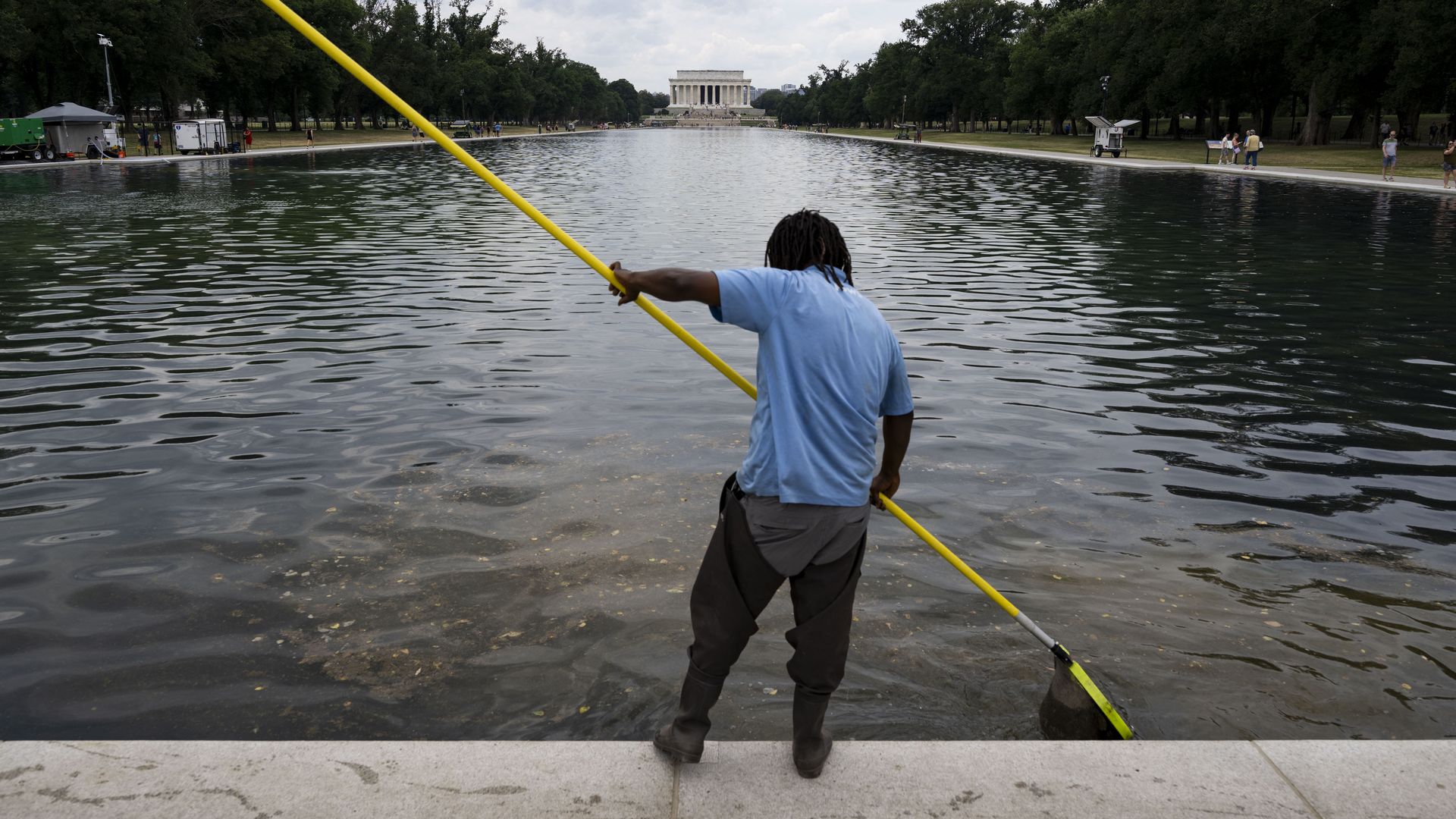
🟦 Checking in on the Reflecting Pool: The repair company says it's under warranty to fix it, and D.C. Water issued a permit yesterday to drain the algae-and-paint infested waters.
- The Virginia company said "a very small part of the massive 7-acre project" needs fixes. (Reuters)
🏀 In Ivy City, D.C. broke ground on the Crummell Community Center, a $36 million project to expand public fitness and rec space in the neighborhood. (UrbanTurf)
🗳️ D.C.'s Election Night results took several hours to be released after polls closed. Between malfunctioning ballot printers and laggy touch screen voting machines ("slower than a 10-year-old iPad"), lines stretched late into the night. (NOTUS)
- The council is considering investing an additional $2 million to upgrade infrastructure before November's general election.
4. Costly primaries raging on D.C.'s doorstep

A pair of largely overlooked U.S. House races in the Maryland suburbs are racing up the leaderboard of the most expensive congressional primaries in U.S. history.
Why it matters: The massive volume of cash pervading these elections has some candidates raising the possibility that there is such a thing as too much spending for your favored candidate.
- Voters "see the frequency of the ads, and now they're asking questions," said Wala Blegay, a Prince George's County Council member running in Maryland's 5th district.
- Said former Capitol Police officer Harry Dunn, another candidate in that race: "It's tough to square, like, why is someone donating this much money?"
Driving the news: Outside groups — most notably the pro-crypto super PAC Protect Progress and AIPAC's United Democracy Project — had spent a collective $12.5 million in MD-05 as of yesterday, according to FEC filings.
- All the actual Democratic candidates in the primary spent a combined $10.5 million as of June 3.
- More than 20 Democrats are running in the primary to succeed former House Majority Leader Steny Hoyer (D-Md.).


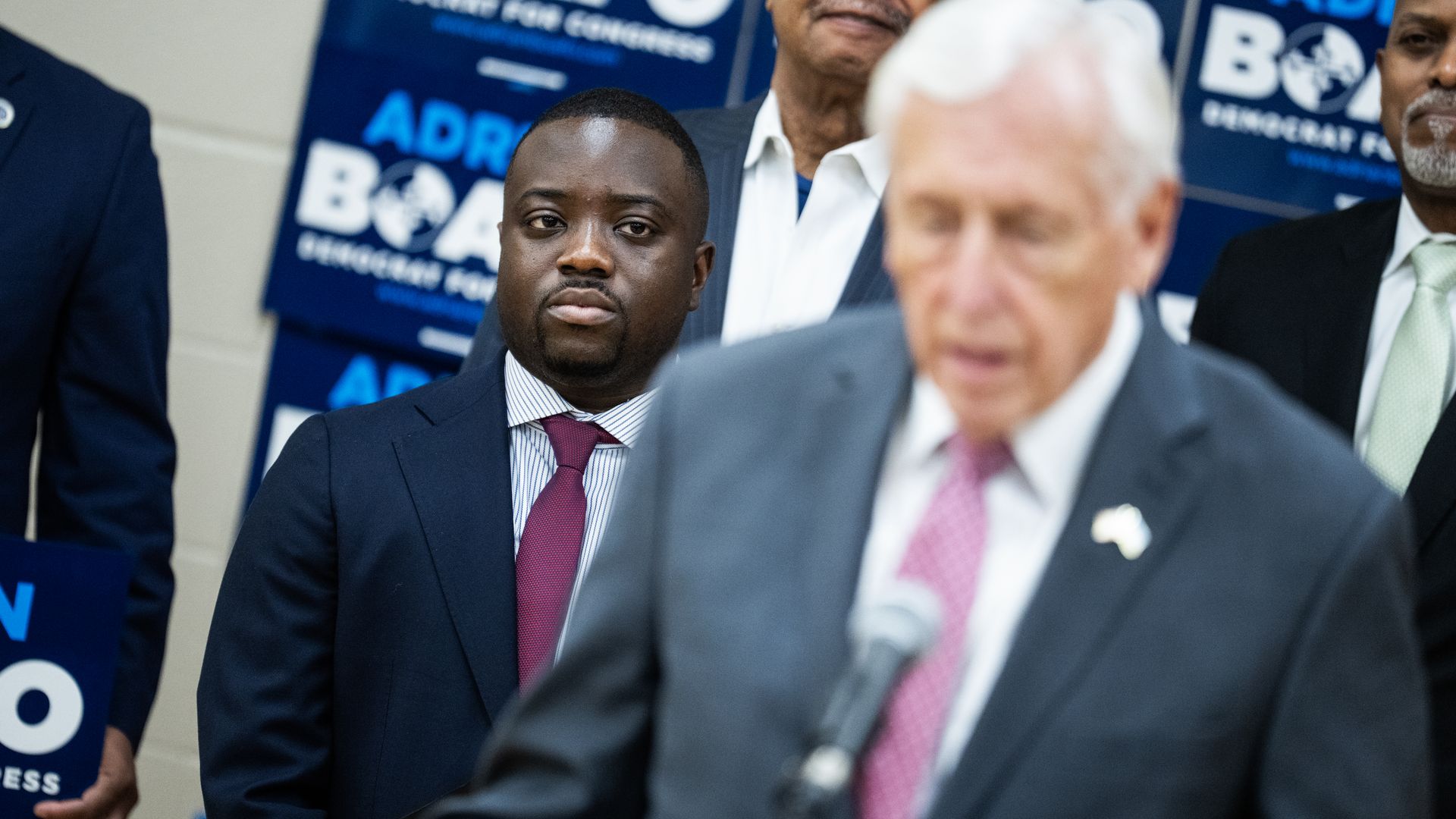
By the numbers: The super PAC spending has almost all favored state Del. Adrian Boafo, who is backed by Hoyer, Maryland Gov. Wes Moore and Sen. Angela Alsobrooks.
Meanwhile, Maryland's 6th district is also among the cycle's costliest contests, with David Trone lending his campaign $25 million and Rep. April McClain Delaney loaning hers $7.4 million.
5. 🦅 New arch just dropped
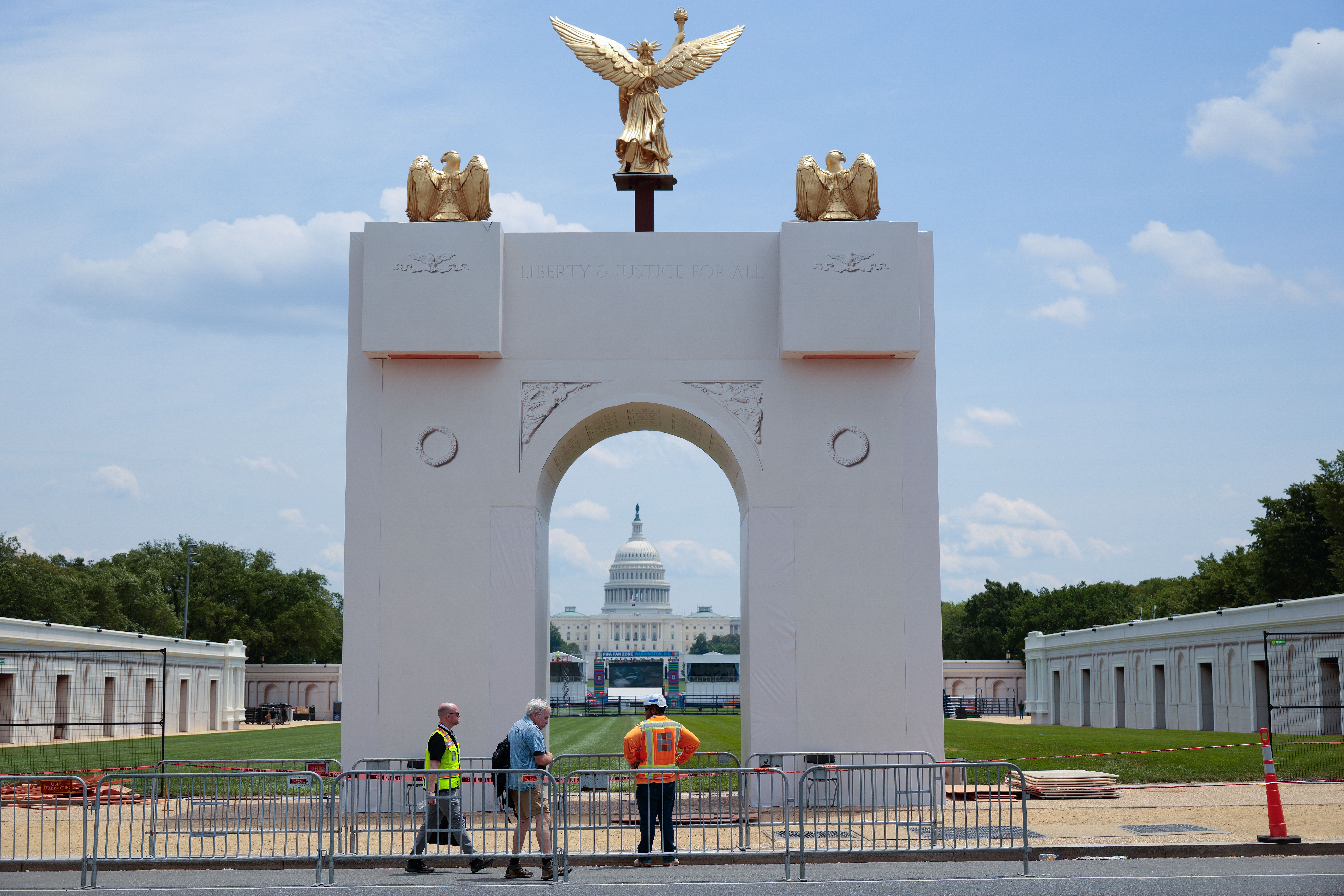
A replica of the Arc de Trump popped up on the National Mall, joining Freedom 250's Great American State Fair.
- The temporary installation sports gold eagles and is relatively puny, compared to the 250-foot design Trump wants at Memorial Circle.
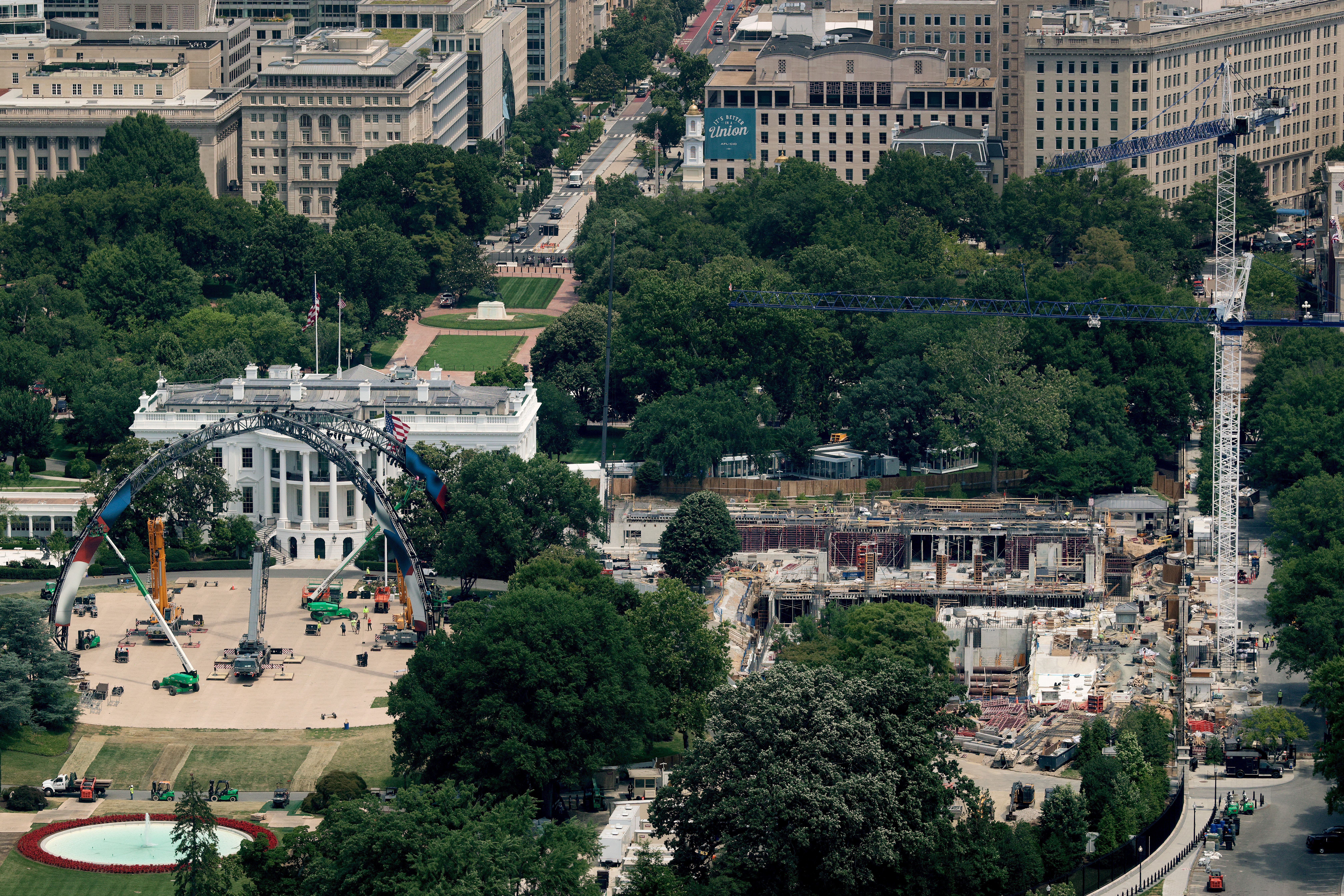
Meanwhile, construction continues on the White House ballroom — while the 92-foot "Claw" comes down:
⚽️ Cuneyt is playing back the Messi highlights, so glad the GOAT didn't retire from international footy in 2016.
Want more Axios D.C. content? Check out our Instagram for extra stuff to do, behind-the-scenes photos, videos and more!
Today's newsletter was edited by Alexa Mencia Orozco.
Sign up for Axios D.C.