Axios Crypto

May 01, 2025

GM! Reports are circulating that the Senate will vote on stablecoin legislation by Memorial Day. So, news on that could pick up soon.
- Email us about things. Anyone else planting wildflowers out there? [email protected]
🍱 State of play: Number of Official Trump currently needed to be in the top 220 — 38,253.14 ($498,205.47)
Today's newsletter is 1,150 words, a 4.5-minute read.
1 big thing: Bitcoin has made it
/2025/05/01/1746112215735.gif?w=3840)
Bitcoin is now an investment held by regular people who want to diversify their portfolio, while the rest of the cryptocurrency world (stablecoins aside) struggles to catch on.
Why it matters: The question of "what is bitcoin actually good for" has been answered by the market: It buys (and is buying) the digital gold narrative.
Zoom in: Bitcoin was created to be a medium of exchange on the internet. But what really worked for it was becoming an alternative investment — something that has a record of going up over time, even if its day-to-day volatility can be stomach churning.
- Bitcoin is up 700X since May 2013. The S&P is 3X over the same time. Bitcoin has also doubled in value since January 2024.
- This is what the believers are looking at when they call bitcoin a hedge against inflation.
- They aren't watching the asset on a weekly or monthly timeline. They are looking at what happens if they hold it for years.
The approval of Bitcoin ETFs 15 months ago demonstrated that a lot of capital was waiting to hit buy on bitcoin as soon it got a regulated wrapper.
And last week was the best week all year for crypto ETFs.
What they're saying: The ETFs "basically helped, if you will, normalize cryptocurrency into an investable asset," Mike Johnson, a partner at EY, the giant professional services firm, tells Axios.
- In recent research his company did in collaboration with Coinbase, they found that a majority of institutional investors have become comfortable with bitcoin as an investment and plan to increase their allocations.
- Further, EY is seeing people start with ETFs and then get interested in directly purchasing bitcoin, suggesting that the new instruments are an entry point to greater sophistication about the asset's unique features.
Other forces are at work now, too. Charles Edwards, of Capriole Investments, a quantitative bitcoin-focused hedge fund, said on an Unchained podcast, that there's a flywheel developing as corporate investors imitate the purchases of publicly traded Strategy (formerly MicroStrategy).
- Most notably, SoftBank and some big players in bitcoin just launched Twenty One, a big fund, with $4 billion in BTC, aimed at making similar moves.
- "It's probably going to be the main driver of price action the next 12 months," Edwards said.
Meanwhile, investors' recent push into bitcoin — and mainly only bitcoin — can be seen in the recent surge in "bitcoin dominance," a metric measuring BTC's share of the total crypto market cap.
- At 64%, it's at the highest level since January 2021.
The big picture: This has all led to bitcoin starting to — at the moment — look less like a risk asset, like many stocks and other crypto assets, and more like digital gold.
- At present, with the larger economy awash in uncertainty, many investors have retreated into gold, driving it to an all-time high. At first, bitcoin didn't benefit from that same shift, but that has started to turn around.
The bottom line: "Obviously, there's some trepidation in the market because of the last crypto winter," Johnson said.
- But the investing public now trusts bitcoin and crypto more broadly than it did just a few years ago. "We do believe we are on a path to mass adoption."
2. Other crypto assets

The original blockchain may end up being useful to the world in other ways, but Bitcoin's basic function as a store-of-value has been established.
- In tech world parlance, Satoshi Nakamoto's innovation has found product-market fit.
Other blockchain projects, however, are stuck in what's known as the trough of disillusionment — the period when a much-hyped class of product loses interest because it doesn't live up to expectations.
State of play: The rest of the industry has run through many narratives of utility, none of which stuck the landing — so far.
- Cases in point: Decentralized finance (DeFi), decentralized physical infrastructure, play-to-earn games, digital property/NFTs and meme coins.
- None of them are dead, but none of them have hit escape velocity, either.
- So far, the only blockchain product that's taking off, besides Bitcoin, is stablecoins, but that's really just another way of saying that the U.S. dollar remains popular.
Yes, but: EY's Johnson ascribes the weak demand for other blockchain-powered products to regulatory uncertainty and their very newness.
- Regulatory clarity should bring more products to market as more market participants feel comfortable innovating on chain.
What we're watching: Johnson points out that bitcoin has had, at a minimum, six or seven more years in the market than any of these other ideas.
- He expects a transformation powered by stablecoins and other tokenized traditional assets. From there, we'll just have to see what else clicks.
3. Arizona's two bitcoin reserve bills
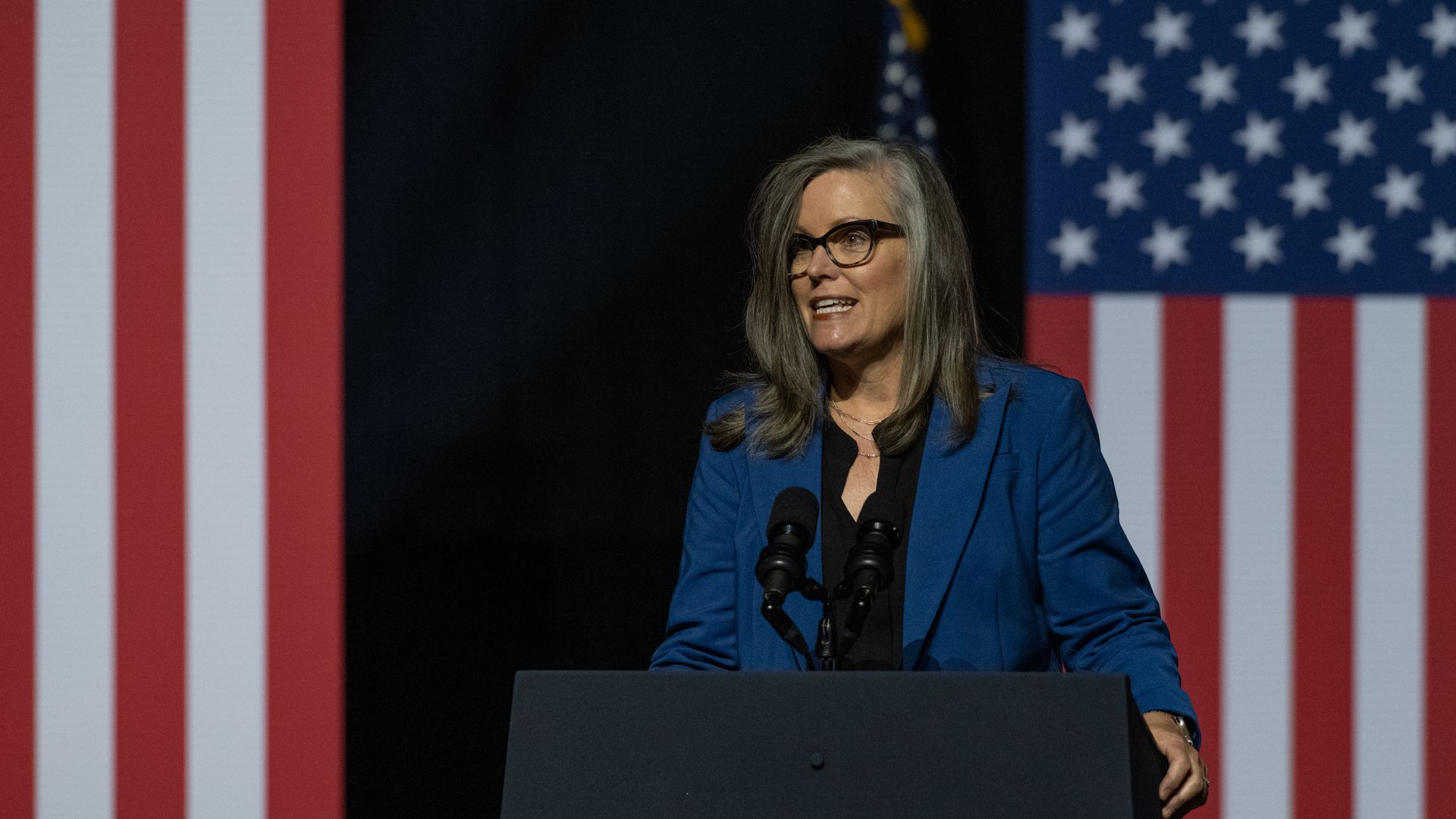
Republicans in the Arizona legislature have sent its Democratic governor two bills that would establish strategic bitcoin reserves.
- Why it matters: The bills imitate moves made by President Trump in establishing reserves at the federal level.
What we're watching: Whether or not Gov. Katie Hobbs signs them. Her office has not replied to Axios.
How it works: One bill authorizes state funds to allocate part of what they hold, up to 10%, to virtual currencies. That includes state retirement funds, if their administrators choose to do so.
- Another bill authorizes the state to hold onto virtual currency seized by law enforcement. It also authorizes the state treasurer to lend out holdings to increase yield.
The big picture: Lots of states have made noises about creating digital asset reserves this year, but none of them have crossed the finish line yet.
- A couple others have made some progress. For example, Oklahoma and New Hampshire have passed bills out of their respective houses.
4. Catch up quick

5. Stablecoin news bits
Since we put out our piece on the contest to win the stablecoin future, some more big news came out from major companies.
- Visa partnered with Bridge (a Stripe company) to enable issuing credit cards that could be loaded with stablecoins. This would allow someone storing value in stablecoins in another country to spend it locally, with Visa converting their holdings to local fiat.
- Mastercard announced its stablecoin program, including a partnership with OKX that would allow users to spend their balances on the exchange with merchants.
- And, somewhat out of left field, Tether took a controlling stake in Adecoagro, a company that produces energy and food throughout South America and Luxembourg.
Our thought bubble: Tether, which says it made $1 billion profit in the first quarter, will be fine for a long time, but it appears to be diversifying just in case it loses market share.
- That said, it is clearly also investing to create new use cases for its stablecoin, USDT.
- It's also promised solar-powered battery charging kiosks as a way to electrify more of Africa.
This newsletter was edited by Pete Gannon and copy edited by Carolyn DiPaolo.
🤨 You won't believe which crypto project Odd Lots host Joe Weisenthal calls a promising idea. —Brady
💸 Join Axios at 8am ET Tuesday for an event in Washington, D.C., to discuss the future of payments with Rep. Bryan Steil (R-Wis.) and Rep. Ritchie Torres (D-N.Y.). RSVP here.
Sign up for Axios Crypto