Axios Crypto

April 17, 2025

Howdy! Prediction markets aren't necessarily crypto products, but crypto was into these markets long before such a thing was cool.
🚨 Situational awareness: More inflation probs.
🏇 Are you a sports bettor? Will you stick with sportsbooks or do you like the prediction market model? [email protected]
Today's newsletter is 1,266 words, a 5-minute read.
1 big thing: Prediction markets for sports

/2025/04/16/1744833693014.gif?w=3840)
The CEO of Kalshi says the prediction markets exchange should not be treated as a gambling operation — in part because the U.S.-based company doesn't make money from losing bets.
- Why it matters: The Commodity Futures Trading Commission — which regulates Kalshi — is expected to hold a roundtable this month as it considers whether to continue allowing sports event contracts.
Catch up quick: Kalshi last year won the right to offer election event contracts and is quickly expanding its sports event contracts in all 50 states, including the 11 states where sports betting is illegal.
- That includes certain single-game event contracts, such as games in this week's NBA play-in tournament, plus "futures" bets like the winner of the 2026 Super Bowl.
- Kalshi also allows users to invest in a wide range of other contracts, such as weather outcomes, stock market performance, Fed decisions, entertainment award winners and product launches.
The big picture: Kalshi CEO Tarek Mansour told Axios in an interview that the company should not be treated like sportsbooks, which are regulated on a state-by-state basis.
- "I just don't really know what this has to do with gambling," he said at an office in Washington, D.C. "If we are gambling, then I think you're basically calling the entire financial market gambling."
- He added: "In our markets, you're trading in an open financial marketplace. You're trading against other people. If you go to a traditional model, you're betting against a sportsbook — they're setting the odds and they make money if you're losing money."
The other side: The American Gaming Association, which represents traditional gambling interests, has requested permission to attend the CFTC roundtable to discuss how "these sports events contracts are problematic for a variety of public policy reasons," Sportico reported.
What does all this mean for blockchains? Brady's thought bubble:
If the argument about not earning fees on losses holds up, that should be great for the giant of prediction markets, the blockchain-based and crypto-powered Polymarket, which charges no fees.
- Polymarket has some legal question marks hanging over it, but it's still doing hundreds of millions of dollars in volume each month.
- The Trump administration has gone out of its way to turn the page on crypto in D.C., so with a blockchain-based application leading this sector it seems more likely to be smiled on by the White House.
What to watch: If sports event contracts get the OK from the CFTC, sportsbooks may try to get in on the action.
2. What we're watching: Roundtables
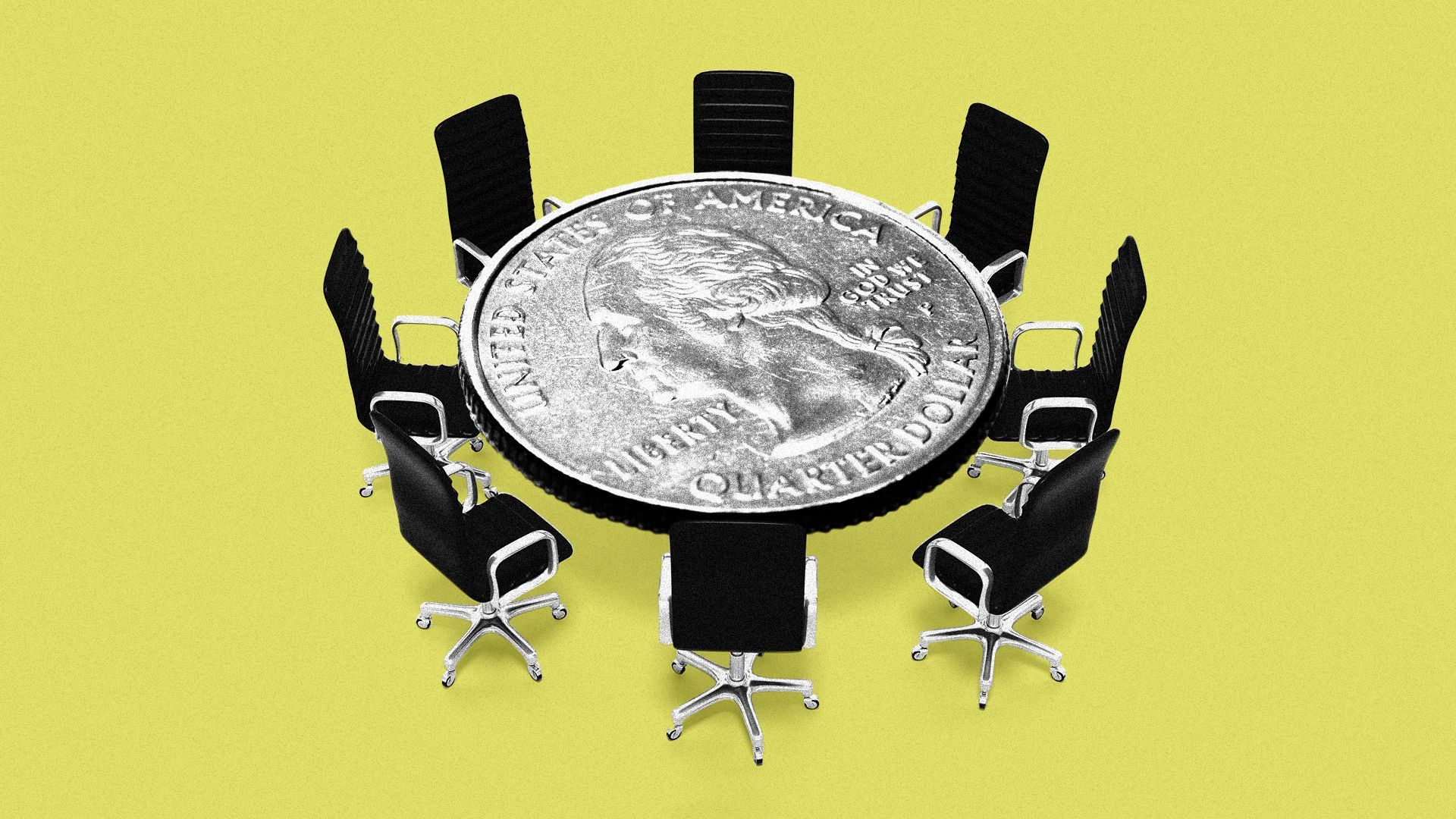
The SEC's Crypto Task Force will have another roundtable next week, where experts will discuss custody — that is, who is allowed to hold customers' digital assets.
- Why it matters: How digital value is custodied is probably the most core concept in digital assets — and an issue where regulatory decisions carry high stakes: impacting innovation, and the future role of TradFi vs. crypto-native firms.
Driving the news: Yesterday, the task force announced the next roundtable's lineup of speakers, which leans on firms that specialize in crypto custody.
The lineup favors big centralized companies that secure digital assets for institutions that want to focus on other things.
- We see one voice on the panel to speak for self-custody: Exodus Movement Inc. a maker of wallets and related products.
Zoom in: Sid Powell, CEO at Maple Finance, which makes decentralized finance instruments that institutions invest in, tells Axios that he hopes to see a regulatory regime that permits sophisticated asset managers to self-custody.
- "If not," he says, "the whole field of DeFi products gets very cut off from traditional asset managers."
- Maple Finance just broke a billion dollars in assets held by its smart contracts.
3. The stablecoin biz is developing fast
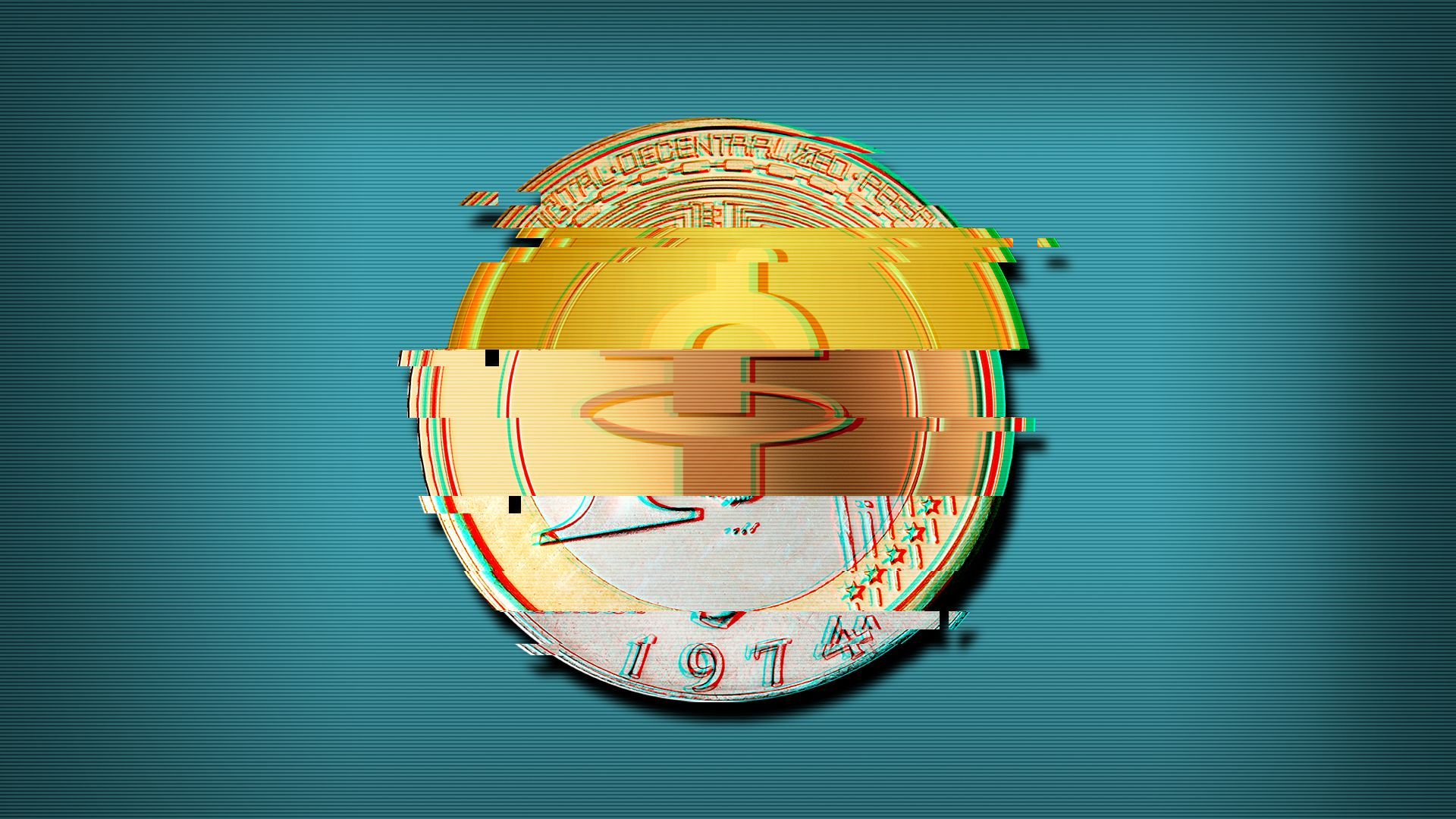
Stablecoin legislation is already having a big impact and neither chamber has even had a floor vote on it yet.
The big picture: Stablecoin projects are coming fast and furious, fueled by expectations of a liquidity wave once the world's biggest economy gives its official nod.
- Standard Chartered experts project stablecoins to become a multitrillion-dollar category by 2028 if legislation passes that sanctions the sector.
- Context: That's comparable to the entire industry's market cap today.
New entrants will find that stablecoins are a good business as long as interest rates aren't zero. Backed by reserves, usually U.S. Treasuries, they're a great business if rates are high.
- But that's a lot of sensitivity to forces outside your control, as Coin Metrics points out in its review of Circle's S-1.
- It also helps if your token is really popular, and it turns out that competing for market share is expensive.
New trends are emerging. Some might not be as profitable, and others may not even be permitted out of the gate.
- Yield-bearing stablecoins could help attract market share. But they could also chip into an issuer's profits, even when rates are strong. Circle has gotten ahead of the trend by acquiring a coin designed for yield, USYC.
- Other products are coming at a steady clip. We've mentioned the $5 billion synthetic dollar, USDE, before, but another such delta-neutral stablecoin with yield built in got seed funding this week, NUSD. (Stablecoin legislation looks likely to forbid those kinds of tokens here — for now.)
Zoom out: There's also more to the stablecoin industry than just issuing the tokens. Startups are forming to build out the use case beyond market liquidity, including companies that use stablecoins for remittances, payroll, cross-border transactions and treasury management.
What's next: More stablecoin launches by companies with recognizable names, following where PayPal led.
- FalconX, one of the custody firms from the prior item, projects perhaps 50 new entrants to the stablecoin market this year (and the company is in a good position to do better than guess).
The bottom line: I'm not a big sports guy, but this one is like what bettors do when they see the All-Pro quarterback limping out of the tunnel.
- No one knows what's gonna happen, but everyone bets like they do.
4. Catch up quick

🏦 Banks have some strong opinions about how stablecoins should work. (The Block)
📊 Publicly traded Bitcoin miners are ramping up sales of BTC as profits narrow amid lower prices. (Miner Mag)
🥱 Solana ETFs are set to debut in Canada. (Blockworks)
🪣 North Carolina is considering allowing 5% of the state's pension to go into digital assets. (WRAL)
5. Culture hash: Bitcoin philanthropy
/2025/04/16/1744837810087.gif?w=3840)
Bitcoin was a gift to the world that has made a lot of people rich. Some of those people and companies give back, to keep the momentum going.
- Why it matters: Bitcoin, like many other prominent blockchains, has no central company to steward its ecosystem — it relies on the largesse of its adherents to keep growing.
Driving the news: Digital asset finance company Unchained announced several philanthropic initiatives to advance the Bitcoin ecosystem this week.
Among its latest plans:
- Investing in community hubs, contributing cash to the Bitcoin Policy Institute, and launching a bitcoin-focused university endowment at the University of Austin in Texas.
- It will also match bitcoin donations in its donor-advised fund up to 1 BTC to partner organizations, such as the pro-freedom Human Rights Foundation and research and development organization Brink.
Between the lines: The interesting thing about the donor-advised fund is that, by donating BTC, donors can get the full fair market value for their contribution without taking a capital gains tax hit on the gains.
Flashback: We spoke to Unchained in April 2023, as one of the very few crypto lenders that didn't sink in the market turmoil of 2022.
Brady's thought bubble: The strongest cryptocurrencies are communities rather than companies. Like any community, participants get back what they put in.
This newsletter was edited by Pete Gannon and copy edited by Carolyn DiPaolo.
☃️ A protracted downturn in the 200-day moving average for BTC is not a "Crypto Winter." It's Crypto Winter when everyone I talk to is in a bad mood every time I talk to them. —Brady
Sign up for Axios Crypto