Axios Crypto

April 03, 2024
Another record in the books. And how professional wrestling can help us understand markets.
Today's newsletter is 866 words, a 3Β½-minute read.
ποΈββοΈ 1 big thing: Decentralized exchanges set a record

Illustration: Sarah Grillo/Axios
Another all-time high has just been set in cryptocurrency markets: March was the biggest month on decentralized exchanges (DEXs), according to DefiLlama.
Why it matters: The surge of activity signals the energy is out there again, with investors looking for short-term gains in a market that's generally going up, Brady writes.
By the numbers: DefiLlama logged $268 billion in DEX volume in March.
- $30 billion more changed hands last month than in November 2021, the prior monthly high.
DEXs are run by smart contracts on public blockchains. No humans are needed to operate them on a day-to-day basis.
- Investors deposit pairs of tokens into pools on the DEX, and the ratio of tokens in the pool reflects the price for each token.
- They're permissionless marketplaces β down to what gets listed on them. Anyone can fire up a market for any token on a DEX's blockchain, so they are the first place that new tokens get liquidity.
- People (or bots) trying to find the next dogwifhat or pepecoin watch DEXs like hawks.
Between the lines: Uniswap and PancakeSwap are the leading DEXs gaining volume now, while the smaller DEXs are dropping, which could mean that some of the sugar rush of the meme coin frenzy is shaking off.
- The four most traded tokens on Uniswap now are ether (ETH), wrapped bitcoin (WBTC) and the top two stablecoins, usd coin (USDC) and tether (USDT).
Zoom in: Solana is driving a significant portion of the action, though Ethereum DEXs (in particular, Uniswap) still lead.
- Four of the top 10 DEXs are on Solana. If they were all one DEX, they would be the third largest, after Ethereum's Uniswap and Binance Smart Chain's PancakeSwap.
- Trading on Solana has reached levels that make all prior eras of trading on the blockchain look tiny.
How they work: When traders use decentralized exchanges, they mostly trade with the exchange itself.
- The investors who deposit token pairs into the DEX pools earn trading fees from people using the pools to trade with.
- If a DEX's prices get knocked out of line with other parts of the larger market, arbitrage bots tend to knock them back in line swiftly.
Zoom out: The only identity a person needs to trade on a DEX is a cryptocurrency wallet, which leaves lawmakers and regulators uneasy about them.
The bottom line: Everyone is a genius trader in a bull market.
π£ 2. Charted: A new token is born


Here's a snapshot from the first day of a new token from a hot decentralized finance project we've been telling you about, Brady writes.
Why it matters: Ethena powers the new stablecoin USDe (ticker USDE), which has swiftly risen to fifth place by market capitalization of all stablecoins (now $1.9 billion).
Driving the news: The team behind Ethena airdropped 5% of the supply of their ENA token yesterday to early adopters of its platform.
Reality check: New tokens usually spike as people jump in, chasing immediate gains. Those early buys usually also lead to lots of early selling, though.
- New tokens often never recover.
How it works: USDe allows holders to earn yield as it profits from staking Ethereum's ether (ETH) and making delta-neutral trades in the ether derivatives market.
What we're watching: Sentiment for ether is strong now, with a bull market and hopes for an ETH ETF, but it could have a near-term shock shortly if the SEC (as it looks likely to do) turns down the latest raft of ETF applications in May.
π£οΈ 3. Quoted: Goldman Sachs
"At least you can hold onto physical gold and store it; you can't do that with crypto ... And anyway, we don't encourage people to own gold."β Goldman Sachs chief investment officer Sharmin Mossavar-Rahmani on bitcoin, in the Wall Street Journal
π 4. Catch up quick
π§Ί Paradigm is looking to raise a $750 million fund, the first big new crypto fund since the downturn. (Bloomberg)
ποΈ Relm, a Bermuda-regulated firm, is offering a suite of bespoke insurance products for participants in the crypto industry. (CoinDesk)
π€ Algorithmic trading bots watching ETF market moves might be aggravating bitcoin volatility. (Bloomberg)
π 5. Culture hash: Kayfabe
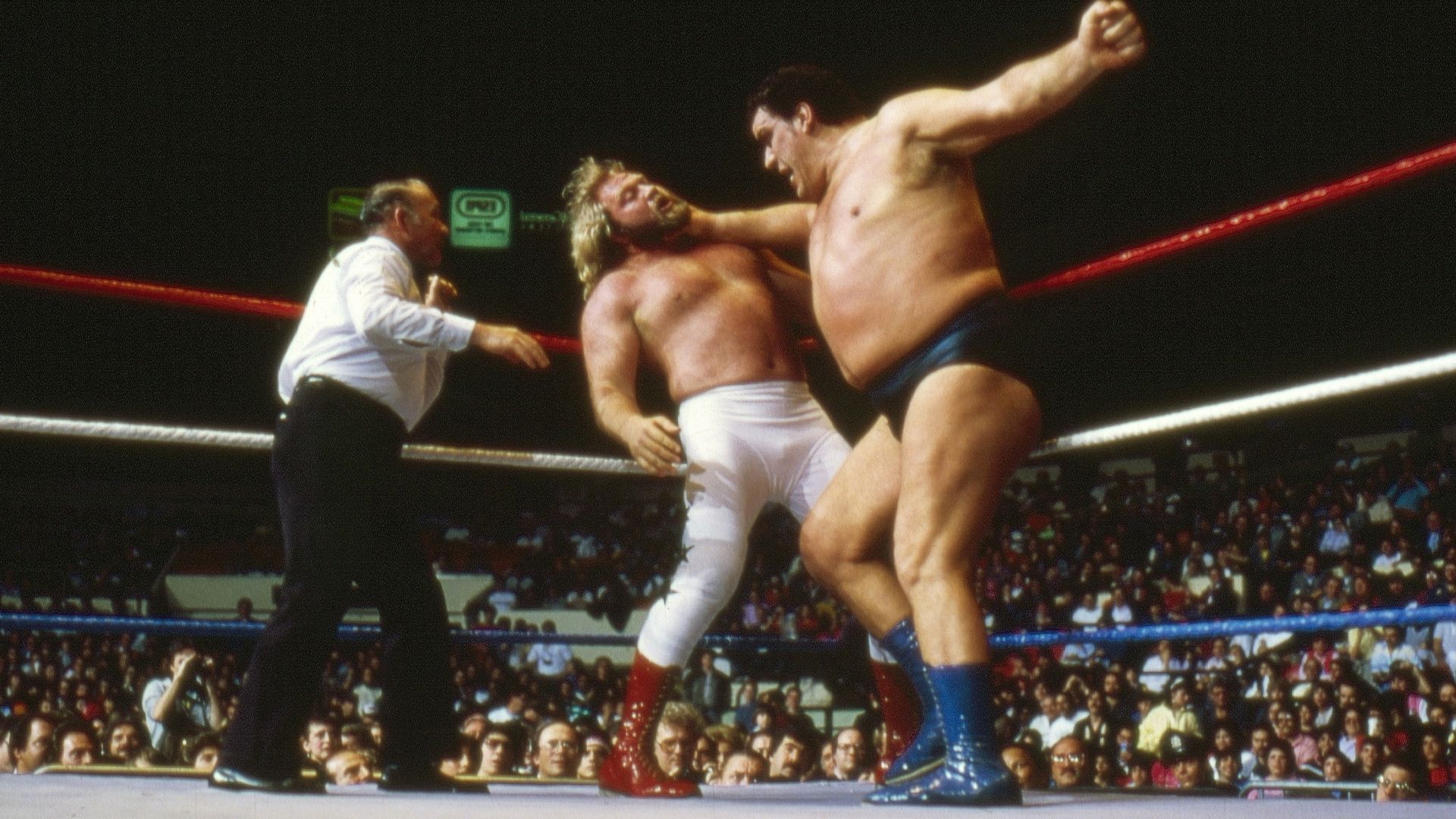
AndrΓ© the Giant, right, vs. Big John Studd, 1985. Photo: Ronald Modra /Sports Illustrated via Getty Images
One of the modern era's most important group of philosophers, professional wrestlers, gave us a powerful concept that's crucial to understanding markets in the internet age: kayfabe.
- Kayfabe is the way professional wrestlers pretend to have ferocious animosity toward each other, as if the outcomes of their physical contests aren't always known in advance, Brady writes.
- Kayfabe is committing to the bit β 24/7. It's method acting, with drop-kicks.
Flashback: When the Wall Street Bets crew performatively avowed their intention to never ever sell GameStop shares, that was kayfabe.
- When Crypto Twitter disavows FUD, that's also kayfabe.
Zoom in: Kayfabe is supremely important in memetic markets, and cryptocurrency is very much one of those. As long as everyone in it agrees to agree not to sell, investors can hold the gains they've made.
- In a new blog post, Zee Prime Capital's Matti writes about kayfabe as an important element of the exploitation phase in crypto market cycles, when everyone is trying to squeeze as much profit as they can out of whichever narratives are sticking.
Reality check: As any wrestler could tell you, sometimes the only way to really commit is by letting yourself get body slammed.
This newsletter was edited by Pete Gannon and copy edited by Carolyn DiPaolo.
Brady's at NFT.nyc today. Say hello if you see him. βC & B
Sign up for Axios Crypto

Brady Dale covers crypto and blockchain impacts on markets and regulation.