Axios Crypto

March 27, 2025

Hello! Greetings! Two busy weeks of crypto conferences in New York and D.C. are behind us, but political developments continue at a brisk pace.
- 📝 State of play: The resolution to repeal the IRS broker rule revision has been voted through Congress. It's just awaiting a signature from the president.
📫 Questions are always welcome: [email protected].
Today's newsletter is 818 words, a 3-minute read.
1 big thing: 🤠 Wyoming's stablecoin enters testing

Wyoming is testing its stablecoin on multiple blockchains, state officials confirmed yesterday from the stage of a conference in D.C.
Why it matters: As the U.S. government gets closer to passing laws establishing a legal framework for stablecoins, more entities are seeking to launch these instruments.
State of play: PayPal, probably the first major brand in the game, made news with its stablecoin a little over a year ago.
- Fidelity is testing one. Custodia and Vantage Banks just issued one. Bank of America said it will likely get in on it, too.
- And World Liberty Financial, the DeFi effort supported by the Trump Organization, announced its own this week: USD1.
Wyoming's is notable in that it comes from domestic government. And the coin, WYST, would be a flex by a state that has long embraced the crypto industry.
- The widening race to develop stablecoins is because there will be less regulatory friction, but Wyoming Gov. Mark Gordon yesterday said the state — which started this process with 2023 legislation — wants to be above all that.
What they're saying: Gordon, speaking at the Chamber of Digital Commerce's DC Blockchain Summit, explained why he thought a conservative approach to a state stablecoin makes sense.
- "Everybody's seeing trillions of dollars coming their way. Everybody wants to kind of establish a new thing right away," he said.
- Gordon wants Wyoming to be "prudent," with a slightly overcollateralized backing and a strong commission to bring the token about.
- Profits from the coin will support the school system.
Zoom in: The state published testnet addresses for the seven blockchains where it's running tests: Avalanche, Solana, Ethereum, Arbitrum, Optimism, Polygon and Base.
- Around distribution, it's working with LayerZero, the interoperability team behind Stargate.
- The stablecoin will ultimately be multichain but will start on just one.
Friction point: Wyoming's process ruffled some feathers. Charles Hoskinson, Wyoming resident and founder of the Cardano blockchain, has expressed anger that his chain didn't get a chance to make a bid to be part of the process.
- "Perhaps this entire enterprise should have never happened in the beginning," he said in November.
The big picture: New stablecoins are hot.
- But so far, stablecoins are a Coke and Pepsi situation. There is Tether's, there is Circle's, and then there is everyone else.
2. Quoted: The STABLE Act
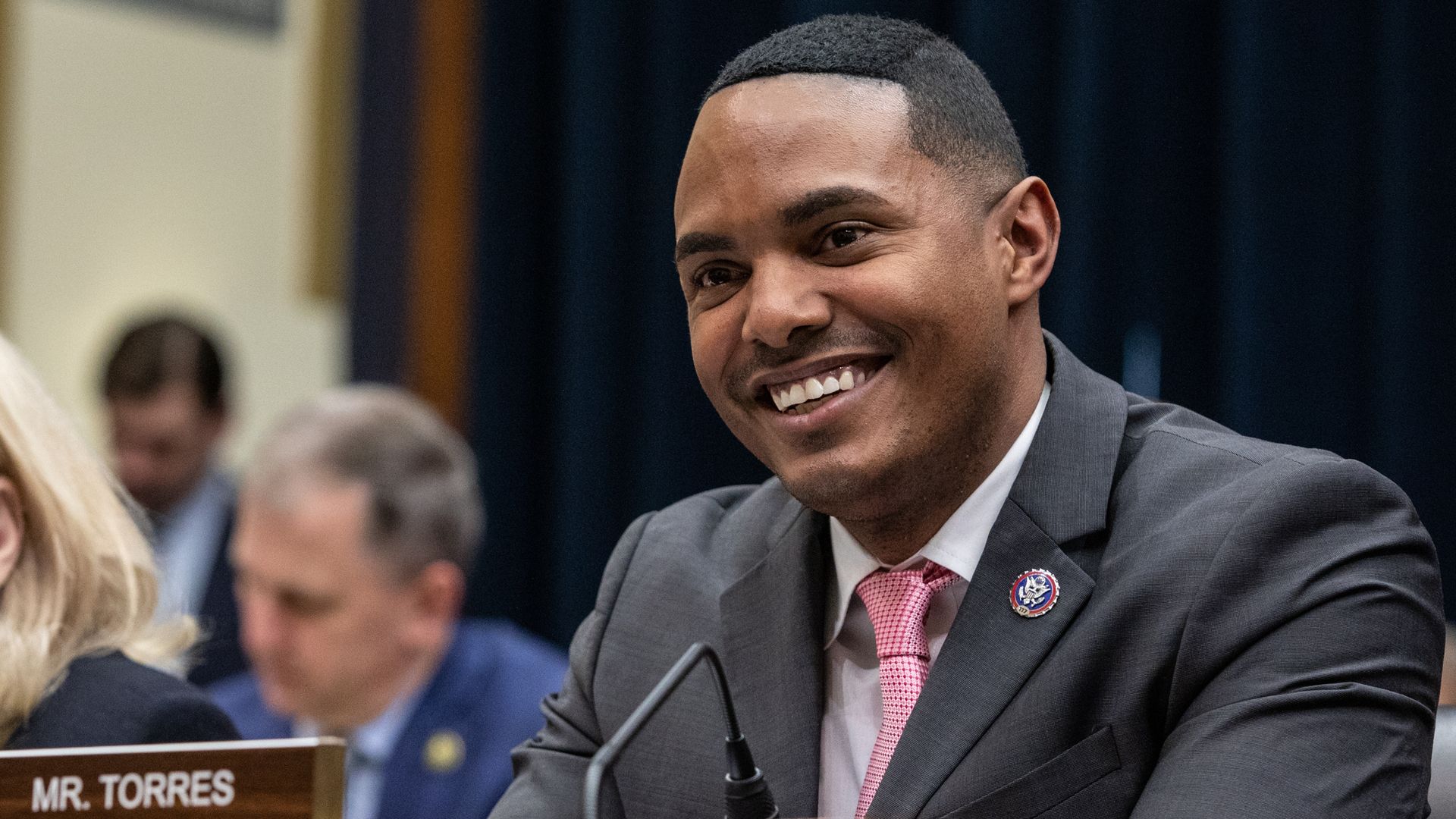
"Stablecoins represent the next frontier of financial technology, and the United States must lead in shaping a regulatory framework that fosters innovation while ensuring transparency and stability."— Rep. Ritchie Torres (D-NY), in a statement coinciding with yesterday's introduction of the Stablecoin Transparency and Accountability for a Better Ledger Economy (STABLE) Act.
What we're watching: House Financial Services has a markup scheduled for Wednesday. We would take a bet that STABLE lands on the agenda.
- Committee staff declined to confirm.
The big picture: Either way, this is the House leadership's answer to the call for stablecoin legislation.
- The Senate bill, which just got voted to the floor, is different.
3. Paul Atkins faces the Senate
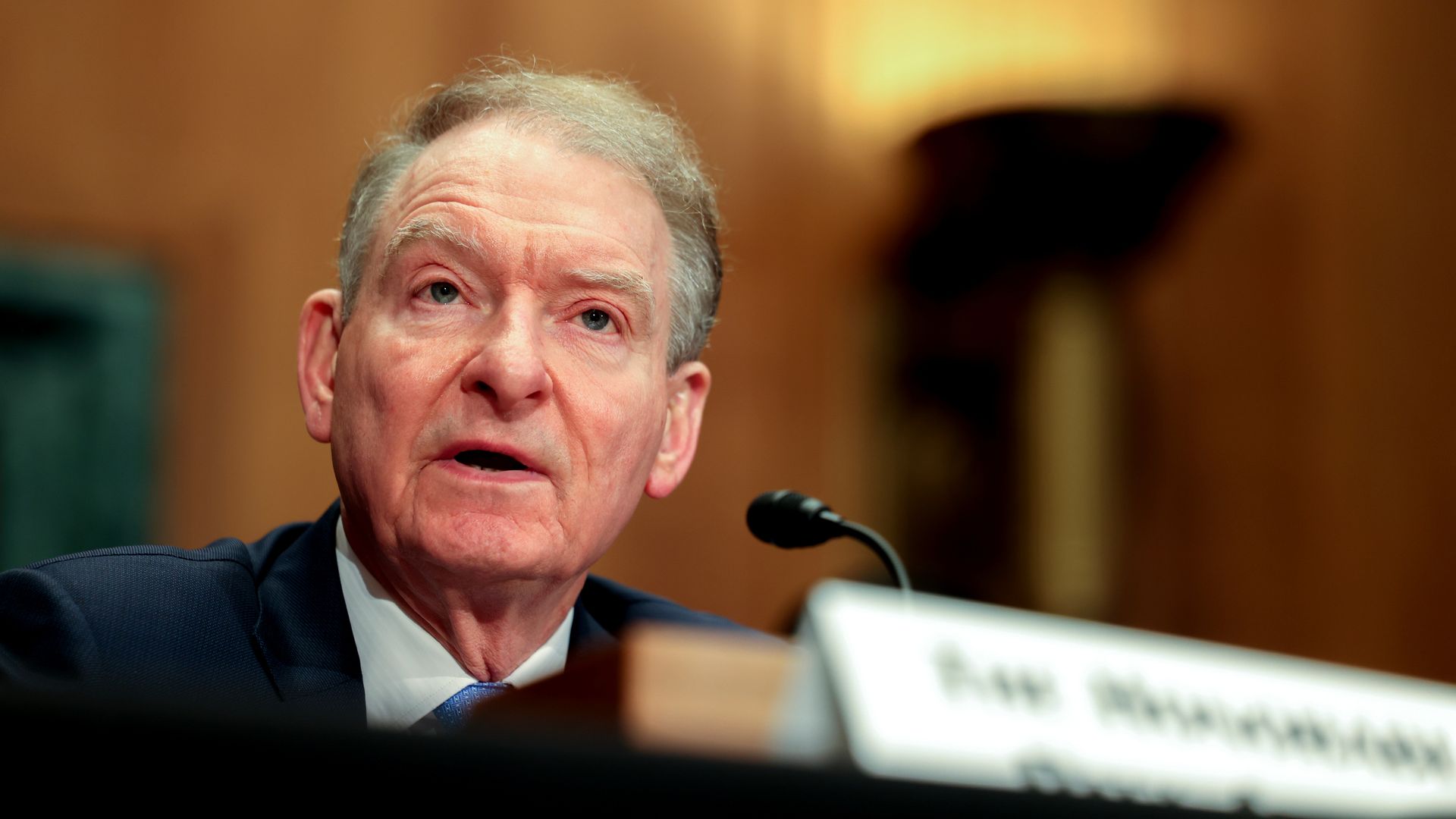
Paul Atkins faced senators on the Banking Committee this morning as part of his confirmation to serve as chair of the U.S. Securities and Exchange Commission.
- Why it matters: The prior SEC chair became enemy No. 1 for the digital asset crowd.
What they're saying: "A top priority of my chairmanship will be to work with my fellow Commissioners and Congress to provide a firm regulatory foundation for digital assets through a rational, coherent, and principled approach," Atkins wrote in his testimony.
Friction point: Sen. Elizabeth Warren, referencing Atkins' tenure as an SEC commissioner, said he had an "almost perfect track record."
- "He got pretty much everything wrong in the run-up to the biggest financial crash since the Great Depression."
Context: Atkins served on the agency's five-member commission from 2002 to 2008.
- Two current commissioners, acting chair Mark Uyeda and Crypto Task Force chair Hester Peirce, worked on Atkins' staff.
The intrigue: Atkins has committed to sell his business if confirmed. Warren pressed Atkins to disclose the buyers of his consultancy, Patomak Global Partners, to verify they are not entities who might have business before the SEC.
- Atkins responded by saying he would comply with all government ethics requirements.
- Committee chair Sen. Tim Scott (R-SC) asked that documents showing Atkins' compliance be entered into the record.
The big picture: The blockchain industry likes Atkins. Blockchain skeptics do not.
Flashback: In 2008, he was lead author of a paper about the SEC's enforcement work, which urged the agency to consider all three parts of its mission before taking enforcement actions.
- "The difficult choices of balancing conflicting interests must be guided by the transcendent principles of predictability, fairness, and transparency, culminating in the rule of law," he and his co-author, Brad Bondi, wrote.
4. Catch up quick

🎮 GameStop is playing a new meme game: bitcoin. (Axios)
🚔 Authorities arrested a Garantex co-founder in India after the exchange was sanctioned by the U.S. and EU. (TechCrunch)
💸 Feds stop $200,000 in USDT headed to Hamas. (DoJ)
This newsletter was edited by Pete Gannon and copy edited by Carolyn DiPaolo.
📺 Well, the new "Daredevil" series on Disney+ is mainly just kinda OK. Oh well. —Brady
Sign up for Axios Crypto