
Axios Communicators

December 19, 2024

Welcome to the last Axios Communicators of 2024. We are taking a break for the holidays, returning on Jan. 9.
- 📬 In the meantime, don't hesitate to send feedback, story ideas, insights or New Year's resolutions (if you're into that) my way.
- ❄️ And sign up for Axios Communicator events in Davos, featuring conversations with Pfizer's Sally Susman, Coca-Cola's Beatriz Perez, and more.
Today's newsletter is 1,617 words, 6 minutes.
1 big thing: Employees go quiet
Tech CEOs are scrambling to land on President-elect Trump's nice list ahead of his inauguration next month, with Meta, Amazon, Uber and OpenAI's Sam Altman each donating at least $1 million to the inaugural fund.
- Meanwhile, the typically very vocal and leaky employee bases have remained eerily quiet.
Why it matters: The lack of employee backlash represents a stark shift from the corporate activism witnessed during Trump's first term.
State of play: There's a steady stream of CEOs visiting Mar-a-Lago — most recently TikTok's Shou Zi Chew, Netflix co-CEO Ted Sarandos, and Jeff Bezos — which had Trump declaring that "Everybody wants to be my friend."
Reality check: It's likely not friendship they are after but a strategic pathway for hedging bets and influence.
What they're saying: Communicators from these tech companies Axios spoke with say that employees seem to understand the political realities of the Trump administration, with one describing the internal vibe as "more pragmatic" than in years past.
- "Employees understand that the regulatory stakes for the tech industry are high and you have to engage with Trump directly if you want to get things done," said one tech communications executive who requested to speak on background.
The other side: Some say this subdued response speaks to election fatigue and the busy holiday season as opposed to serving as a bellwether for employee activism.
- "The term hasn't started, and the famous Women's March, the activism and uproar around the Muslim ban and pulling out of the Paris Agreement didn't happen until after Trump's first inauguration," points out Dan Schwerin, co-founder of Evergreen Strategy Group.
- "CEOs and their advisors are underestimating the cross pressure they're going to face when [policy proposals] start happening. People are tired now, but they are going to find a second wind when confronted with the reality of it next year," he added.
And while donating to Trump's inauguration is good government relations, it's shortsighted says Paul Argenti, professor of corporate communication at Tuck School of Business at Dartmouth College.
- "Trump believes in loyalty. But you have to be 100% sure you can be completely loyal — and if you're Zuckerberg or Bezos, I don't think you can."
The big picture: When it comes to policy matters, geopolitics or societal issues, companies have shifted from loud, external and values-based communications to predominantly internal comms rooted in business-first messaging.
- "Compared to the first Trump term, people have learned a lot about the importance of prioritizing internal communications," says Nick Merrill, co-founder and managing partner at Evergreen Strategy Group.
- "We'll probably see fewer CEO statements that condemned this or that, and a lot more thoughtful, consistent engagement of the workforce. But they should be careful about doing things now that they might regret next year," he added.
What to watch: How these tech executives respond should Trump implement policies that go against their business goals, impact employees or challenge their corporate values.
- 👀 And who bails on Davos' global stage to attend the inauguration.
2. Brands go niche


Audiences have splintered into several information bubbles, based on ideology, wealth, jobs, age and location — making it nearly impossible for big brands to reach every consumer.
Why it matters: In the age of media fragmentation, it's not just about finding an audience, it's about creating a cult.
By the numbers: Strategic communications firm Confidant partnered with marketing insights firm Vytal to survey 1,000 U.S. adults between the ages of 18 and 59 to better understand brand devotion amid audience fragmentation.
- 88% of Americans engage in niche communities, and 45% of Gen Z, millennial, and Gen X Americans feel more connected to these communities than to mainstream culture.
- Nearly half flock to brands that cater to specific interests over those with broad, mass-market appeal, with Gen Z being the most likely (53%) to prioritize niche brands.
The intrigue: 51% of consumers say that feeling part of a brand's community is important to them, and 53% are likely to try a brand recommended by their community.
- "As a brand, it's really hard to connect," says marketing specialist and founder of SW Projects Sara Wilson. "These communities are places that brands can plug directly in to people's personal identity, whether that's values, beliefs, interests, hobbies, fears or desires. And in that way, these communities are so powerful and can be gold mines for brands."
The big picture: The findings reflect a growing demand for authenticity, relevance, and a sense of belonging — which many individual creators and influencers have prioritized when building their trusted audiences.
- This becomes even more important as younger audiences abandon traditional media for information and flock to news influencers and content creators on social platforms.
Zoom in: This means communication teams have to be more strategic and creative when it comes to finding and infiltrating the niche communities of their clearly defined audiences.
- Tactics include booking the right podcast interviews, reading the right Substacks, partnering with the right creators and monitoring the right Reddit threads.
What they're saying: Brands must build genuine connections and offer consumers more than just products — they'll offer belonging, says Garland Harwood, co-founder of Confidant.
- "In today's increasingly fragmented culture and media landscape, communicators planning next year's campaigns must prioritize the niche communities in their orbit. By showing up authentically — honoring a community's rituals and meaningfully contributing to its culture — brands can inspire a deeper devotion that drives loyalty and turns members into enthusiastic advocates," he added.
💭 Eleanor's thought bubble: When I talk to communication teams, I often ask them how they think about the "P" in PR.
- So much time is spent hand-wringing over the "R" — relations — but not enough time is spent debating whether the public at large is reachable, worth engaging and pertinent to achieving business goals.
3. 🏆 Best of 2024
Most-read Axios Communicators stories:
- 👀 The hiring news that raised a lot of eyebrows, as former Republican presidential candidate Nikki Haley joined Edelman
- 💅 was the most misunderstood emoji of 2024, highlighting how varying cultural and generational uses can create communication roadblocks.
- 🏀 Kim Mulkey's media relations strategy backfires after she tried to get ahead of a Washington Post profile and actually drew more attention to it.
- 🥣 Kellogg CEO faced backlash over "cereal for dinner" comment, proving that the messenger matters.
- 👑 A poorly edited photo of Kate Middleton thrust conspiracy theories into the mainstream discourse, which called the royal family's PR strategy into question.
Most-read Axios Communicator newsletter editions:
- 💼 "CCO Turnover," which warned of the stagnant job market with CCO turnover hitting a five-year low.
- 🎙️"Trump's Comms Target," which examined how a hyper-target communications strategy helped Trump win the White House.
- 🤐 "1-year mark looms," which highlighted how businesses who spoke out following the Hamas-led terrorist attack on Israel in October 2023 did little to communicate around the one-year mark.
🧠 Go deeper with Axios Communicators by joining Communicators Pro.
4. Communicator spotlight: Meridith Webster of The Estée Lauder Companies
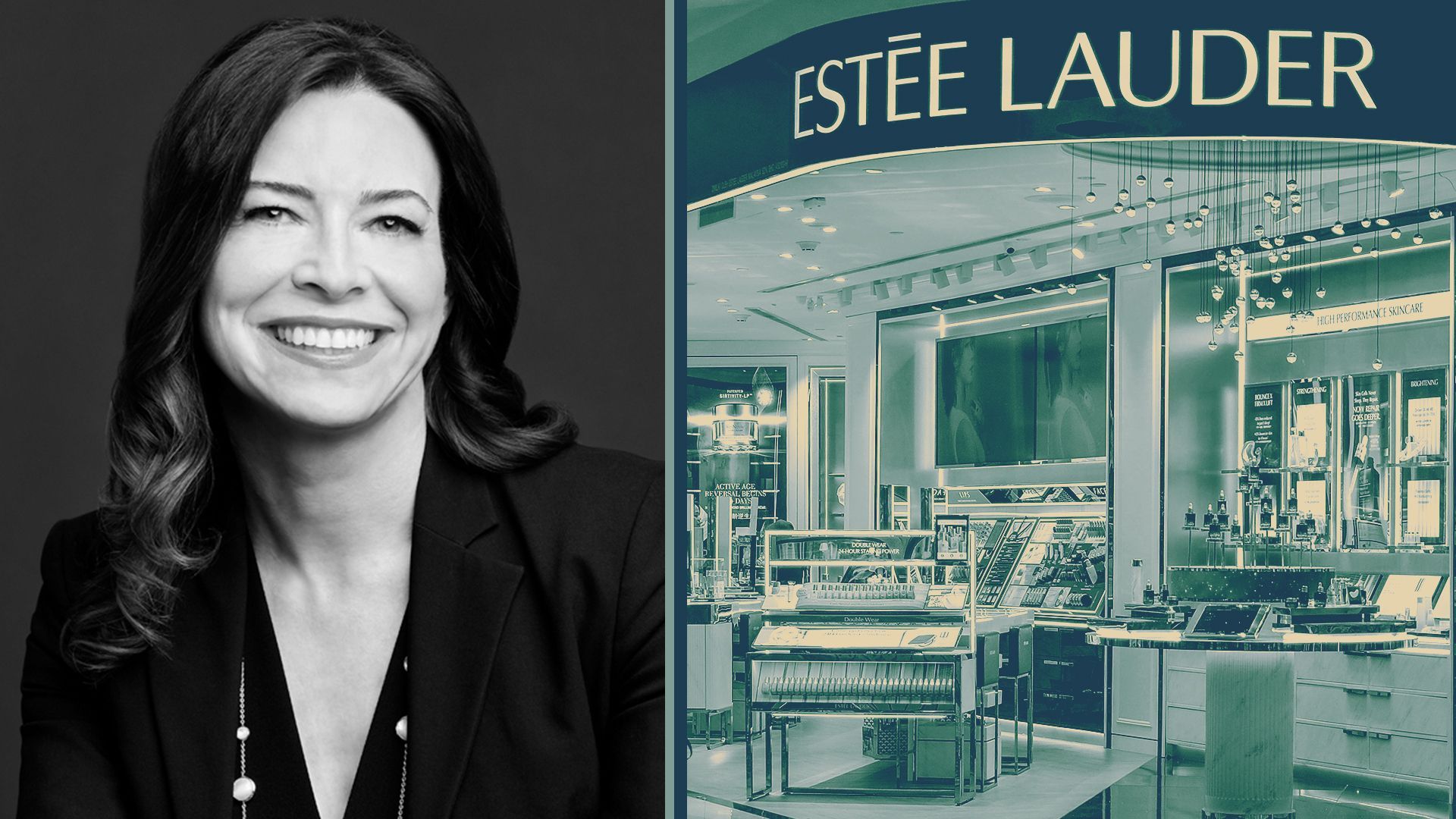
As the executive vice president of global communications and public affairs at The Estée Lauder Companies, Meridith Webster is responsible for driving, elevating and protecting the reputations of the company, its brands and its leaders.
- Why it matters: Webster's team is tasked with keeping Estée Lauder's corporate reputation intact amid a leadership change and family succession drama.
🗣️ What she's saying: "The company's undergoing a leadership change. ... Change is hard," she told Axios.
- "Our CEO has been in the role 16 years. ...Our CFO also just retired and was in the role 12 years, then we have our North America head retiring Jan. 1. So as a communications team, our job is to communicate consistently, transparently, authentically and quickly to core audiences."
📍 How she got here: Webster began her career in Washington, D.C., working for the Clinton administration before pursuing a law degree from Georgetown University.
- She then served as deputy chief of staff for U.N. Ambassador Susan Rice and worked in the Obama White House as special assistant to the president and senior adviser to the chief of staff.
- From there, Webster jumped into media, holding various roles at Bloomberg L.P. before joining Vox Media as its first chief communications officer.
- She most recently worked in the Biden administration before a recruiter reached out to her on LinkedIn with this opportunity at The Estée Lauder Companies.
🏗️ How it's structured: Webster currently reports to president & CEO Fabrizio Freda and the chairman of the board, William Lauder.
- She oversees the global team responsible for communications and public affairs.
💡 Smart communicators don't relish chaos but can manage it and drive what's next, she says.
- "I'm not an Oracle, but a good communications professional has to be able to see like the next five to 10 steps ahead, and then not just identify and admire the problem, but actually come up with how best to manage it."
👀 Who she's watching: Companies that are also navigating leadership changes — in particular, Starbucks and Nike.
🧠 Best career advice came from Madeleine Albright, who told her that "you can have it all — just not at the same time."
Go deeper... read her spotlight in its entirety.
5. 🎥 1 fun thing: Blackstone brings holiday cheer

Blackstone is back with its annual holiday video, and this time they're poking even more fun at themselves.
Why it matters: It's an example of owned content done right — executives encouraging holiday humor while also sprinkling in some strategic messaging.
What they're saying: "The initial goal was to create something fun for employees and highlight our culture, and it's kind of taken on a life of its own," Blackstone's global head of corporate affairs Christine Anderson told Axios following last year's viral video.
- It's now released publicly to investors, financial advisers, portfolio companies and the media as a way to highlight its annual accomplishments.
Go deeper... Watch.
😇 Thanks for another great year! And an extra thanks to editors Nicholas Johnston and Chris Speckhard.
- End the year with a bang by encouraging your friends and colleagues to subscribe.
Sign up for Axios Communicators