Axios Communicators

March 09, 2023
Welcome back!
- 🍹 Attending SXSW? Join Axios on March 13 for cocktails and conversations with Verizon Consumer Group CEO Sowmyanarayan Sampath, IBM CCO Jonathan Adashek and DeepMedia CEO and founder Rijul Gupta about AI and the future of communications. Request an invite.
Today's newsletter is 1,397 words, a 5.5-minute read.
1 big thing: Misinformation chaos continues

In the age of social media, companies, brands and public figures are just one viral TikTok or tweet away from a full-fledged public relations crisis.
Why it matters: If communicators hope to regain control of the message and re-establish trust, their crisis management playbooks must now include strategies to combat misinformation and disinformation online.
State of play: Social media is the current battlefield for crises because it's where issues have the most potential to spin out of control.
- A recent MIT study found false news online reaches people about six times faster than the truth and falsehoods are 70% more likely to be retweeted on Twitter than the truth.
- Public chatter about mis- and disinformation continues to skyrocket, accumulating 25 million mentions — a 30% increase from last year, according to data shared by Zignal Labs.
By the numbers: While most are aware that misinformation abounds, few are prepared to address it.
- Most U.S. businesses admit they are inadequately prepared to communicate during a crisis, a recent Capterra survey found.
- 28% of businesses don’t have formal response plans and 23% have no plan at all.
- Of the leaders who have witnessed a crisis, 84% say they would increase crisis planning and 72% would broaden the scope of their communications plan.
What they're saying: Crisis plans need to be social media friendly, says Molly McPherson, a crisis communication consultant and avid TikTok user.
- "Crisis communication response, particularly as it relates to social media, has changed dramatically due to the influence of short-form video," McPherson told Axios.
- "Prior to TikTok, most social media crises were happening on Twitter and companies were combating words with words. What has changed is not only a new social media giant, but one that is fueled by younger generations who have very strong opinions and are highly engaged."
Between the lines: Just when companies and brands were getting comfortable issuing nameless, faceless statements on Twitter, a platform that doesn't allow for corporate anonymity comes along.
- TikTok's user-generated content can quickly go viral and directly impact a brand's reputation — from extreme instances like Southwest's flight meltdowns and Daily Harvest recalls, to cultural head-scratchers like West Elm Caleb.
- To better manage these viral moments and push out facts, comms teams must evolve to meet audiences where they are with short-form video, says McPherson.
Yes, but: In some cases, a corporate response on social media can backfire by bringing more attention to the issue.
- "You have to weigh whether [the issue] is an actual risk to the company. Then you have to take a hard look at the source," crisis and issues management expert Larry Cristini told Axios. "Responding to those that don't have influence or credibility could actually raise their standing by drawing you into some engagement online."
- And if the source isn't credible, a company can still be proactive on social media "by highlighting what they do well and focusing on the positives instead of combating what's been said," Jo Robertson, author of "Executing Crisis: A C-Suite Crisis Leadership Survival Guide," told Axios.
What we're watching: The White House and more than 20 U.S. states have banned government employees from using TikTok. Bans have also taken place within India, Taiwan, the European Union and Canada.
- Such bans will impact how misinformation — and responses to them — could spread.
The bottom line: Misinformation campaigns can happen across all platforms and communicators should have a plan in place that uses all available channels and reaches hyper-targeted, engaged audiences.
2. Bonus chart: Where users think misinformation lives


Zoom in: According to Security.org research, Facebook is the least trusted social media site, with only 10% of users regularly trusting the content they see on the platform.
3. Quick tips for combating a crisis
Illustration: Annelise Capossela/Axios
Misinformation can spread faster than facts, so communicators need to get ahead rather than play catch up.
According to experts Axios spoke to, here's how ...
- Establish a rapid response team to monitor for misinformation during all hours. Response time is critical in the early stages of a misinformation campaign.
- Create an information hub — usually a website — for the most up-to-date, public information. This should be a reliable resource for reporters, community members, employees and shareholders.
- Find the messenger who can over-communicate, provide the public with updated information and address all inaccuracies point by point.
- Meet audiences where they are by using all platforms at your disposal — traditional media, social media, owned platforms and internal message boards or channels.
Plus, a few general crisis response tips to keep in mind ...
- The only way out is through. Leadership should identify where they want things to stand once the crisis has passed. What are the goals and objectives? Work back from that.
- Live in reality by coming to terms with your role in the crisis — are you the villain or the victim? This answer should inform your actions.
- Less spin, more action. All communications following a crisis should focus on the actionable next steps — it's not just about what you're saying, but what you're doing.
- Look at the data. Data can shed light on sentiment, inform when to weigh in and prescribe where to go to reach specific audiences.
- Engage with surrogates and be proactive by reaching out to trusted journalists.
- And don't forget about employees — they are your strongest allies. Be transparent, share the facts and explain the crisis plan to them.
4. Disney surrenders to DeSantis
Illustration: AĂŻda Amer/Axios
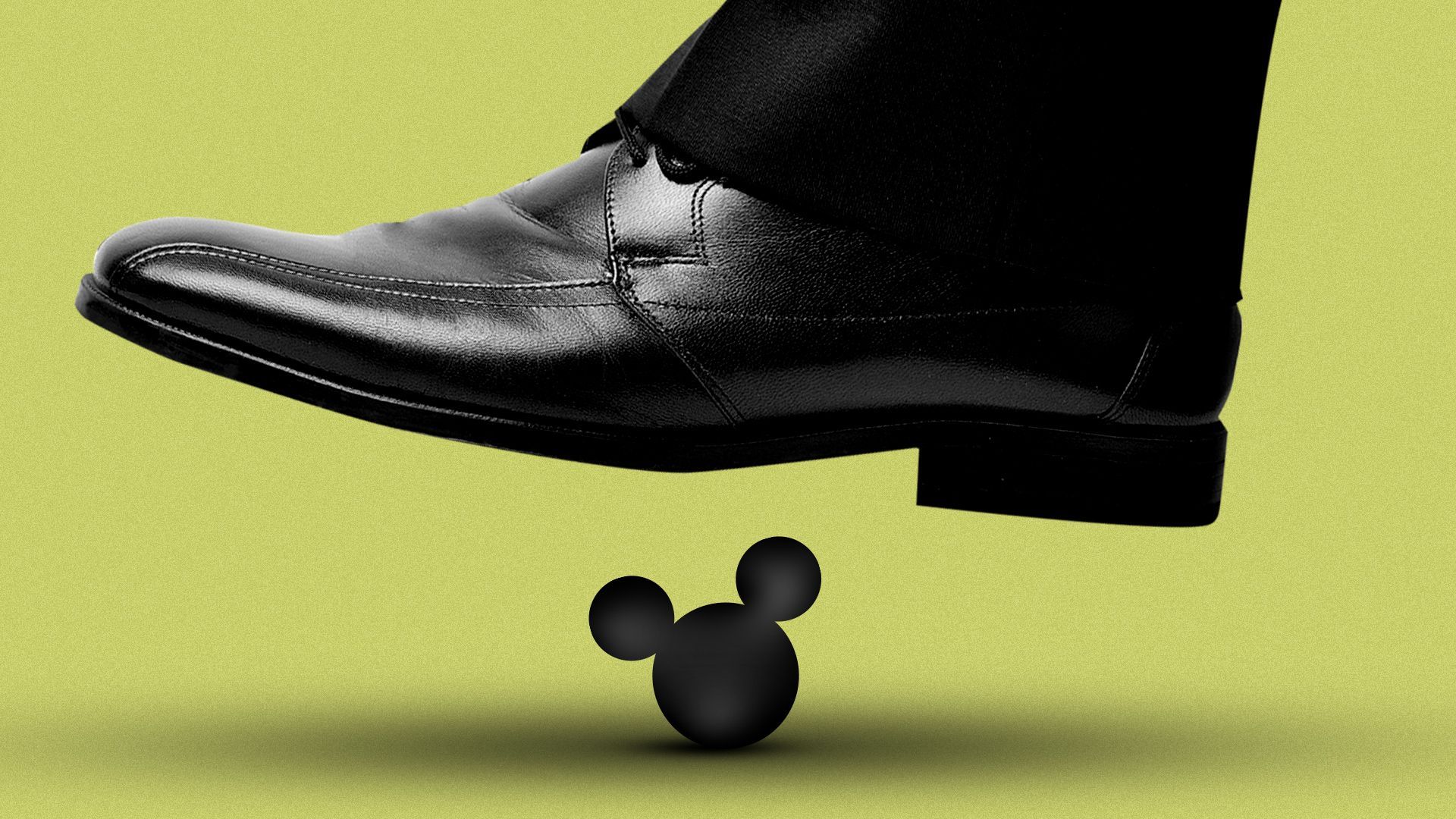
Florida Gov. Ron DeSantis recently succeeded in a Disney land grab that many believe was a form of retaliation for the company's opposition to the state's controversial Parental Rights in Education Law.
Why it matters: Many corporate leaders quietly point to the Disney debacle as a reason not to engage on social issues, even those that are important to its employees, customers and shareholders.
Catch up quick: DeSantis signed into law a bill to revoke Disney World's longstanding ability to operate as a self-governing body and created a special tax district for the park that will be managed by a five-member board appointed by the governor.
Between the lines: This will likely mean more taxes and regulations on one of the state's biggest drivers of tourism.
- "For more than 50 years, the state of Florida put Disney on a pedestal. That all changed last year, when left-wing activists working at the company’s headquarters in Burbank, Calif., pressured Disney to oppose Florida’s Parental Rights in Education Act," DeSantis wrote in a recent Wall Street Journal op-ed.
What they're saying: Disney is moving forward under the new framework and "... will continue to innovate, inspire and bring joy to the millions of guests who come to Florida to visit Walt Disney World each year," Jeff Vahle, president of Walt Disney World, said in a statement.
The bottom line: Disney's response is a lesson in strategic silence, says Tech Inc. columnist Jason Aten.
- "Do I think Disney regrets that it poked a bear that was looking for a signature issue to launch a presidential campaign? Probably, but that bear is already out there writing op-eds and giving speeches. ... Regardless of how you feel about the law, or Disney, or DeSantis, there was no good move for the company that wants to be known as the happiest place on earth."
5. 🍿 Crisis planning at the Oscars
Illustration: Rebecca Zisser/Axios
The Academy of Motion Pictures Arts and Sciences — the organization responsible for the Oscars — says it will be better prepared to manage live crises this year.
Why it matters: The academy received backlash after actor Will Smith slapped presenter Chris Rock on stage during last year's live telecast.
- There was no immediate response and the organization did not take action until roughly two weeks later.
What they're saying: This year, The academy has enlisted a crisis communications team, put new structures in place and has gamed out potential scenarios.
- “What happened onstage was wholly unacceptable and the response from our organization was inadequate," Janet Yang, president of the academy, said at a recent nominees' luncheon, per the Associated Press.
- “We learned from this that the academy must be fully transparent and accountable in our actions, and particularly in times of crisis you must act swiftly, compassionately and decisively. ... You should and can expect no less from us going forward.”
6. 👋🏻 1 parting shot
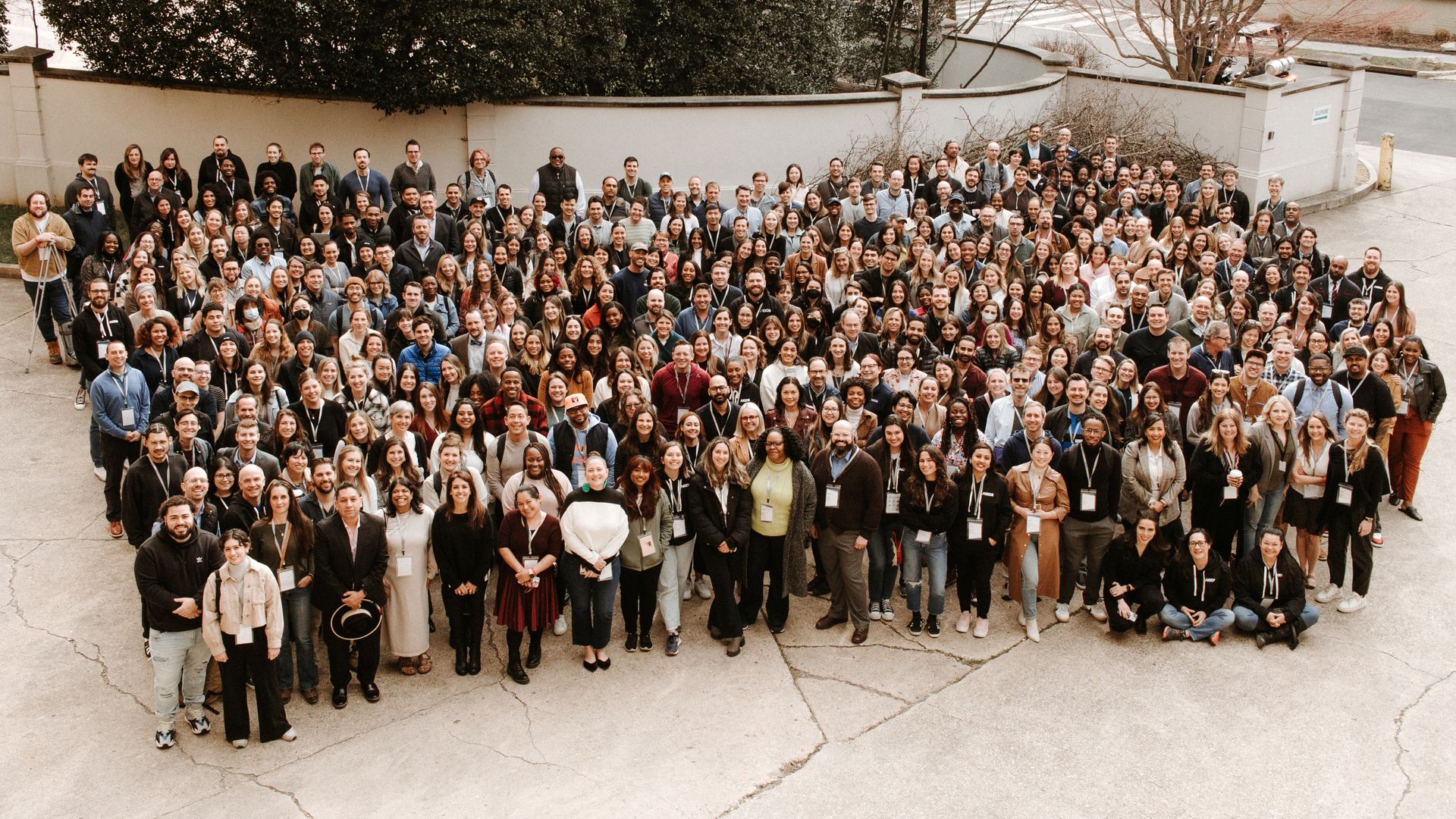
Axios employees at the annual company retreat in Washington, D.C. Credit: Axios
A look at Axios team members during last month's all-staff retreat.
❓How are your remote or hybrid employers handling in-person gatherings? Are they still hosting retreats? Or are they holding off due to economic uncertainty? Shoot me a note.
🤓 Thanks for reading! And a special thanks to editor Nicholas Johnston and copy editor Kathie Bozanich.
Invite your colleagues, friends and family to subscribe to Axios Communicators.
Sign up for Axios Communicators

Eleanor Hawkins unpacks the topics and trends driving Communications.