Axios Communicators

January 19, 2023
Happy Thursday and welcome back!
- 🎧 Out now: The finale of Axios' podcast "How It Happened: Elon Musk vs. Twitter," which examines Musk's first months as CEO of Twitter and the challenges facing each of his companies. Listen here.
Today's newsletter is 1,349 words, a 5-minute read.
1 big thing: Southwest begins to rebuild
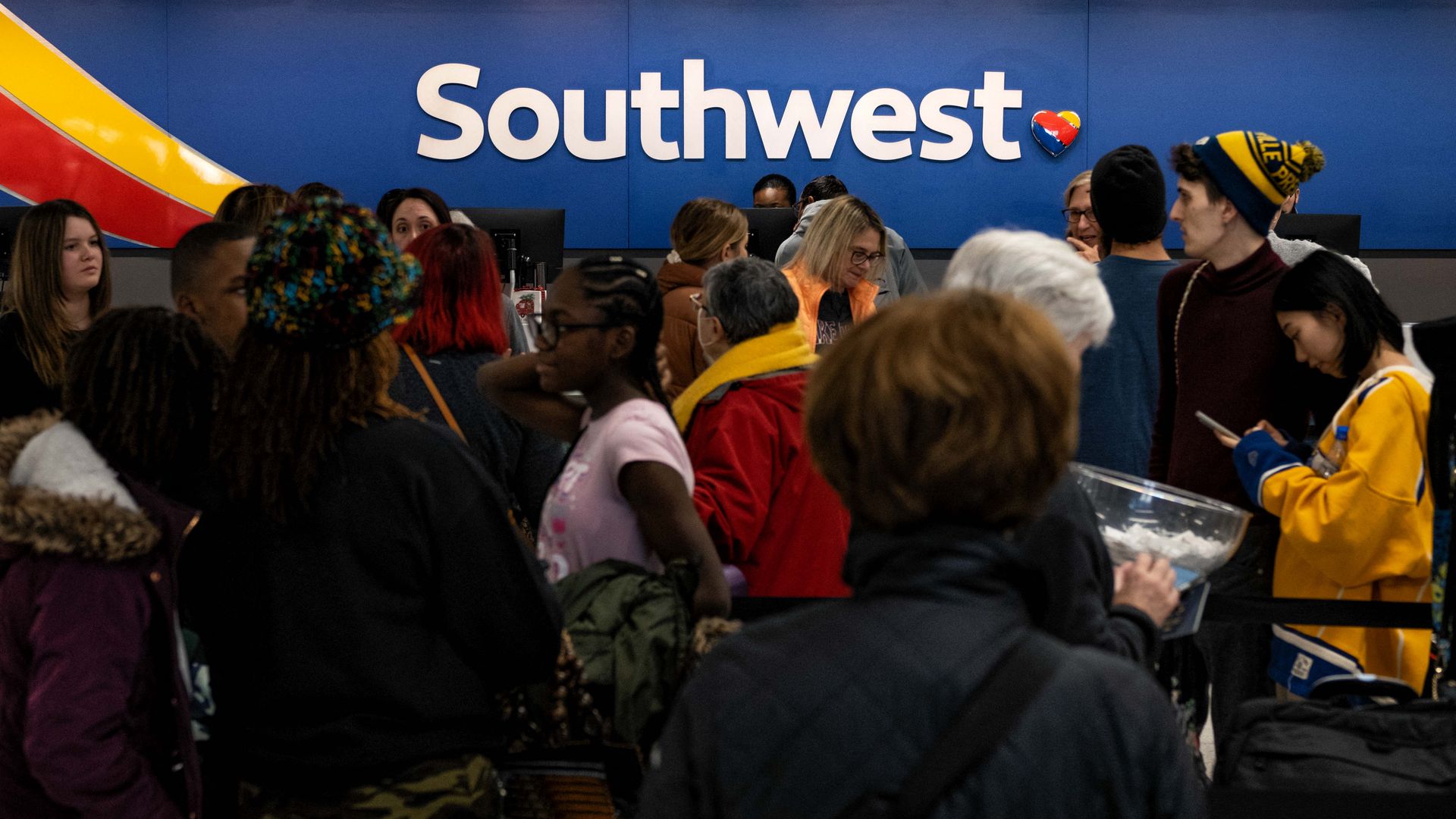
Photo: Seth Herald/AFP via Getty Images
Southwest Airlines is scrambling to resuscitate its reputation after the recent operational failures that affected roughly 1 million holiday travelers.
Why it matters: Communications weren't the problem, but they are a key part of Southwest's solution.
State of play: Now that flight schedules are back to normal, Southwest is activating on the PR front by acknowledging, apologizing and taking action.
- President and CEO Bob Jordan has appealed directly to consumers through a flurry of emails and videos apologizing, sharing operational updates and providing details on refunds — more than 90% of which have been completed — reimbursements and extra Rapid Rewards points.
- He's also briefed key legislators, members of the media and industry influencers on what Southwest is doing to avoid such failures going forward.
- This external communications push is being mirrored internally too, the airline says.
What they’re saying: "Southwest will navigate this operationally, and communications will complement that progress from a narrative standpoint," chief communications officer Linda Rutherford told Axios.
- "We can refresh and rebuild that trust among our various stakeholders by being transparent and plain-spoken in terms of what we have learned and by showing tangible results of what we will do differently as a result."
Zoom in: Part of that action is an operations review committee appointed by its board of directors and an assessment by a third-party firm whose findings will be shared with key stakeholders.
The big picture: Southwest still ranks among the top three airlines — behind Delta and Alaska, but ahead of United and American — according to The Wall Street Journal's latest airline scorecard.
- Plus: The airline says it is seeing a steady stream of booking activity — particularly among frequent fliers.
What we’re watching: All eyes are on Southwest’s earnings call next week, which should give some indication of the reputational damage, shareholder sentiment and state of consumer loyalty.
- We can expect them to firm up any fourth-quarter losses and provide context for current demand, revenue performance and any lingering financial impacts that spilled into the new year.
- We can also expect to hear about operational corrections for the near and long-term, plus a healthy dose of Southwest employee LUV — a behind-the-scenes look at all they did to support consumers beyond the DOT requirements.
The bottom line: You can be doing all of the right things to rebuild after an operational crisis, but unless it is boldly communicated to all stakeholders, brand loyalty could continue to suffer.
2. Bonus: Buttigieg's playbook
Photo: Paul Morigi/Getty Images
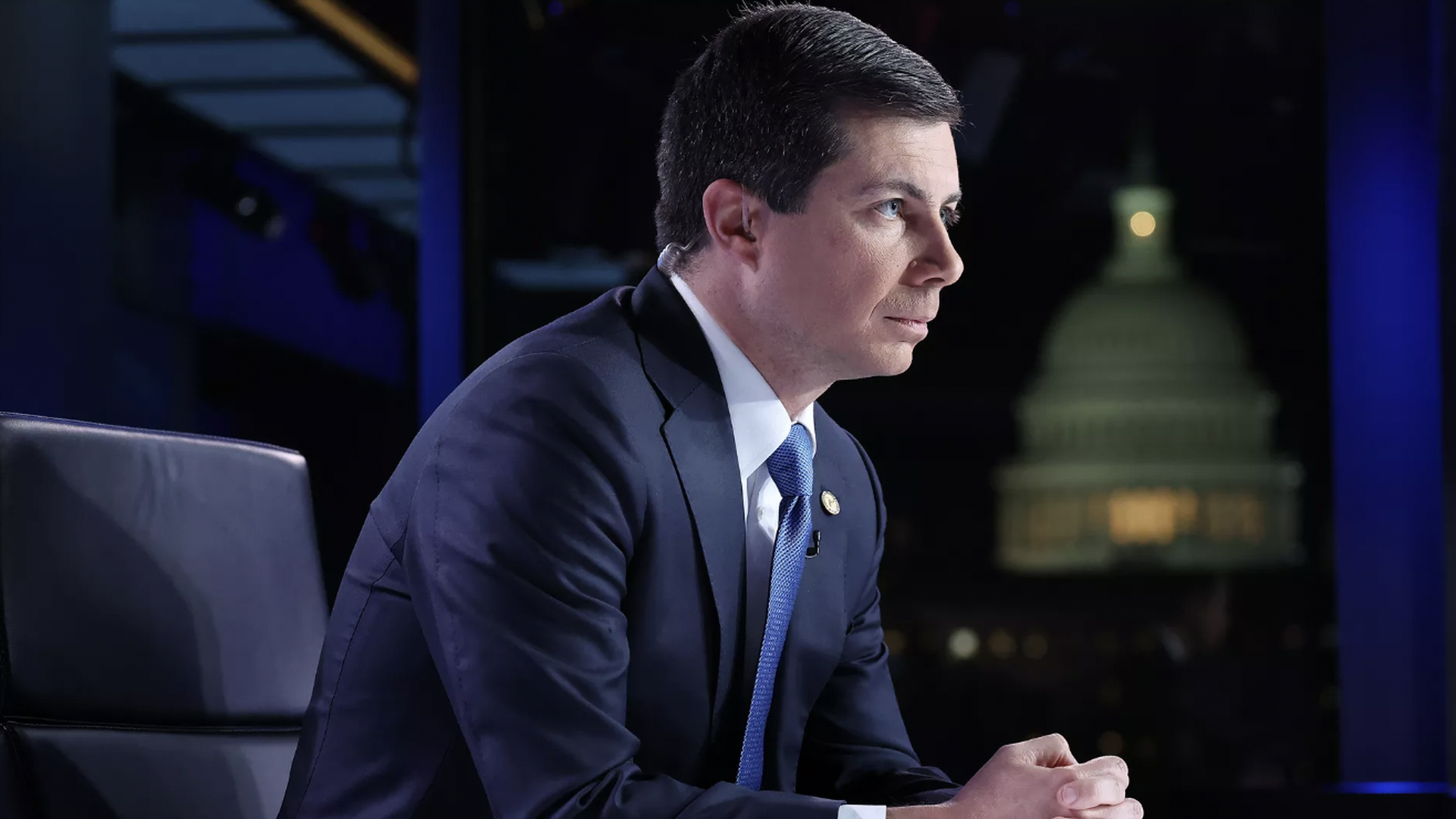
Transportation Secretary Pete Buttigieg is known for being a sharp communicator, and the latest string of infrastructure failures are putting his skills to the test.
Why it matters: Buttigieg's response to the latest transportation headache — an FAA outage — offers some useful lessons in communicating through a crisis.
What they're saying: Amid the chaos, Buttigieg went on CNN to "clearly state the critical facts and immediate actions taken, acknowledge the impacts and empathize with those affected, own up to organizational vulnerabilities and prioritize next steps to avoid it from happening again," Larry Cristini, Okta's head of business-critical and crisis communications told Axios.
- Plus: "As a master stroke, Buttigieg took the opportunity to leverage the crisis and publicly make the case for more federal funding."
The bottom line: Presenting facts, sharing an authentic concern and providing actionable next steps is a clear formula for communicating through any crisis, big or small.
Case in point...👇🏻
3. Power of authentic apologies
The olive oil startup Graza learned that sincere apologies can go a long way — particularly with consumers.
Catch-up quick: The olive oil company, which was founded in 2022 by Andrew Benin and Allen Dushi, became a staple in modern kitchens thanks to its high quality, fair price and squeeze bottle packaging.
- Yes, but: Graza had multiple stumbles during its first holiday rush and what followed was a refreshing take on the importance of an authentic apology.
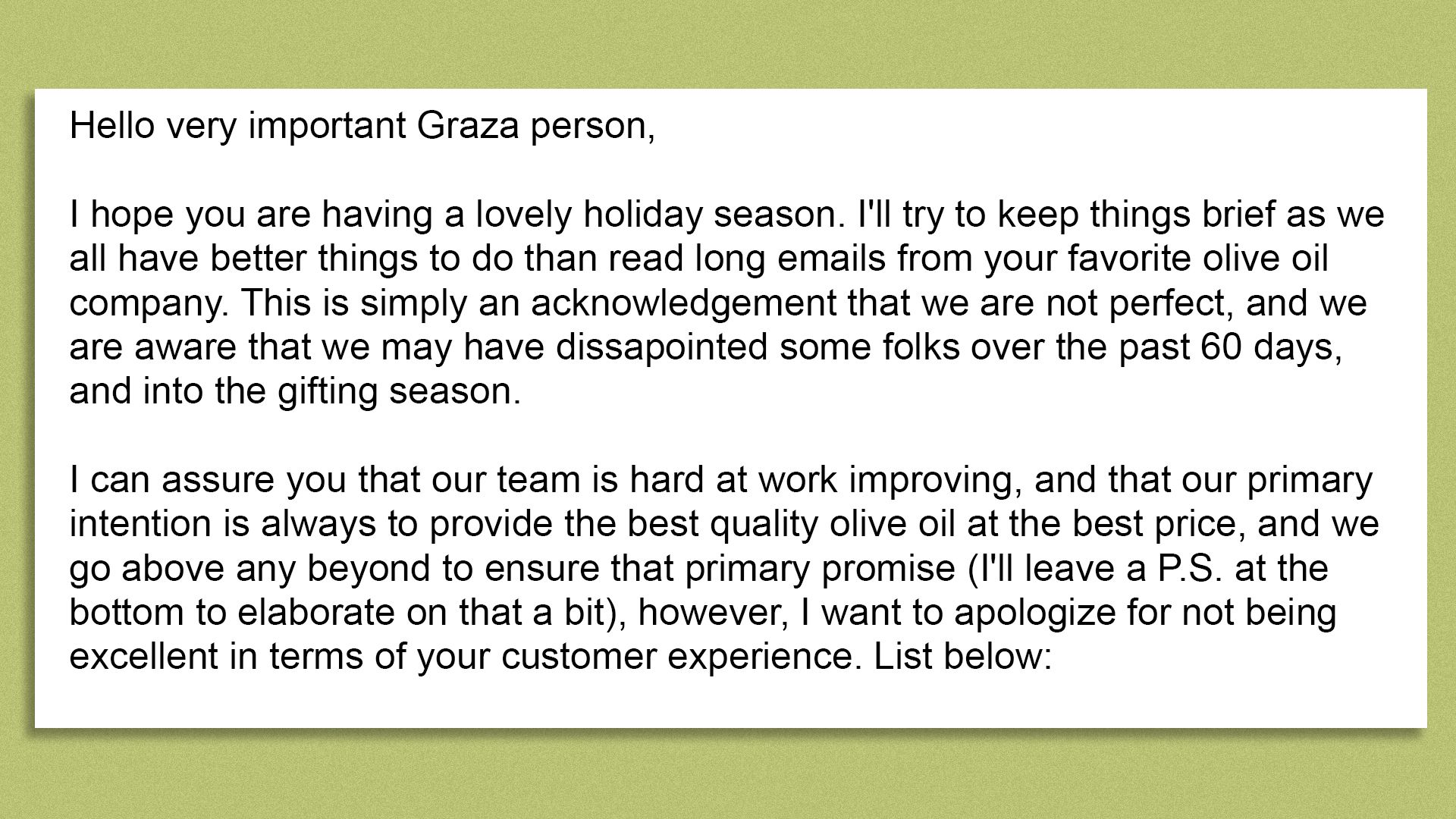
The intrigue: Benin shot off an apology email to anyone who ordered Graza in the past 60 days.
- It went straight from the founder to 35,544 consumers — no proofreading or editing from lawyers, marketing or communications teams.
- The note "explained in plain English and candid detail what went wrong and why. ... It was raw, transparent about uncertainty and messy with typos and misspellings. It was also oddly entertaining and strangely charming," writes The Wall Street Journal.
Zoom in: Customers replied in droves to thank Benin for his candor, and many swore stronger allegiance to the brand because of it.
💭 Our thought bubble: This level of authenticity — typos and all — is endearing because it's coming from a startup founder. This approach probably wouldn't work for a more established company.
- Regardless, the way a company, employer, partner or friend apologizes says a lot about how they value your relationship, and it's a critical communications tool for generating goodwill and regaining trust.
Go deeper: Read the apology note via the WSJ (no paywall!).
4. Employers remain most trusted source of information


Business leaders remain the most trusted voices around the world, according to the new Edelman Trust Barometer.
Why it matters: CEOs are now under pressure to take the lead on a wide range of societal issues that government is no longer trusted to manage, writes Axios' Mike Allen.
Zoom in: The most reliable source of information is the employer — and more specifically, company-wide newsletters.
- "We first saw data supporting the essential role of employer communications during the pandemic, when we found high demand for frequent communications about health-related topics," according to Edelman.
- "Since then, we have asked about the relative credibility of employer communications across topics, and have found it is the most believable source — no matter which subject we ask about."
By the numbers: Since last year's survey, trust in business increased 6 points in the U.S.
- "My employer" is 25 points more trusted than government or elected officials and business holds a 54-point lead over government in competence — and 30 points in ethics.
- "72 percent want business to defend facts and expose questionable science being used to justify bad social policy. .... 64 percent want companies to support politicians and media outlets that build consensus and cooperation."
The bottom line: To maintain trust, societal leadership must be a core function of business, says the study.
5. Communicator Spotlight: Isabel Lara, NPR's CCO

Photo illustration: Shoshana Gordon/Axios. Photo: Stephen Voss/NPR
Isabel Lara serves as chief communications officer for NPR and offers comms support to its network of over 1,000 member stations nationwide.
Why it matters: Lara is responsible for shaping a narrative as the public radio entity adapts to the ever-changing media landscape.
🏗 How it’s structured: Her team oversees media relations, social media, talent relations, internal communications, audience relations, crisis and corporate communications.
- "A big chunk of our staff are journalists, so internal and external communications must always be in sync," she tells Axios. "Staff should hear the good — and most importantly — the bad news, from us first ... not read it in the newspaper or see it leaked on Twitter."
💕 Favorite part of the job: "I love working with journalists because they’re curious and skeptical by nature ... making a journalist care about a story I am telling them is always a thrill."
🌡 Hardest day at work: On June 5, 2016, NPR photographer David Gilkey and Afghan translator and journalist Zabihullah Tamanna were killed while on assignment in Afghanistan.
- After sharing the tragic news with the families, Lara worked closely with NPR's news chief, head of security and internal communications lead to notify staff before the news broke externally.
- "One of the lessons learned was the solidarity that exists among news organizations when something like this happens."
💡Best advice: Be transparent.
- "No one likes to be blindsided. Keep your boss in the loop so they can remove any obstacles in your path. Brainstorm and share information with your team. Make sure your colleagues on other teams are aware of what's happening too. Everyone likes to feel like an insider."
5. Quote du jour
"Two-thirds of employees say they will only work for a company whose values are similar to theirs."— Richard Edelman tells CNN at the World Economic Forum in Davos, Switzerland.
✅ Thanks to editor Nicholas Johnston, copy editor Kathie Bozanich and to you for reading!
Invite your friends and colleagues to subscribe.
Sign up for Axios Communicators

Eleanor Hawkins unpacks the topics and trends driving Communications.