Axios Columbus

March 18, 2026

Hello, Wednesday!
๐ฌ๏ธ Today's weather: Cloudy and windy, with a high near 40 and a chance for afternoon rain and snow.
๐ข Situational awareness: Expect tornado sirens at 9:50am today. It's a statewide drill for Severe Weather Awareness Week.
โ What should Axios Columbus do more of โ or less of? Tell us in this short survey.
Today's newsletter is 1,041 words โ a 4-minute read.
1 big thing: Why we don't talk about COVID anymore
Six years ago this week, COVID-19 dominated daily life. Schools closed, headlines tracked cases, and Ohio reported its first deaths and postponed a primary election.
Why it matters: Today, the pandemic that killed over 1 million Americans and reshaped society has largely faded from public conversation.
- That silence isn't unusual โย but it could have real consequences, an Ohio State University public health historian says.
Driving the news: Associate professor Marian Moser Jones and other researchers have interviewed over 120 local and state health officials across the U.S. to document how they navigated the pandemic.
- They hope to create a historical record before memories fade and society moves on.
- "There's almost been a consensus โ in a time when we don't have consensus about a lot โ that we're going to move on and not talk about this anymore," Moser Jones tells Axios.
What they've found: Many health care workers witnessed traumatic scenes, including patients dying alone, and endured months of fear and uncertainty before vaccines and treatments existed.
- And officials, once praised as heroes, became targets of anger and blame.
- The urge to suppress painful experiences is deeply human, Moser Jones tells Axios.
Flashback: There was a similar desire to move on after the 1918 influenza pandemic, which killed about 675,000 Americans and intertwined with World War I.
- It was also a tense, politicized time full of unrest, misinformation and, yes, mask resistance.
- Ohio-born President Warren G. Harding won in 1920 on a "return to normalcy" campaign, and society shifted focus into the Roaring Twenties.
Case in point: The library's Dispatch archives show references to "Spanish flu" or "Spanish influenza" โ the virus' original misleading name โ waned by the 1930s and then mostly disappeared for decades.
- In 1964, the newspaper's magazine published a four-page retrospective.
Between the lines: A politicized pandemic is hard to collectively mourn, Moser Jones says. Unlike wars or other tragedies, there are no remembrance days or memorials.
- And by its nature, an endemic virus has no true "end."
Yes, but: Putting the pandemic behind us too quickly makes it hard to assess what worked and what didn't โย and whether public health officials are equipped for the next crisis.
The bottom line: "People are going to want to know what happened," Moser Jones says.
- "Pandemics are going to come back, whether we repress our memories or not."
2. What the history books might say
Six years later, COVID is already becoming history โย but how schools teach it is still evolving.
The big picture: Early research suggests K-12 textbooks are presenting the pandemic in fragmented ways, avoiding deeper questions about its causes and consequences.
- Meanwhile, kids who lived through it are now the teens in high school history classrooms, bringing their own lived, nuanced experiences into lessons.
Between the lines: The 1918 flu pandemic isn't specifically mentioned in Ohio's social studies learning standards or model curriculum, though "pandemic diseases" are listed among the "social and political challenges of a globalized world."
- That means how COVID is taught can vary significantly from district to district, Ohio Council for the Social Studies board member Elijah Fenwick-Sanders tells Axios.
Zoom in: Fenwick-Sanders, a Cincinnati-area history teacher, says he doesn't treat COVID as a finished chapter. Instead, it's a reference point.
- He begins the school year discussing recent events, to anchor students in the present, before visiting earlier periods of U.S. history.
- That lens helps students draw parallels โย and in some ways, make sense of their "collective trauma," he says.
What he's saying: "The answers weren't clear in their time, just like they may not be clear in ours," Fenwick-Sanders says. "We're still in the first draft of history."
3. Do you want to talk about COVID?
Though the pandemic isn't a part of everyday conversation anymore, it changed people's lives in ways that still linger.
Tell us what you remember most, six years later.
- What did you learn?
- How did the experience change your life?
- Was it all bad, or did any good come of it?
๐ฌ Reply to this newsletter with your story. We'd love to hear from you.
4. Nutshells: Your local news roundup
๐ Ohio State's investigation into former president Ted Carter is "moving as quickly as possible" and government entities have not started any separate investigations. (Dispatch)
- The podcaster at the heart of the investigation had a $93,716 contract to record 50 episodes of her show at WOSU's headquarters. (WOSU)
โ๏ธ The "boom" heard in Northeast Ohio yesterday morning was likely a shock wave created by a meteor. (Axios Cleveland)
โ๏ธ Gov. Mike DeWine has signed a bill banning ranked choice voting. (Dayton Daily News)
๐ฎ A new bill would regulate minors' access to online gaming. (Statehouse News Bureau)
- Sen. Michele Reynolds (R-Canal Winchester) says the bill is a response to an Indiana teenager's death earlier this year.
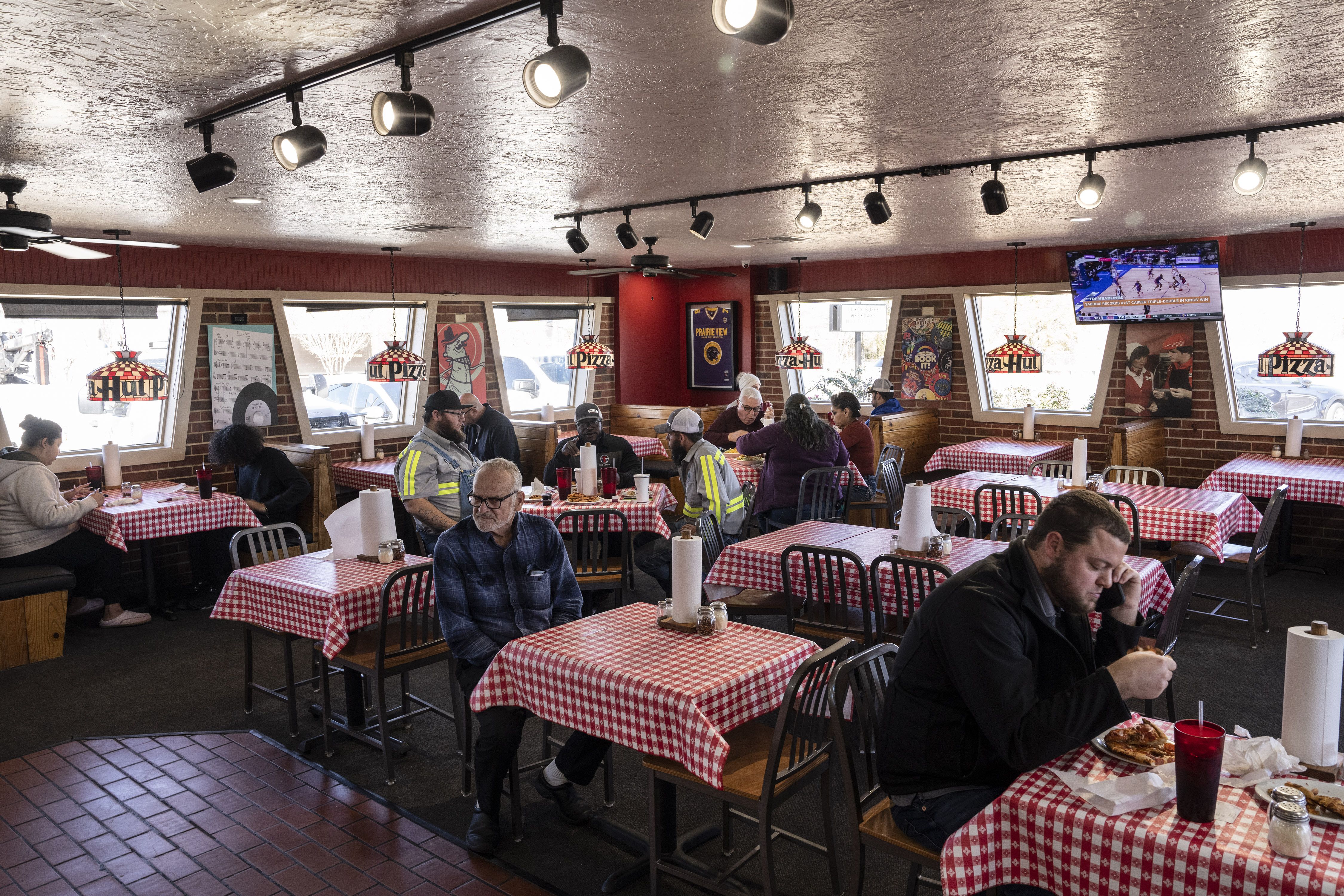
5. ๐ Pizza time warp

The good old days are closer than you might think.
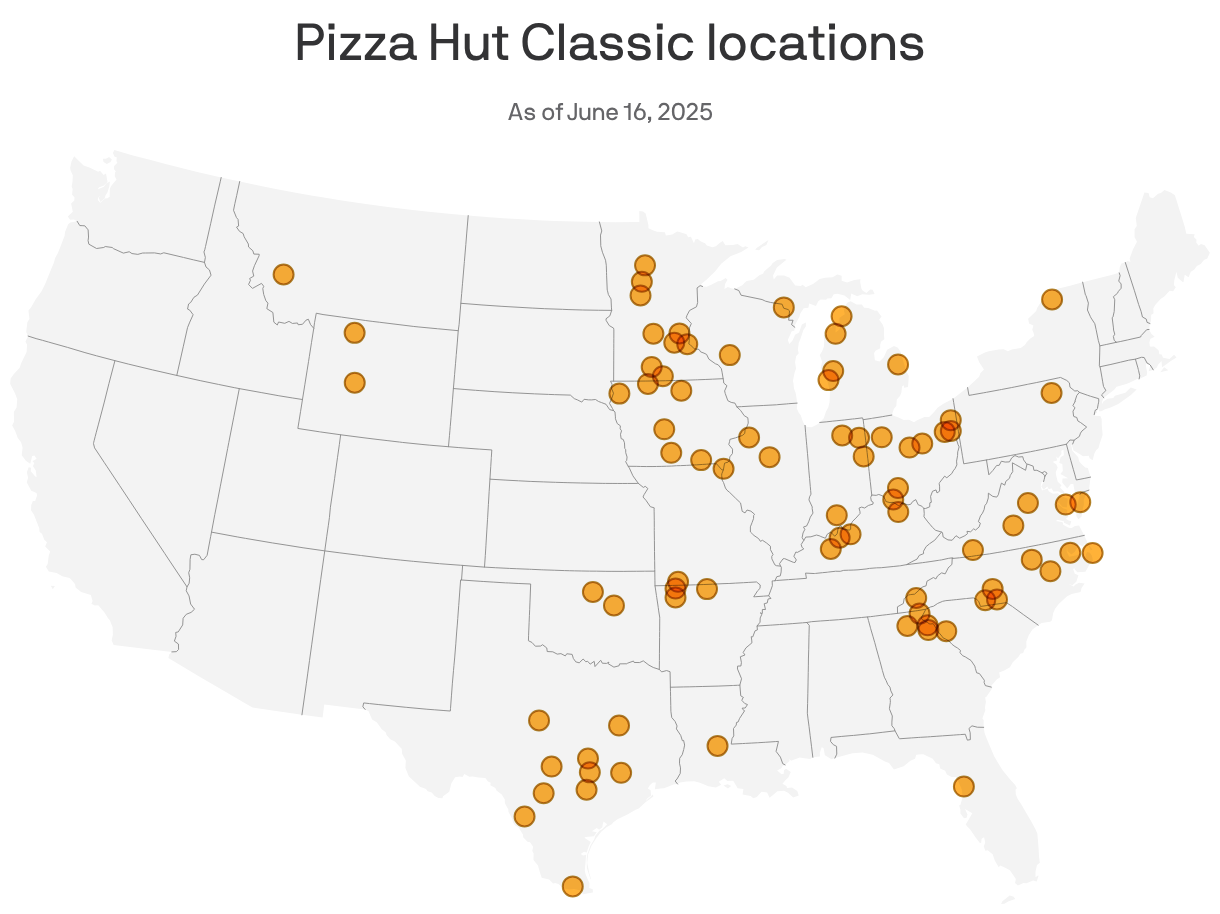
The intrigue: Retro "Pizza Hut Classic" locations are still around, the New York Times reports, and a few are even within a quick road trip of Central Ohio.
- "Retrologist" Rolando Pujol has assembled a list of about 80 locations.
- With eight, Ohio has among the most in the nation.
๐บ๏ธ The closest trips:
- Mount Gilead, less than an hour north.
- Loudonville, about 90 minutes northeast.
- Hillsboro, about 90 minutes southwest.
Yes, but: Pizza Hut parent company Yum Brands "does not promote or even acknowledge their existence," per The Times.
๐ญ Pujol tells The Times: "I did feel like I was giving people a passport to find a piece of their personal history that they had lost track of."
- "I am doing a public service."
Sign up for our free men's and women's bracket challenges to win Axios swag โ if asked, the password is "Axios" without quotation marks.
Our picks:
๐ Andrew was astonished to find that Pizza Hut still does Book It.
๐ Alissa is a little disappointed Book It is now tracked on an app, instead of a nostalgic button.
๐ Tyler lives right next to a Pizza Hut, but of the takeout-only variety.
Thanks to Tyler Buchanan for editing today's newsletter.
Sign up for Axios Columbus