Axios Closer

March 08, 2023
🪷 Happy Wednesday. Hope here. In recognition of International Women’s Day, today’s newsletter is focused on giving you a pulse check on the state of economic progress for women.
Today's newsletter is 673 words, a 2½-minute read.
🔔 The dashboard: The S&P 500 closed up 0.1%.
- Biggest gainer? ON Semiconductor (+5.6%), after BofA Securities raised its price target on the stock, which lifted the whole chip sector.
- Biggest decliner? Norwegian Cruise Line (-4.3%). ¯\_(ツ)_/¯
1 big thing: Progress is fragile
Illustration: Sarah Grillo/Axios
Many measures of economic progress for women are pointing in the right direction, but the pandemic has brought the vitality of that progress under strain, Hope writes.
State of play: The share of women between the prime working ages of 25 and 54 working or looking for work has virtually rebounded to pre-pandemic levels, after nearly 20% of the entire U.S. female population lost their jobs.
- There are more women leading Fortune 500 companies than ever before, and women’s entrepreneurship has been on the rise — with women starting 49% of new businesses in 2021, up from 28% in 2019.
Yes, but: Women are much more likely to report burnout from the pandemic as they struggle with return-to-office policies and lack of child care options.
What they’re saying: "What the pandemic really brought home was the realization that … economic and personal security for women is more fragile than we probably have expected previously," Emily Haber, German ambassador to the U.S., told Axios’ Courtenay Brown this morning.
- “Even if we secure progress, progress seems to be standing on thin ice.”
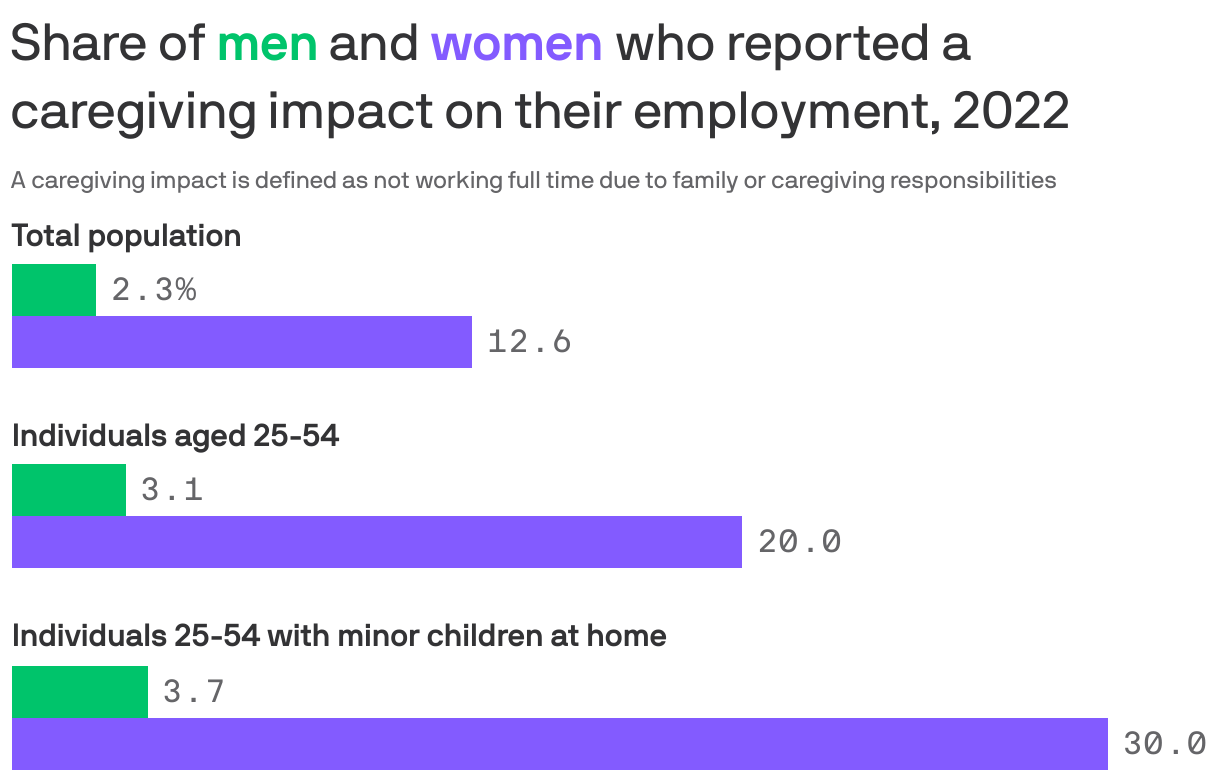
What to watch: Women continue to bear a disproportionate burden from caregiving throughout their lives — with women five to eight times more likely than men to report an impact on their careers as a result, a Center for American Progress study finds.
2. Charted: Tough choices

Having a child greatly reduces the employment rate of women, particularly for those with children under the age of 5, the Center for American Progress study also found.
- While the Biden administration is trying to tie child care to economic incentives for growth companies, critics say an add-on requirement “cannot replace broad-based investments in child care.”
4. Discretionary pay gap

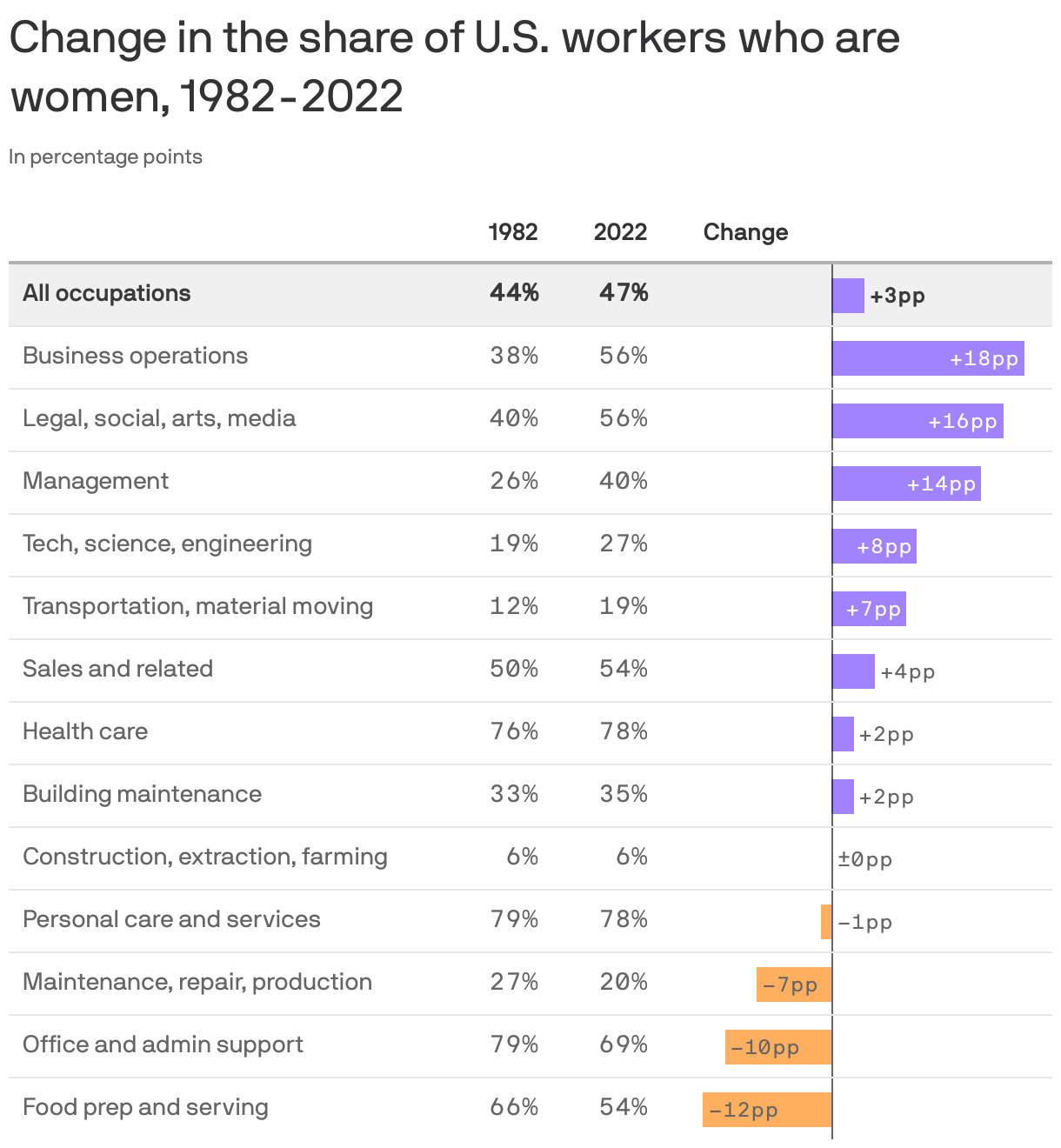
The types of jobs that women and men hold play a role in the overall gender pay gap in the U.S., which has barely budged over the past 20 years.
Why it matters: Pay disparity within occupations can sometimes be wider and worse in fields like finance and insurance than in arts and recreation, blunting the effect of more women moving into higher-paying fields and attaining higher degrees.
What they're saying: When bonuses are discretionary, they may favor men who are more likely to work longer hours and to push for a raise, Ruth Thomas, a pay equity strategist at Payscale, told CNBC.
- For example, the largest uncontrolled pay gap is for women with MBAs, who take home 76 cents for every dollar a man with an MBA makes, Payscale found.
The big picture: There’s no single explanation for why progress on shrinking the pay gap has “all but stalled,” according to Pew Research.
- But differential treatment, including by race and ethnicity, contributes to the problem.
5. Stop using "imposter syndrome"

Illustration: Aïda Amer/Axios
The definition of "imposter syndrome" suggests that a feeling of inadequacy is irrational, formed merely by some deficiency of confidence that begins and ends in the head of a successful individual.
- But what happens when those feelings of self-doubt are manifested by very rational circumstances?
Zoom in: A 2021 piece in Harvard Business Review by Ruchika Tulshyan and Jodi-Ann Burey explores how an overgeneralization of the phenomenon serves to dismiss the very real systemic workplace issues that continually fuel self-doubt in successful working women, Axios' Pete Gannon writes.
What they're saying: "Imposter syndrome directs our view toward fixing women at work instead of fixing the places where women work," the authors wrote.
The big picture: The solution to the issue, they argued, is the creation of an environment "that fosters a variety of leadership styles and in which diverse racial, ethnic, and gender identities are seen as just as professional as the current model."
6. The bottom line
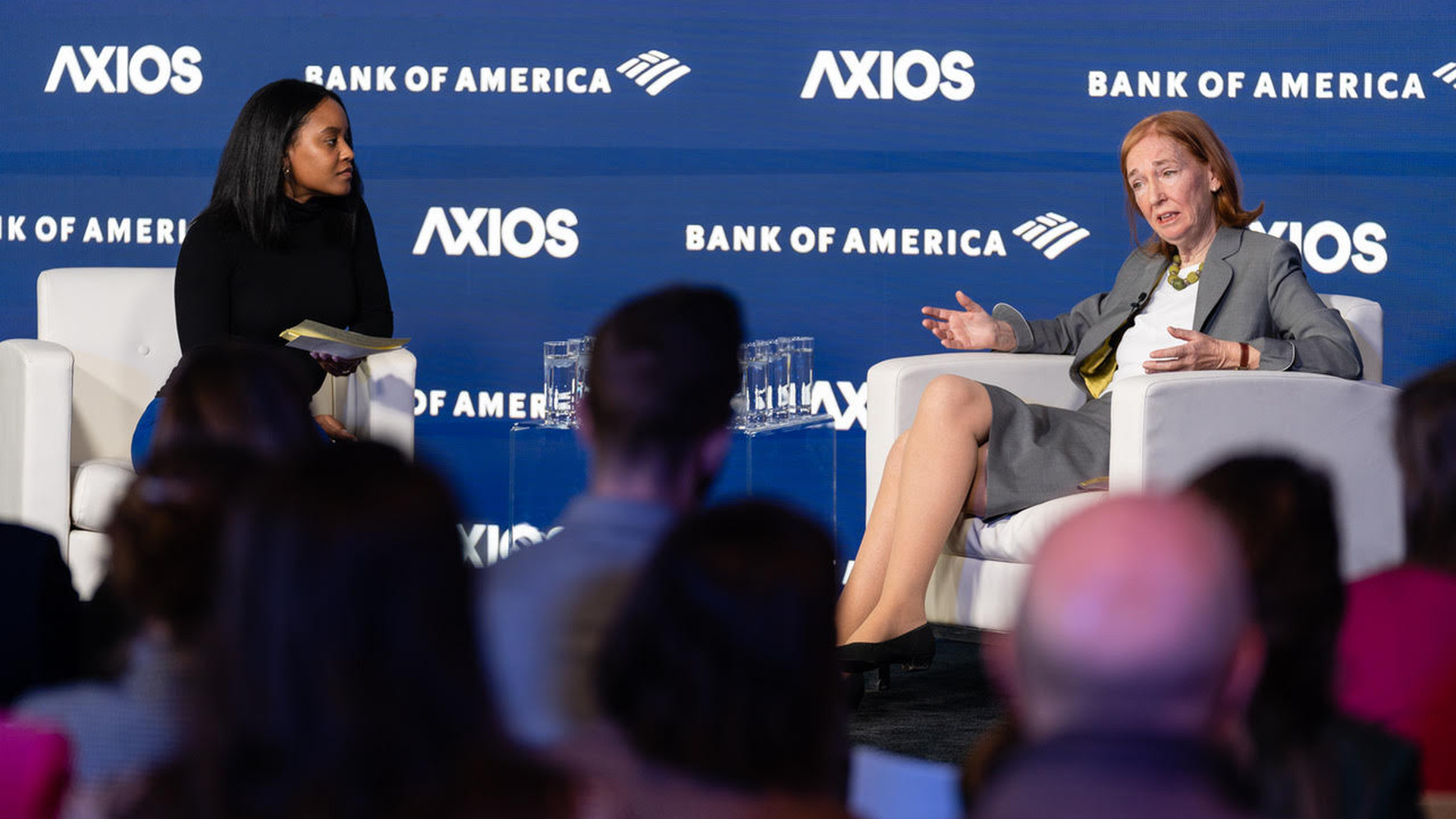
Axios' Courtenay Brown on stage with German Ambassador to the United States Emily Haber. Photo: Eric Lee/Axios
"Working against discrimination of women, of other groups, is not a woman's business. It's the business of society at large."— Emily Haber, German ambassador to the United States, in conversation with Axios' Courtenay Brown during an Axios News Shapers event this morning in D.C.
Today's newsletter was edited by Pete Gannon and copy edited by Sheryl Miller.
💡 Axios is hosting our second annual What’s Next Summit on March 29 in Washington, D.C., spotlighting the innovations, trends and people that are breaking boundaries and shaping our world.
- Speakers include music producer Timbaland, Whole Foods Market CEO Jason Buechel, CVS Health president and CEO Karen S. Lynch, and more.
- Register to livestream the event here.
Sign up for Axios Closer

Catch up on the day's biggest business stories and look ahead to important trends. Led by Nathan Bomey.