Axios Closer

February 01, 2022

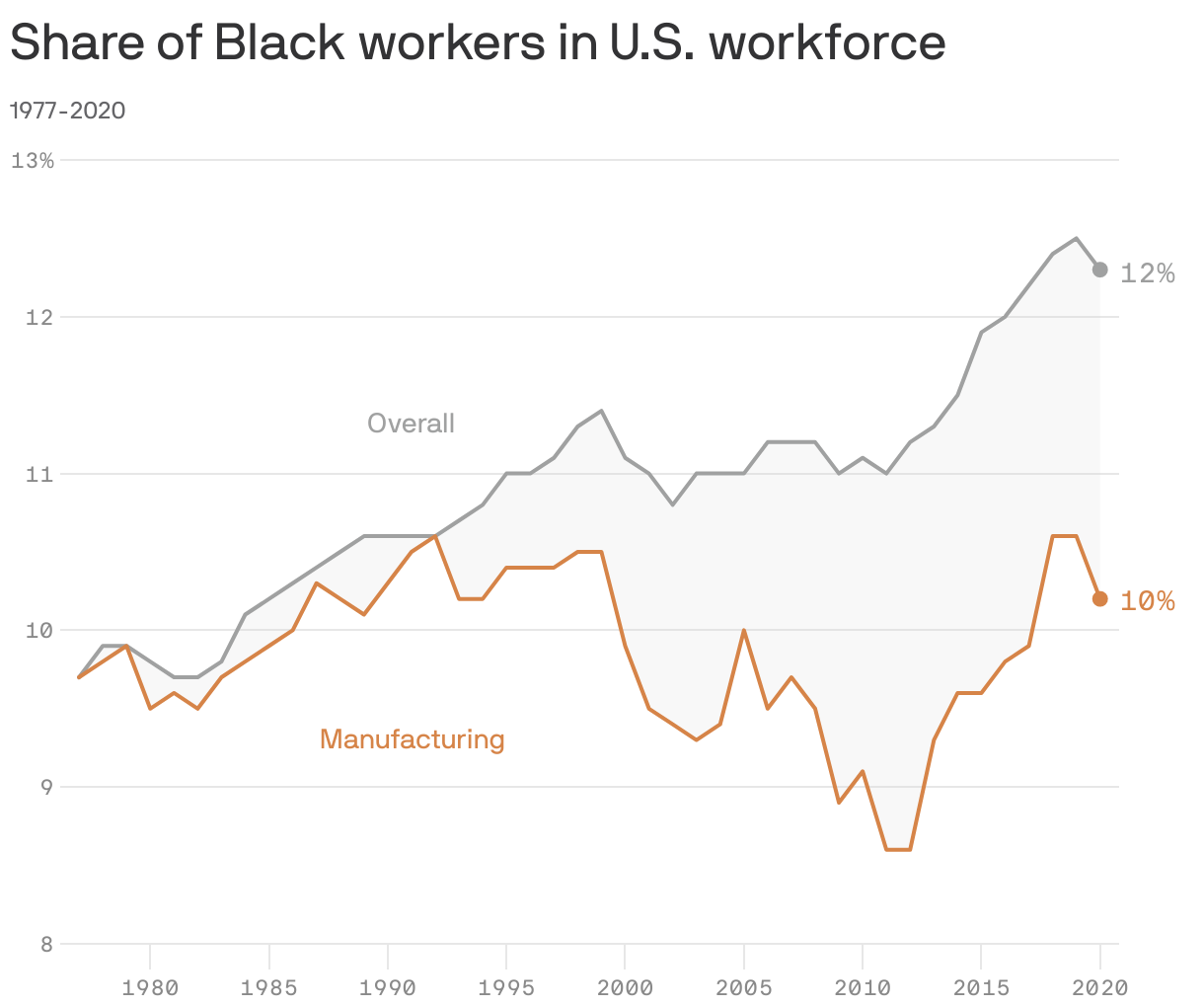
1 big thing: Black workers hard hit by globalization
 Open embedded content from datawrapper.dwcdn.net
As the nation marks Black History Month, a look back at the history of globalization reveals economic and racial inequities that still reverberate.
Why it matters: Black Americans have been disproportionately affected by the manufacturing sector’s contraction, Nathan writes.
- Among median-wage, non-college-educated employees, Black workers earn $5,000 more per year in manufacturing jobs than in other roles.
Driving the news: Black workers lost 646,500 manufacturing jobs from 1998 to 2020, wiping out more than 30% of their employment in the sector, according to a new report by the Economic Policy Institute.
- Black Americans went from 10.6% of the industry’s positions at their peak to 10.2% in 2020.
Many of those higher-paying jobs have disappeared as production shifted overseas.
- “The loss of jobs offering good wages and superior benefits in manufacturing has narrowed a once viable pathway to the middle class, particularly for workers of color — who represent a disproportionate share of those without a college degree,” according to the EPI report.
Ripple effects: The job losses have had a “spiral effect” on communities with a high percentage of people of color by undermining their tax bases, report co-author Valerie Wilson tells Axios.
- “The jobs that were growing and newly available were not the same quality of jobs that were lost,” Wilson says, noting that low-paying service-sector positions have proliferated.
What’s next: EPI is calling for an investment in infrastructure and climate-change-related programs to boost U.S. exports and pair it with policies that “help ensure that workers of color and women can access these jobs.”
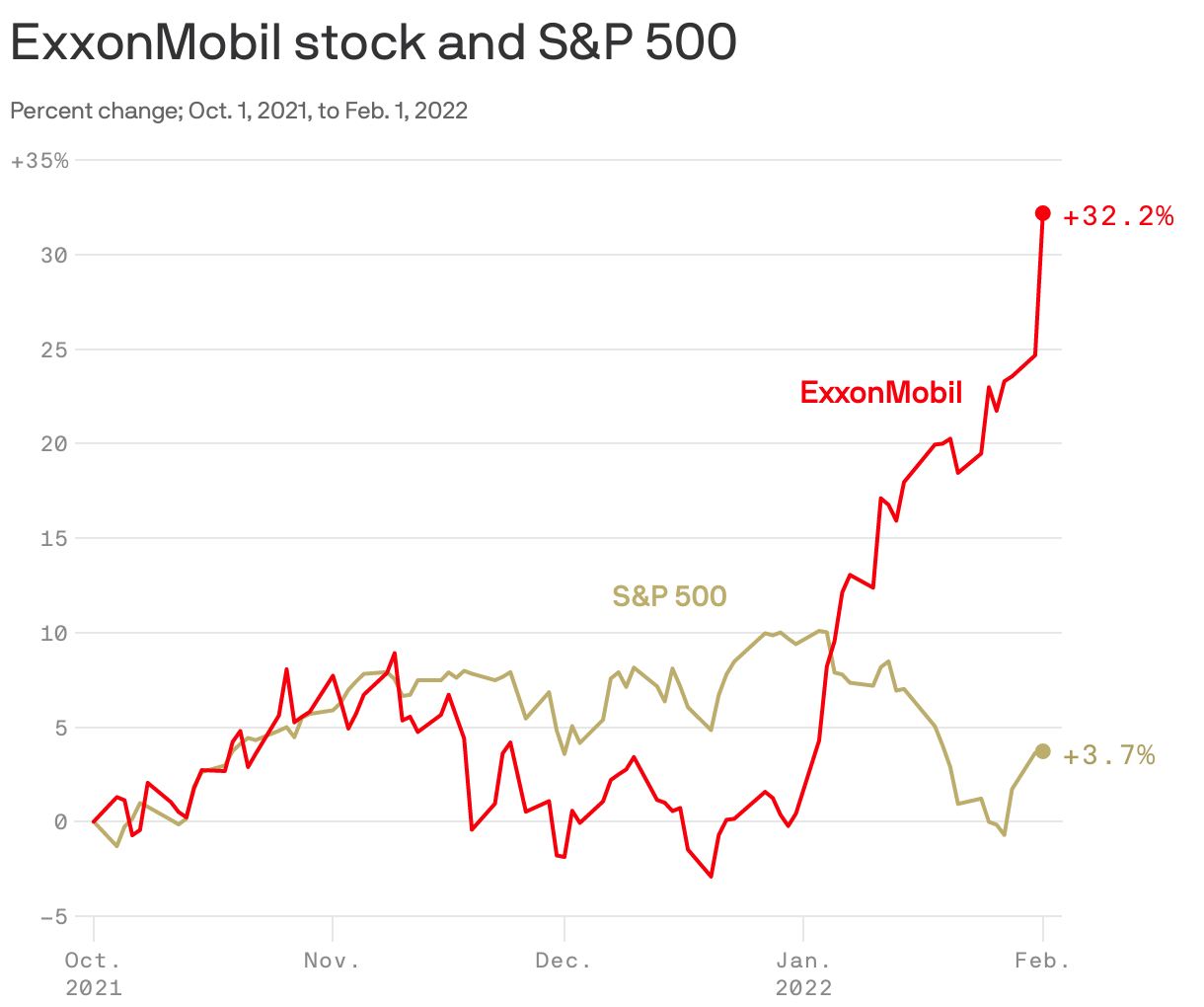
2. Charted: Exxon gets its groove back
 Open embedded content from datawrapper.dwcdn.net
ExxonMobil’s got its groove back, Nathan writes.
What’s happening: The oil giant's stock is trading at its highest point since early 2019.
- Exxon swung from a $22 billion loss in 2020 to a $23 billion profit in 2021, its best performance since 2014.
Between the lines: The company committed to net-zero emissions on its operations by 2050 after years of criticism for its handling of climate change.
What we’re watching: Whether that commitment is serious and how it affects the company's bottom line.
3. What's happening
4. The wrong kind of flexibility

Photo: Jeffrey Greenberg/Education Images/Universal Images Group via Getty Images
5. Say goodbye to rolling stops
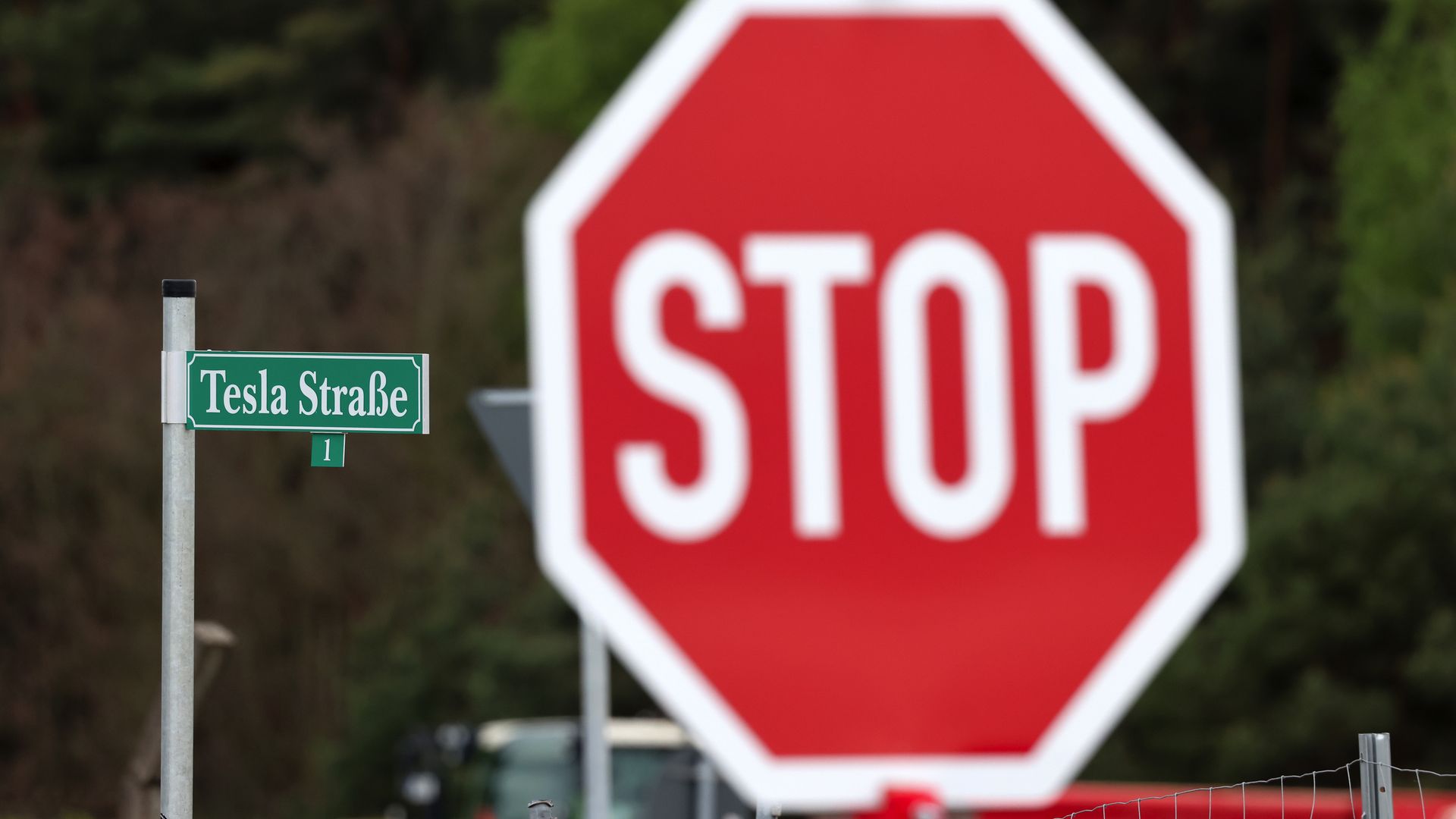
A stop sign near Tesla's Gigafactory construction site in Grünheide, Germany, on May 18, 2021. Photo: Liesa Johannssen-Koppitz/Bloomberg via Getty Images
6. What they're saying 🥩
Axios Closer

Catch up on the day's biggest business stories and look ahead to important trends. Led by Nathan Bomey.