Axios Chicago

March 25, 2024

1 big thing: Kids are dying inside
A shocking number of American kids are sad, suicidal and stuck on small screens sucking away their zest for life.
- Why it matters: This is the indisputable and alarming trend among American children, based on the latest polling and deep research by a prominent social psychologist in a book out next week.
🧮 The startling data: Rates of depression and anxiety among American adolescents jumped by more than 50% in multiple studies between 2010 and 2019, writes Jonathan Haidt, a leading expert on the spike in teen mental illness. Those numbers were relatively stable in the 2000s.
- The suicide rate for kids between 10 and 14 tripled between 2007 and 2021, according to the CDC.
- The share of high school girls who seriously considered attempting suicide jumped from 19% in 2011 to 30% in 2021.
Three events are bringing the crisis into sharper focus: the release of the annual World Happiness Report, the congressional debate over TikTok and next Tuesday's release of Haidt's book, "The Anxious Generation."


🖼️ The big picture: The pandemic is often cited as a driver of the teen mental health crisis. But it was brewing long before then, Axios' Erica Pandey writes.
- A growing body of research links the acceleration of the crisis to one of this century's biggest events: the arrival of the smartphone.
- "Smartphones and social media fundamentally changed the way teens spend their time outside of school," says Jean Twenge, a psychologist and author of the book "Generations."
🔎 Zoom in: In study after study, teens say social media is making them stressed and depressed. But the time they're spending online keeps rising.
- In the early 2000s, middle- and high-school kids saw friends in person about three times a week. Now, that's closer to 1.5, according to data from the University of Michigan's Monitoring the Future project.
- At the same time, screen time has skyrocketed. Teens spend an average of 4.8 hours every day on social media apps, including TikTok, Instagram and Snapchat, according to Gallup.
- For the first time, the U.S. fell out of the top 20 in the World Happiness Report, released Tuesday. Gallup cited "Americans under 30 feeling worse about their lives" for the steep drop.
2. 👀 TikTok's addictive algorithm
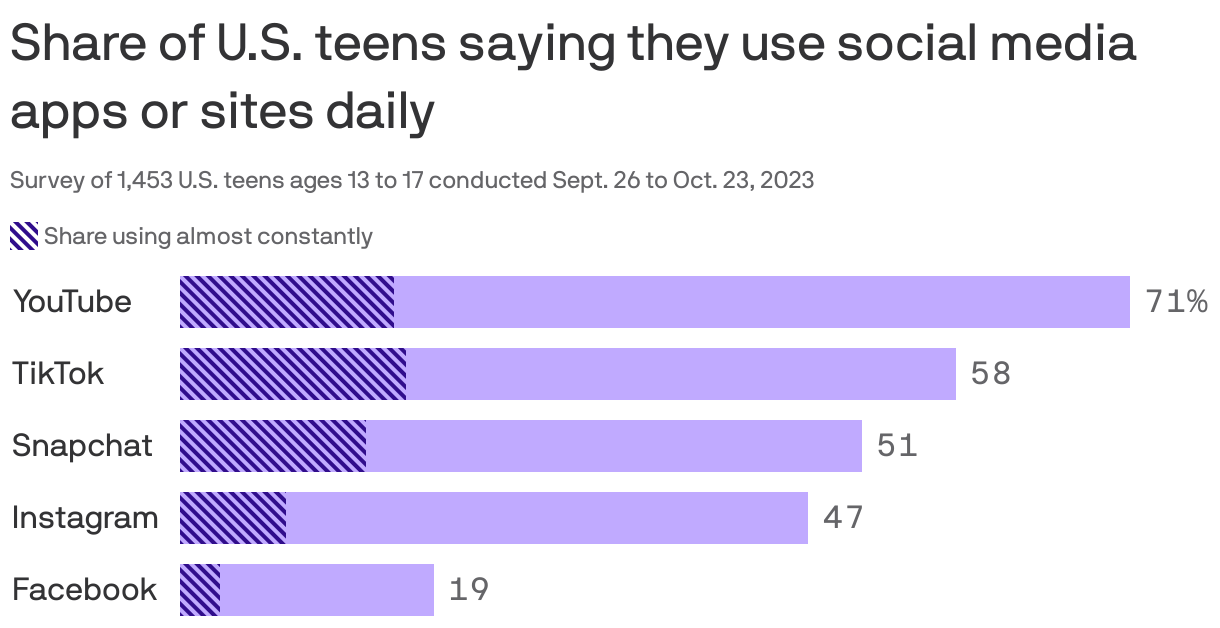
American teens — by a large margin — use YouTube more than TikTok. But they're more likely to scroll through the ByteDance-owned app "almost constantly," according to Pew Research Center polling.
- Why it matters: The stat points to how addictive and unhealthy TikTok's endless feed of videos can be for teens.
🔭 Zoom in: There's suddenly a roaring national debate over fears about teens' privacy, their data security — and all the misinformation going straight to their phones.
- Citing national security concerns, Congress is pushing to force the platform's Chinese parent company to sell TikTok or face a ban.
- A ban — though unlikely anytime soon — would force a massive shift in how millions of Americans spend their time.
- "It's of course possible that people will replace TikTok time with YouTube time or Instagram time," psychologist Jean Twenge says. "However, TikTok's algorithm is particularly effective at getting you to spend more time on it."
Between the lines: A study from the Center for Countering Digital Hate found that new TikTok accounts were shown self-harm and eating disorder content within minutes of scrolling.
- Suicide-related videos popped up within 2.6 minutes.
- Eating disorder content popped up in 8 minutes.
🥊 Reality check: It's not just TikTok. Teen mental health started to plummet years before the app launched in 2016.
- Top social media companies say they've made efforts to curb the crisis.
- Asked for comment by Axios, TikTok pointed to community guidelines that say: "We do not allow content that may put young people at risk of exploitation, or psychological, physical, or developmental harm."
- A YouTube spokesperson passed along blogs explaining the platform's "expert-backed approaches to eating disorder content and limiting certain types of recommendations."
- Meta said it has "well over 30 tools we have released" to help parents and teens manage Instagram and Facebook.
3. 👎 Charted: The kids are not alright


A huge happiness gap is opening between American adults and teens.
- Depression has hit teens much harder than adults in the smartphone era (charted above), according to National Survey on Drug Use and Health data.
The massive gap is clear in the World Happiness Report:
- In the oldest age group, America was the world's 10th happiest country. Among the young, America fell to 62nd place.
Between the lines: Young people in North America are now less likely to say they're happy than older populations.
- That's a massive reversal from most regions, where younger people tend to be happier.
4. 📱 Case against smartphones

Illustration: Annelise Capossela/Axios
5. 🔒 New school tool
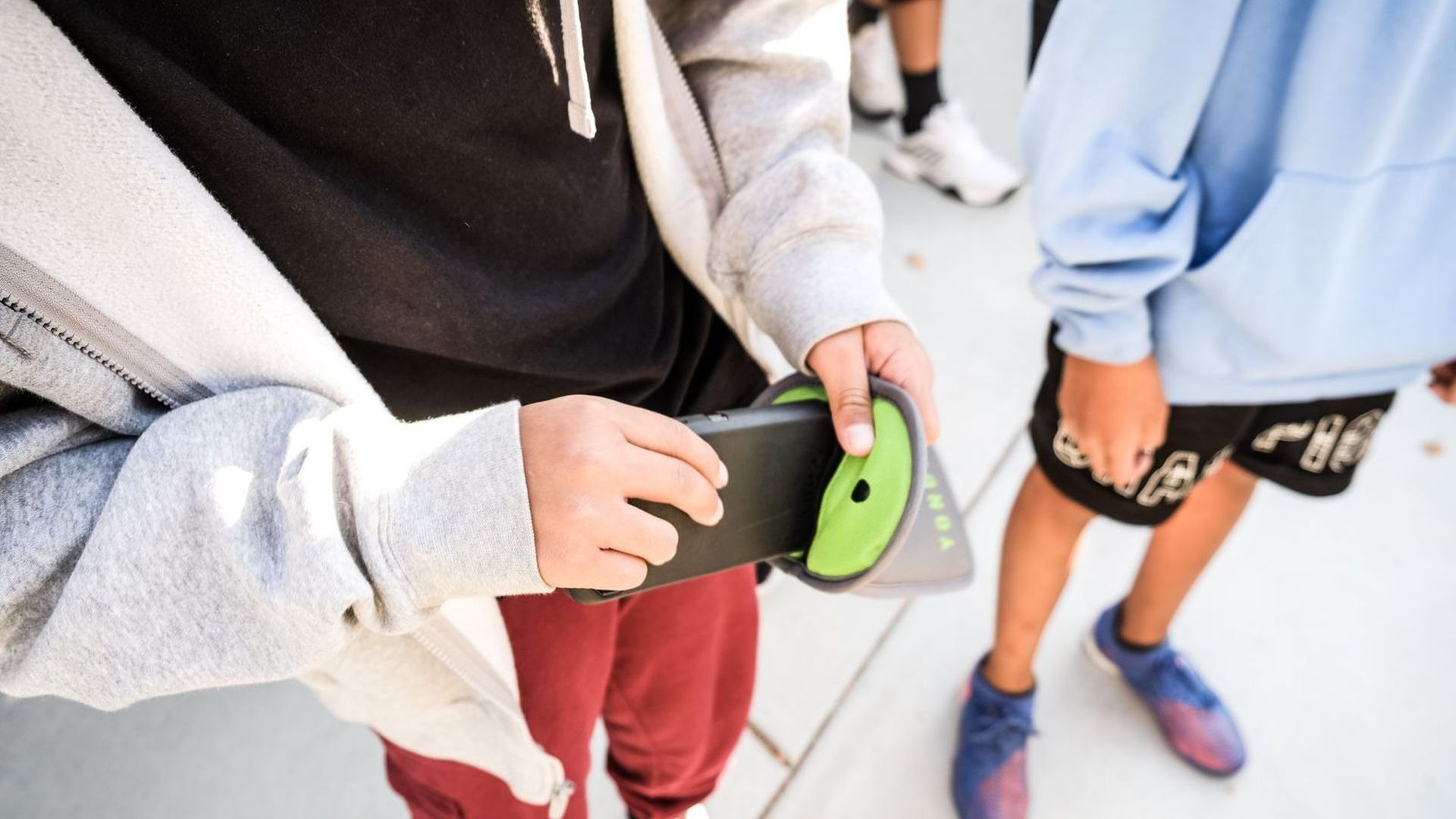
A student puts a cellphone into a Yondr pouch, where it'll remain locked for the day. Photo: Yondr
6. 🏃 Set kids loose

Illustration: Lindsey Bailey/Axios
7. 📉 Risky behaviors plummet
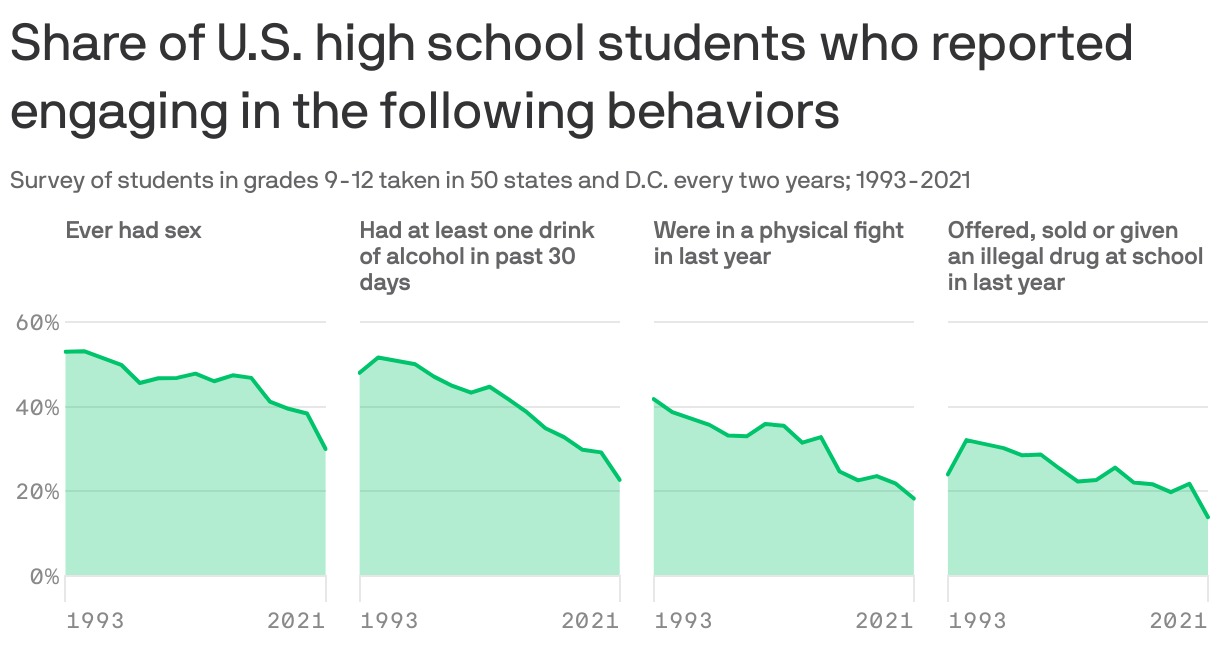
For better or worse, high schoolers are participating in significantly less risky behavior than they were three decades ago, Axios' Noah Bressner writes.
- Why it matters: Studies show that Gen Z is more shy than millennials.
Almost every frowned-upon activity has taken a hit among high schoolers, according to the CDC's latest Youth Risk Behavior Survey, from 2021.
- About 23% of high schoolers said they drank alcohol in the last month — down from 48% in 1993.
The percentage of students who said they've ever had sex was down 23 points.
- In 1993, almost 42% of students reported being in a physical fight in the last year. That's down to 18%.
8. 😊 What we can tell kids about happiness

Illustration: Maura Losch/Axios
Axios Chicago

Get smarter, faster on what matters in Chicago with Monica Eng, Justin Kaufmann, and Carrie Shepherd.