Axios Chicago

September 07, 2024


Hello, Saturday! Today we're featuring your edible gardens and sage advice.
🐛 Be a catalyst for our growth this year — join us as a member.
Today's newsletter is 800 words — a 3-minute read.
1 big thing: Spicing up the garden
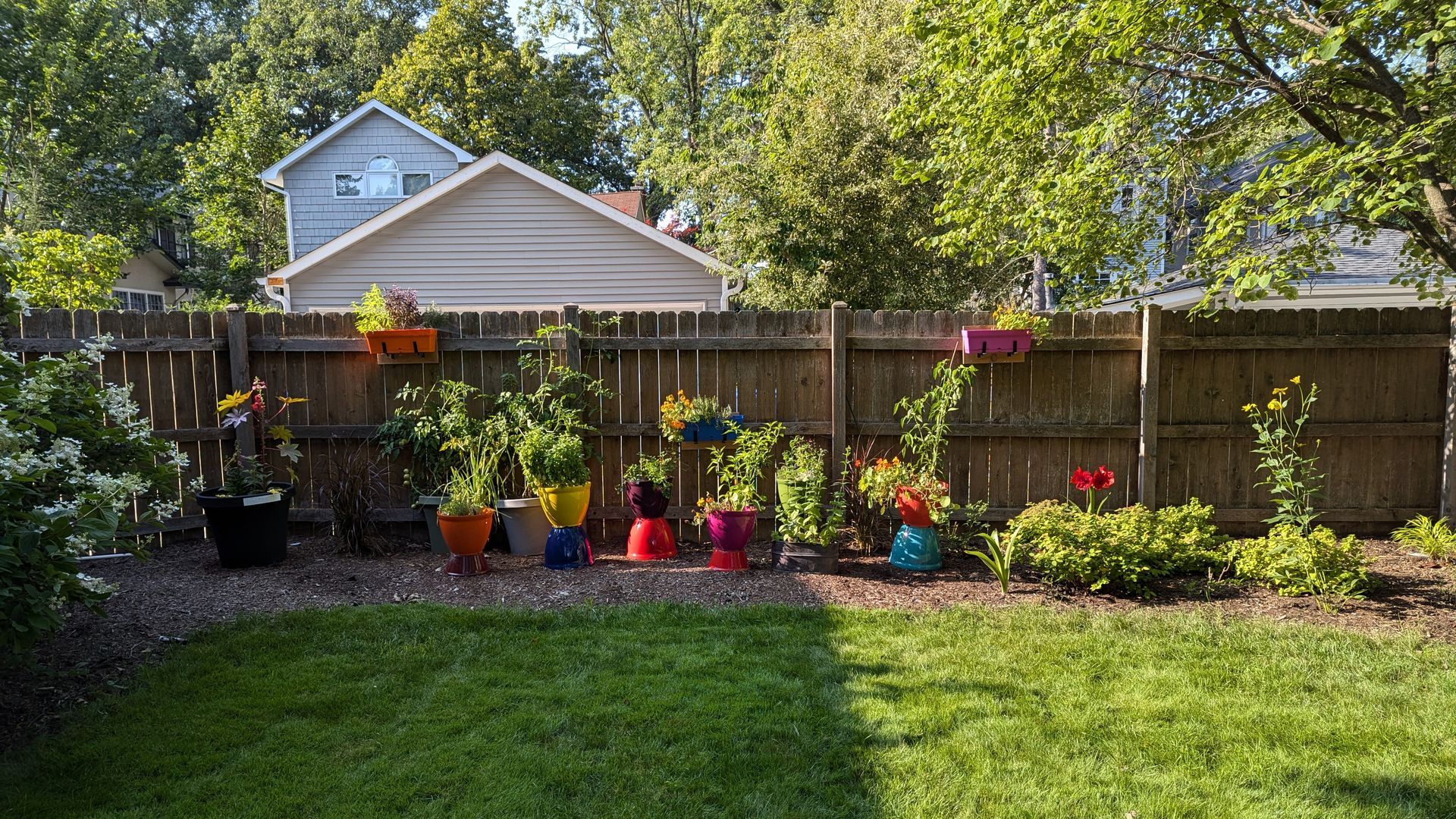
Neighbors can see Robert Friesen's garden — his "colorful masterpiece" — from 150 feet away.
The big picture: The benefits of growing your own herbs are far-reaching, from the simple joy of a new hobby to becoming a bit more self-sufficient.
- Friesen, of Wilmette, started growing herbs and more after a 2020 divorce.
Driving the garden: Fall is the prime time to plant perennial herbs such as sage, chives, oregano and thyme.
- Many herbs will thrive indoors during the winter — including baby parsley and mint plants, which are beginner-friendly and can be bought at a nursery, according to the Chicago Botanic Garden.
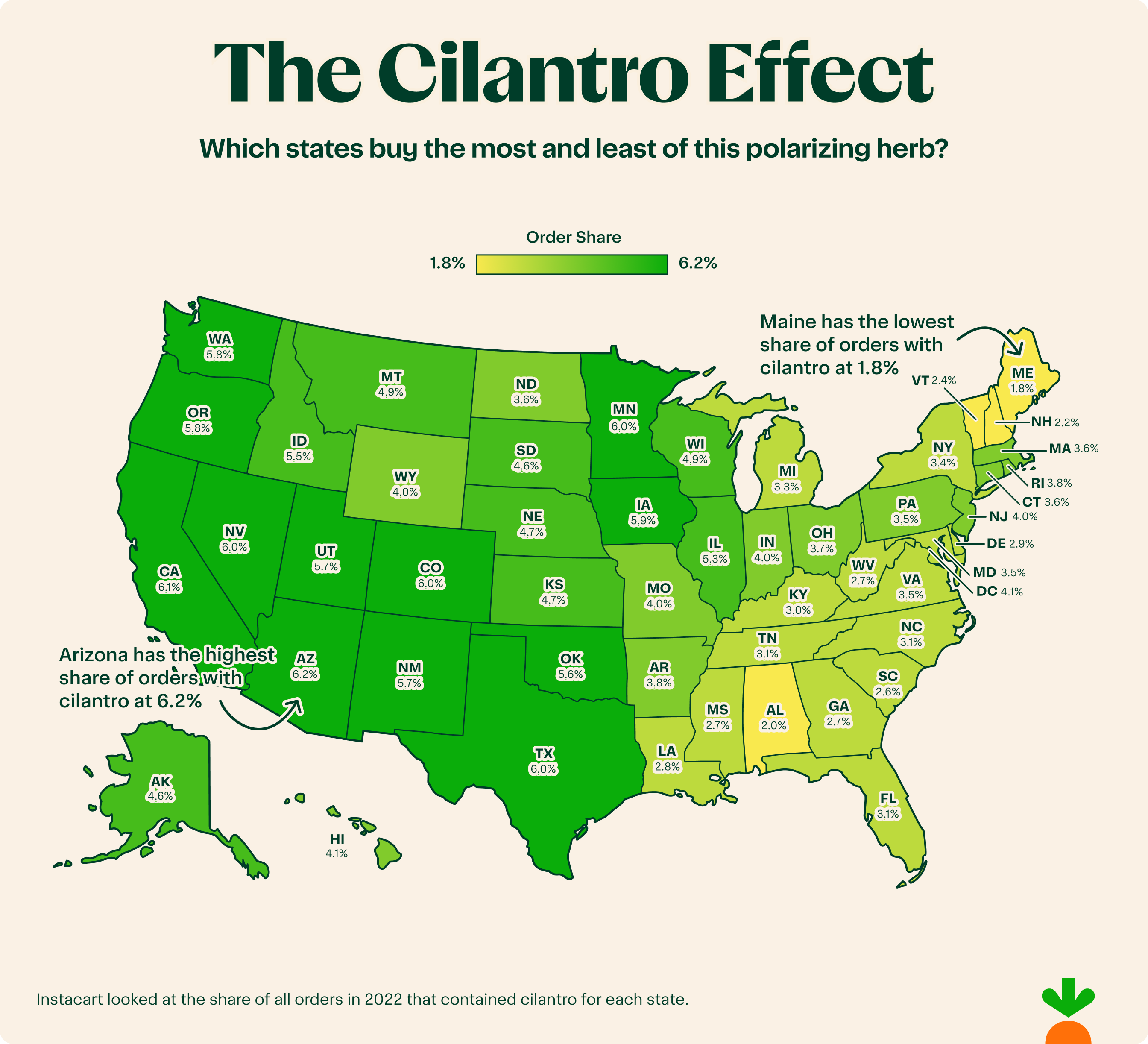
What they're saying: Grow what you eat, as South Side homesteader Kristin Burke recently told us. If you hate cilantro, don't waste space on it.
- Besides tomatoes and jalapenos, Friesen, who lives alone, sticks to herbs because "much goes to waste when I suddenly have the likes of 20 bell peppers."
Friesen's vibrant pots and window boxes, which cost about $200, are packed with three different types of basil, parsley, sage and rosemary, among other herbs.
- Thai basil and apple mint are particularly delicious in cocktails, he tells Axios.
The intrigue: Palatine homeowner David Sjolander grows mint — but not to eat.
- Mint repels pests, "but we've also found that one of our dogs likes to roll around in it and rub it all over herself," Sjolander tells Axios.
The bottom line: There's never a bad thyme to start your own herb garden.
Editor's note: This story has been corrected to say that Friesen's garden can be seen from 150 feet away, not yards.
2. 👩🍳 The best-o pesto
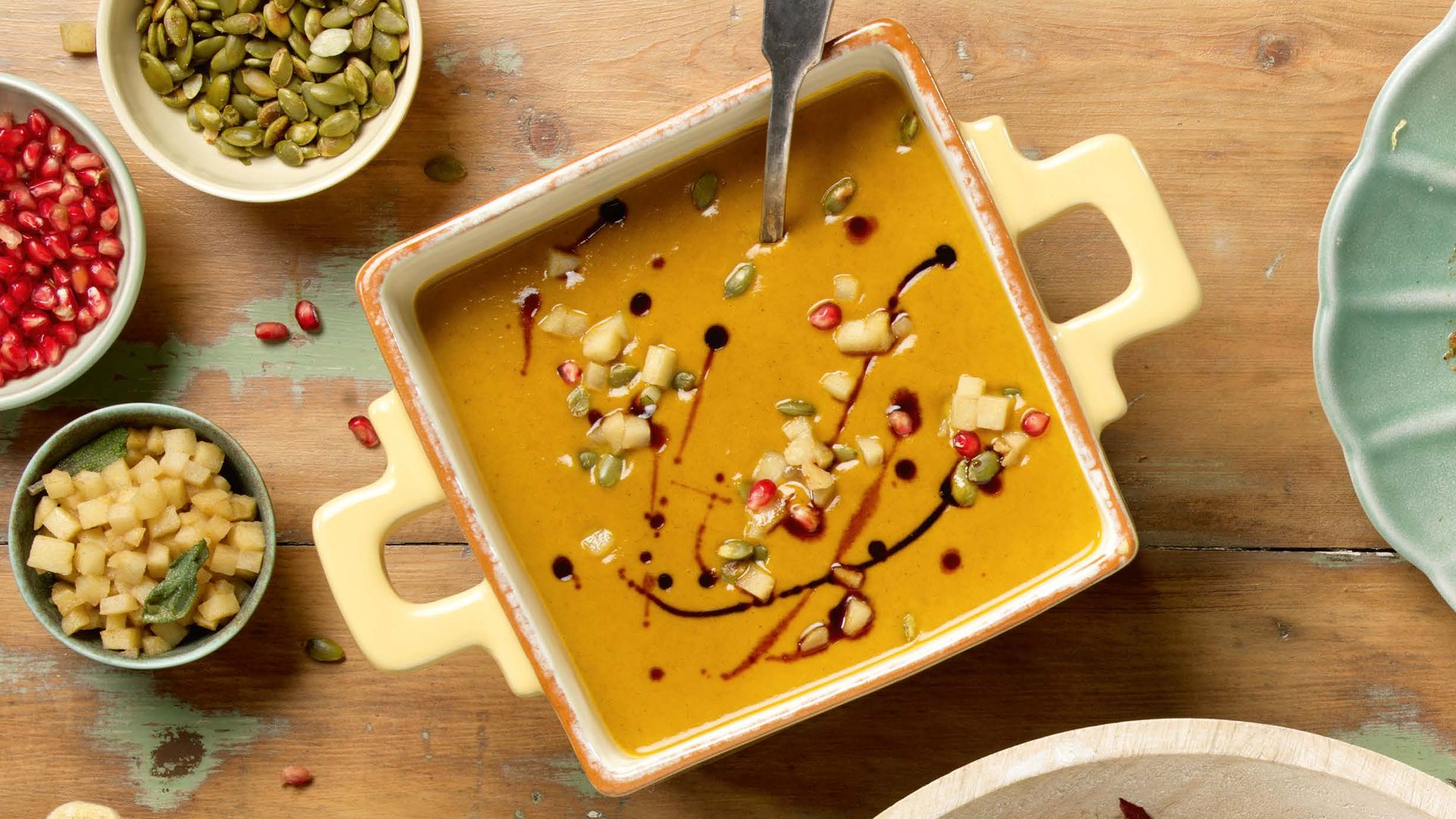
Looking for ways to use up your herbs? Monteverde chef Sarah Grueneberg dished about her pumpkin seed pesto recipe.
Between the lines: James Beard award-winning Grueneberg's Italian restaurant is located in the West Loop, which was crowned Axios Chicago readers' second-favorite food neighborhood.
Ingredients (makes just over 1.5 cups):
- 1 cup large butternut squash chunks
- 6 tablespoons plus 1 teaspoon everyday olive oil
- Kosher salt
- 1/2 cup green pumpkin seeds (pepitas)
- 2 tablespoons coarsely chopped fresh sage leaves
- 1/4 cup fresh flat-leaf parsley leaves, roughly chopped
- 1 tablespoon balsamic vinegar
- 1 teaspoon finely grated orange zest (use a Microplane)
- 1 pinch of ground nutmeg
- 1/4 cup freshly grated Parmigiano-Reggiano
- Fresh cracked black pepper
Directions:
- Preheat the oven to 450°F. Line a baking sheet with parchment paper or foil and spray with cooking spray. In a medium bowl, toss the butternut squash with 1 tablespoon of olive oil and a generous pinch or two of salt. Scatter the squash on the baking sheet in an even layer. Bake for 30 minutes, stirring halfway. Bake until the squash is tender yet caramelized on the edges. Let cool for 10 minutes.
- Meanwhile, heat a medium skillet over medium heat. Add the pumpkin seeds and 1 teaspoon of the olive oil and cook, stirring, until starting to toast, 2 minutes. Add the sage and cook until fragrant and the seeds are toasted, about 1 minute longer. Remove from the heat and cool.
- In a large mortar, combine the toasted pumpkin seed mixture and parsley; use a pestle to crush them. Add the remaining 5 tablespoons of olive oil along with the balsamic, orange zest and nutmeg. Combine with a twisting motion of the pestle against the mortar. Add the squash and parm and continue to press down and mix the ingredients with the pestle. (If you do not have a mortar and pestle, you can use a food processor. Pulse all the ingredients except the olive oil and the butternut squash until combined. Pulse the mixture as you slowly drizzle in the olive oil. Transfer the pesto to a bowl and fold in the roasted butternut squash, mashing it a bit.)
- Season with a few pinches of kosher salt and black pepper. Using a spoon, mix to combine. The pesto can be refrigerated in an airtight container for up to a week.
From Listen to Your Vegetables by Sarah Grueneberg and Kate Heddings. Copyright © 2022 by Green Mountain Collection, LLC. Reprinted by permission of Harvest, an imprint of HarperCollins Publishers.
3. We like cilantro
4. 💰 Negotiating commissions

Real estate commission changes are here, and we want to know how you're doing.
- Home buyers, have you tried negotiating fees with your agent? How'd it go?
- Sellers, do you plan to cover the buyer's agent's cost? Were you able to save any cash?
Email [email protected] with your name and neighborhood or hit reply. We may feature your insights in an upcoming newsletter.
Our picks:
🤞 Bri has (cautiously) high hopes for her new basil plant. Send some encourage-mint her way.
🪴 Sami is restocking her favorite Trader Joe's pesto.
Thanks to our editor Ashley May.
Sign up for Axios Chicago
