Axios Austin

June 04, 2026


It's Thursday!
🌧️ Today's weather: Chance of showers and thunderstorms, with a high in the mid-80s.
Today's newsletter is 906 words — a 3.5-minute read.
1 big thing: Using AI to address tree canopies
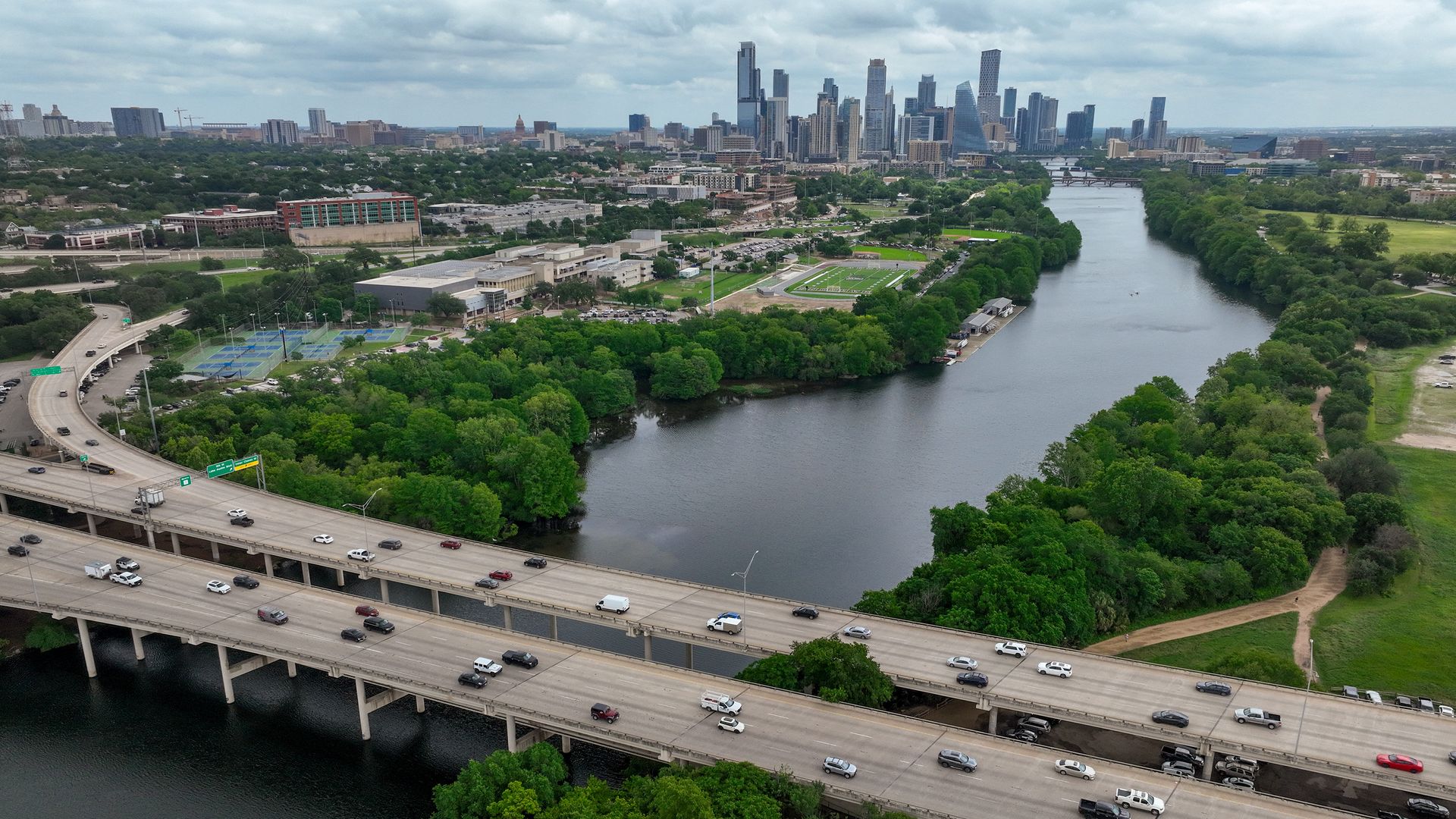
As Austin confronts hotter summers, city officials are turning to Google's AI to address shade disparities.
Why it matters: Neighborhoods with less tree cover often face higher heat exposure, and AI-driven analysis can help target where shade could have the greatest impact.
State of play: Roughly 43% of Austin's land is covered by tree canopy, per the latest estimate by Google.
- Austin leaders want to reach 50% by 2050, but the city's shade isn't distributed equally.
- More trees are found in wealthier neighborhoods — and there tend to be fewer trees where low-income people and people of color reside.
How it works: Google combines its overhead imagery data from Google Earth with weather and socioeconomic datasets.
- The city then uses Google's data, alongside professional expertise, to guide where to prioritize tree planting and other cooling investments, according to Alan Halter, an IT geospatial analyst with the city.
- "Traditional canopy modeling can take years for aerial imagery capture, then months of heavy computer processing on massive files," Halter tells Axios.
Zoom in: Google's Chris Hein says the technology allows cities to combine aerial imagery, weather information and socioeconomic data in a single tool.
- It showcases how AI can "actually meet the public sector needs," Hein tells Axios.
The big picture: Extreme heat causes more deaths in the U.S. than any other weather-related hazard, and cities are increasingly looking for ways to reduce temperatures and protect vulnerable residents.
- Researchers at UCLA found that tree canopies provide 25 times more shade at noon than buildings, making them a cheaper, more natural way to create shade and address climate change.
Flashback: Austin has been tackling our increasingly hot summers for years.
- The city turns libraries and other public buildings into cooling centers in extremely warm weather.
- Along with tree planting, officials have also deployed misting canopies and applied heat-reflective coatings on pavements to combat the heat.
What's next: Google says 14 cities are using its tree canopy data, and the company has plans to expand to more than 350 cities globally.
2. The power of Wemby's emotions

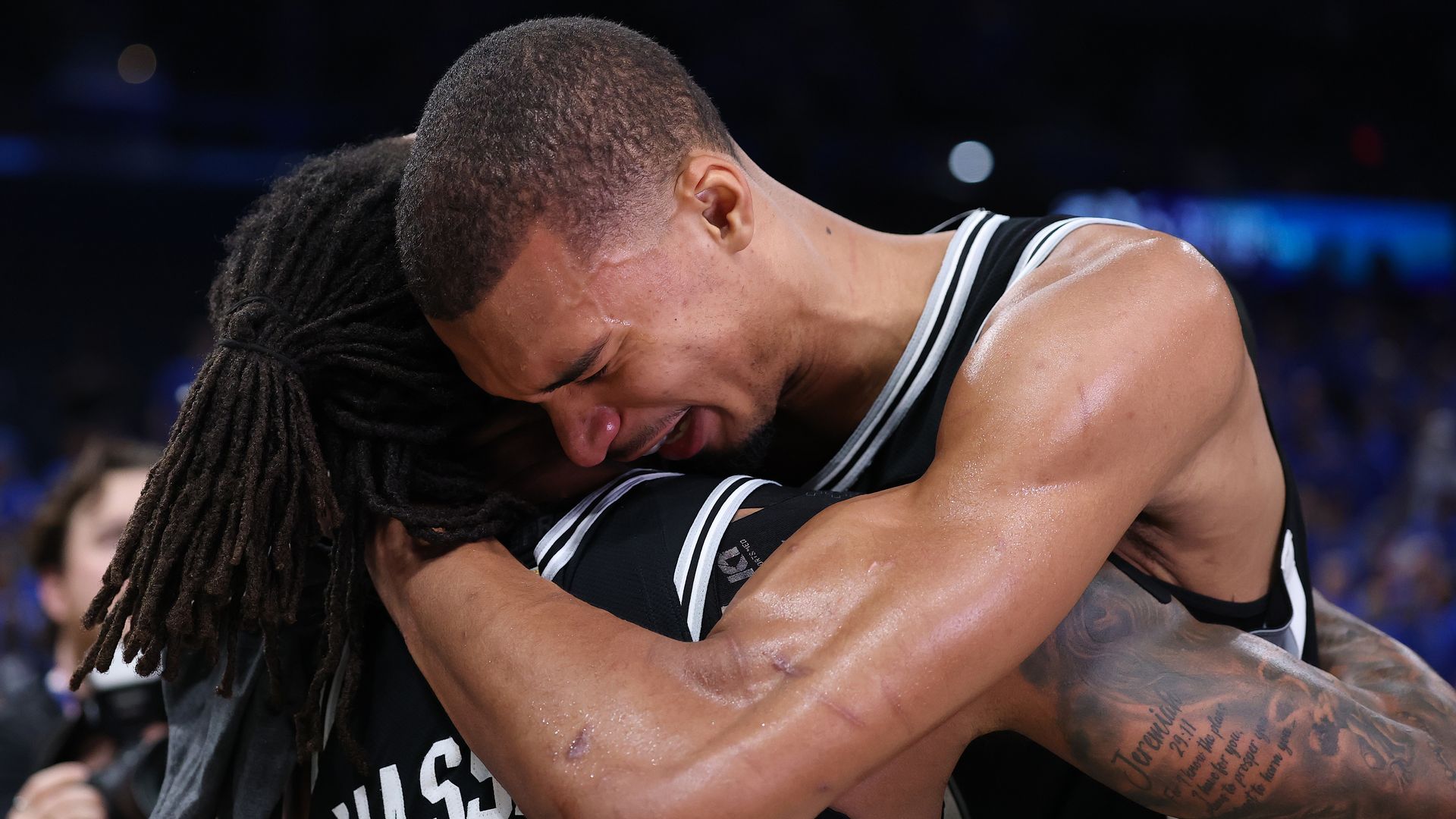
Spurs star Victor Wembanyama is redefining what it means to express emotion and vulnerability as a professional athlete.
Why it matters: Conveying feelings is sometimes seen as a weakness, especially among men — but Wemby shows how embracing emotions unapologetically is a strength.
State of play: After the Spurs won Game 7 of the Western Conference finals, Wemby was moved to tears as he embraced teammate Stephon Castle before bringing together a team group hug — a display of emotions that's common for the 22-year-old French phenom.
- In late April, when the Spurs eliminated the Portland Trail Blazers from the Western Conference semifinals, a French reporter asked Wemby about those who criticize him for showing emotion.
- In a now-famous reply, he said: "I refuse to carry the burden of having to hide my emotions."
How it works: Expressing intense feelings, whether positive or negative, helps alleviate stress, Giancarlo Ferruzzi, associate professor of psychiatry and behavioral sciences at UT Health San Antonio, tells Axios.
- Ferruzzi is also certified in sports performance psychiatry and is the designated mental health practitioner for the Spurs.
- He says athletes are often under excess stress and stimulation. Repressing feelings can lead to a buildup of stress hormones in the body that isn't healthy. "Crying releases our body's own natural pain medicines," Ferruzzi says.
Zoom out: The NBA has gotten serious about mental health. Each team is required to have a designated mental health practitioner, per The Athletic, plus action plans in the case of mental health emergencies.
3. 🤠 The Roundup: Wrangling the news

✏️ Austin ISD's recommended budget for the 2026-27 school year includes staff cuts, including teachers, librarians, counselors and more. (KUT)
🗳️ National Democrats are targeting 12 Texas legislature districts to flip during the fall midterms. If they flipped all 12, they would be one seat shy of an even split in the Texas House. (Texas Tribune)
🌆 Facing foreclosure, two downtown hotels — LINE Austin and Hyatt Centric — went up for auction this week. (KVUE)
4. Weekender guide
Here's what's on deck this weekend.
Friday
📚 Catch podcaster and comedian Brooke Averick as she talks about her debut book, "Phoebe Berman's Gonna Lose It" at First Baptist Church of Austin. 6pm, $44.26 for general admission and the book.
⚽️ Watch Saudi Arabia vs. Puerto Rico at Q2 Stadium. 6pm, tickets start at $31.
Saturday
🌷 Shop the Garden Club of Austin's annual plant and flower show and sale at Zilker Botanical Garden Auditorium on Saturday and Sunday. 9am-5pm, included with garden admission.
Sunday
🍿 Enjoy a double feature of "Invasion of the Body Snatchers" (1978) and "Eraserhead" at the Paramount Theatre. Plus, catch a tour of the theater's film booth. 5:30pm, $15.
5. 📸 1 photo to go: Waterloo Greenway opening
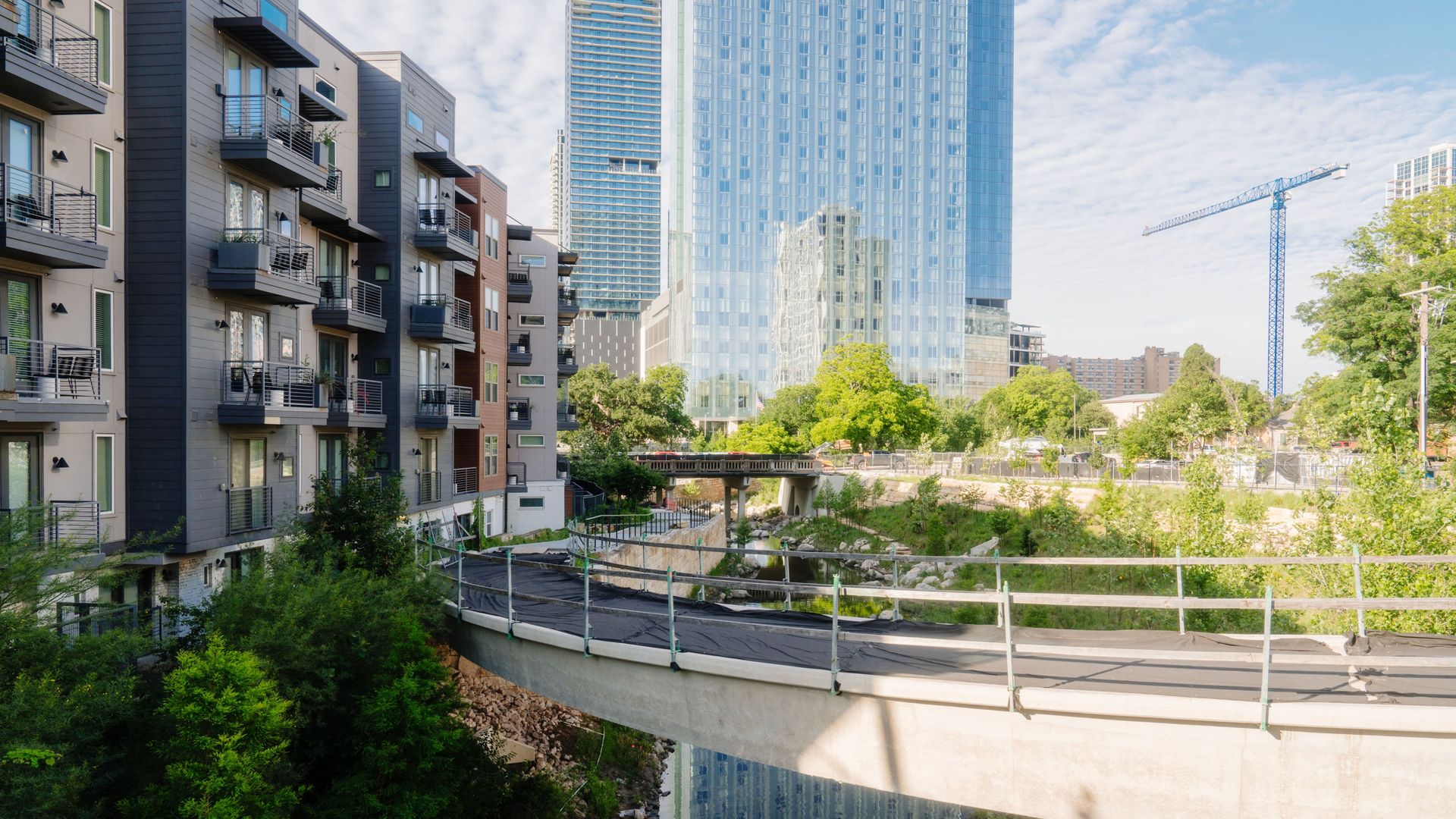
The second phase of Waterloo Greenway is set to open this weekend, bringing additional green space to pedestrians downtown.
What's happening: You can attend the opening of the new space on Saturday during a ribbon-cutting ceremony and free celebration at 10am.
- $5 event parking is available at the Austin Convention Center 5th Street garage.
What's next: Phase Three will complete the 1.5-mile trail along Waller Creek, connecting 4th Street to Waterloo Park. Officials haven't released a target completion date for the next phase.
Thanks to Astrid Galván and Bob Gee for editing this newsletter.
🍉 Asher just bought this excellent 1989 shirt.
🥳 Nicole is headed to Las Vegas to see Elton John.
Sign up for Axios Austin
