Axios Austin

June 14, 2026

π Hello, Sunday! Axios reporter Carly Mallenbaum here with a special newsletter edition about caregivers who are there at the beginning and end of life.
π Find these stories on our Wellness Brief page.
π Happy birthday to our member Christopher Roberts!
Today's newsletter is 823 words β a 3-minute read.
1 big thing: Doulas go mainstream
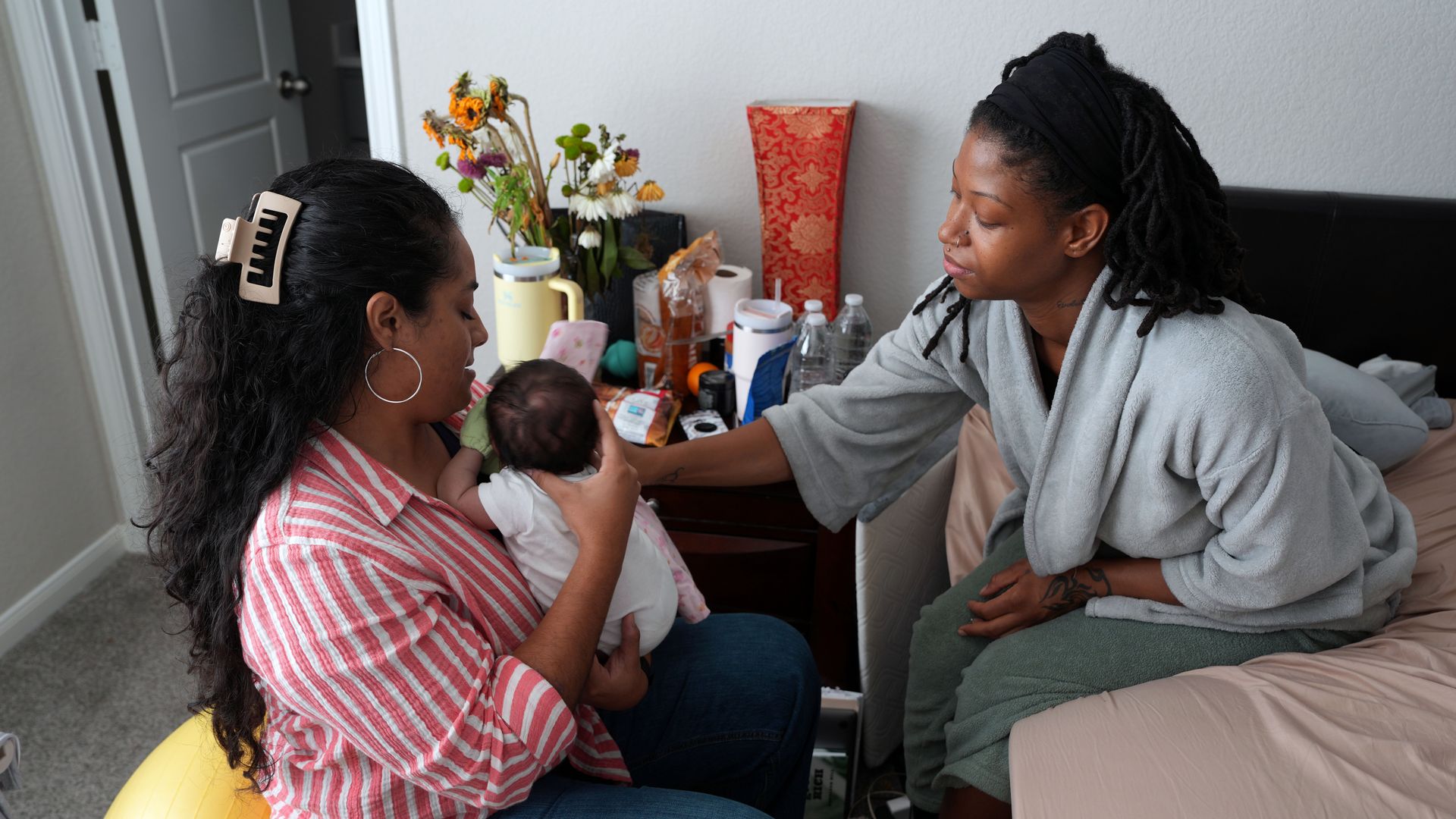
Doula care is moving into the mainstream as major insurers expand coverage and more patients incorporate it into pregnancy care.
Why it matters: Research has linked doula support to lower cesarean rates and fewer preterm births.
- And a new review of clinical trials published in JAMA Network Open found doula support was most consistently associated with lower maternal anxiety, higher breastfeeding initiation and better postpartum follow-up care.
The latest: UnitedHealthcare recently announced it would allow coverage of doula care in employer-sponsored plans nationwide β a significant move into the private insurance space.
- Improving maternal and infant health outcomes also reduces the total cost of giving birth for the health care system, UHC tells Axios.
Between the lines: A doula isn't a midwife.
- Midwives perform medical tasks like cervical checks and delivering babies.
- Doulas offer continuous nonmedical support β affirmations, position changes, advocacy in the hospital β before, during and after birth, says Nicole Sessions, a doula and maternal mental health researcher in Atlanta.
What they're saying: As awareness of doulas has increased, "many people expect us to be in the room" for a delivery, Sessions tells Axios. "There's a lot more camaraderie" among hospital staff.
Zoom out: Doula care has become a key tool for addressing the disproportionately high rate of maternal death among Black women.
- Sessions argues that "culturally competent," community-based doulas β those who share a patient's race, neighborhood or life experience β are often better able to build trust and advocate for patients.
2. Where doulas are covered by Medicaid
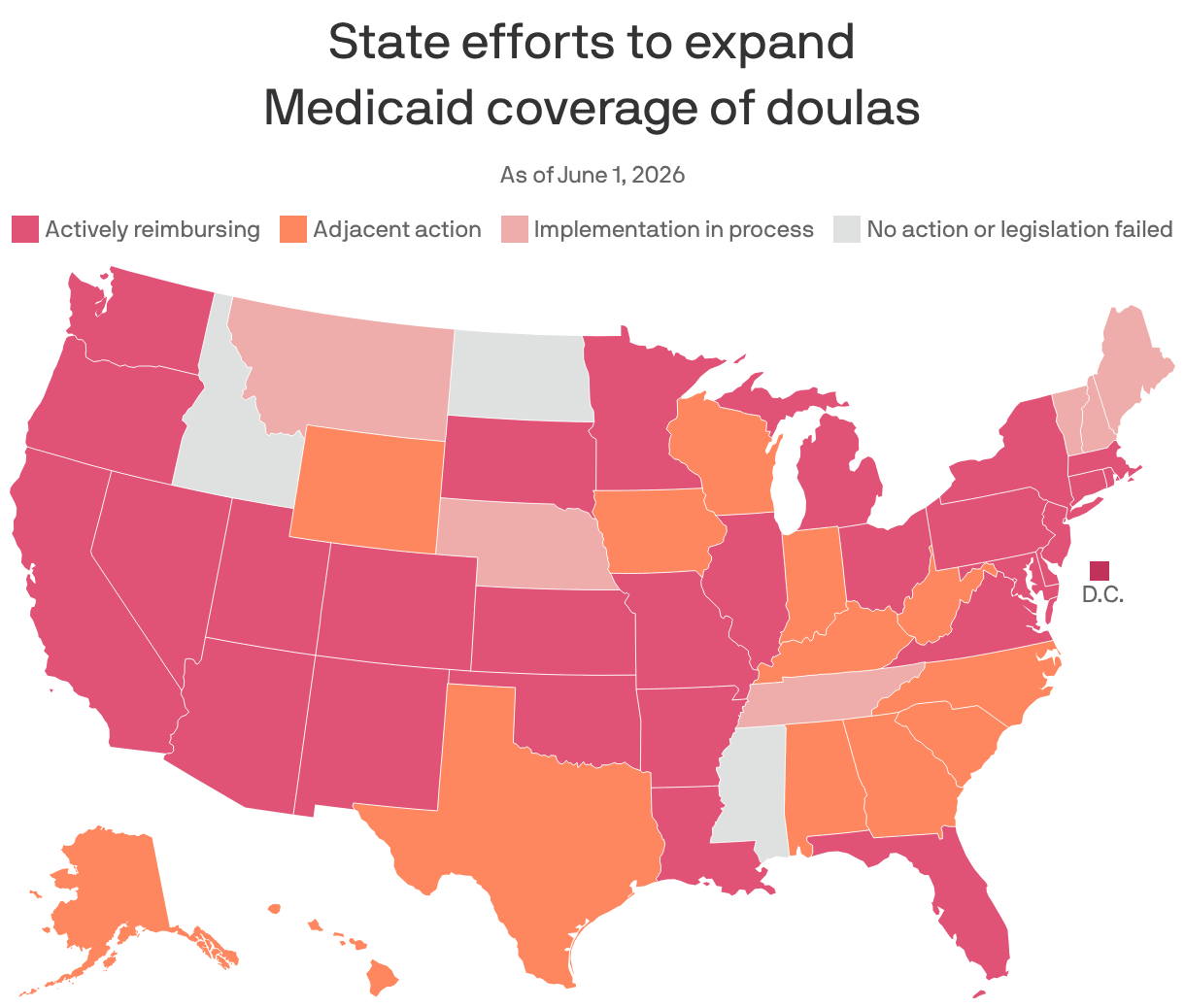
More than half of U.S. states now reimburse for doula care under Medicaid β but Texas isn't among those states.
The latest: The Texas Legislature passed a maternal health care bill in 2025, but it doesn't have a concrete Medicaid coverage plan.
- The Texas Doula Association, an advocacy group, says on its website, "At this time, TDA is not confident that access to Doula care will be a priority" in the wake of Medicaid cuts.
By the numbers: 28 states and D.C. are actively reimbursing, according to the National Health Law Program. Before 2020, only Oregon and Minnesota did.
- For the rest of the country, that's "a lot of progress" in a few years, says Amy Chen, senior attorney at the National Health Law Program.
Yes, but: Expanding coverage could create a catch-22.
- The more doulas get folded into insurance systems, the more regulated they become. Their effectiveness, however, may stem precisely from being unregulated and fully answerable to patients, Sessions says.
- "The insurance model isn't quite savvy enough to hold the nuances of the profession just yet," she says, citing limits insurers may place on billable postpartum hours.
- Reimbursement maximums vary widely β from less than $800 to more than $3,000. Experienced doulas may not sign on if rates fall below their typical charges.
The big picture: Sessions worries that doula care is becoming a temporary fix β absorbing pressure that should be driving deeper changes to the obstetric system.

3. Dads need support, too
Dads who throw themselves into fatherhood may also be at risk for depression, says clinical psychologist and "Dad Brain" author Darby Saxbe.
Why it matters: New dads are often treated as the support system, not someone who might need support β yet when one parent struggles, so does the other.
By the numbers: About 1 in 10 dads experience anxiety or depression in their child's first year β and they're far less likely to be screened for it than moms.
What they're saying: The more dads take on, the more they're "kind of shouldering those same risks" mothers have long faced, Saxbe says β a "double-edged sword" where the involvement that deepens the bond also carries the cost.
The intrigue: Couples' stress hormones and moods tend to move in tandem, Saxbe's research finds. So when one parent is depressed, the other's risk climbs. "If we care about Mom's mental health, we actually need to care about Dad's, too."
- Some risk factors overlap: disrupted sleep, an identity reckoning and a strained partnership.
The bottom line: Dads do best with hands-on time and a network around them. "We were not designed to parent in isolation," Saxbe says.
4. More death doulas
Doulas don't just help welcome new life. There's a growing field of end-of-life doulas.
State of play: As discussion of death has gotten less taboo, public figures, including Nicole Kidman and "Hamnet" director ChloΓ© Zhao, have spoken openly about training to become death doulas.
By the numbers: Membership in the National End-of-Life Doula Alliance grew from about 260 in 2019 to 2,040 as of June 2, NEDA tells Axios.
Go deeper: Read tips from a Texas death doula for talking to someone who's grieving.
Our picks:
π Carly has become an unofficial doula for dog-parents welcoming their first human baby.
Thanks to our editor Sami Sparber.
Sign up for Axios Austin