Axios AM

November 22, 2025

π³ Happy Saturday! Smart Brevityβ’ count: 1,370 words ... 5 mins. Thanks to Erica Pandey for orchestrating. Edited by Lauren Floyd.
1 big thing: Trump and Mamdani's show
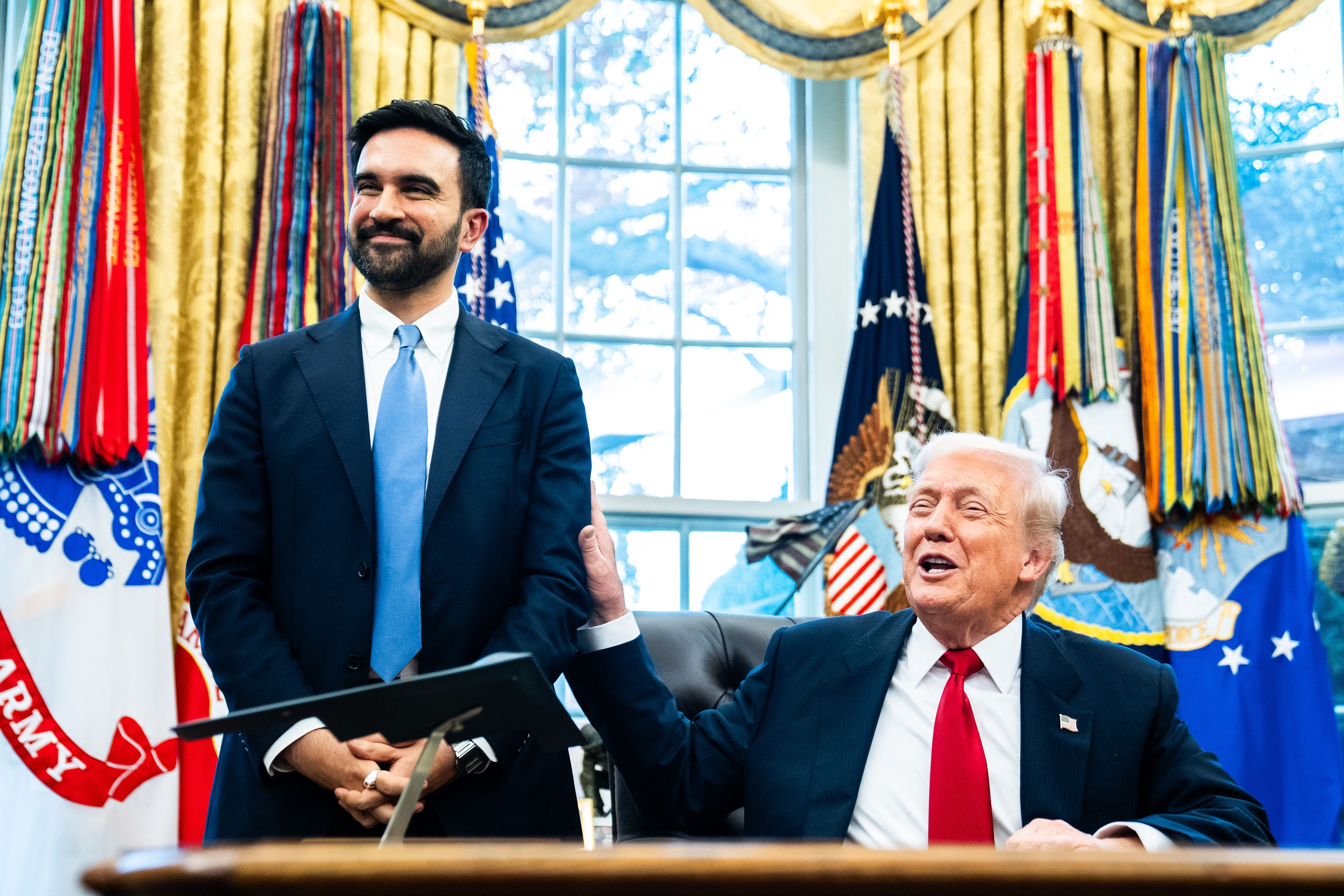
The hype about a showdown was wrong. President Trump and New York Mayor-elect Zohran Mamdani had a surprising bond when they met in the Oval Office yesterday: populist outsiders, lovers of the Big Apple, and two politicians who each want what the other has, Axios' Marc Caputo, Alex Isenstadt and Holly Otterbein write.
- They put on a show with head-turning congeniality.
π‘ Why it matters: For a few minutes, Mamdani (whom Trump had called a communist) and Trump (whom Mamdani had called a fascist) gave a glimpse of how they might work together, or at least appear to.
Mamdani, facing a city budget deficit, needs federal money and doesn't want Trump to send National Guard troops into New York City.
- Trump, reeling from bad polling on the economy, sought to co-opt some of the shine from the charismatic Mamdani's message on affordability.
In a joint press appearance, the president zeroed in on affordability β an issue the mayor-elect relentlessly focused on in his odds-defying campaign, which bore some echoes to Trump's first run for president.
- "If I can get prices down, it's good for New York," Trump said. Mamdani pledged to work with the White House.
π³οΈ "This is great for Democrats," says Joe Calvello, a progressive strategist close to Mamdani's team.
- GOP efforts to cast Mamdani as a too-far-left bogeyman could be tough in next year's elections, Calvello says, when "here's Trump joshing it up with him, tapping him on the shoulder, complimenting him."
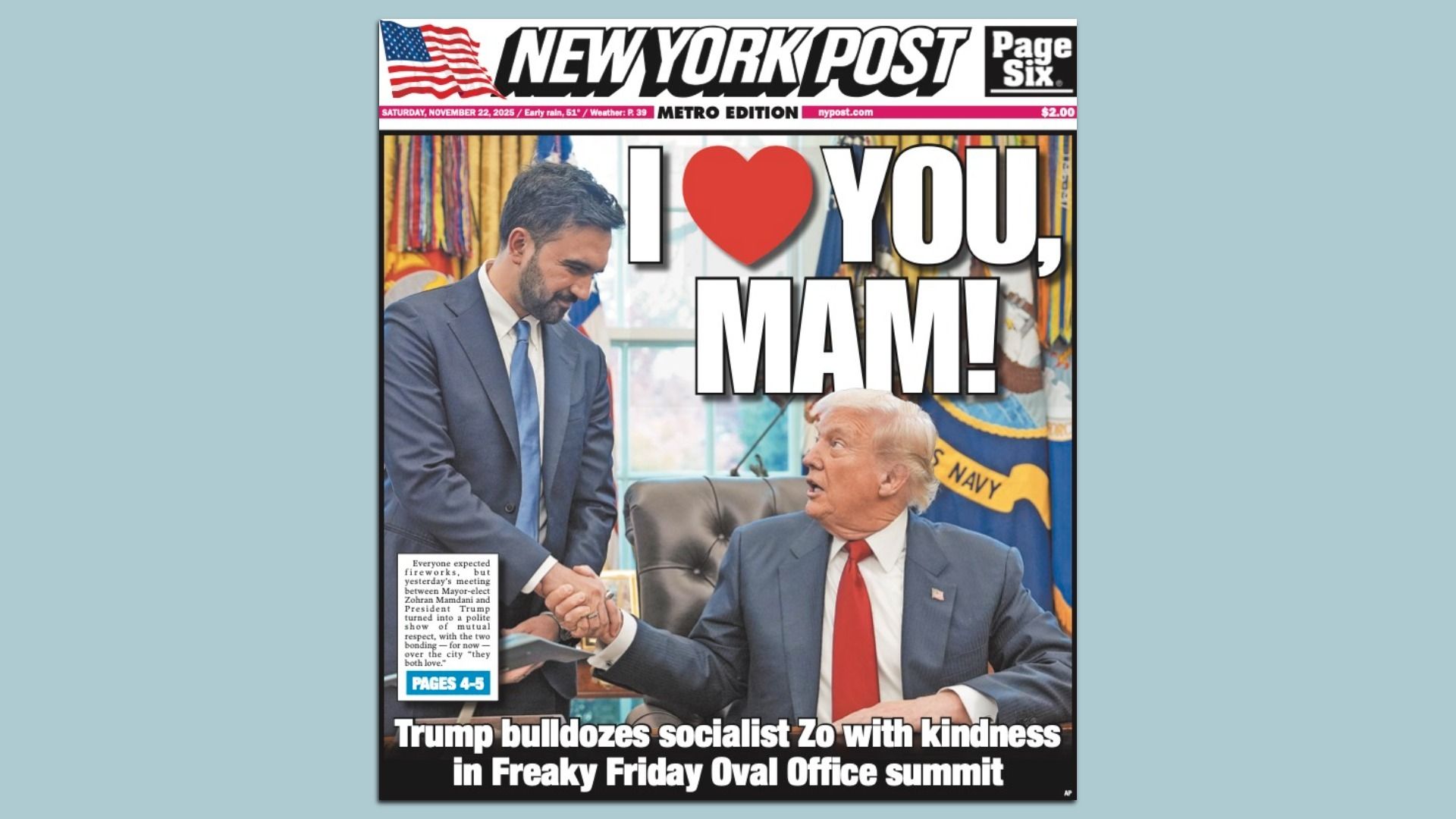
Friction point: Trump's praise of Mamdani may have undermined one of the president's closest GOP allies β New York Rep. Elise Stefanik.
- In her 2026 campaign for New York governor, Stefanik is portraying incumbent Kathy Hochul as a socialist in Mamdani's mold.
2. πΆ Screening babies
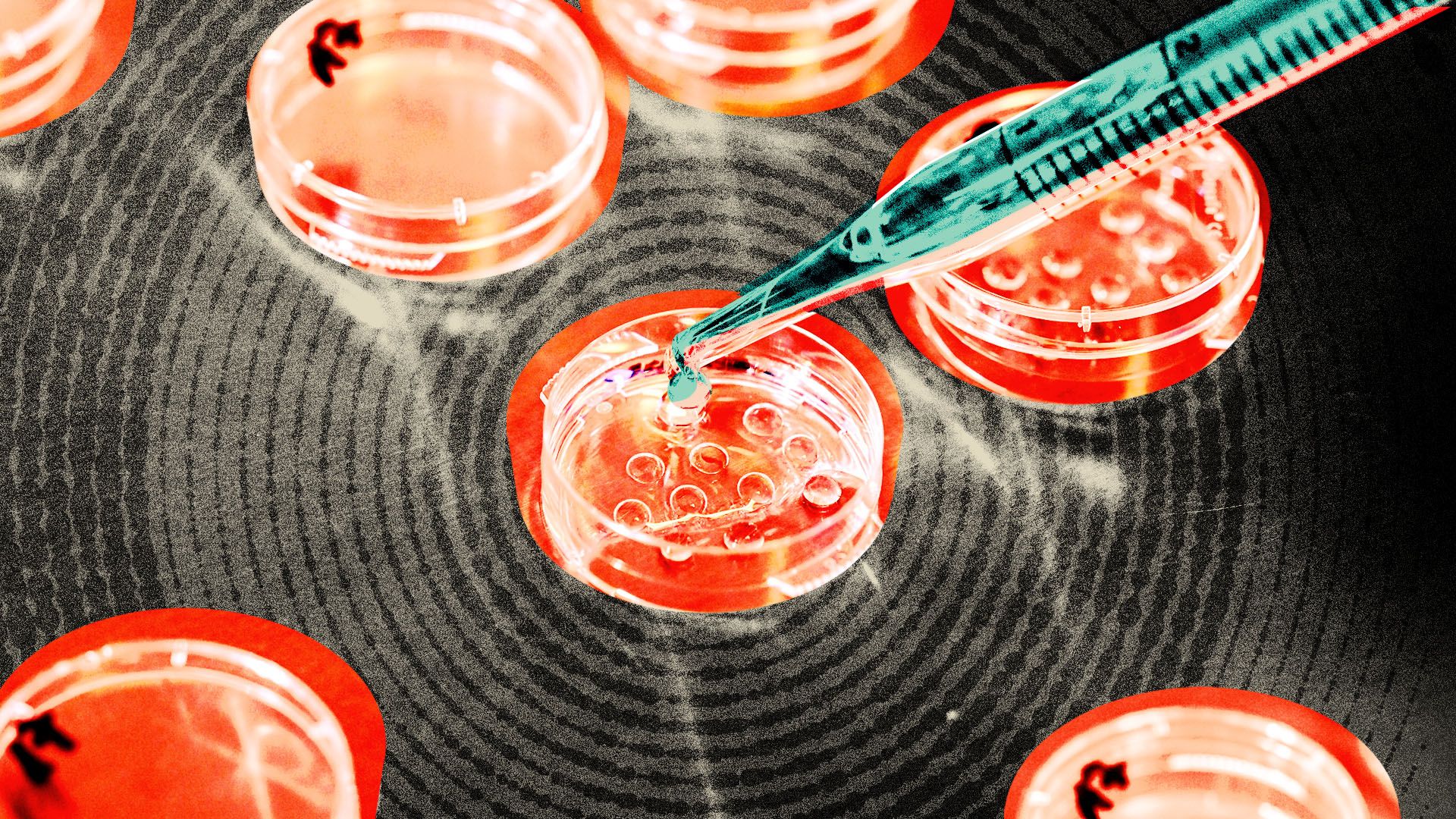
In vitro fertilization has exploded across America. The number of babies born through assisted reproductive technologies β most of them via IVF β jumped 45% from 2013 to 2022.
- A more recent part of the surge is elective IVF β still a small share of overall IVF cycles β in which people who could conceive naturally choose IVF to screen embryos for genetic traits linked to cancer risk, IQ, height and more, Axios' Carly Mallenbaum reports.
Why it matters: It's becoming big business, with screening companies promising "generational health." But doctors warn the science behind embryo scoring for complex conditions is shaky β and could push would-be parents toward major medical and emotional decisions based on unproven data.
- Plus, elective IVF is reopening old debates about "designer babies," and the ethics of hand-picking certain traits for future children.
π¬ Catch up quick: Some types of genetic testing for embryos have been around for years. The newest type on offer, PGT-P, uses DNA databases from adults to estimate an embryo's genetic predisposition to conditions that aren't driven by just a single gene.
- It's an "emerging consumer phenomenon" for people who don't have fertility issues or known genetic risks to do "elective IVF for the purposes of having a healthier, taller [child], whatever 'best' is to them," says Kian Sadeghi, CEO of embryo genetic testing company Nucleus Genomics.
Sadeghi's company screens not only for cancers and other health concerns, but for traits like height, IQ and male-pattern baldness.
- He said he'd understand if his own mother had chosen to implant an embryo projected to be taller than he is (5 feet, 6 inches).
𧬠Between the lines: The use of adult DNA data to make major decisions about embryo selection with PGT-P worries some doctors and bioethicists.
- "We just don't have a high enough correlation between genes and disease," says Ruth Lathi, an OB-GYN professor at Stanford's medical school.
3. π° Trump's tariff piggy bank
If you add up all of President Trump's plans for the tens of billions in tariff revenue the U.S. is collecting, the bucket of money has already dried up β and then some.
- Why it matters: Meaningful tariff revenue could improve the nation's fiscal outlook, creating a bright spot from the administration's trade policy, Axios' Courtenay Brown reports.
π But Trump's promised debt reduction, deficit reduction, $2,000 dividend checks and farm bailouts with the money, among other things.
- All of it would cost hundreds of billions of dollars, if not trillions, more in total than is on track to be collected. Failure to follow through could result in political blowback in next year's midterm elections.
β‘ The latest: Trump said in a Truth Social post this month that "a dividend of at least $2,000 a person (not including high-income people!) will be paid to everyone."
- The Committee for a Responsible Budget estimates the checks would cost $600 billion β twice as much as Trump's tariffs are estimated to raise on an annual basis.
4. π Stat du jour
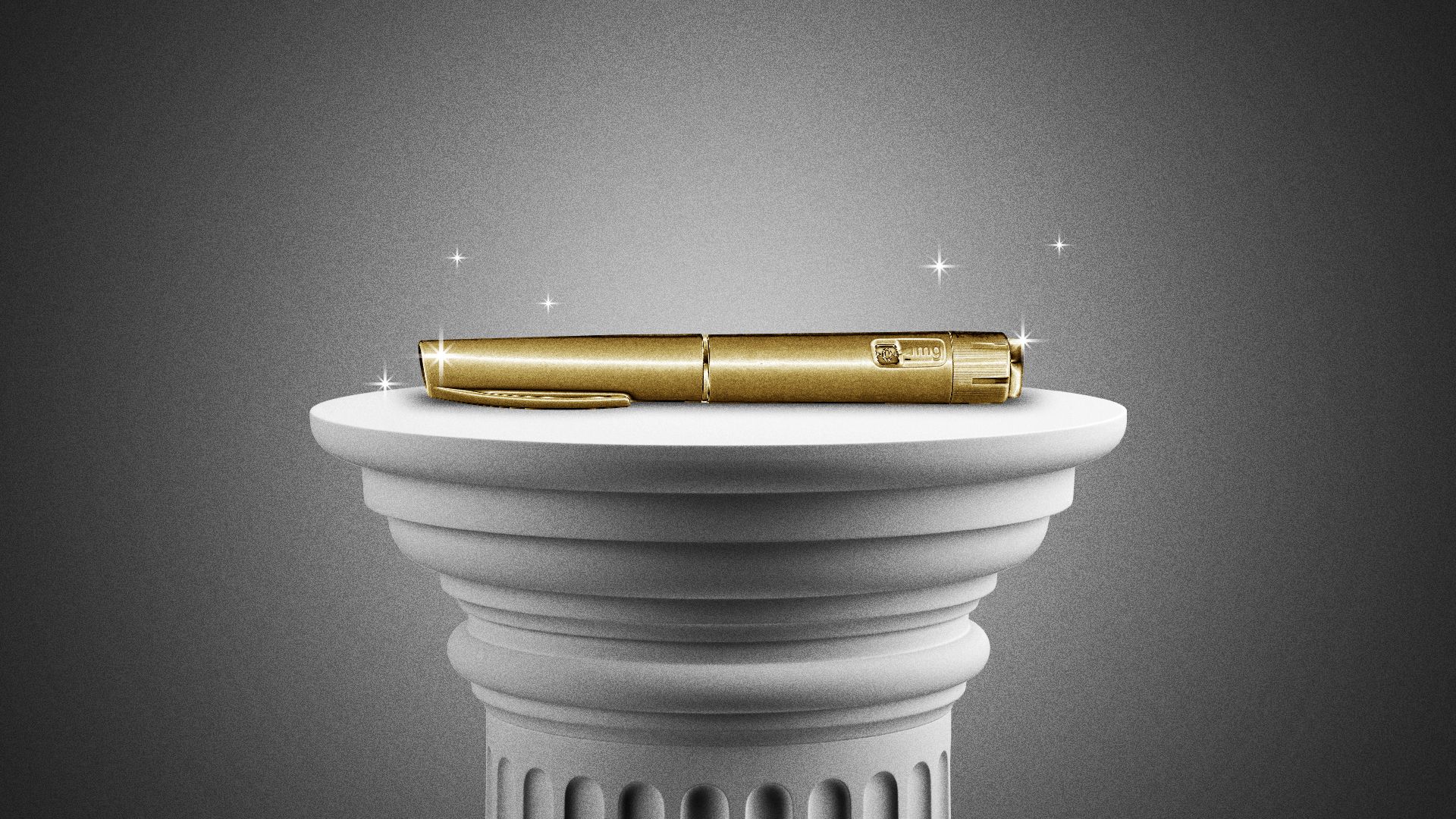
Eli Lilly reached a market valuation of $1 trillion in trading yesterday, becoming the first health care company and only non-tech company other than Warren Buffett's Berkshire Hathaway (counting Tesla as tech) in the trillion-dollar club.
- Since the launch of its flagship obesity drug, Zepbound, two years ago, Lilly's shares have risen more than 75%, Axios' Jeffrey Cane writes.
5. ποΈ MTG out

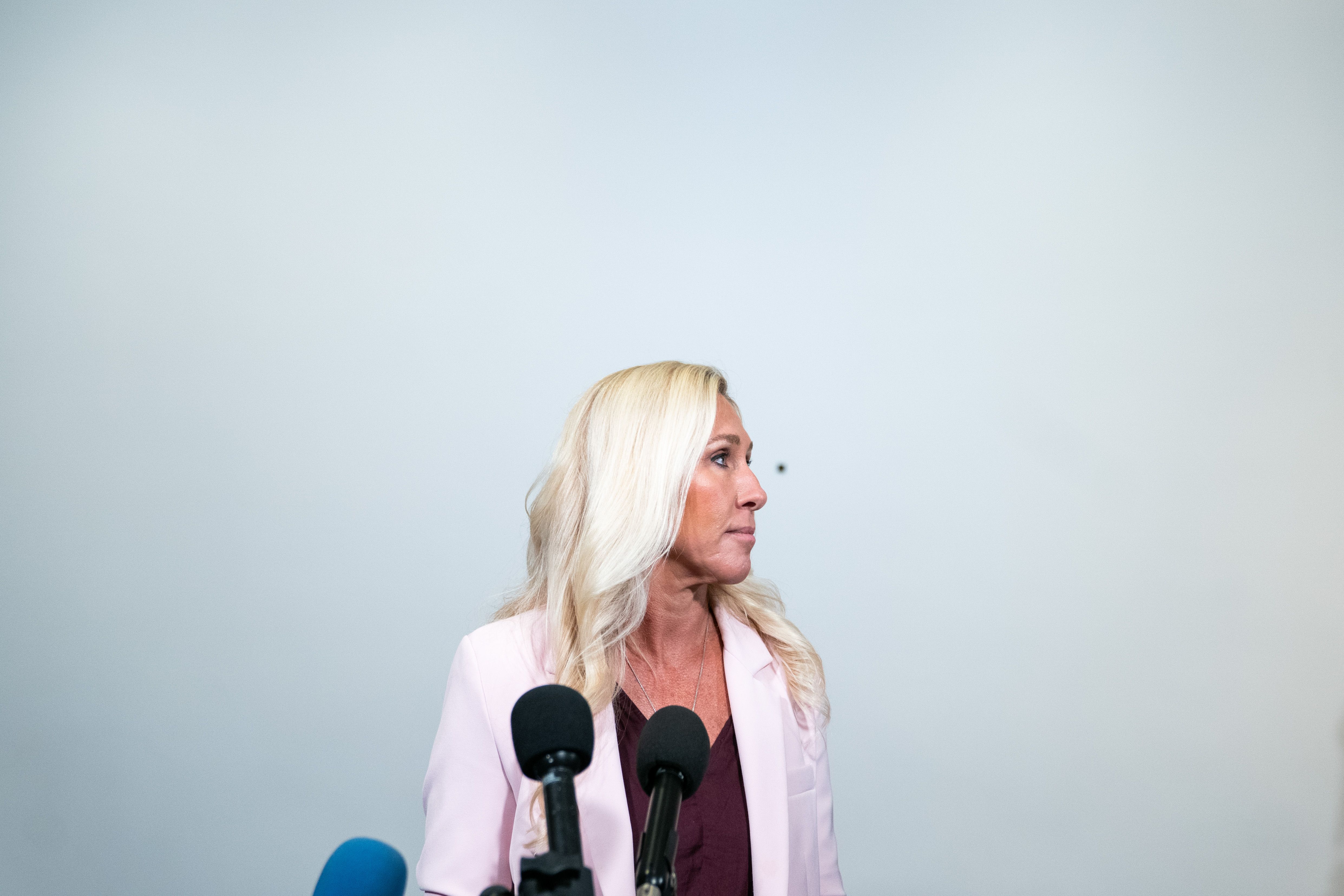
Rep. Marjorie Taylor Greene (R-Ga.) is resigning from Congress after her messy split with President Trump, the Georgia Republican announced in a post yesterday evening.
- Why it matters: Greene was one of Trump's earliest allies. But she broke with Republicans over health care costs and foreign policy, and her relationship with Trump dissolved over her push to release the Epstein files, Axios' Kate Santaliz writes.
Between the lines: Trump's political operation in recent days had been fielding interest from potential MTG challengers.
- One name mentioned in pro-Trump circles is Clayton Fuller, a northwest Georgia district attorney who ran unsuccessfully against Greene in 2020.
Go deeper: Congress' crazy week ... Alex Isenstadt contributed.
6. π¨ Holiday scams rising
Nowhere is safe from scammers this holiday season as deepfakes, scam texts and polished phishing emails flood shoppers' inboxes and social feeds.
- Why it matters: Generative AI tools have made scams look frighteningly believable and easier than ever to fall for, Axios cybersecurity expert Sam Sabin reports.
Common scams to be wary of as you hunt for deals:
- ποΈ Lookalike digital storefronts: Scammers continue to clone legitimate e-commerce sites like Amazon or Temu to steal credit card info and push counterfeit goods. They often use URLs that differ from the real ones by a single letter.
- π° Fake deals: Expect a wave of emails posing as retailers offering steep discounts or exclusive holiday drops.
- π¦ Delivery and shipping scams: These texts often claim a missed delivery or demand an extra payment to confirm an address.
7. π AI mishears
AI is struggling to understand accented English and non-standard dialects.
- Why it matters: The tech is deciding who gets a job interview, how students are graded and what doctors record in a patient's chart. But major speech-to-text systems make far more errors for Black speakers, Axios' Russell Contreras reports.
π€ How it works: Some companies use AI to transcribe and analyze interview responses, schools use it to assess oral reading tests and doctors use it to convert conversations into medical notes.
- But studies show that AI systems misinterpret speech from some Black speakers or others who don't use "standard English."
What to watch: Companies like OpenAI, Amazon and Google have launched projects to collect more diverse speech samples.
- Some hospitals use human reviewers to double-check transcripts from AI scribes.
8. π° 1 for the road: Vintage gowns' comeback
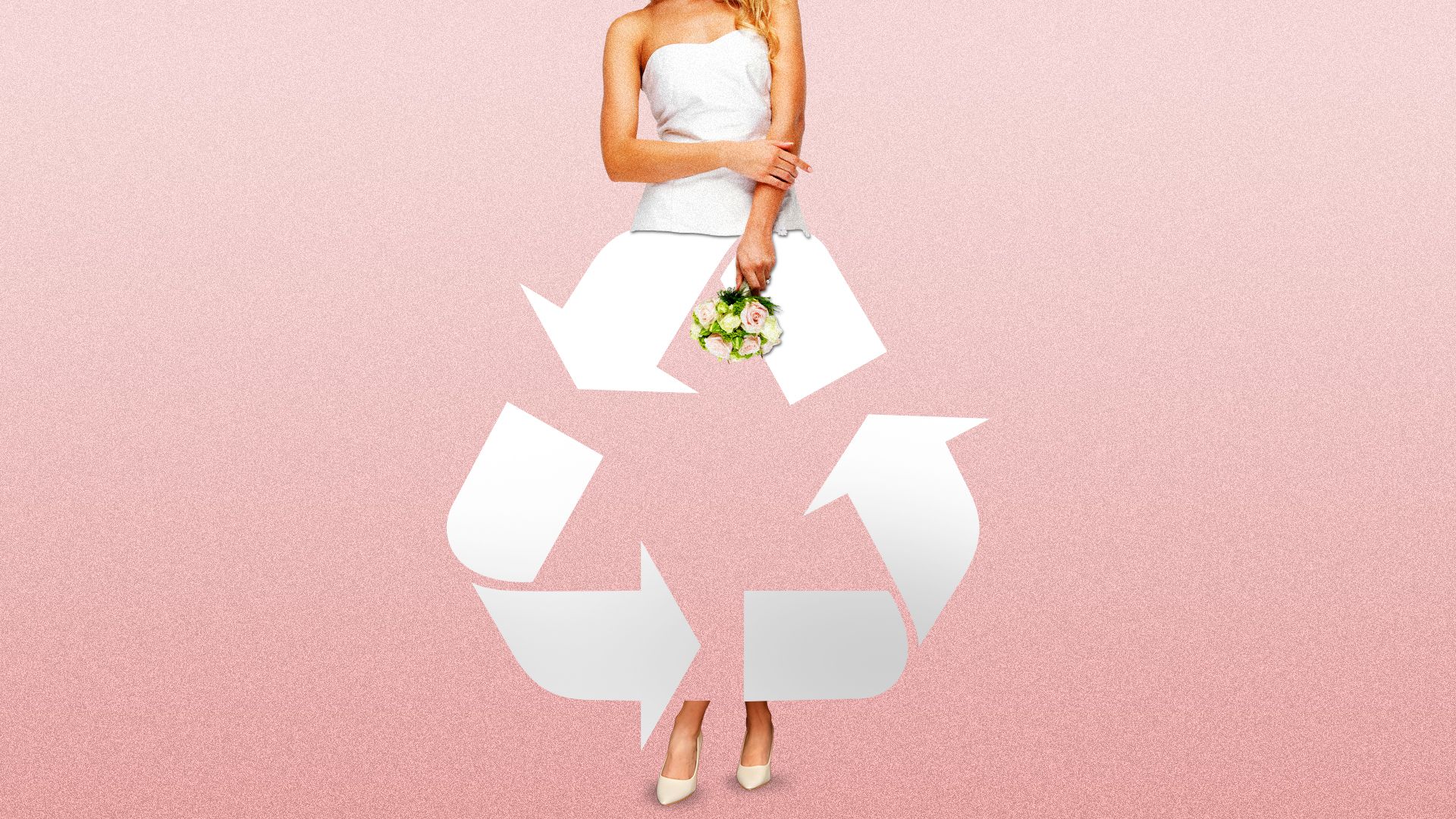
More brides are repurposing their mothers' wedding gowns for their own special day.
- Case in point: In Austin, Hill Country Bridal's Carol Dyer says more brides are bringing in their mothers' gowns to create custom looks, Axios Austin's Nicole Cobler writes.
πͺ‘ "We work together to transform those dresses into something beautiful," Dyer says. "It's gotten more popular in the last couple years."
- She now sees four to five brides a month interested in redesigning family gowns.
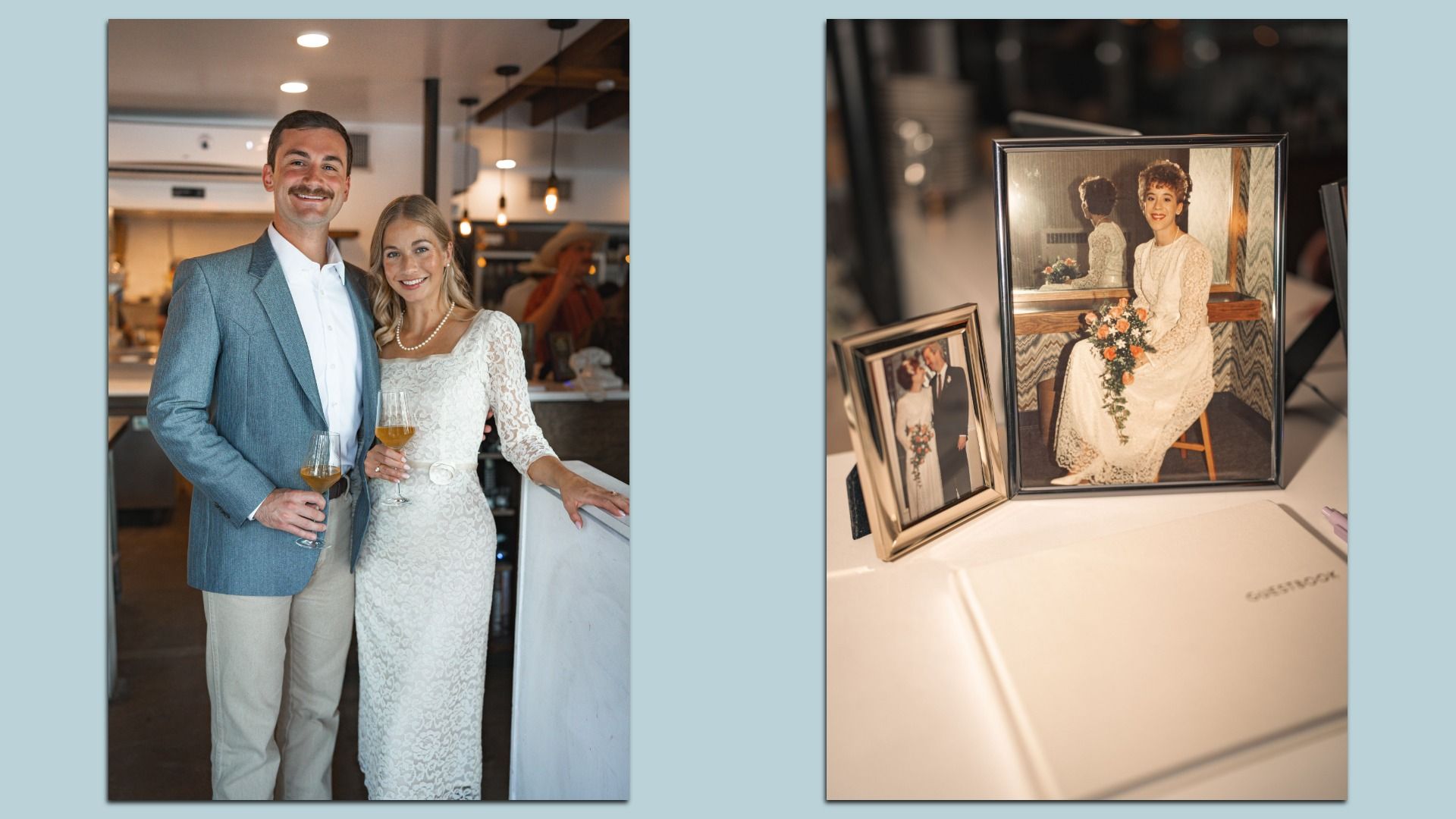
Nicole's thought bubble: I wore a redesigned version of my mom's 1991 wedding dress for my rehearsal dinner β with her blessing, of course.
- My mom loved the updated dress, and I displayed photos of her in the original gown at our rehearsal dinner.
Share this story ... Get Axios Austin ... Find your Axios Local city.
π¬ Thanks for reading! Please invite your friends to join AM.
Sign up for Axios AM