Axios AM

February 12, 2026

☀️ Happy Thursday! Smart Brevity™ count: 1,438 words ... 5½ mins. Thanks to Noah Bressner for orchestrating. Edited by Mark Robinson and Bill Kole.
1 big thing: Loud AI alarm
Top AI experts at OpenAI, Anthropic and other companies warn of rising dangers of their technology, with some quitting in protest or going public with grave concerns, Axios' Madison Mills writes.
- Why it matters: Leading AI models, including Anthropic's Claude and OpenAI's ChatGPT, are getting a lot better, a lot faster, and even building new products themselves.
That excites AI optimists — and scares the hell out of several people tasked with policing their safety for society.
- On Monday, an Anthropic researcher announced his departure, in part to write poetry about "the place we find ourselves."
- A former OpenAI researcher, Zoë Hitzig, also left this week, citing "deep reservations about OpenAI's strategy." Another OpenAI employee, Hieu Pham, wrote on X: "I finally feel the existential threat that AI is posing."
Jason Calacanis, tech investor and co-host of the All-In podcast, wrote on X: "I've never seen so many technologists state their concerns so strongly, frequently and with such concern as I have with AI."
- The biggest talk among the AI crowd yesterday was entrepreneur Matt Shumer's post, "Something Big Is Happening," comparing this moment to the eve of COVID. It went mega-viral, garnering nearly 70 million views in 36 hours, as he laid out the risks of AI fundamentally reshaping our jobs and lives: "This might be the most important year of your career. Work accordingly."
🚨 Between the lines: While the business and tech worlds are obsessed with this topic, it hardly registers in the White House and Congress.
🥊 Reality check: Most people at these companies remain bullish that they'll be able to steer AI smartly, without societal damage or big job loss. But the companies themselves admit the risk.
- Anthropic published a "Sabotage Risk Report" showing that, while low risk, AI can be used in heinous crimes, including the creation of chemical weapons. The report examined risks of AI acting without human intervention, purely on its own, including "self-sustaining activities that allow it to pay for or steal access to additional compute."
- OpenAI dismantled its mission alignment team, which was created to ensure AGI (artificial general intelligence) benefits all of humanity, Platformer's Casey Newton reported.
💥 Threat level: The latest warnings follow AI breakthroughs showing these models can build complex products on their own — then improve them without human intervention.
- OpenAI's last model helped train itself. Anthropic's viral Cowork tool built itself.
- These revelations — in addition to signs that AI threatens big categories of the economy, including software or legal services — are prompting lots of real-time soul-searching.
The bottom line: The AI disruption is here. Its impact is happening faster and more broadly than most people and institutions are ready for.
2. 🦾 Anthropic subscription surge


The share of U.S. companies paying for Anthropic's AI tools and services jumped in January, Axios' Emily Peck writes.
- Why it matters: It was Anthropic's breakthrough month, writes Ara Kharazian, an economist at Ramp, which has been tracking business spending on AI.
Anthropic's new software coding product — Claude Code — went viral earlier this year and helped drive adoption.
🧮 By the numbers: The share of companies paying for Anthropic increased to 20% from 17%, according to Ramp, a company that offers corporate credit cards and expense-management tools to roughly 50,000 companies nationwide.
- OpenAI dropped slightly from 37% to 36%.
One-fifth of businesses that use Ramp now pay for Anthropic, up from one in 25 last year.
- Anthropic isn't gaining users at OpenAI's expense. About 79% of OpenAI users also pay for Anthropic.
3. 👀 Voters say Biden was better
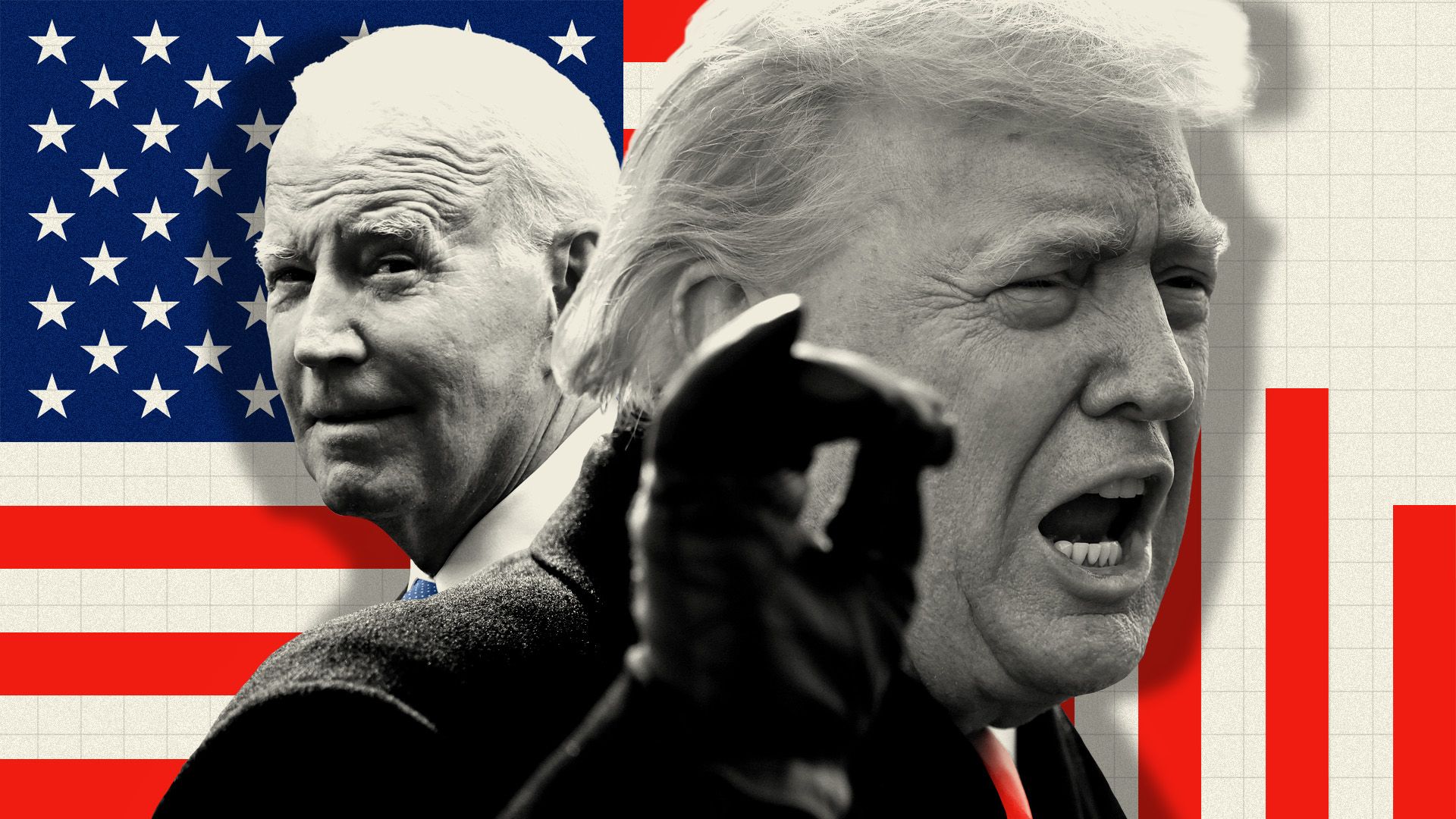
President Trump has become so politically toxic that voters now say Joe Biden — whose unpopularity forced him into early retirement — did a better job as president, Axios' Zachary Basu writes from three new polls.
- Why it matters: The White House has nine months to turn the ship around before a potential midterm wipeout for Republicans.
🔎 Zoom in: Three national surveys point to the same alarming trend for a president who's done everything in his power to erase his predecessor's legacy.
- Harvard CAPS/Harris (Jan. 28–29): Mark Penn's polling firm found that registered voters are statistically split over whether Trump is doing a worse job than Biden.
- Rasmussen Reports (Feb. 2–4): The Trump-friendly pollster is fending off MAGA criticism after finding that 48% of likely voters say Biden did a better job as president, compared with 40% who chose Trump.
- YouGov/Economist (Feb. 6–9): This survey found that 46% of U.S. adults say Trump is doing a worse job than Biden, compared with 40% who say he's doing better.
One year in, Trump has lost virtually every advantage that won him the presidency.
- His signature issues are now liabilities: 49% of adults "strongly disapprove" of how Trump has handled border security and immigration, according to a new NBC News poll.
- Trump's net approval on the economy (-18) is 26 points lower than it was at this point in his first term — and 53 points lower among independents, according to CNN polling analyst Harry Enten.
White House deputy press secretary Kush Desai told us the Trump administration "remains laser-focused on continuing to cool inflation, accelerate economic growth, secure our border, and mass deport criminal illegal aliens."
4. ☃️ Ski season lifeline

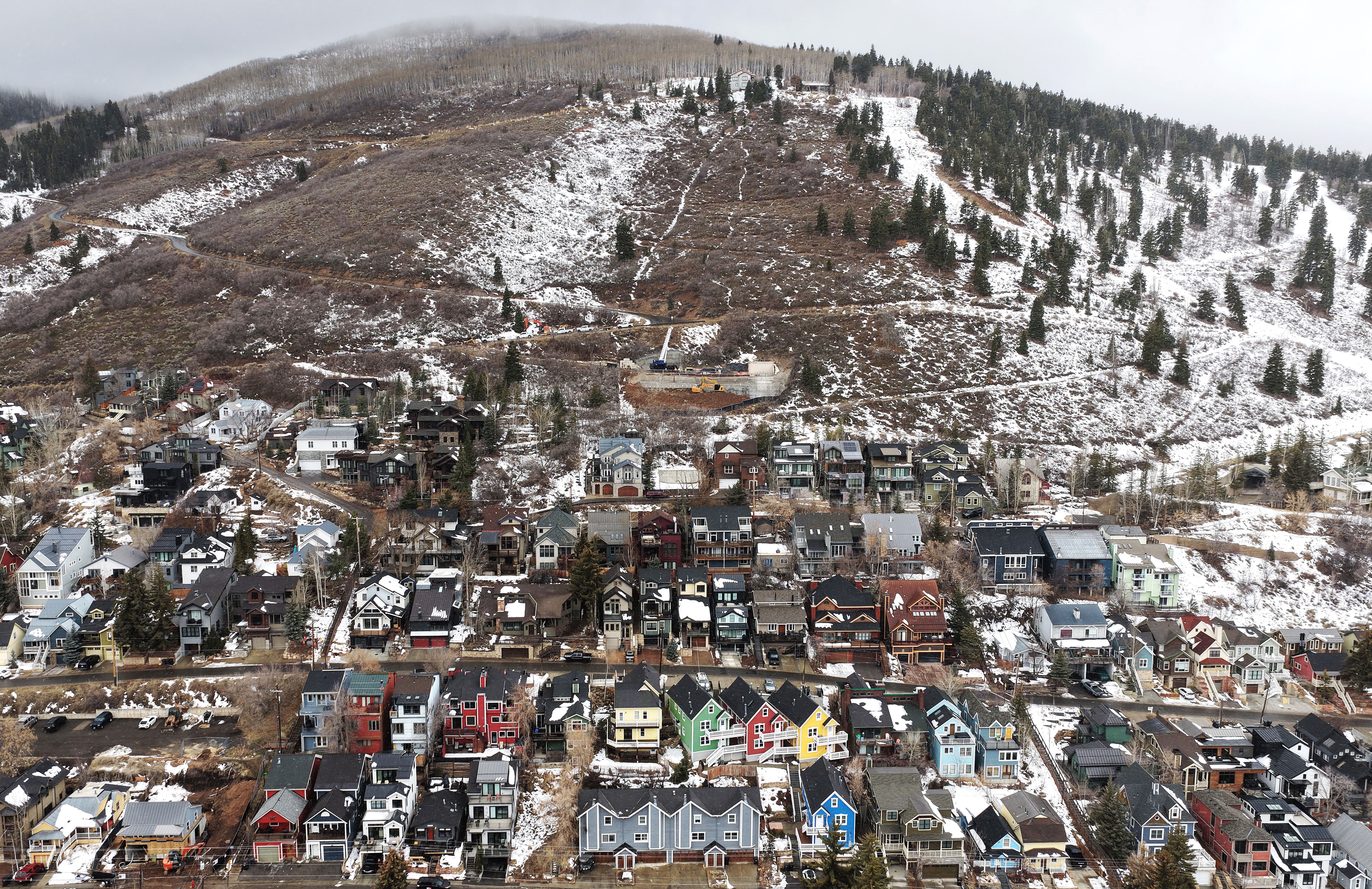
A winter storm that will last through this morning is expected to bring much-needed snowfall to Utah's unusually warm and dry mountains, Axios Salt Lake City's Kim Bojórquez writes.
- Why it matters: Utah's snowpack hit a record low this month — bad news for the state's famous ski resorts, which rely on steady snowfall to bring in visitors.
Colorado is on track to record its worst-ever snowpack.
- Keep reading ... Get Axios Local: Daily newsletters in 34 cities.
5. 🌡️ Greenhouse gas surprise
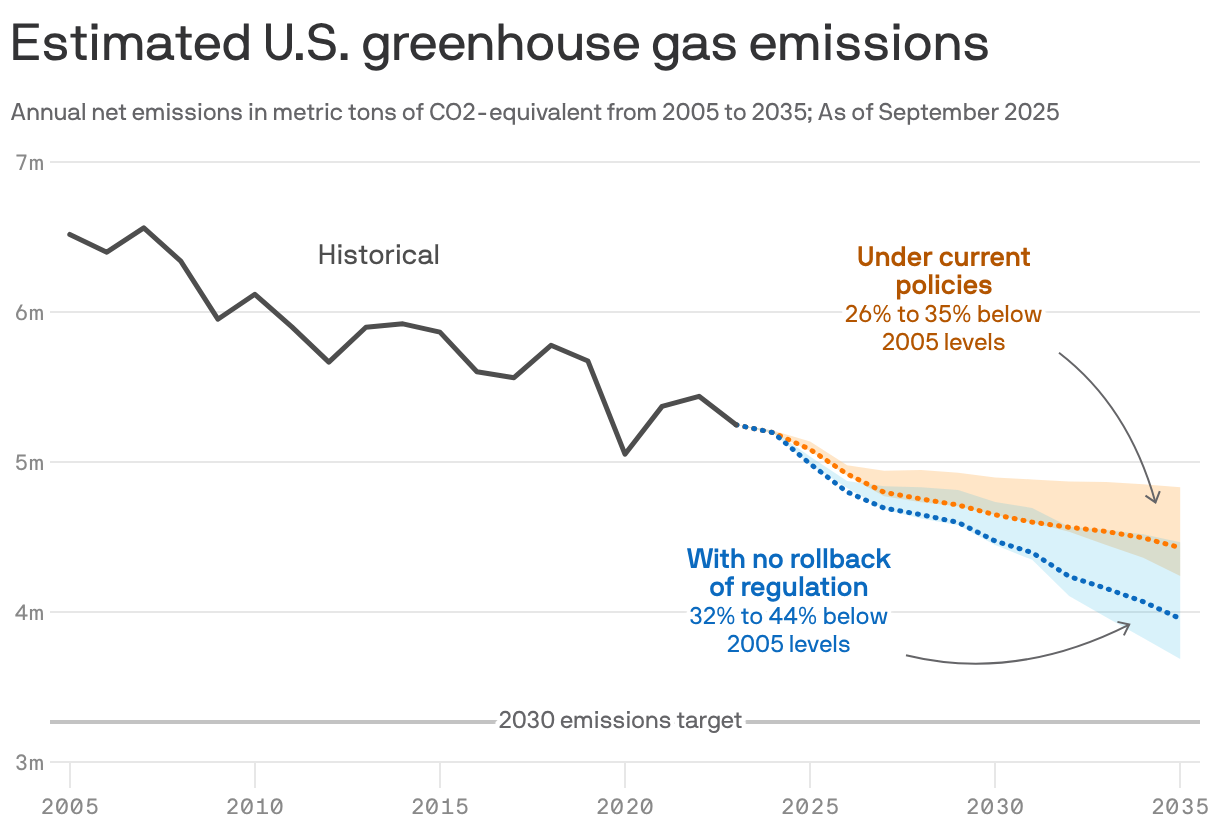
President Trump is trying to pull the rug out from under federal climate regulation. But the U.S. economy may no longer be standing on it, Axios Future of Energy co-author Amy Harder writes.
- Why it matters: The energy transition is well underway and is unlikely to be reversed.
⚡ Driving the day: The EPA today is expected to overturn the 2009 "endangerment finding," which determined that greenhouse gases threaten public health and set the foundation for federal regulation of climate pollution.
- At 1:30 p.m. ET, Trump makes the historic announcement in the Roosevelt Room with EPA Administrator Lee Zeldin.
Between the lines: The repeal is legally and symbolically seismic. But its real-world impact may be more muted:
- It would likely slow emissions cuts — but not reverse them, according to modeling by the Rhodium Group, a New York-based research firm.
6. 😵💫 Labor market whiplash


America's workers had a miserable 2025. The first jobs report of the new year shows the job market on a much more solid footing, Axios Macro authors Courtenay Brown and Neil Irwin write.
- Why it matters: You would be forgiven for having economic whiplash. Downbeat indicators led up to yesterday's report, including plunging job openings and sharply negative polling on the country's perception of the job market.
The labor market had virtually no growth last year — just 181,000 jobs added, compared with 1.4 million in 2024.
- Now, a surprisingly strong January jobs report (+130,000 jobs) may signal stabilization or even a pickup in hiring in the months ahead.
🩺 Between the lines: While the job market appears stronger, the gains remain concentrated.
- Health care and social assistance accounted for the bulk of last month's gain. Other sectors are barely adding workers.
7. 📊 Gallup drops approval ratings
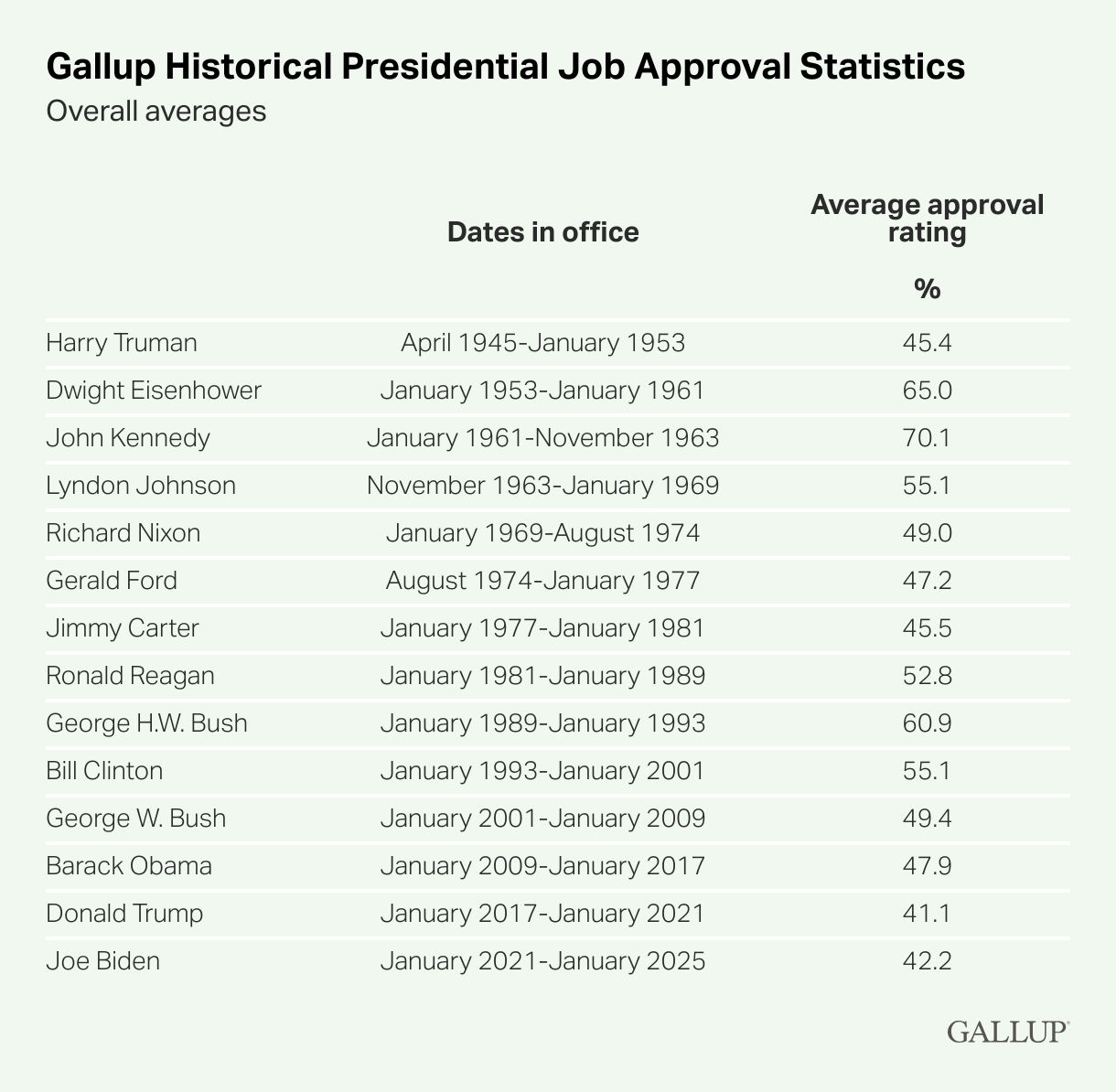
Gallup will stop tracking presidential job approval ratings after almost nine decades, Axios' Avery Lotz writes.
- Why it matters: The polling giant's approval ratings have long served as a historical barometer of American sentiment toward the White House.
A spokesperson said that leadership approval ratings are now "widely produced, aggregated and interpreted, and no longer represent an area where Gallup can make its most distinctive contribution."
- President George W. Bush captured the highest job approval rating Gallup ever recorded, reaching 90% following 9/11.
- President John F. Kennedy had the highest average approval rating at roughly 70%.
Go deeper: Every president's numbers since Truman ... Share this story.
8. ⛸️ 1 for the road: Snoop in the stands

Axios' Ina Fried captured Wisconsin's Jordan Stolz celebrating yesterday after winning gold in men's 1,000-meter speedskating in Milan.
- The backstory: "It all began on a frozen pond behind the family home in Kewaskum, Wisconsin, where five-year-old Jordan Stolz first shuffled onto the ice wearing a blue life jacket, circling a hand-cleared speed skating oval under the watchful eyes of his parents." (Olympics.com)
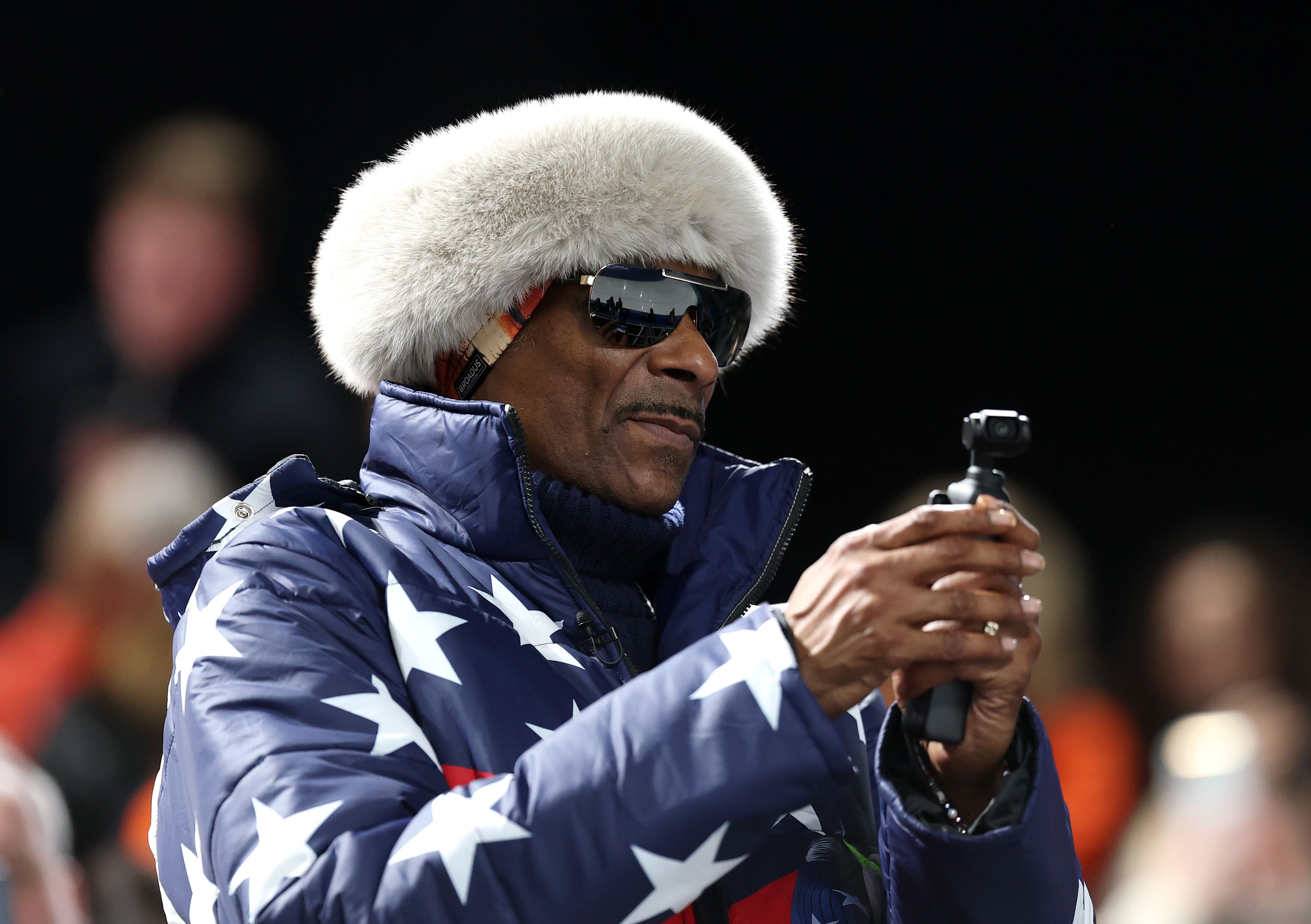
Snoop Dogg — rapper, NBC Olympics correspondent, and Team USA honorary coach and hype man — sat a few rows in front of Ina.
📬 Thanks for reading! Please invite your friends to join AM.
Sign up for Axios AM