Axios AM

June 15, 2025

1 big thing: Trump's ICE backtrack

2. ☢️ Israel urges U.S. to join war

Israel has asked the Trump administration over the past 48 hours to join the war with Iran in order to eliminate its nuclear program, Axios' Barak Ravid reports.
- Israel lacks the bunker-buster bombs and large bomber aircraft needed to destroy Iran's Fordow uranium enrichment site, which is built into a mountain and deep underground.
- The U.S. has both — within flying distance of Iran.
👀 But the Trump administration has so far distanced itself from Israel's operation, and argued that it would be illegitimate for Iran to retaliate by striking U.S. targets.
- Directly attacking Iran, even if the U.S. involvement is limited to bombing a single site, would pull the U.S. directly into the war.
- But if Fordow remains operational after the strikes end, Israel will have failed in its goal to "eliminate" Iran's nuclear program.
Behind the scenes: An Israeli official claimed to Axios that the U.S. might join the operation, and that President Trump even suggested he'd do so if necessary in a recent conversation with Prime Minister Benjamin Netanyahu.
- A White House official denied that on Friday. A second U.S. official confirmed yesterday that Israel has urged the Trump administration to join the war. But the official said the administration isn't currently considering it.

🏛️ Back in Washington, a group of pro-Israel members of Congress urged Trump to ensure "zero enrichment, zero pathway to a nuclear weapon" in negotiations with Iran, Axios' Andrew Solender has learned.
- The letter is led by Rep. Josh Gottheimer (D-N.J.), a staunchly pro-Israel centrist Democrat, and signed by seven other House Democrats, plus GOP Rep. Don Bacon (R-Neb.).
They asked the president to add "crushing diplomatic pressure ... to Israel's military pressure" by working with European countries to impose "Snapback" sanctions on Iran for being out of compliance with the 2015 nuclear deal.
3. 🚨 Minnesota killing rattles Congress

A long-simmering fight over congressional security boiled over again this weekend following a pair of shootings against Minnesota state legislators at their homes that left two dead and two others hospitalized.
- The shootings have deeply unnerved members of Congress, who feel that any one of them could be the subject of an unanticipated attack — particularly at home in their districts or while in transit, Axios' Andrew Solender reports.
The latest: Minnesota state House Democratic Leader Melissa Hortman and her husband were shot and killed at their home early yesterday.
- The suspect, identified by law enforcement officials as 57-year-old Vance Boelter, also allegedly shot Democratic state Sen. John Hoffman and his wife at their home, leaving both hospitalized.
- Boelter was allegedly dressed as a police officer and driving a vehicle similar to those used by local law enforcement.
- He also had what investigators described as a "manifesto" that listed other Democratic lawmakers, as well as prominent abortion rights advocates, officials allege.
⚡ State of play: The shooting sent shockwaves through Capitol Hill, with Senate Minority Leader Chuck Schumer (D-N.Y.) saying he asked for increased security for Sens. Amy Klobuchar (D-Minn.) and Tina Smith (D-Minn.).
- House Minority Leader Hakeem Jeffries (D-N.Y.) said he similarly asked security officials to "ensure the safety of our Minnesota delegation and Members of Congress across the country."
- The Capitol Police said in a statement Saturday it was "aware of the violence targeting state lawmakers in Minnesota" and had "been working with our federal, state and local partners," but declined to offer further details.
House Republicans held a call yesterday afternoon, in which lawmakers pushed their leadership to provide more security resources to individual members.
- Specific proposals included increasing security measures at members' homes and at airports, as well as boosting security for meetings, according to three House Republicans who were on the call.
🔭 Zoom out: Personal security details are largely a privilege for top congressional leaders and a few other high-profile members facing specific, credible threats.
- Rank-and-file members are renewing a push for greater security — arguing for their own details, greater safety measures at their homes and in airports, and more stringent measures to hide personal information.
4. ⚡ National split screen
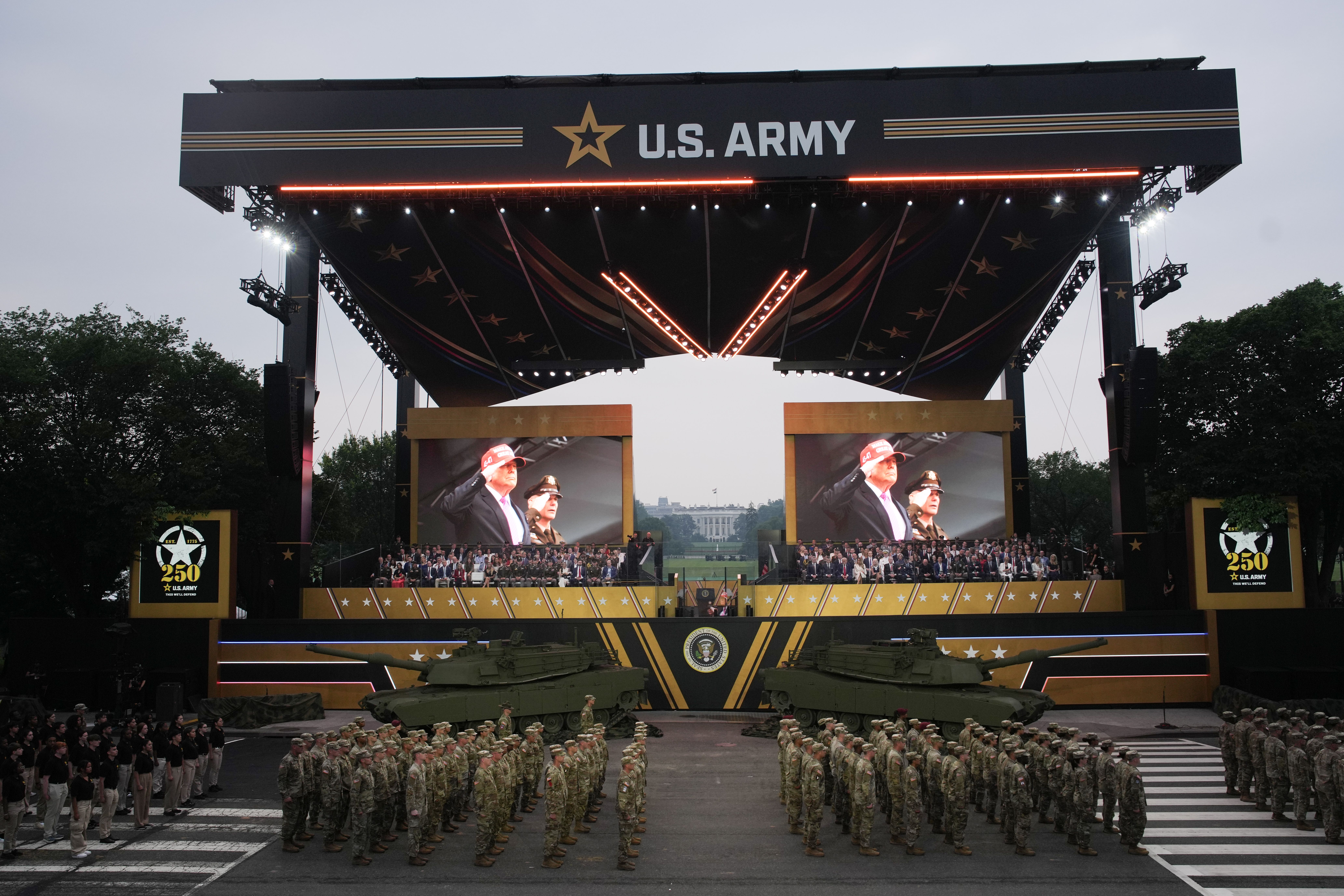
President Trump hosted the country's largest military parade in decades in D.C. yesterday evening. It marked 250 years of the U.S. Army — and coincided with Trump's 79th birthday.
- "Every other country celebrates their victories. It's about time America did, too," Trump said in remarks at the end of the parade. The president also received a commemorative flag as the crowd sang "Happy Birthday."
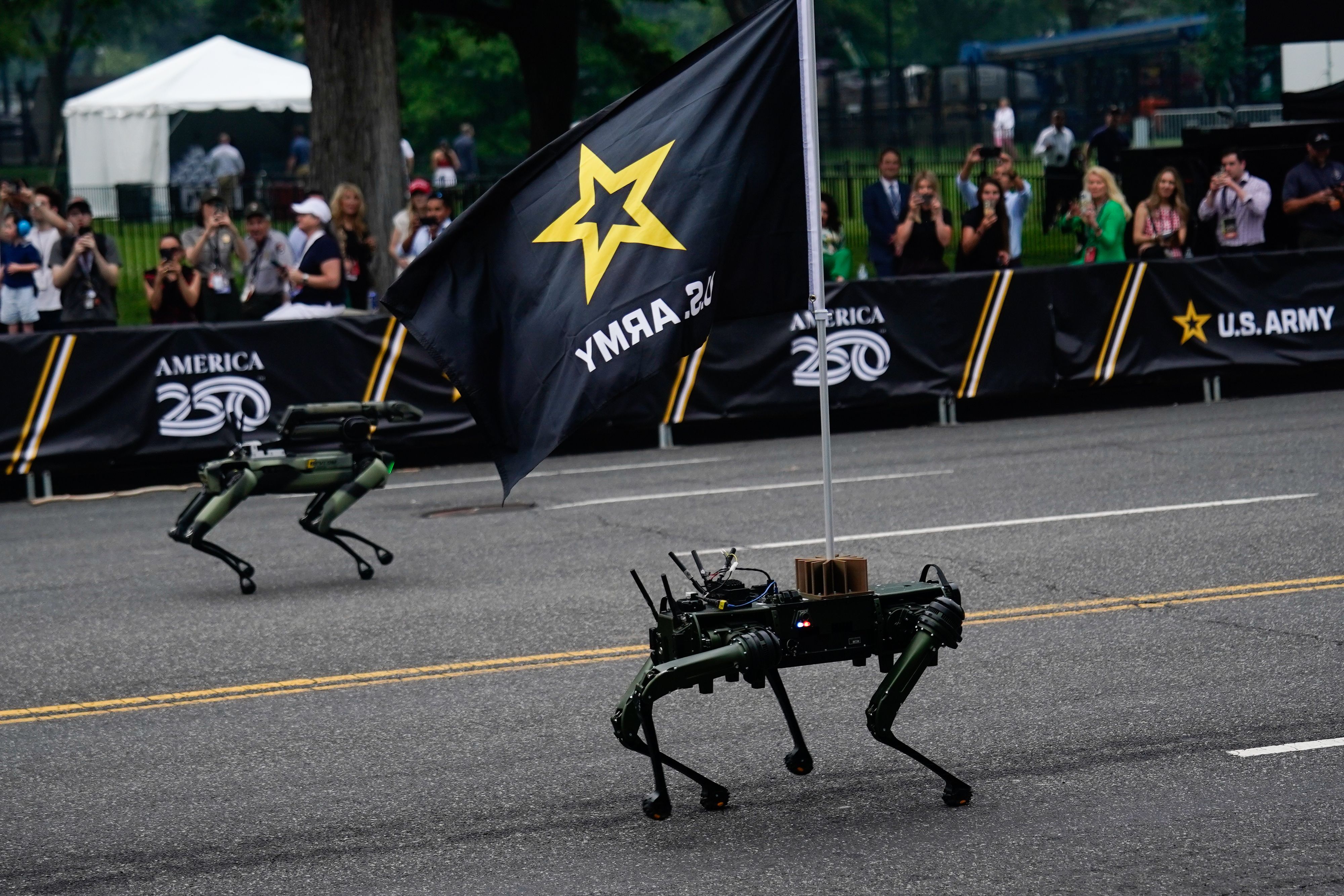
More than 6,000 soldiers and 128 Army tanks processed down Constitution Avenue, AP reports.
- Early in the evening, the Army's Golden Knights parachute team descended from overcast skies toward the reviewing stand. Robot dogs joined the parade too.
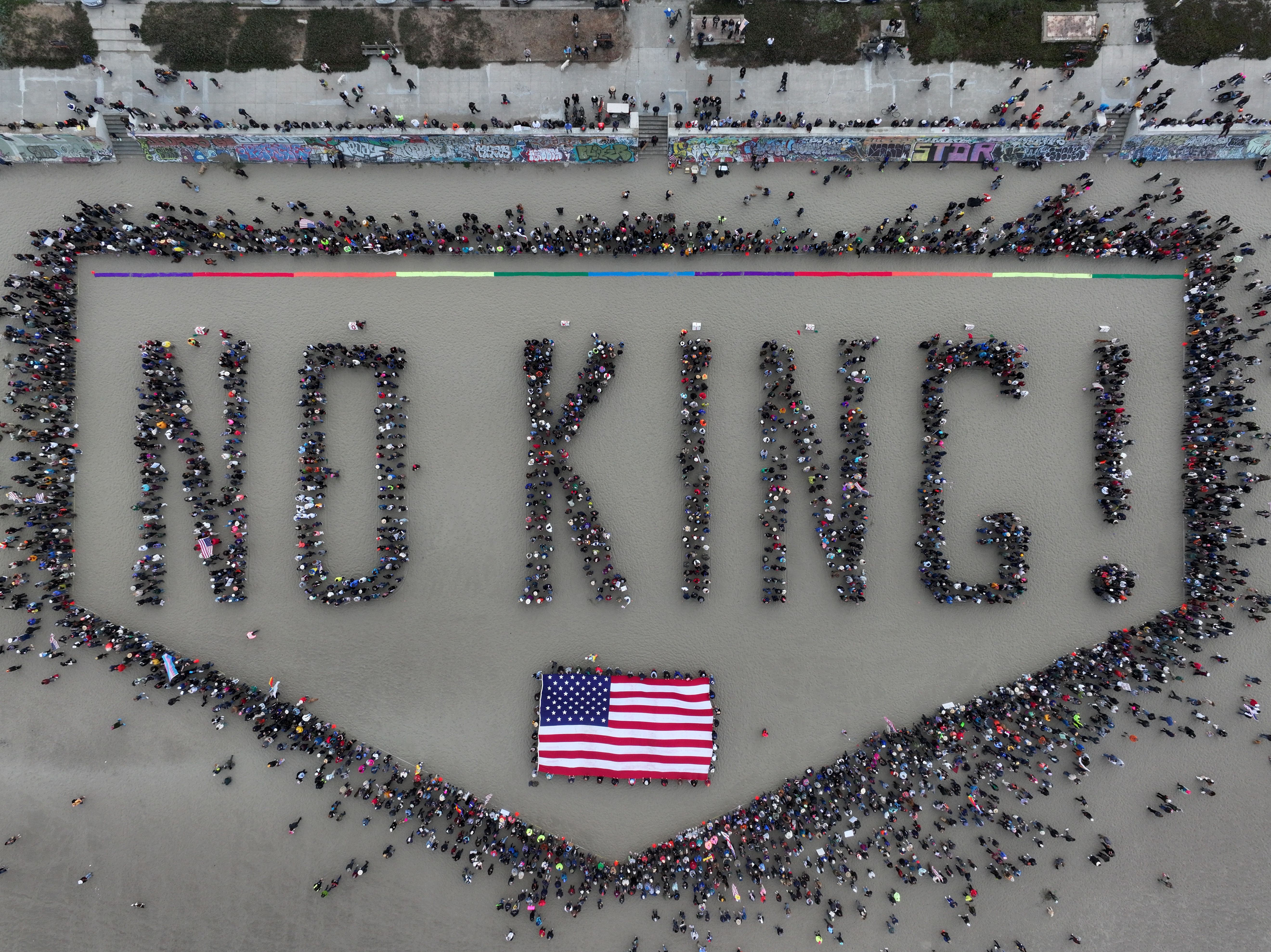
In stark counter-programming, protesters across the U.S. took to the streets in demonstrations against the Trump administration.
- More than 5 million people took part in "No Kings" rallies in over 2,100 cities and towns across the country, organizers tell Axios' April Rubin and Rebecca Falconer.

While most rallies were peaceful, there were reports of clashes between police and protesters during a Los Angeles "No Kings" rally, where days-long fiery demonstrations against ICE raids have been taking place.
- Authorities said one person was critically injured in Salt Lake City after gunshots were fired, and a man in Culpeper, Va., was arrested for allegedly intentionally driving an SUV through a crowd. There were no immediate reports of injuries.
5. 👨👧 More dads take leave
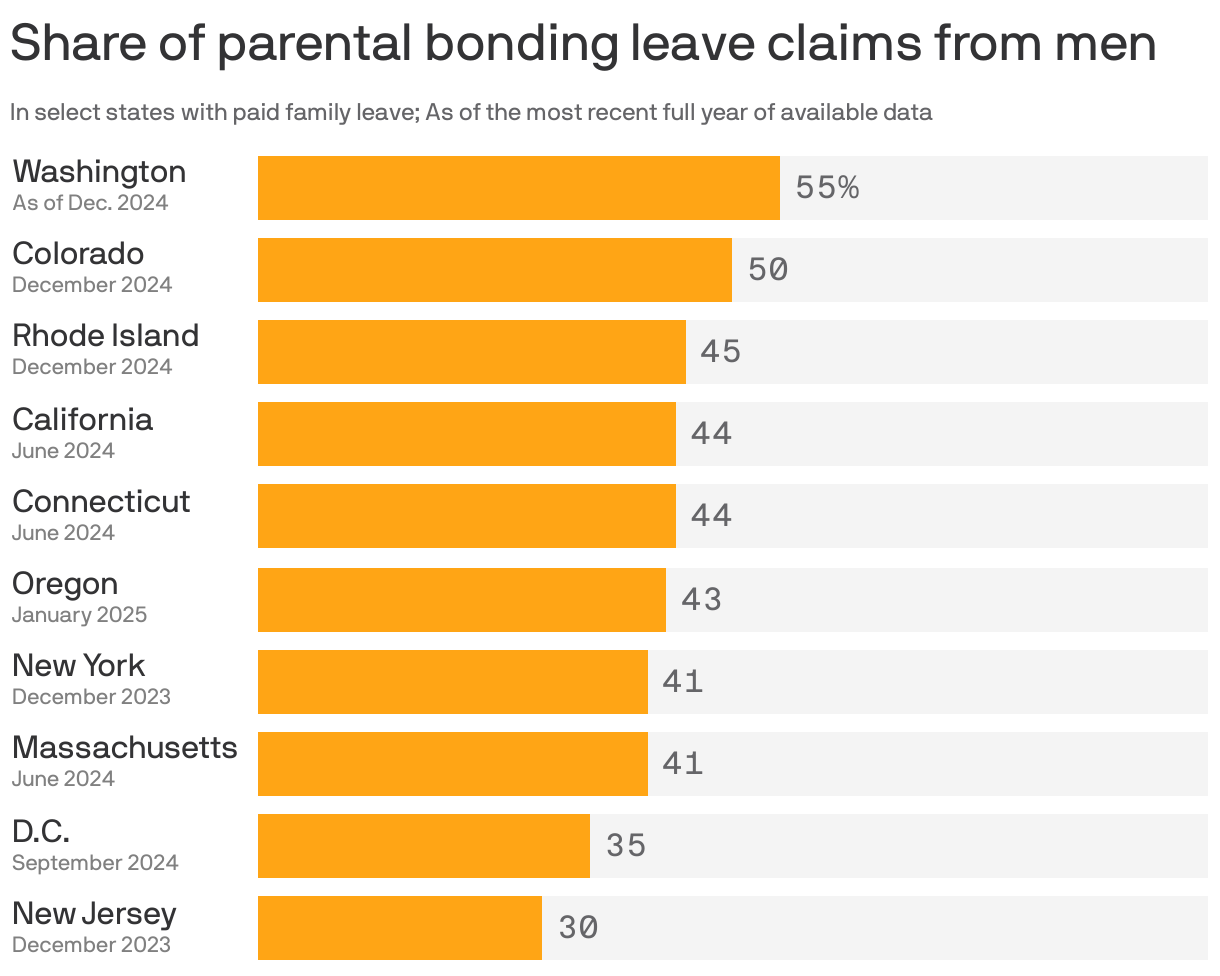
More men are taking state-paid paternity leave in states that have the benefit, Axios' Emily Peck writes from a new study.
- Why it matters: Taking time off to bond with a newborn or newly adopted child has all kinds of upsides. Men, women and children all see positive health impacts — including reduced infant mortality rates, research finds.
⚖️ Zoom in: Though there's no federal paid leave, 13 states and D.C. have enacted a paid family leave policy called "bonding" leave — for new working parents to bond with kids.
- In the states that have this leave, it's typically funded by a small payroll tax. Parents get paychecks either from their employer or the state, depending on how leave is structured.
- Parents end up getting about 12 weeks of "bonding" leave.
By the numbers: Fathers and mothers are coming close to parity in leave-taking in those states, finds the report from advocacy group Paid Leave for All.
- The study looked at the share of men and women taking advantage of leave policies. They found that men took at least 40% of all the parental leave taken in eight of 10 states with policies up and running.
6. ✈️ Attacks divert flights
/2025/06/14/1749938117145.gif)
This GIF shows commercial flights above the Middle East prior to and immediately after Israel's attacks on Iran on Thursday.
- Flights in the region were grounded or diverted quickly after the strikes.
7. 🎈 Holiday collision
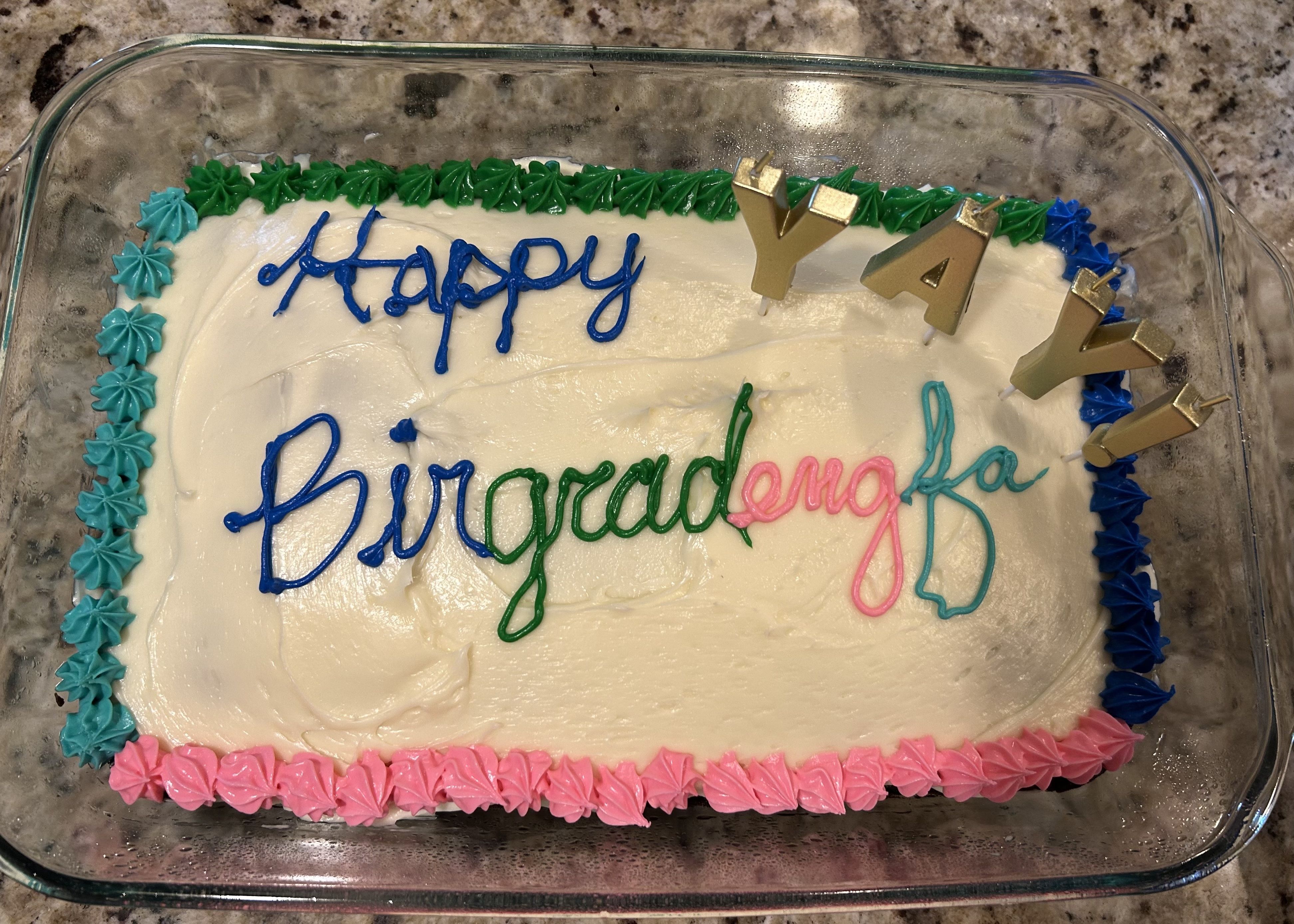
Mike is in North Carolina at the lake house of his brother, Scott, and his wife, Sheri, who whipped up this cake to celebrate a birthday trio ... graduations from middle school and Alabama ... Abbie's engagement ... + Father's Day.
- The next generation also has the gift of party: Evan and Aubrey Allen surprised Scott and Sheri with a luau yesterday when they returned from an afternoon on the boat.
8. 🐶 1 for the road

Bruce, a 21-month-old golden retriever, had his MLB debut as a bat-retrieving dog at National Park in Washington yesterday.
- As part of Pups in the Park, he fetched a bat during a ceremony before the Nats played the Miami Marlins.
Axios AM