Axios AM

December 28, 2025

1 big thing: JD's 2028 plotting
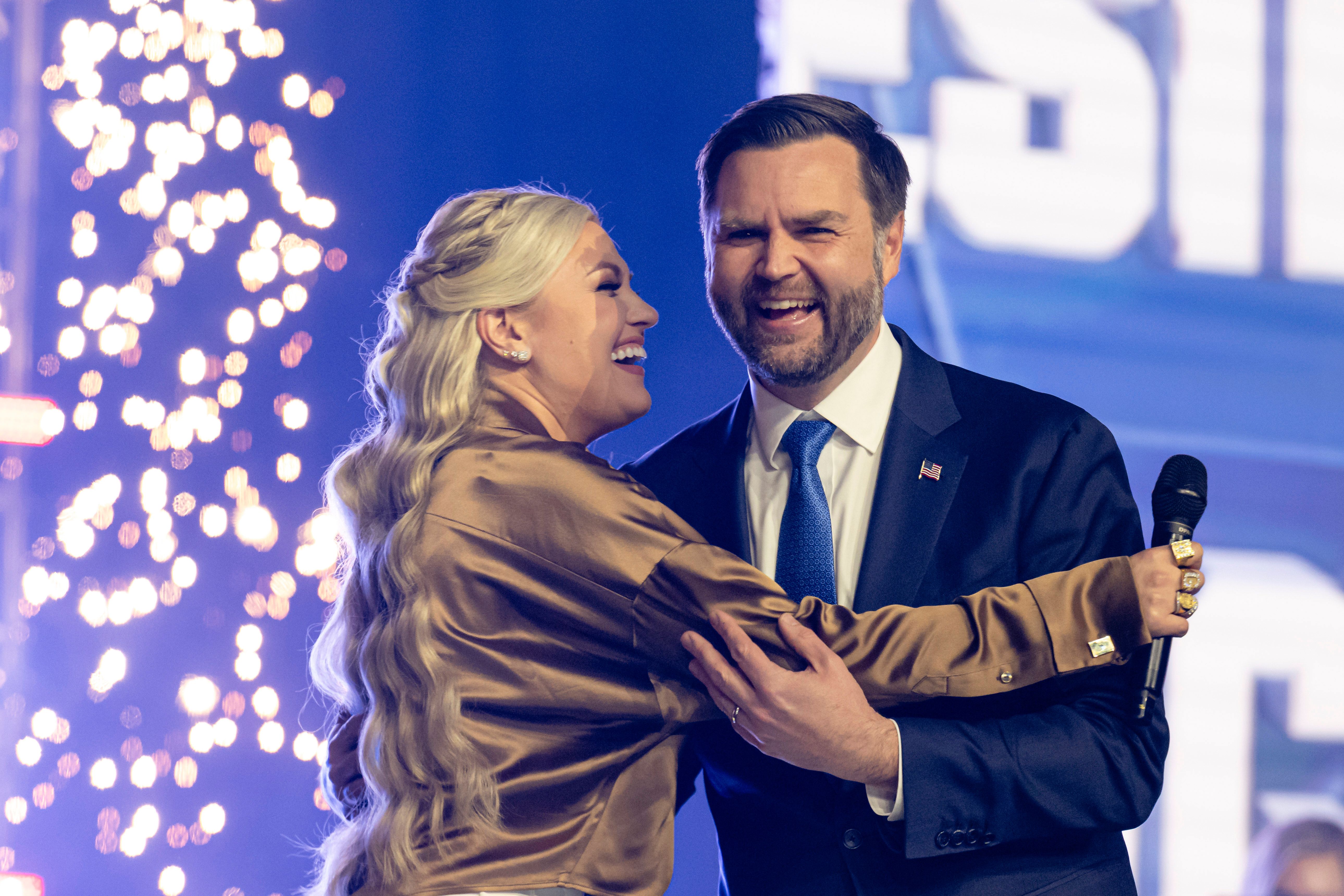
Vice President JD Vance plans to literally fly above MAGA's rising civil war — campaigning coast to coast in the midterms and sticking close to President Trump, while building support for an expected presidential run in 2028, Axios' Alex Isenstadt reports.
- Why it matters: Vance has to get ready for a national campaign. But he can't look too eager, since President Trump isn't one to share the spotlight.
💡 Vance aides say he's focused on next November's midterms, not thinking about 2028. But talking with outside Vance allies and others familiar with his thinking, Axios stitched together the VP's five-pronged plan for making 2026 pay off later:
- Be a loyal VP. Vance's biggest priority is to show he's loyal to Trump above all else. Trump is the dominant figure in the Republican Party, and that won't change before 2028 kicks off. So for Vance to be the GOP nominee, he'll need Trump's strong backing. Republicans expect Vance to continue to vocally support Trump's policies, even ones that aren't always popular with some parts of the GOP.
- Stay out of MAGA's civil war. Vance has no intention of taking sides in the civil war among celebrity MAGA podcasters, who are fighting bitterly and publicly over antisemitism and America's role abroad. The feuds were a backdrop for Vance's appearance earlier this month at Turning Point USA's AmericaFest, where he condemned "endless, self-defeating purity tests," and said he "didn't bring a list of conservatives to denounce or to deplatform." One person familiar with Vance's thinking said he's working to be a "voice of unity against the left."
- Raise big money. Vance was named finance chair of the Republican National Committee, helping him meet top donors nationwide long before a 2028 campaign. The VP has deep connections among Silicon Valley billionaires, but still needs to cultivate more traditional GOP fundraisers and check-writers. Locking down big donors will also help Vance deprive potential GOP challengers — including Sen. Ted Cruz of Texas and Sen. Josh Hawley of Missouri — of the cash they'd need.
- Play big in '26. Vance is expected to spend much of next year campaigning for Republican midterm candidates. That'll help him earn chits, deepen his ties to local organizers and activists, and get new allies who could be helpful for what's next. He'll also hone his skills on the stump.
- Lean on an influencer army. Vance could soon face fire from would-be Republican challengers. Sen. Rand Paul of Kentucky edged into that territory last week on ABC's "This Week," refusing to back Vance as the party's next standard-bearer. He'll try to rely on conservative online personalities who've long been in his corner, including Donald Trump Jr. and Jack Posobiec. Many of those figures advocated for Trump to pick Vance.
💬 William Martin, communications director to the vice president, told us that Vance "has been very clear since taking office in January that his number one priority would be helping President Trump fulfill their campaign promises of secure borders, affordable prices and safety in our communities."
- "In the new year, Vice President Vance will continue delivering on those promises while campaigning aggressively with Republicans across the country to win the midterms."
2. 🔮 Demystify AI in 8 steps

AI feels like magic — largely because most of us don't understand how it really works, Axios' Amy Harder writes.
- That "magic" is actually a giant stack of energy, hardware and software working together so your computer can turn a few typed words into a giant cat sightseeing in Seattle. Let's break it down, working backwards:
🤖 Step 8: I use an AI tool — like ChatGPT or Gemini — to write a prompt for an image of my cat stretching next to Seattle's Space Needle and ... voila!
🖥️ Step 7: Inside a data center, the image I requested is crunched by powerful chips called GPUs (graphics processing units).
- All this computing creates a lot of heat. So data centers need massive cooling systems, which use a lot of electricity.
🦾 Step 6: The companies running these AI systems rely on GPUs built mainly by one company, Nvidia.
- A GPU is designed to handle huge numbers of small calculations at once, which is exactly what AI needs.
☁️ Step 5: Those GPUs sit inside cloud infrastructure that large tech companies own and operate.
- These companies provide the software that lets AI systems actually run on all that hardware.
⚡ Step 4: Because millions of people are using AI, data centers need vast amounts of electricity.
- Global electricity demand from AI-optimized data centers is projected to more than quadruple by 2030.
🧱 Step 3: Then there's the world of companies that build and operate the data centers themselves.
🔌 Step 2: The data centers from Step 3 need to connect to the electric grid.
- Key players, from grid operators to utilities to firms acting as middlemen, help data center builders secure two scarce resources: land and power.
🏭 Step 1: It all starts with an original energy source — a wind farm, nuclear power or natural gas plant that powers data centers.
3. 🤖 Scoop: Inside a Nvidia deal

4. 🐻 Wild highway

Construction is complete on what Colorado officials call North America's largest wildlife crossing — passing over a busy stretch of Interstate 25.
- Why it matters: The Greenland wildlife overpass covers a major migration zone for elk, mule deer, pronghorn, bears and mountain lions, Axios Denver's Alayna Alvarez writes.
For decades, the freeway sliced through their routes, raising the risk of collisions. The new system will cut wildlife-vehicle crashes by 90%, Colorado transportation director Shoshana Lew estimates.
- At 209 feet long and 200 feet wide, the overpass spans six lanes of interstate traffic.
Share this story ... Get Axios Denver ... Find your Axios Local city.
5. 💵 Where wages are rising
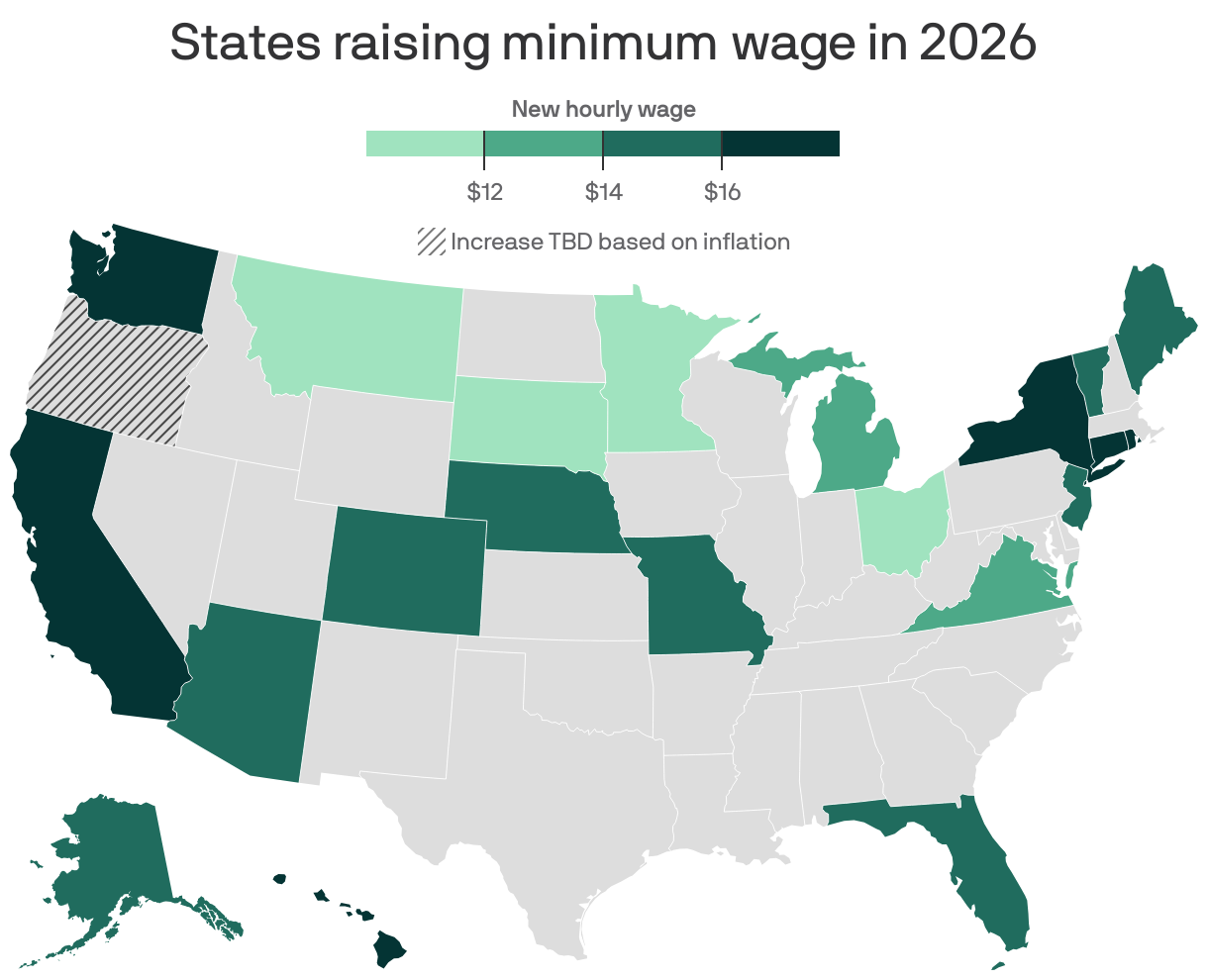
Workers in 19 states are in line for a raise when minimum wage increases take effect on New Year's Day.
- Why it matters: Beyond those earning minimum wage, these increases often push employers to raise salaries for workers higher up on the income ladder, Axios' Emily Peck reports.
Another three states — Florida, Alaska and Oregon — are increasing their minimum wages later in the year.
- For the first time, there'll be more workers in states with a minimum wage of $15 an hour or higher than those with the federal minimum of $7.25.
6. 👟 Shoes for the mind
7. 🕯️ Remembering Brigitte Bardot, 91

Brigitte Bardot — an icon of cinema often referred to in France simply as "B.B.," whose later years were marked by animal rights campaigns — died at 91.
When she was just 21, Bardot's character in "And God Created Woman" embodied liberated femininity. The controversy fueled her appeal. Bardot became a symbol of 1950s and '60s France, Reuters reports.
- She scandalized censors and captivated audiences. Her free-spirited performance in the 1956 film, shot by her husband, Roger Vadim, marked a decisive break from the demure heroines of the previous era.
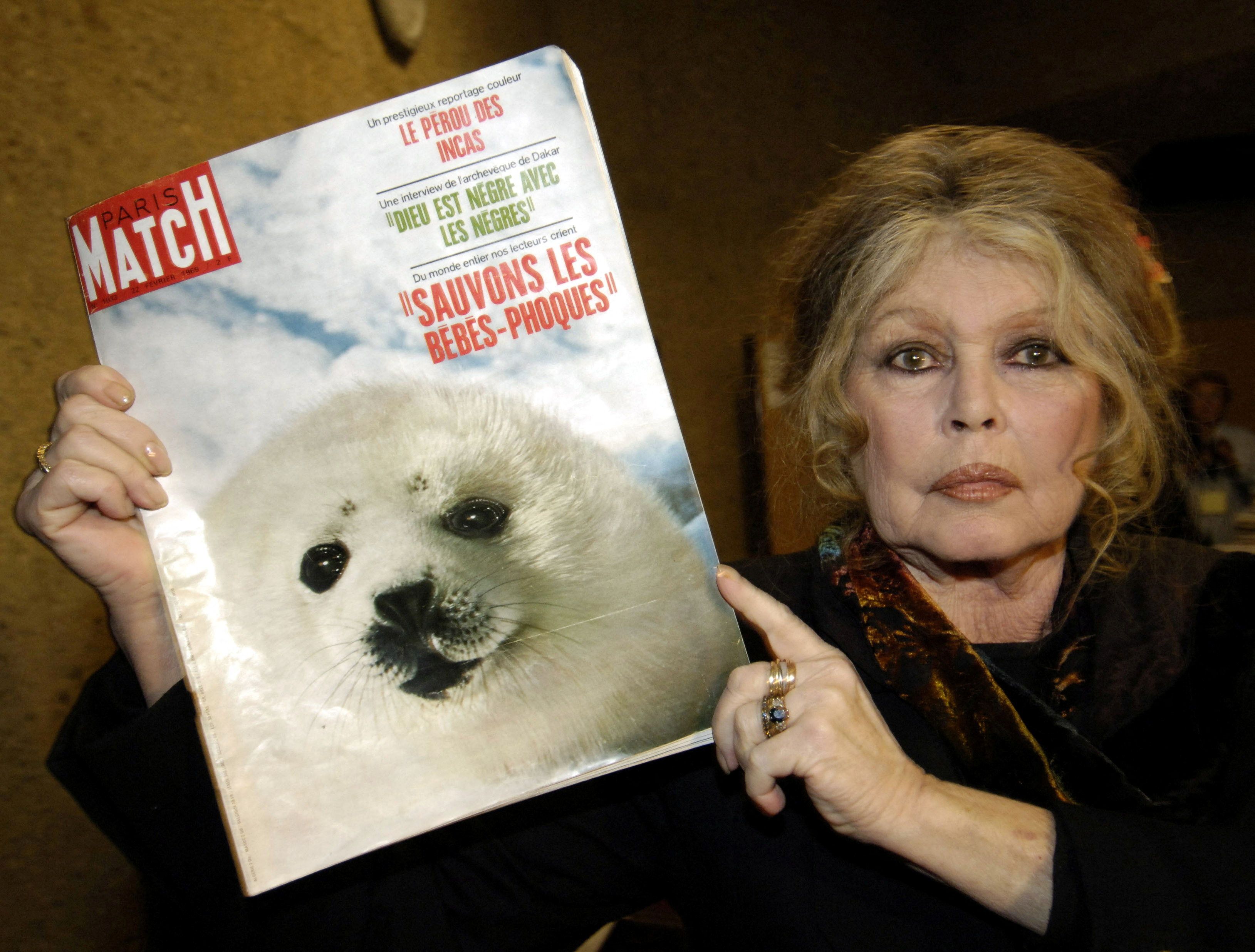
"I understand wild animals, under the fire of machine guns or hunters' rifles, so well," Bardot said in a 1982 interview. The paparazzi "didn't shoot to kill, but they certainly killed something inside me by photographing me like that with their zoom lenses. They were like the arms of war, like bazookas."
8. 📚 1 for the road: Hot books of '25
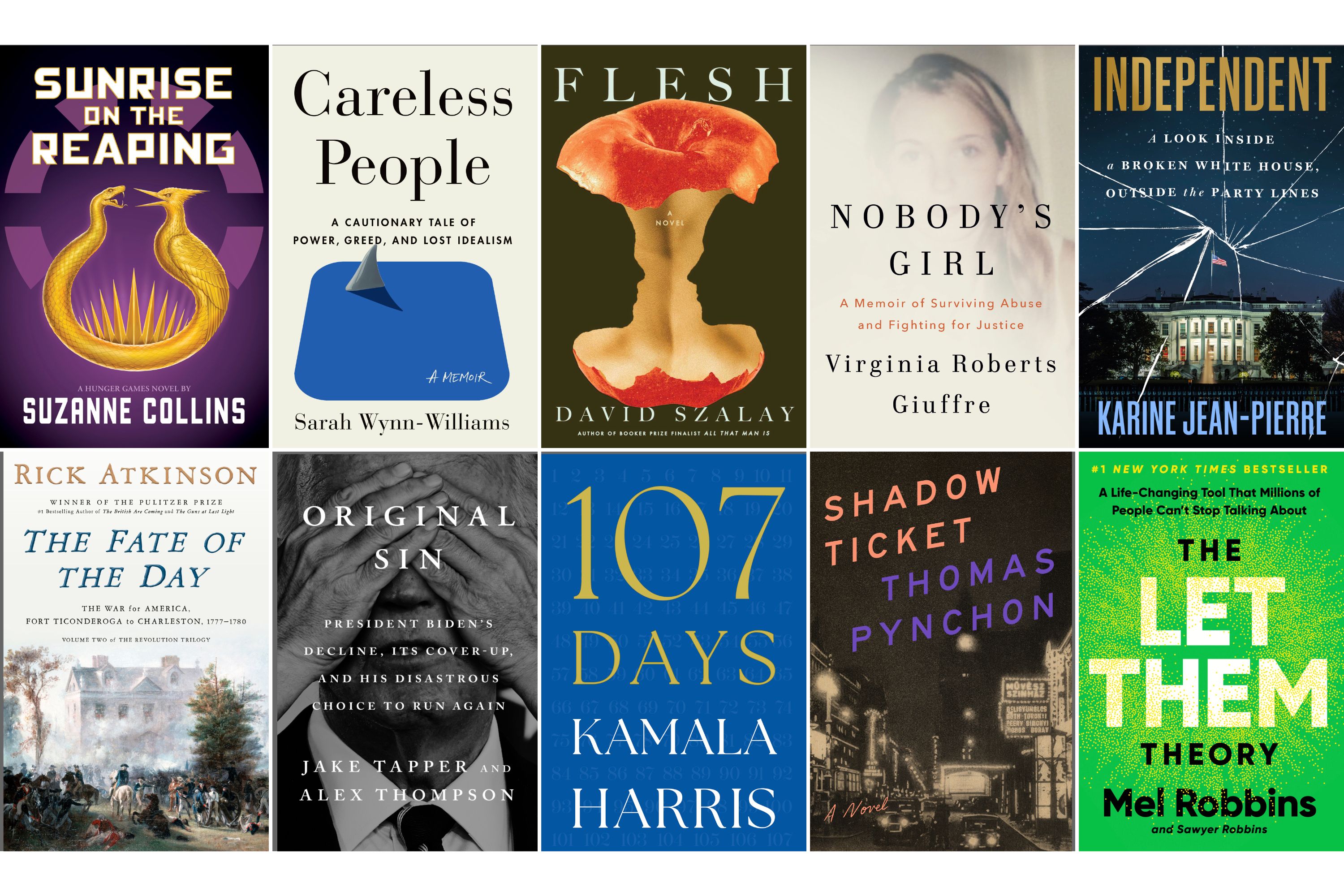
Bust out your gift cards: 2025 brought a new "Hunger Games" novel, plus the first book in 12 years from Thomas Pynchon. Readers sought life advice from Mel Robbins, campaign score-settling by Kamala Harris, and a posthumous memoir by a Jeffrey Epstein accuser, Virginia Giuffre (sold 1 million copies worldwide).
- Some of this year's best, chosen by longtime AP publishing-industry correspondent Hillel Italie (Robert Barnett would love this), plus a couple of Mike's keepers:
- "Sunrise on the Reaping," by Suzanne Collins: Prequel set 24 years before the first book. Sold 4 million worldwide.
- "The Let Them Theory," by Mel Robbins. This self-help masterpiece stayed on bestseller lists all year. Watch Mel's interview with Jim VandeHei on "The Axios Show."
- "Flesh," by David Szalay: Literary fiction traveled this year from India to New York (Kiran Desai's "The Loneliness of Sunny and Sonia"), from Houston to Japan (Bryan Washington's "Palaver"), from the recent past to the 22nd century (Ian McEwan's "What We Can Know"). "Flesh" is a deadpan account of a working-class, half-dead Hungarian, István.
- "Nobody's Girl," by Virginia Giuffre: Painful account of an Epstein "sex slave."
- "The Fate of the Day," by Rick Atkinson: Second in a Revolutionary War trilogy, with 50 pages listing source material.
- "Shadow Ticket" (and "Vineland"), by Thomas Pynchon: At 89, Pynchon was back with a characteristically shaggy tale of a 1930s private detective, Hicks McTaggart, whose search for a missing cheese heiress takes him from Milwaukee to Budapest.
- "Original Sin," by CNN's Jake Tapper and Axios' Alex Thompson: The "original sin of Election 2024 was Biden's decision to run for reelection."
- "107 Days," by Kamala Harris: Sold 330,000 copies in hardback, plus audio & e-books. She points fingers.
- "1929: Inside the Greatest Crash in Wall Street History — and How It Shattered a Nation," by multitalented Andrew Ross Sorkin: A deservedly very strong seller. The Wall Street Journal review: "Sorkin says his model was Walter Lord's 'A Night to Remember' (1955), about another crash, that of the Titanic. Mr. Sorkin says he, too, wants 'to restore the texture and detail of the human lives' that lived through tragedy."
- "The Anxious Generation: How the Great Rewiring of Childhood is Causing an Epidemic of Mental Illness," by Jonathan Haidt.
- "Mark Twain," by Ron Chernow, is a can't-miss gift.
🎁 AP's full list ... Gift links: 10 Best Books of 2025 from New York Times and Wall Street Journal.
Axios AM