Axios AM

January 07, 2025

π§€ Happy Tuesday morning! Smart Brevityβ’ count: 1,756 words ... 6Β½ mins. Thanks to Noah Bressner for orchestrating. Copy edited by Bryan McBournie.
1 big thing: Trump tariff winners
Several major U.S. manufacturing sectors are primed to be clear winners under President-elect Trump's tariff plans βΒ even if consumers take a hit, Axios managing editor for business Ben Berkowitz writes.
- Think of it as Trump's critical U.S. products protection plan.
- At the top of the list: defense-related minerals, medical supplies, and power generation and storage.
Why it matters: By making cheap foreign imports more expensive, Trump's tariffs are expected to incentivize domestic manufacturers to expand.
πΌοΈ The big picture: A lot of what's crucial to American industry and society either isn't made here, or isn't made in enough quantity to fill demand, or is made here but at much higher cost than overseas.
- Trump's looking toward a blunt-force fix: Make foreign products so expensive that there's profit to be made by making them here instead.
π Zoom in: Two very specific industries would potentially win quickly.
1. Energy production β from rare-earth minerals to finished products like solar panels and batteries β would benefit under Trump, who in October called tariff "the most beautiful word in the dictionary ... my favorite word."
- The rare-earths supply chain, including 17 metallic elements critical to electronics, is a huge concern for both military and civilian applications. The GAO said in September these minerals are in short supply, and the Pentagon hasn't moved quickly enough to ensure they're not being sold to adversaries.
- A Chinese export ban in December only raises the stakes for boosting production.
2. Makers of critical medical supplies, including vials and syringes, are also potential big winners.
- The U.S. medical supply industry is already under pressure, with multiple single points of failure, and plenty of low-cost international competition.
- Just last fall, Hurricane Helene took out a North Carolina plant owned by Baxter that produced about half of all the IVs used in U.S. hospitals.
- A tariff regime could make it financially viable for more companies like Baxter, Medtronic and Stryker to make more medical products at home for local use.
π₯ Reality check: Some industries look like winners but probably aren't, at least initially.
- The industrial supply chain would appear to benefit from tariffs on metals like steel and copper, but as Trump's first-term levies proved, sometimes that production just moves to another low-cost country.
- When Trump imposed steel tariffs in 2018, production simply shifted to other nations, rather than being re-shored in any significant way.
π Between the lines: The Washington Post's Jeff Stein yesterday pointed to the industries highlighted in this item as "key sectors that the Trump team wants to bring back to the United States."
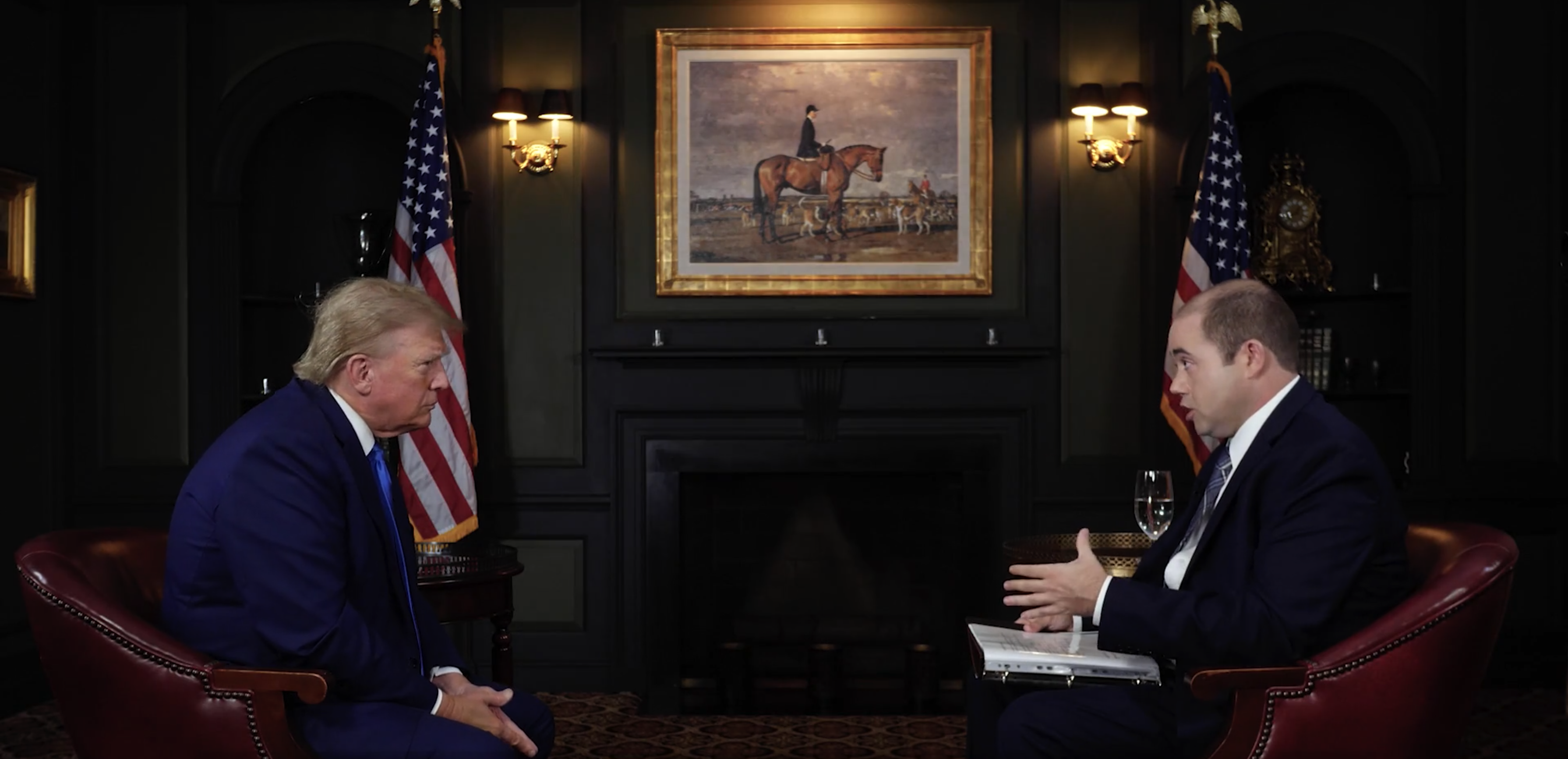
- Trump vehemently denied that his "tariff policy will be pared back."
2. π GOP dominates states

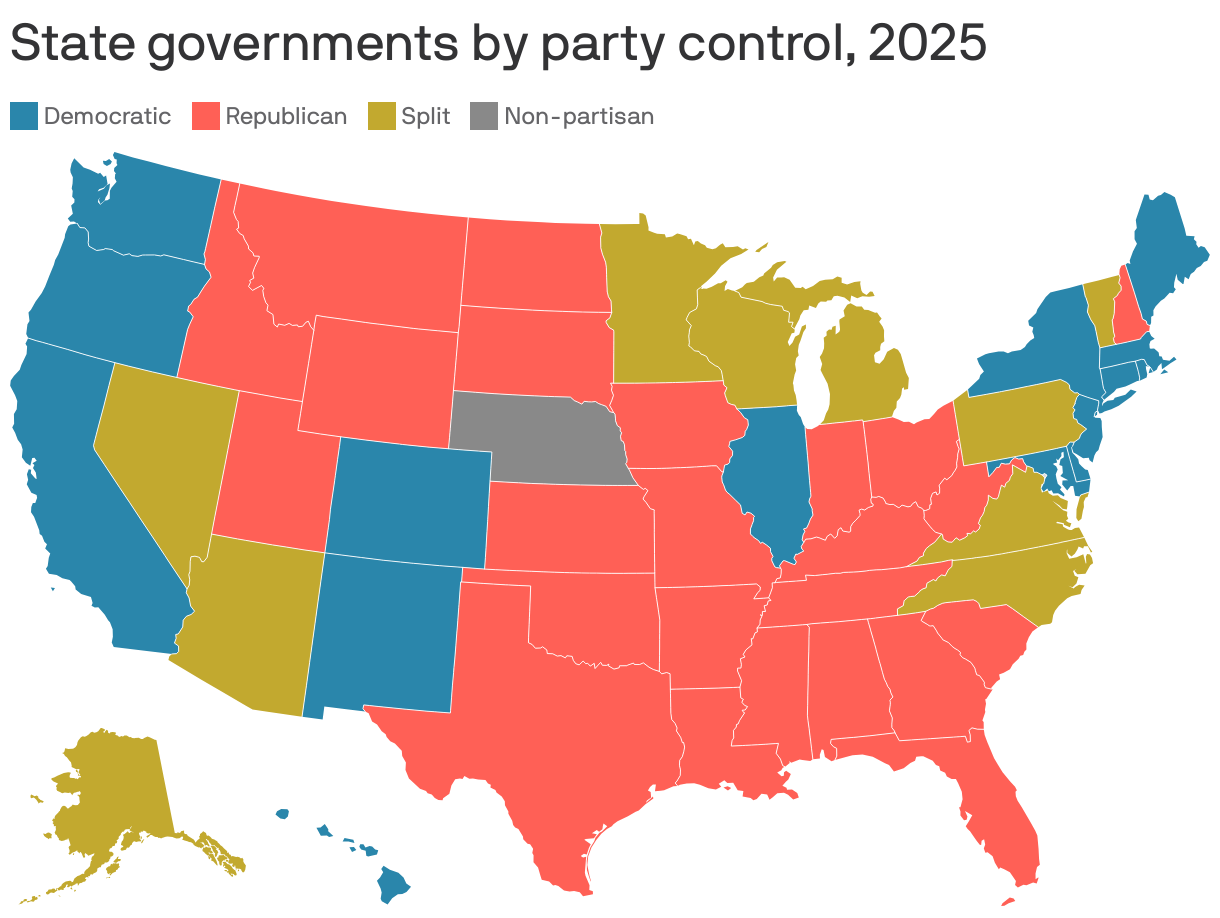
Republicans this year will control the legislative process in nearly twice the number of states as Democrats, Axios' Alex Fitzpatrick found.
- Republicans will control state capitols in 24 states, to Democrats' 15, per Cook Political Report.
- The process is split in 10 others, including Michigan, Minnesota and North Carolina.
π½ Nebraska has a unicameral legislature unique among U.S. states β though the Cornhusker State has a Republican-leaning supermajority.
3. π€ The race to generate AI video
With the wide release of Sora, OpenAI's video tool, most of the big tech giants β and some startups β are now racing to create models capable of generating realistic, high-quality videos from text prompts, Axios' Megan Morrone writes.
- Why it matters: GenAI video tools could save time and money for filmmakers, but they could also unleash novel copyright issues and a flood of deepfakes.
The fiercer the competition in the AI space, the more likely tech companies are to prioritize release dates over safety.
- Generating AI video requires magnitudes more energy than generating text, which is already straining the power grid.
π¨ The big picture: Google, OpenAI and AI startup Runway all offer products that let creators generate short videos with minimal effort.
Google announced Veo 2, the latest version of its genAI video tool, a week after Sora's wider release in December. The company says Veo 2 is now available to early-access users in the U.S. who are over 18.
- But no one "seems to have any idea how to actually try it out," tech writer and investor MG Siegler wrote on his blog.
OpenAI released the beta version of Sora to a select group of testers in February 2024, then released the product to all ChatGPT Plus and Pro subscribers in December.
- Aimed at users who want to create 20-second videos, Sora is ideal for social media and marketing.
- The videos are impressive, but they often struggle with basic physics.
AI startup Runway's most current model β Gen-3 Alpha β has been available on all of its paid plans since September.
- Runway's tools were critical to making the Oscar-winning film "Everything Everywhere All at Once."
4. βοΈ Biden: "New Orleans defines strength"

President Biden mourned with New Orleans last night during a prayer service at St. Louis Cathedral in the French Quarter, Axios New Orleans' Carlie Kollath Wells reports.
- Why it matters: The community gathering was meant to help begin the healing after a terrorist attack on Bourbon Street killed 14 people and injured at least 35 more.
"New Orleans defines strength and resilience," Biden said, "whether it's in the form of this attack or hurricanes or superstorms. This city, its people get back up."
- Keep reading ... Go deeper: New Orleans terror attack was months in the making.
5. π² Device-makers embrace AI
AI is again taking center stage and powering many of the advancements in cars, computers and other gadgets at CES βΒ the annual four-day consumer tech showcase, which kicks off in Vegas today, Axios' Ina Fried writes.
- Why it matters: Their pressure is on for device-makers to show how AI is actually improving the products.
π Big announcements so far: Qualcomm added a more entry-level version of its X series processor designed to power Windows PCs that can start as low as $600.
- AMD showed off an array of powerful, but often power-hungry, chips that it says outperform those in Apple's Mac line.
- Samsung debuted its 2025 lineup of TV and audio products. Its mainstream TV lineup includes a variety of AI features designed to do everything from improving video quality to identifying the actor onscreen.
- United Airlines unveiled an accelerated plan to speed up its in-flight WiFi via Starlink. It'll outfit all regional jets by the end of this year, with plans to eventually include the service on its entire fleet.
6. ποΈ WashPost adrift
Journalists leaving at an unprecedented clip, combined with looming layoffs and expected leadership changes, has The Washington Post on edge as it prepares to cover the second Trump administration, Axios' Sara Fischer writes.
- Why it matters: Once a close national competitor to The New York Times and The Wall Street Journal, The Post is now battling for relevance in its own backyard.
π State of play: Yesterday brought more announcements about star political reporters leaving β another gut punch to the Post newsroom, which has seen a slew of top talent flee in recent weeks amid frustration with management.
- Puck announced it hired Leigh Ann Caldwell as its chief Washington correspondent. The Wall Street Journal confirmed it hired Josh Dawsey, one of The Post's top Trump chroniclers.
- Last week, two of The Post's other top political reporters, Ashley Parker and Michael Scherer, moved to The Atlantic. Tyler Pager, a rising talent, was poached by The New York Times as a White House reporter, joining former Post managing editor Matea Gold, who announced last month that she's moving to The Times as deputy Washington bureau chief.
On the opinion side, cartoonist Ann Telnaes, a Pulitzer Prize winner, quit last Friday. Several opinion editors stepped down from The Post's editorial board last year after the paper's endorsement of Vice President Harris for president was spiked at the 11th hour at the behest of owner Jeff Bezos.
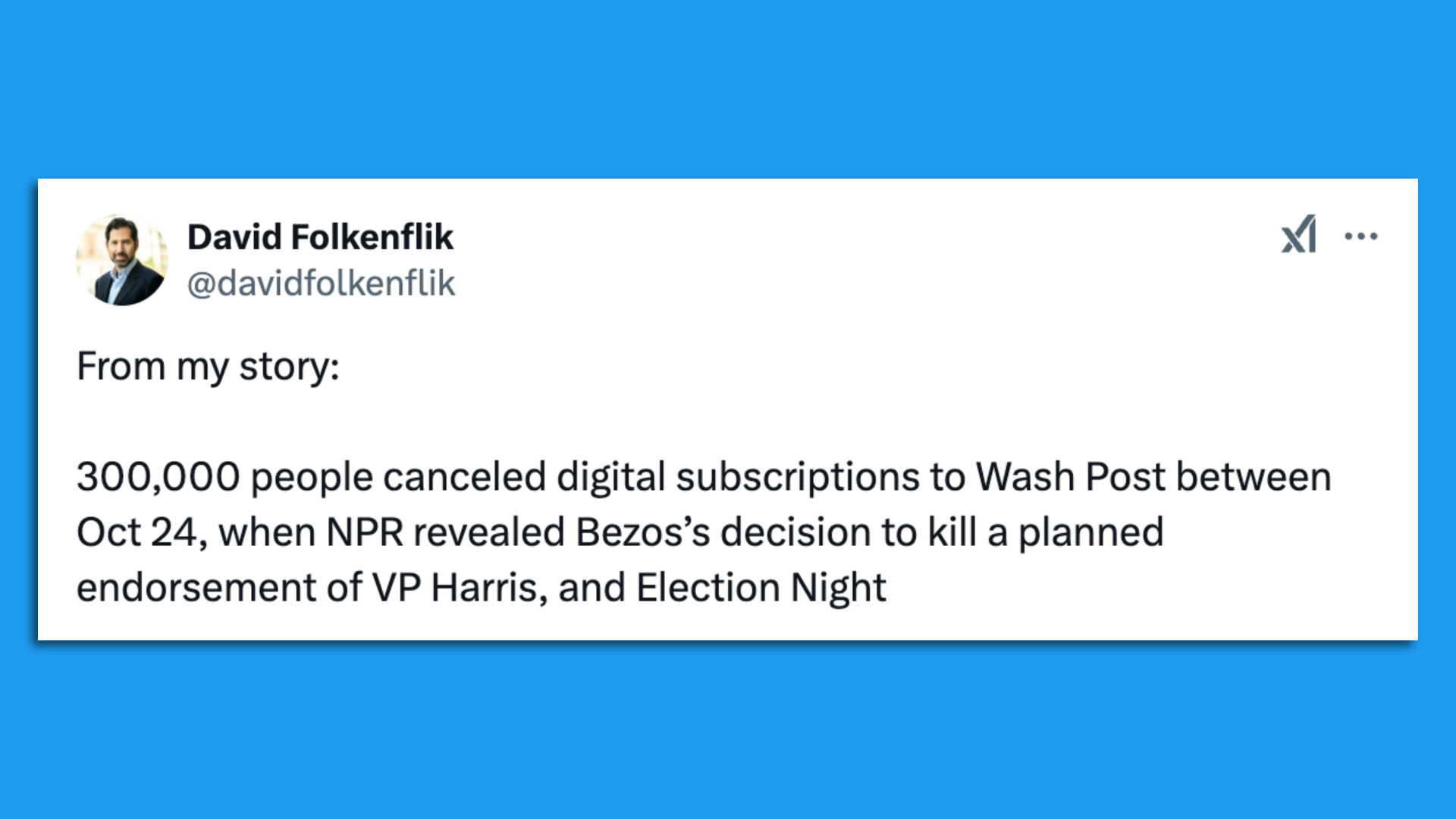
π The big picture: While the Times and Journal continue to grow their digital subscriber bases, The Post reported that 250,000 subscribers canceled after the endorsement debacle β about 10% of digital subscribers.
π€ What we're hearing: Numerous Post editors and reporters have told us sadly that if there's a plan or vision, they don't know what it is.
- Just before the holidays, The Post announced WP Ventures, formerly known as the "Third Newsroom," with a focus on "expanding our presence on social media and creating new commercial opportunities for consumer and lifestyle journalism, while accelerating innovation and cross-company collaboration."
Get Sara's weekly newsletter, Axios Media Trends, out later today with her latest from CES in Vegas!
7. ποΈ Breitbart's D.C. deployment

Matt Boyle, Washington bureau chief of Breitbart News, tells me the aggressively pro-MAGA publication is gearing up for Trump II by surging "troops into battle in the heart of the swamp in Washington, with the plan to win the information war we've been fighting for over a decade."
- "It's nothing personal with the establishment; simply business, and we mean it," boasted Boyle, who has been with the publication for 12 years.
Why it matters: Breitbart is emblematic of the reordering of media swat that'll accompany President-elect Trump's inauguration 13 days from now.
Alex Marlow, Breitbart editor-in-chief, told Axios: "While a lot of newsrooms are retooling, treating reporters and editors like offseason sports free agency, we're ... promoting our top talent we've been developing."
π What's new: Political reporter Nick Gilbertson will become White House correspondent, attending daily briefings.
- Boyle says you'll see him in D.C. more after four years in Florida.
- Joel Pollak, senior editor-at-large, will be less in California and more in D.C.
π¬ What they're saying: "The establishment media has completely and totally misunderstood the success of Donald Trump not once but twice now," Boyle said. "Now that this America First movement is entering a new level of maturity and professionalism, our crew here at Breitbart is doubling down on the hunt for major news stories that everyone else keeps missing."
8. π· Parting shots

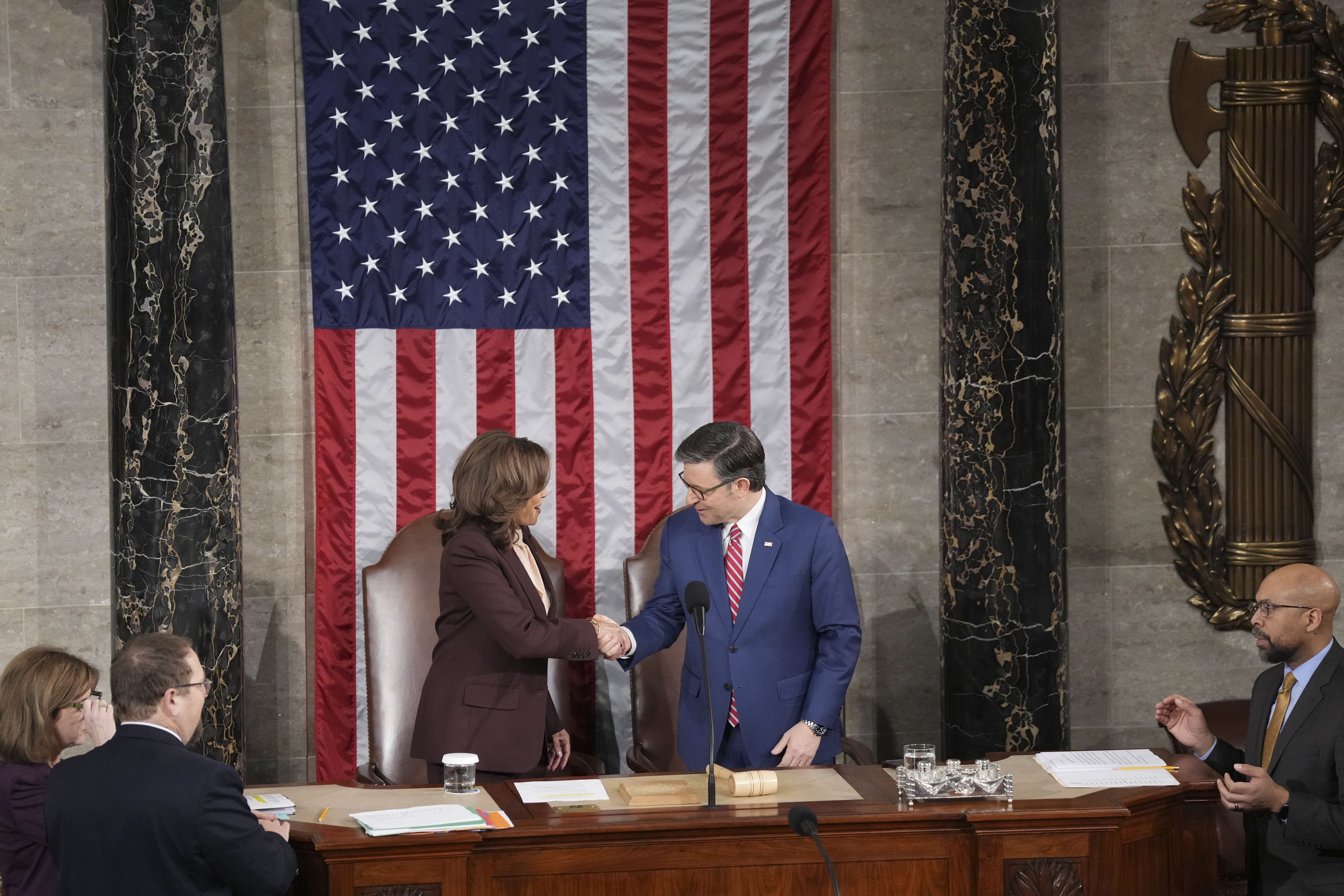
Normalcy returned to a 236-year-old ritual yesterday, with Vice President Harris (D) greeting House Speaker Mike Johnson (R-La.) before a joint session of Congress to certify President-elect Trump's victory.
- "It's a peaceful transfer of power," Harris told reporters as she left the Capitol on the fourth anniversary of the Jan. 6 attack. "It's a good day."
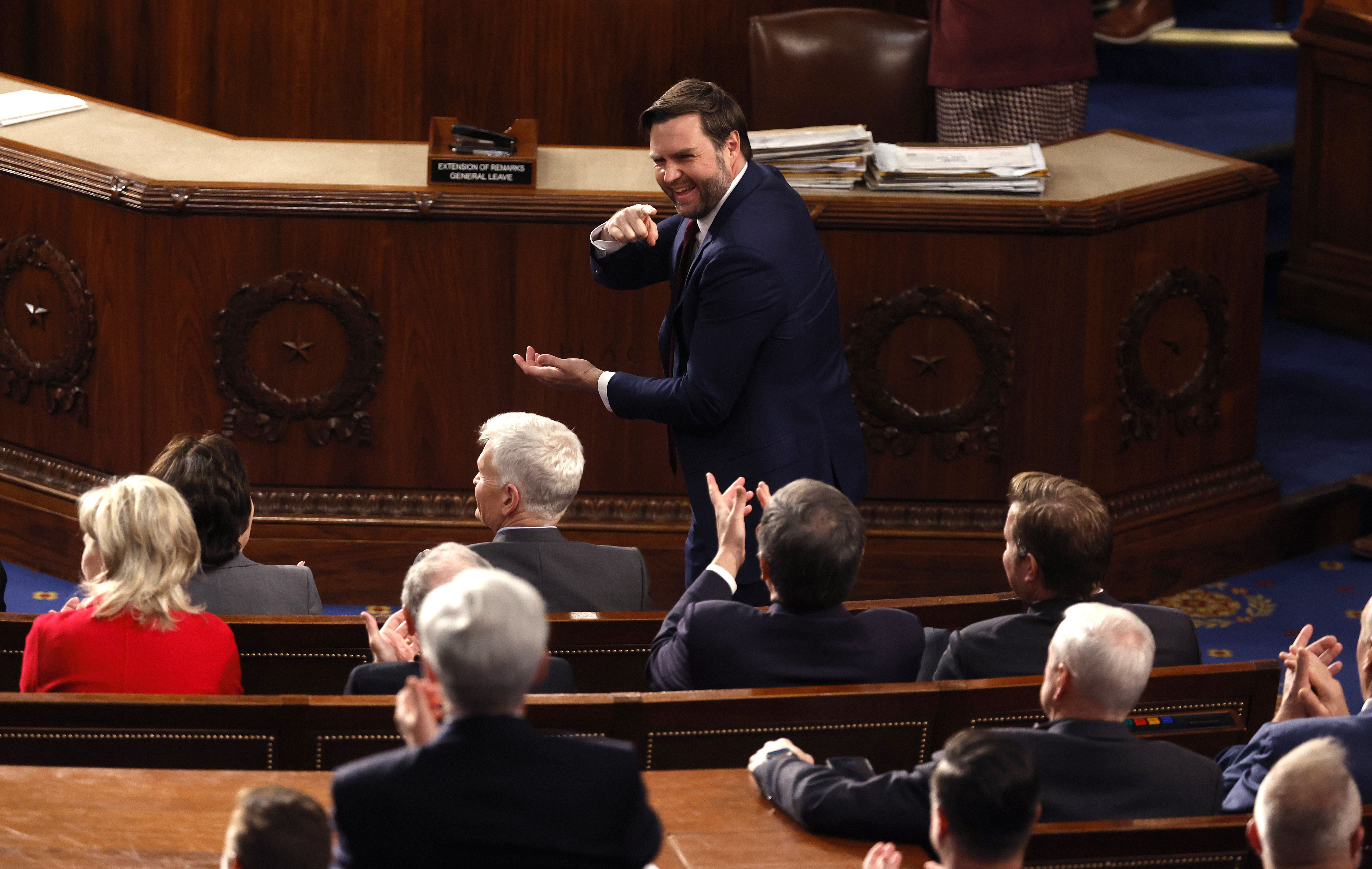
Above: Vice President-elect JD Vance (R-Ohio) celebrates after certification of the Electoral College vote.
- Go deeper: Axios' Andrew Solender takes you inside the chamber.
π¬ Thanks for reading! Please invite your friends to join AM.
Sign up for Axios AM