Axios AM

August 31, 2025

๐ Hello, Sunday! In this special edition of AM, we dive deep into Health Secretary Robert F. Kennedy Jr.'s MAHA movement.
- Thanks to Axios' Adriel Bettelheim, David Nather, Kate Marino, Erica Pandey, Tina Reed and Maya Goldman for reporting and editing this newsletter, and Matt Piper for copy editing.
๐ป๐ฆ Breaking: Pope Leo XIV, speaking in English, demanded an end to the "pandemic of arms, large and small," as he prayed for victims of this past week's shooting during a Catholic school Mass in Minneapolis. Keep reading.
- Smart Brevityโข count: 1,986 words ... 7ยฝ mins.
1 big thing: America's food reckoning
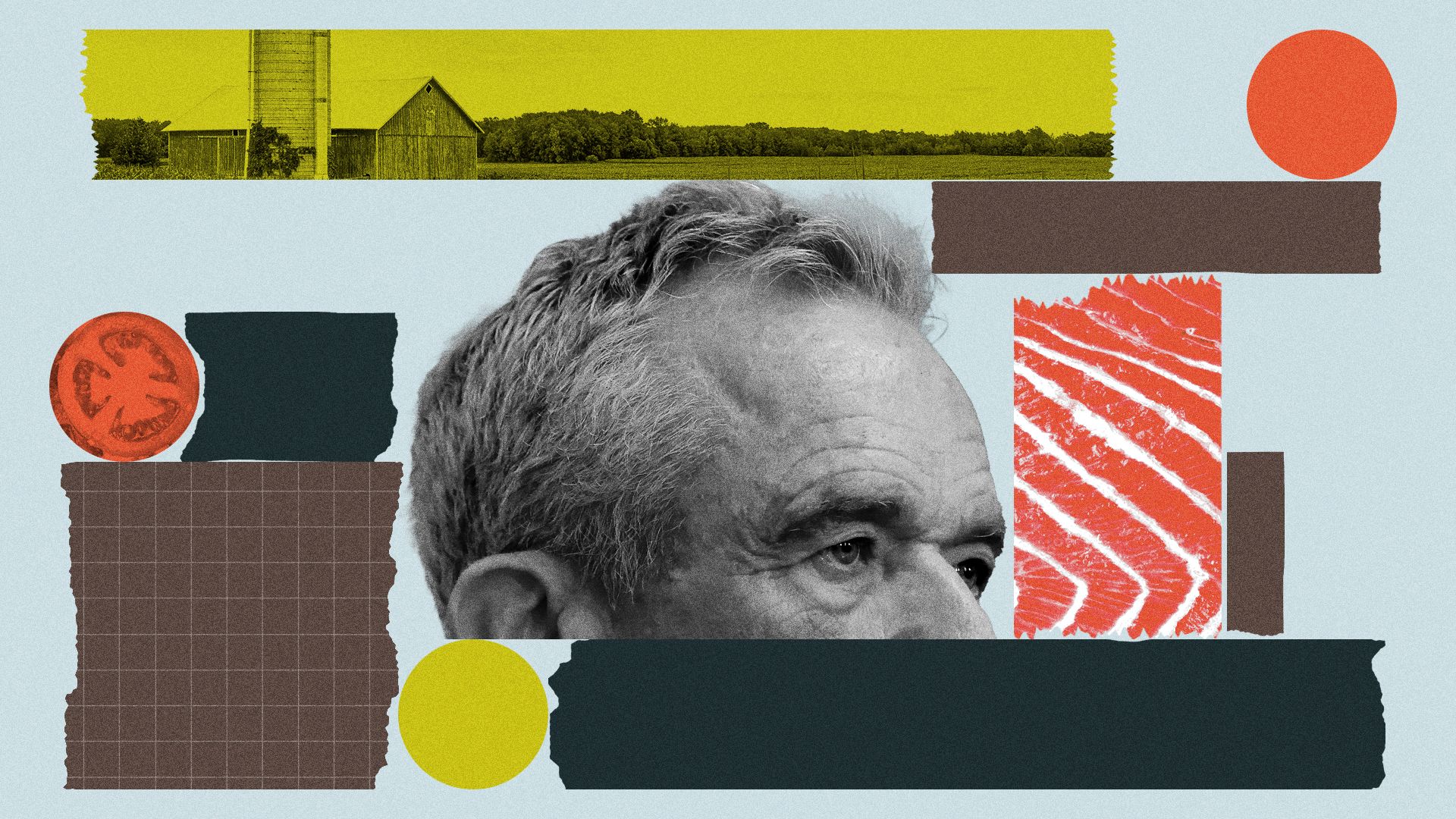
RFK Jr.'s "Make America Healthy Again" movement has thrown the nation's public health leadership into chaos โ and is also playing into a larger food fight.
- Americans are asking louder questions about what's on their plates. For many, Kennedy's call to overhaul the food supply resonates, Axios' Erica Pandey reports.
๐ก "We're clearly at an all-time high of public attention, policymaker attention and health care attention on food," says Dariush Mozaffarian, director of the Food is Medicine Institute at Tufts. "We're at a moment where there could be real change."
- But the backlash against Kennedy's vaccine views is sucking the air out of his more popular food agenda. Scientists and doctors โ including top officials who resigned in protest last week from the CDC โ are warning that MAHA vaccine activism could unravel decades of hard-won progress in public health.
By the numbers: Most Americans get more than half their calories from ultra-processed foods, like hamburgers, pizza and sugary drinks.
- It's hard to dodge these foods, when they make up some 70% of America's food supply.
๐ The tide is turning. Across race, ethnicity and socioeconomic status, "people prefer natural or healthy foods and are flipping their products to see what ingredients are in them," says Josiemer Mattei, an associate professor of nutrition at Harvard.
- A study of more than 50,000 adults found the share eating a "poor diet" โ one dominated by ultra-processed foods โ fell from 49% in 1999 to 37% in 2020.
The MAHA movement is intensifying scrutiny of America's food โ from how it's produced and marketed to who profits โ and demanding concessions from food and beverage makers.
- Republicans are joining progressives in challenging Big Food and Big Ag, a break from past GOP positions.
- HHS is rolling out new food rules โ some welcomed by experts, others sparking debate.
๐ Zoom in: "One thing that they're rightly targeting is artificial food dyes," says Mattei, the Harvard professor. "In general, the nutrition community is in favor of that. They increase the palatability and aesthetic of the food, but they're harmful."
- The American public also favors more robust food safety inspections and better labeling, two pieces of Kennedy's agenda.
Reality check: MAHA's emphasis on self-empowerment and self-responsibility, rather than medical professionals, has its limits.
- Perhaps the biggest flashpoint โ vaccines โ erupted last week when CDC director Susan Monarez was ousted, triggering a wave of resignations at the agency.
- As the Trump administration is touting a renewed focus on nutrition, it's slashing funding for medical research at unprecedented levels, fueling a science brain drain.
The other side: "President Trump has the utmost confidence and trust in Secretary Kennedy to lead HHS and he only wants the best, brightest, most MAHA-aligned people on board to deliver on this important mission," White House press secretary Karoline Leavitt told Axios.
2. ๐ What America wants
Americans across the political spectrum back Kennedy's efforts to improve America's food supply โ but there's a partisan split over his views on vaccines, Axios' Maya Goldman reports.
- 87% of respondents in a recent Axios-Ipsos survey said the government should do more to make sure food is safe. 90% said it should be easier for the average American to understand food safety guidelines, something Kennedy has said he's working on.
๐ But there's a widening divide over the importance of childhood vaccines, according to a Gallup poll last month.
- 93% of Democratic and Democrat-leaning voters said it's extremely or very important that parents get their kids vaccinated, compared with 52% of Republican and Republican-leaning voters.
๐ By the numbers: 43% of adults surveyed by Pew in spring said they strongly or somewhat disapproved of Kennedy's job performance. 36% strongly or somewhat approved.
- But he's viewed more favorably than other Trump administration officials, including President Trump himself, per Gallup.
3. ๐ฅ MAHA vs. corporate America
The MAHA movement has scrambled political alliances by forcing a Republican administration to choose between placating its base โ which is intent on cleaning up the food supply โ or siding with powerful agriculture interests, some of which helped get President Trump elected.
- The early months of the administration have seen a push to eliminate synthetic food dyes, restrict ultra-processed foods and mandate new warning labels. Industries accustomed to GOP sympathy, or largesse, are turning into punching bags, Axios' Tina Reed reports.
๐ซ Case in point: To ease the pressure and head off the threat of new regulations, Kraft Heinz, Nestlรฉ, Mars and Kellogg have all pledged to eliminate artificial dyes by 2027.
- 70% of Fortune 500 food and beverage companies, and 90% of pharmaceutical companies, have addressed MAHA-related topics in earnings calls this year, per Gravity Research.
Reality check: The real test will be agriculture. Big GOP donors like Mountaire, Reyes Holdings and British American Tobacco have a lot riding on keeping regulation minimal โ and appear to be getting their message across.
4. ๐งช Science under siege
By promoting debunked theories about vaccines and public health and accusing federal workers of being in cahoots with the drug industry, Kennedy and his allies have supercharged suspicion about mainstream science, Axios' Tina Reed reports.
- When four high-ranking CDC officials who had worked on mpox, Ebola, COVID data and the opioid crisis response resigned Wednesday, they cited Kennedy's political interference.
"This administration is unlike anything we've ever seen," says Richard Besser, a former acting director of the CDC and now CEO of the Robert Wood Johnson Foundation.
- "I fear now that Secretary Kennedy will now be even further emboldened to issue the same reckless directives that [Susan] Monarez rightly refused," he says.
State of play: The MAHA agenda has emphasized a focus on chronic disease, particularly in children. Along the way, Kennedy and his allies have promoted debunked theories about environmental toxins and connections between vaccines and autism.
- He's simultaneously presided over billions of dollars in research funding cuts that have halted ongoing studies and disrupted data collection. The upheaval has prompted some government scientists to take jobs with industry or abroad.
Beyond the CDC, funds for state and local health departments were frozen. Lots of critical infrastructure โ lab testing capabilities, food safety and disease surveillance, and bioterrorism threat detectionโ have all been diminished.
5. ๐ช๏ธ Misinformation machine
The public is increasingly turning to the internet with questions about their health. But for every credible answer, there's a flood of misleading โ and sometimes dangerous โ misinformation.
- Why it matters: Getting health advice has never been faster, but figuring out what's trustworthy has never been harder, Axios' Erica Pandey writes.
๐ Many of MAHA's core ideas โ from vaccine skepticism to rejecting seed oils to promoting raw milk โ mirror the content health and wellness influencers push today.
- But there are few signs that scientists or licensed medical professionals are vetting the messages beforehand.
Zoom in: For decades, public health organizations have spread their messages through TV ads, press conferences and public service campaigns.
- But "information is so much more democratized now. It's harder for these slower-moving communication mechanisms to compete," says Tara Kirk Sell, a senior scholar at the Johns Hopkins Center for Health Security.
Enter the health influencers โ endlessly posting about breakfast routines, supplements and parenting hacks.
- Some share helpful tips, disclaimers included. Others spread half-truths or flat-out falsehoods that rack up millions of views.
- While health influencers have been gaining traction for several years, the MAHA movement is giving many of them an even bigger platform โ and more legitimacy.
๐งฎ By the numbers: Researchers at the University of Chicago tried to quantify the proliferation of health misinformation on TikTok in a recent study.
- They focused on #sinustok and found that nearly half (44%) of the videos about sinusitis contained false claims โ most from influencers with no medical training.
6. ๐ฑ MAHA's messengers
The MAHA movement's not-so-secret weapon is a network of moms on social media who amplify Kennedy's calls to clean up America's food supply.
- Why it matters: "Bro-casters" like Joe Rogan may help drive the political narrative. But Kennedy has turned to these "mom-fluencers" to further his agenda, which includes narratives that aren't scientifically sound, Axios' Tina Reed reports.
๐ฅฆ Case in point: Influencers like Vani Hari, better known as the "Food Babe," can be found on social media platforms and on the podcast circuits.
- Hari, who has 2.3 million followers on Instagram and is a New York Times bestselling author, got dozens of protesters to travel to Kellogg headquarters in Battle Creek, Mich., last year to protest food dyes in the company's cereals and deliver petitions.
The influencers' pet causes range from food additives and seed oils to the use of glyphosate in farming, fluoride in water and the vaccine schedule.
- They've coalesced around Kennedy's suspicion of the pharmaceutical and food industries, and his contention that regulators have grown cozy with the businesses they're supposed to be policing.
Who's who:
- Nutritionist Courtney Swan, who makes content about improving the food system, has a large Instagram following.
- Moms Across America founder Zen Honeycutt is a podcast host who has focused on spotlighting widespread pesticide use, among other topics.
- Ana-Maria Temple is a holistic pediatrician with hundreds of thousands of Instagram followers. She makes content about nontoxic alternatives to everyday items.
๐ก Reality check: While the influencers discuss the value of eating whole foods, getting exercise and quality sleep, and parental choice, they've often veered into misinformation.
- Hari has pushed the message: "If you can't pronounce it, don't eat it" โ also featured on a White House video. Scientists and nutritionists say this claim plays on fear and could blacklist common essential compounds because of their scientific names.
- Other influencers have surfaced debunked theories about vaccine safety.
- Read on.
โ Let us know what you think! Please just reply to this email, or drop us a line at the Finish Line box: [email protected].
7. ๐๏ธ Saluting one of one: Mark Knoller

"RIP Mark Knoller," the longtime @CBSNews White House reporter who made himself into a one-man archive of all presidential facts and statistics," the N.Y. Times' Peter Baker tweeted last night.
- "He was a prince of the briefing room, ever generous to colleagues and competitors alike."
Knoller โ who for five presidents was the booming voice of the White House on AP Radio, then CBS News Radio โ has died in Washington at age 73, after suffering from diabetes and ill-health.
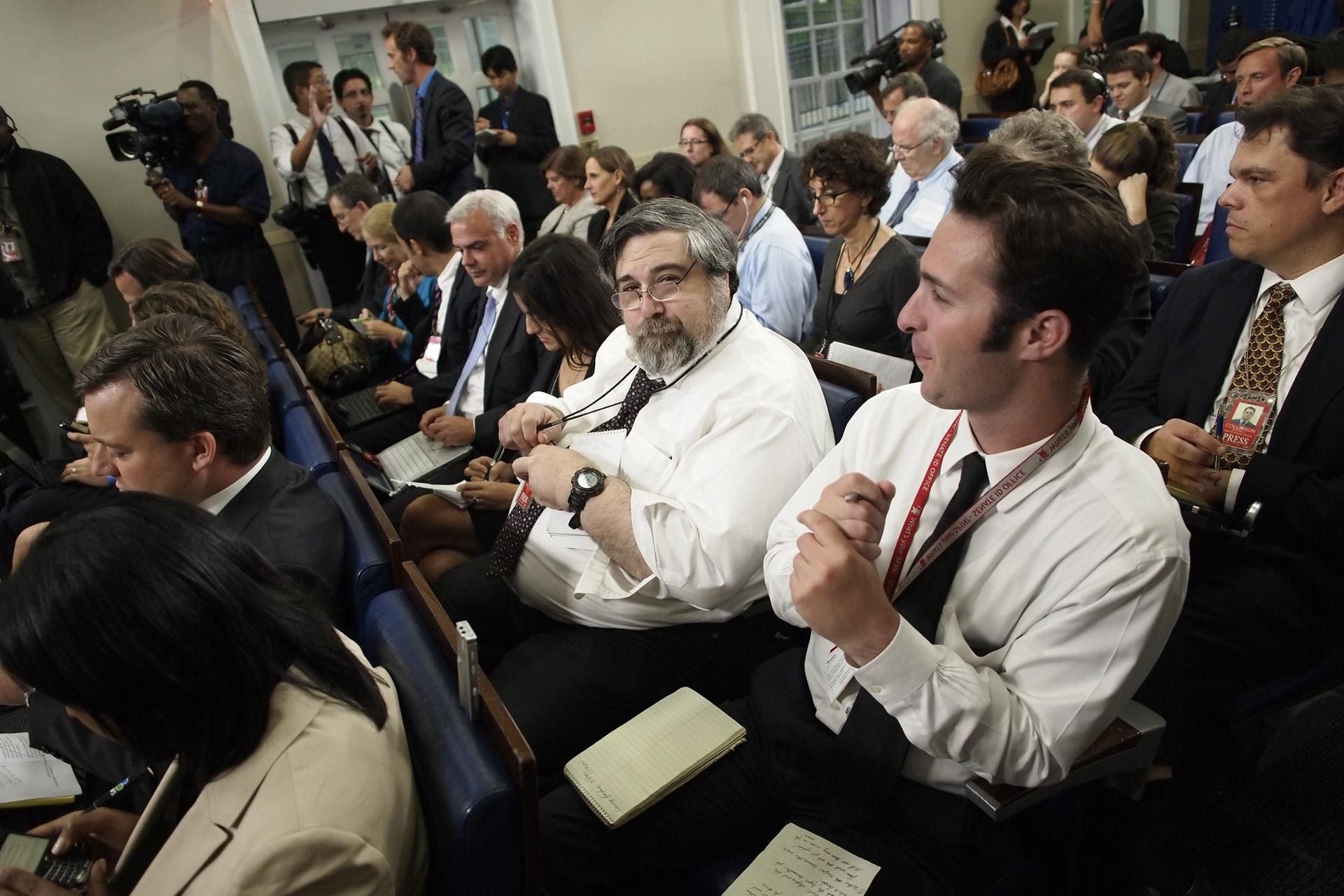
- I got to know Knoller when I was covering President George W. Bush for The Washington Post. Before the days of ubiquitous cellphones, White House reporters worked elbow to elbow in a "filing center" wherever the president went.
- After a Bush speech, the newspaper reporters would be struggling with their leads when suddenly the gym (or wherever we were filing) was engulfed with the voice of Knoller โ "Traveling with the president!" โ with an efficient, insightful take.
For decades, Knoller worked late into the night to update his logs of every presidential speech, golf match and state visited, CBS News' Chip Reid writes.
8. ๐ 1 for the road: 38 years in one chair

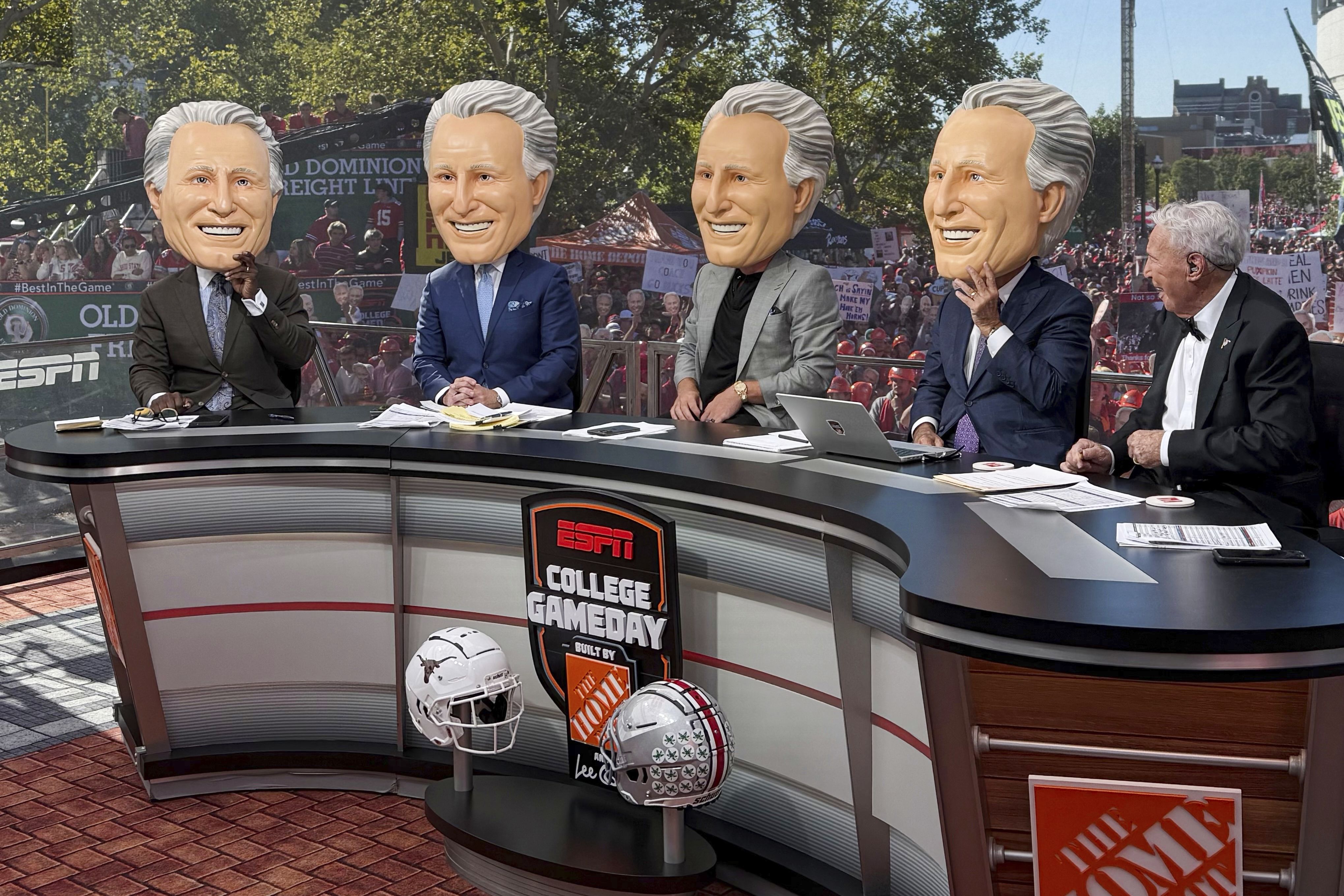
Just as it was the first time, Lee Corso's final headgear pick was Brutus Buckeye. During his final appearance on ESPN's "College GameDay," Corso, age 90, picked third-ranked Ohio State to beat top-ranked Texas, AP's Joe Reedy writes from Columbus, Ohio.
- Sure enough, The Ohio State University upset the No. 1 Longhorns, 14-7.
Corso, who wore a tux for his grand finale, has been a part of "GameDay" since its start in 1987. His pregame-show philosophy: "Football is just the vehicle. It's entertainment, sweetheart."
๐ฌ Thanks for sharing your holiday weekend! Please invite your friends to join AM.
Sign up for Axios AM