Axios AM

June 02, 2021

🐪 Happy Wednesday! Smart Brevity™ count: 1,054 words ... 4 minutes. Edited by Zachary Basu.
1 big thing: 2022's war over racism
Illustration: Sarah Grillo/Axios
With or without Donald J. Trump atop the party, the Republican strategy for the 2022 elections and beyond virtually assures race — and racism — will be central to political debate for years to come.
- Why it matters: In an era when every topic seems to turn quickly to race, Republicans see this most divisive issue as either political necessity or an election-winner — including as it relates to voting laws, critical race theory, big-city crime, immigration and political correctness.
The big picture: These topics pit the mostly white GOP against the very diverse Democratic Party. It's unfolding in local school boards, national politics and on social media.
An Axios-Ipsos poll on race relations last month shows this starkly, Axios managing editor Margaret Talev writes:
- There's a massive gulf between how Democrats and Republicans view race — a 66-point gap on whether the U.S. must continue making changes to give Black Americans equal rights to white Americans.
- There's a 48-point gap on whether the events of the past year led to a realization there's still a lot of racism in the U.S. — and a 49-point gap on whether the protests were good for society.
Of all demographic groups, white people were the most resistant to structural reforms to address institutional racism — a gap driven by Republican sentiment.
- Chris Jackson of Ipsos Public Affairs says the GOP focus on race looks counterproductive at first, since a majority of Americans favor continued efforts to equalize the playing field for Black Americans.
- But the pollster said a closer look reveals that the GOP's focus is more strategic — around specific ideas that drive culture wars and could potentially move swing voters.
Here's where the GOP sees an opening: In our poll, just one in five white independents supports the "defund the police" movement.
- Half of white independents say the media exaggerates stories of police brutality and racism.
- Two in five white independents say social policies, including affirmative action, discriminate unfairly against white people.
- Those issues prime this slice of the electorate for messaging that paints Democrats as extreme on issues around race.
Between the lines: Republicans have at times played on racial fears for decades. It became more explicit in the Trump era.
2. Ransomware is big business
Illustration: Aïda Amer/Axios
A holiday-weekend ransomware attack, which left the world's largest meat processor hobbled, has CEOs around the globe asking, "Am I next?"
- Why it matters: The attack on Brazil-based JBS came just weeks after a similar attack on Colonial Pipeline, the U.S.'s largest refined-fuel pipeline operator. Attacks that disrupt food and energy supplies are the kinds that rouse governments to strike back.
Ransomware has become a "global pandemic" (as former U.S. cyber leader Chris Krebs put it) due to the rise of a profitable industry around it, Axios managing editor Scott Rosenberg writes.
- Companies typically pay a ransom to avoid the trauma of data loss and rebuilding systems from scratch.
- Bitcoin makes it possible for criminals to collect ransom efficiently and anonymously.
3. Misinformation cops stymied
Illustration: Aïda Amer/Axios
Social media companies are trying to walk the line between banning false information and overreacting to merely unverified information, Axios' Neal Rothschild writes.
- Why it matters: Rather than emphasize consistency, platforms have zigged and zagged their policies as the news cycle evolves.
Over the past year, for example, Facebook has bounced between policing coronavirus misinformation, adding labels to those posts, deciding that vaccine misinformation wasn't subject to the same standards as COVID posts — and then reversing that policy in February.
Between the lines: Many of the most controversial, polarizing topics that animate internet discourse exist within factual gray areas.
- Social media platforms have trouble deciphering between the need to shut down dangerous posts and being too strict when facts aren't resolved.
- In recent weeks, mainstream attitudes have changed on UFOs and the Wuhan "lab-leak theory."
4. Boom states: Southwest becomes factory hub
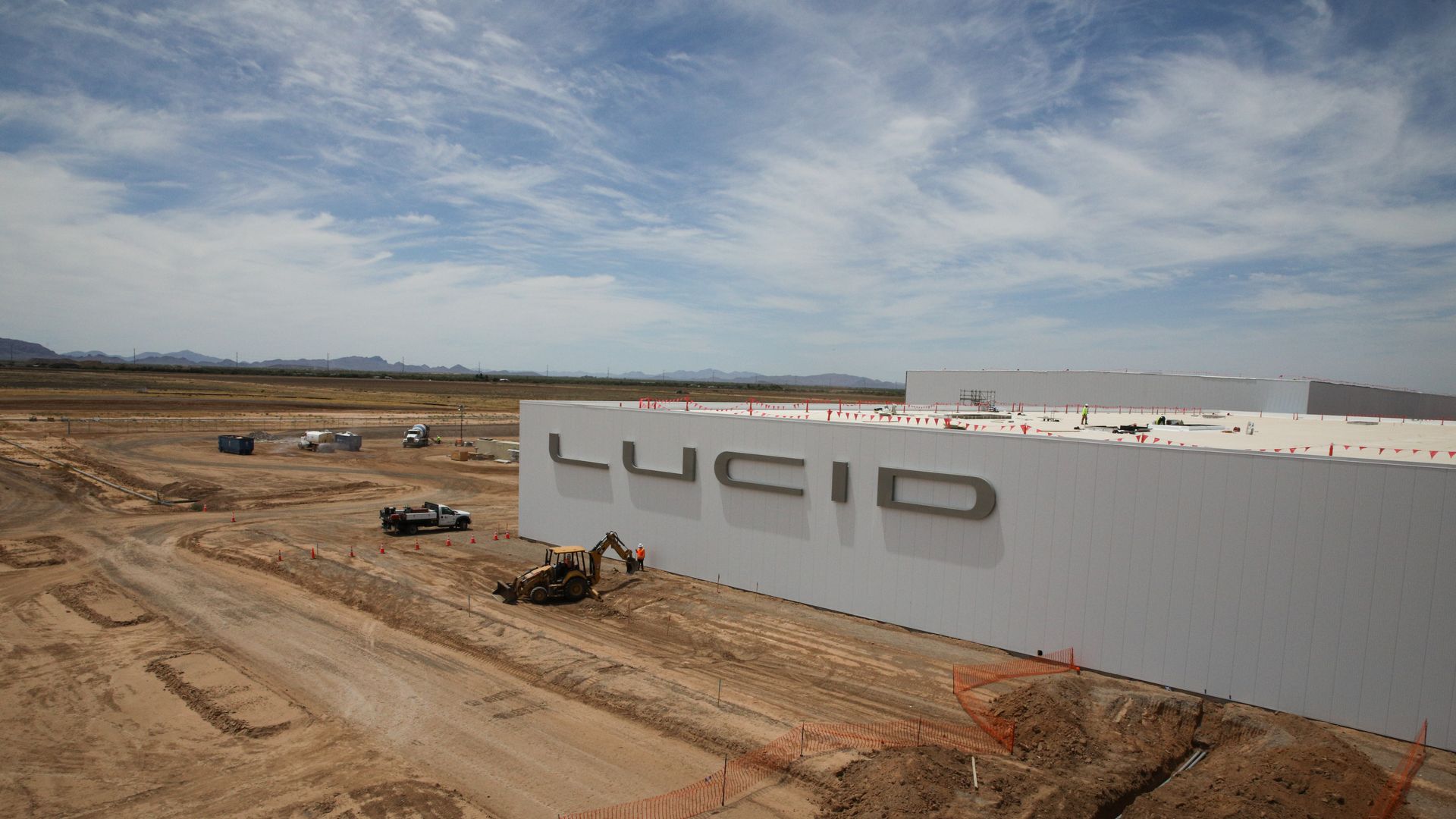
Lucid Motors plant under construction last year in Casa Grande, Ariz. Photo: Caitlin O'Hara/Bloomberg via Getty Images
Companies making everything from steel to electric cars are building plants in the Southwest, "far from historical hubs of American industry in the Midwest and Southeast," The Wall Street Journal reports (subscription).
- Why it matters: "The lure is open land, local tax breaks and a growing supply of tech-savvy workers."
"The Southwest, comprising Arizona, New Mexico, Texas and Oklahoma, increased its manufacturing output more than any other region in the U.S. in the four years through 2020," The Journal reports.
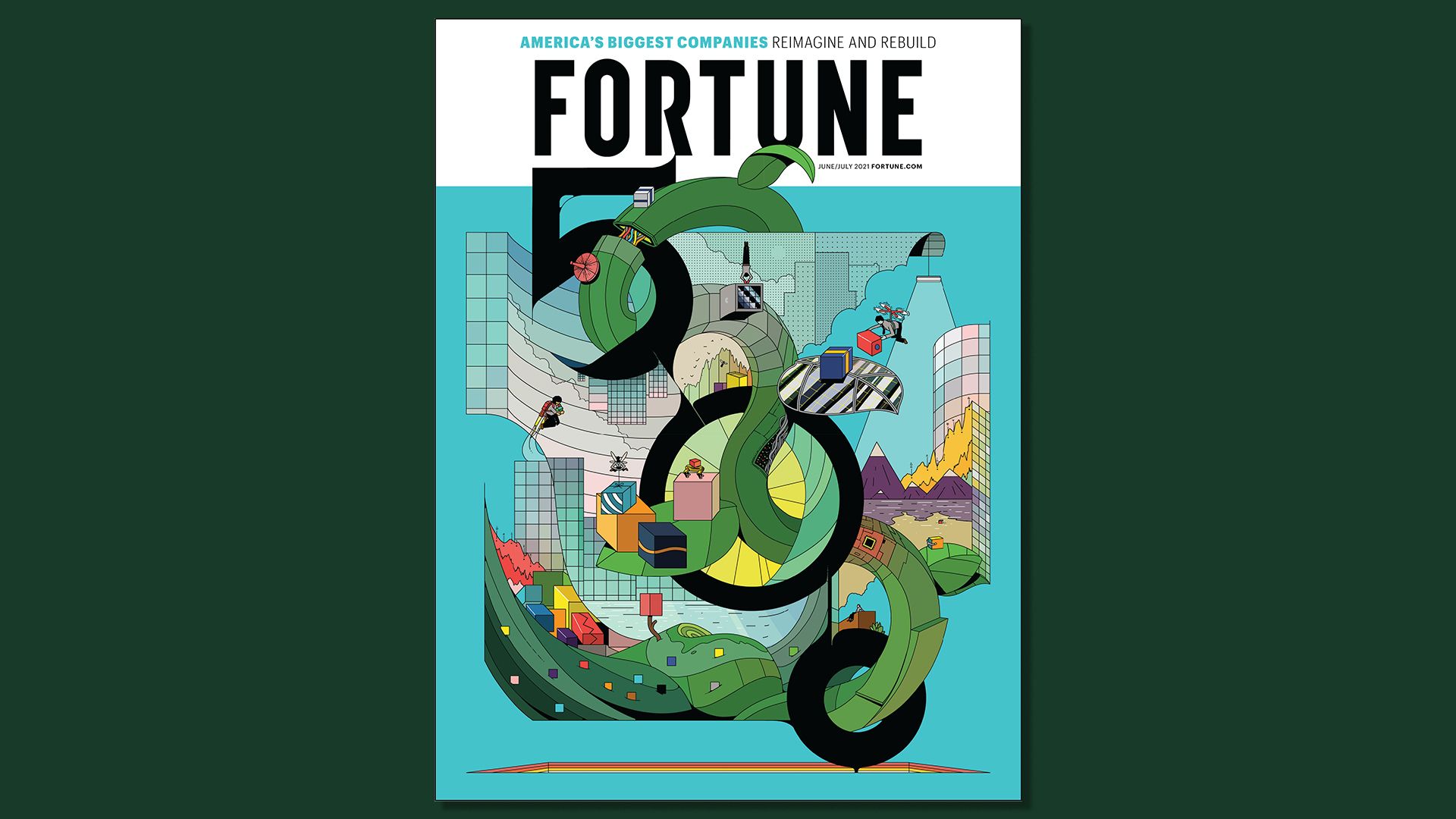
5. Women set Fortune 500 record
Courtesy Fortune
41 companies on the 67th annual Fortune 500 are led by women CEOs —an all-time high, the magazine reports:
- For the first time, two Black women are running Fortune 500 businesses — Roz Brewer of No. 16 Walgreens Boots Alliance, and Thasunda Brown Duckett of No. 79 TIAA.
- Making history at the highest-ranking business ever run by a female CEO: Karen Lynch of No. 4 CVS Health.
The top 10:
- Walmart
- Amazon
- Apple
- CVS Health
- UnitedHealth Group
- Berkshire Hathaway
- McKesson
- AmerisourceBergen
- Alphabet
- ExxonMobil
Full list. ... Methodology.
6. Cities expect violent summer
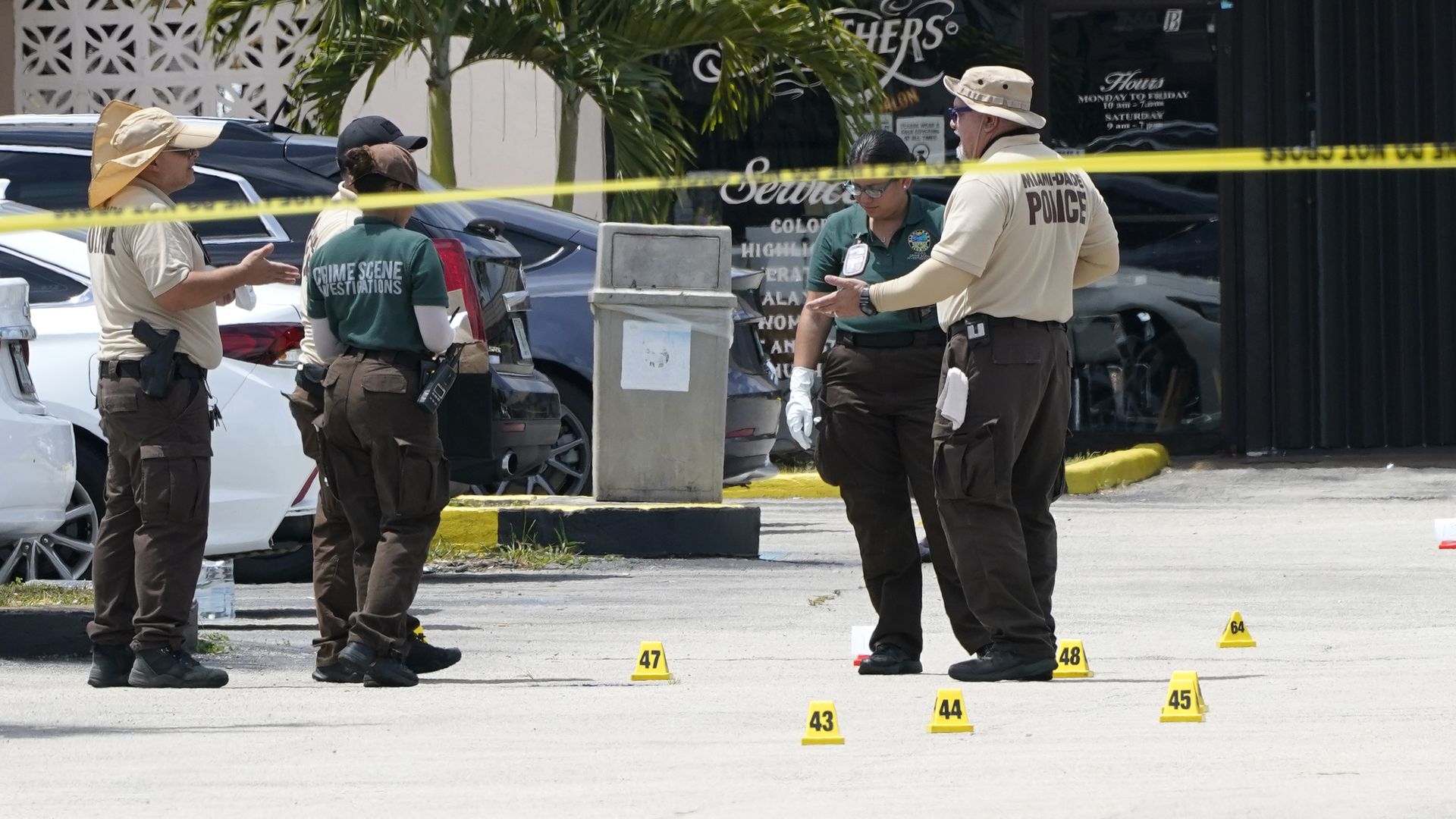
Law enforcement officials work the scene of a shooting that killed two and wounded 21 others outside a banquet hall near Miami on Sunday. Photo: Lynne Sladky/AP
"Unless the American people speak out," Miami Police Chief Art Acevedo warned on CNN, "it’s gonna be a long, hot, bloody summer."
Homicide rates in large cities were up more than 30% last year, and up 24% for the beginning of this year, criminologists tell the N.Y. Times' Neil MacFarquhar (subscription):
- "Overall crime figures were down during the coronavirus pandemic."
- "Homicides were a notable exception, however, with almost every major city in the United States seeing large increases in 2020. In Chicago and several other cities, last year was the worst year for killings since the mid-1990s."
2020 homicides were up 82% in Portland, Ore., up 72% in Minneapolis and up 36% in L.A., The Times reported, noting that those increases have continued this year in many cities.
7. Biden asks Harris to combat "new assault on the right to vote"
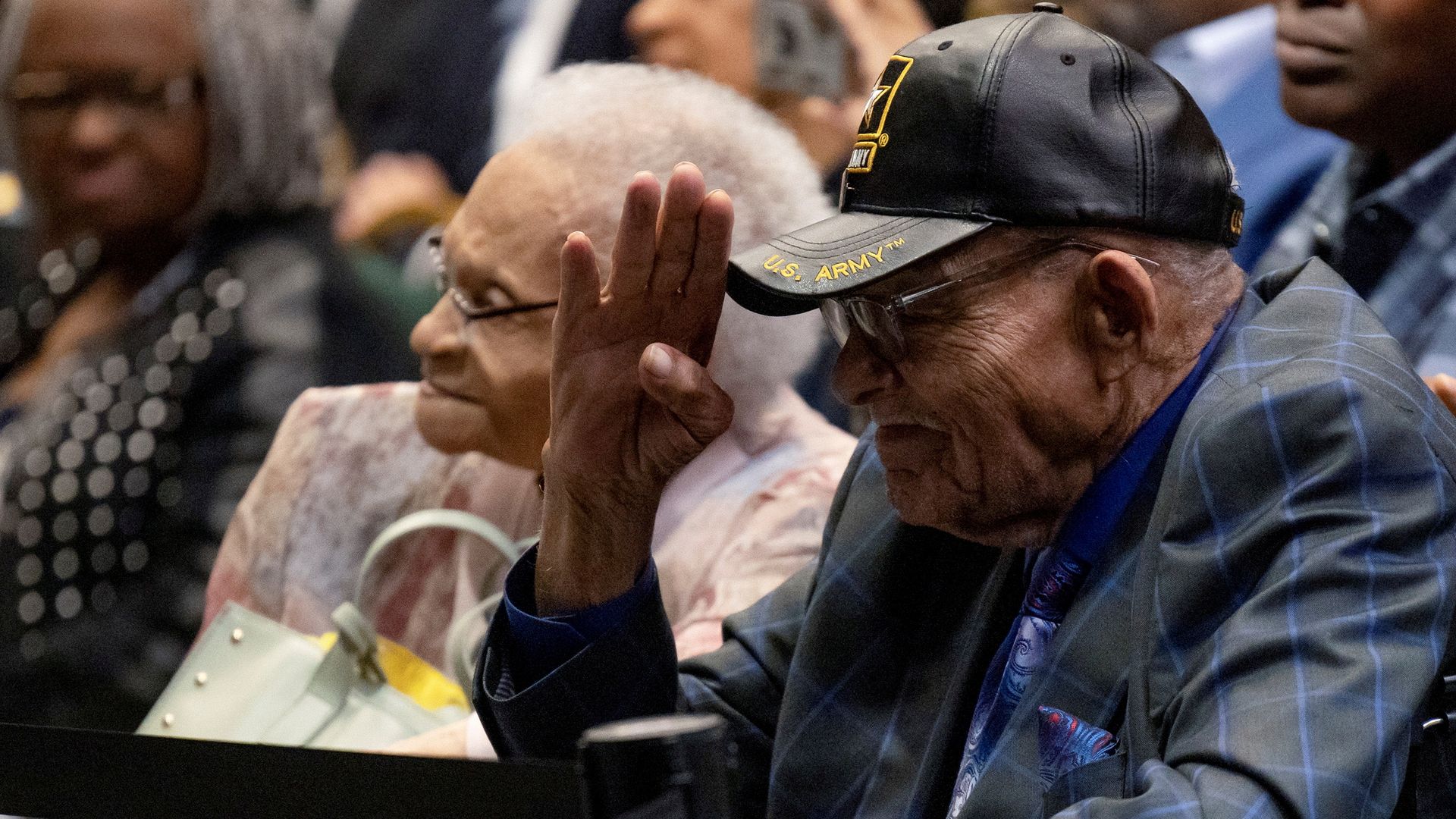
Hughes Van Ellis, age 100 — one of three known survivors of the massacre — salutes as he and fellow survivor (and older sister) Viola Fletcher, 107, listen to President Biden in Tulsa yesterday. Photo: Carlos Barria/Reuters
President Biden used his speech on the 100th anniversary of the Tulsa Race Massacre to announce he's asked Vice President Harris to lead an administration push to protect voting rights.
- Harris said in a statement: "I will engage the American people, and I will work with voting rights organizations, community organizations, and the private sector to help strengthen and uplift efforts on voting rights nationwide."
Biden said of the long-ignored massacre: "We can't just choose to learn what we want to know and not what we should know. We should know the good, the bad, everything. That’s what great nations do: They come to terms with their dark sides."
8. 🧪 Surprise real-estate boom: Labs
A bright spot in the battered world of office real estate, Bloomberg's John Gittelsohn reports:
- "Blackstone, KKR and other investors are betting on laboratory space as vaccines fuel the economic rebound."
- "More than $10 billion has gone toward buying buildings used for life sciences and other research this year, according to Real Capital Analytics Inc. That accounted for approximately 4% of all global commercial real estate transactions through May, double the share from last year."
9. America's new media colossus
Discovery
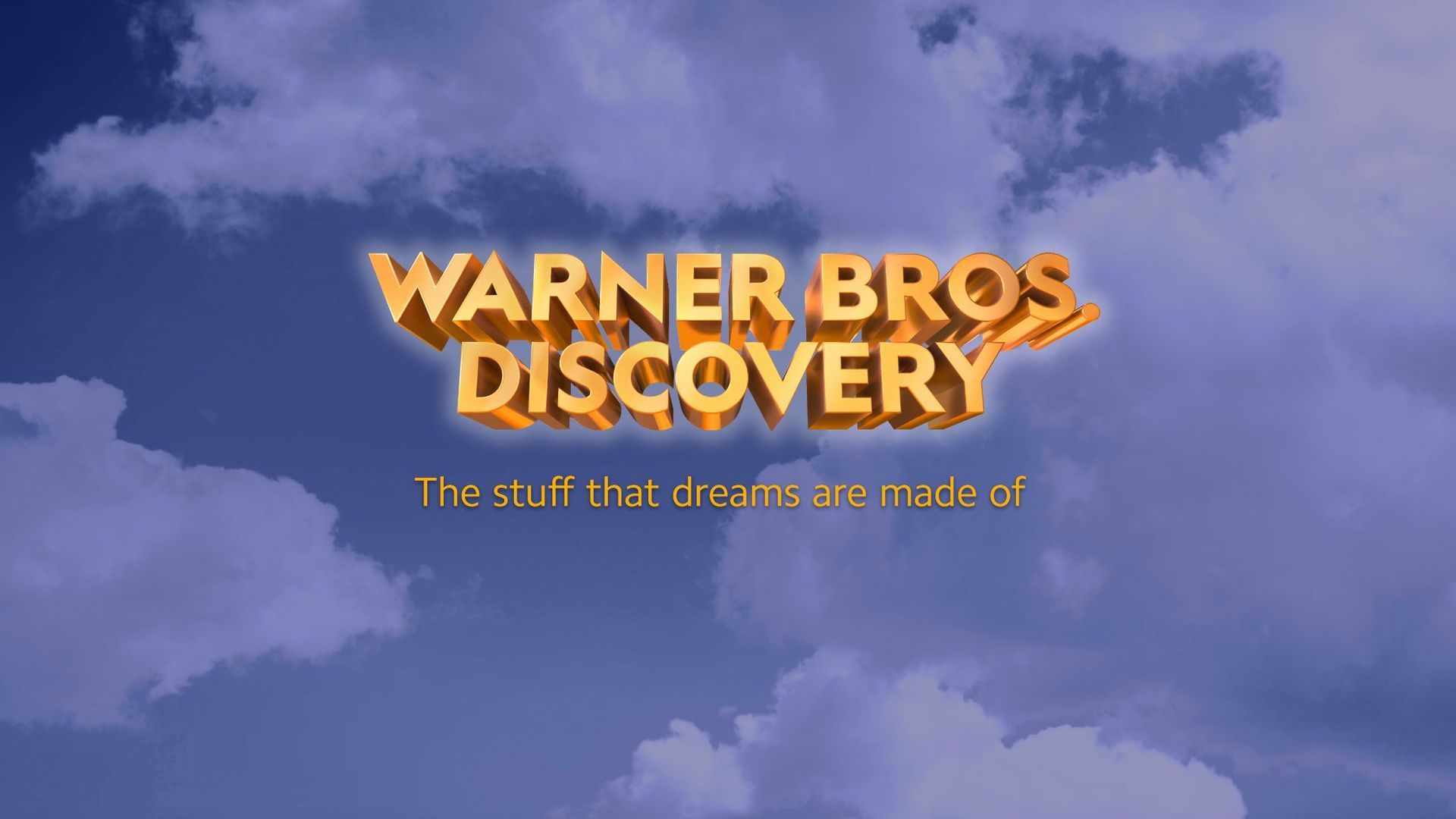
Speaking to employees from the Warner Bros. studio lot, Discovery CEO David Zaslav announced the name for the new company that will be formed via the combination of WarnerMedia and Discovery: Warner Bros. Discovery, Axios' Sara Fischer writes.
- Zaslav said: "Warner Bros. Discovery will aspire to be the most innovative, exciting and fun place to tell stories in the world."
10. 😱 Lingo: "shrinkflation"
Companies are hiding higher prices with smaller packages, the WashPost's Abha Bhattarai reports:
- "Consumers are absorbing higher labor and materials costs in the form of thinner rolls, smaller cans and lighter bags, and experts say such 'shrinkflation' will ramp up in the months to come."
📬 Please invite your friends, family, colleagues to sign up here for Axios AM and Axios PM.
Sign up for Axios AM
Catch up with the most important news of the day