Axios AM

October 16, 2025

1 big thing: New Gaza scramble

The Trump administration is working to help establish a multinational security force for Gaza, vet potential Palestinian civilian leaders, and take the first steps toward rebuilding the enclave, Axios' Barak Ravid and Dave Lawler write.
- Why it matters: The first week of peace in Gaza has been marked by joyful reunions as well as public executions. An Israeli withdrawal but also deadly clashes. And a peace process proceeding as envisioned, but already facing its first potential crisis.
Two years of war are over, the exchange of live hostages and prisoners is complete, aid is flowing and bulldozers are arriving to begin clearing away the rubble.
- But Gaza's future — who governs, who provides security, what happens to Hamas and to the Israeli occupation force — is unsettled.
State of play: Two Trump advisers told reporters yesterday that they're pressing both sides to move into the next phase of the peace process, which involves tackling those big questions.
- They also want to begin the rebuilding process in parts of Gaza that are outside Hamas control, particularly the city of Rafah on the border with Egypt. The advisers hope Rafah can become an example for a post-Hamas Gaza.
- In the meantime, their priorities are avoiding further clashes along the "yellow line" dividing Israeli and Hamas-controlled Gaza, streamlining aid deliveries, and ensuring Hamas returns the bodies of deceased Israeli hostages.

🔎 Zoom in: Israeli officials warned President Trump's envoys yesterday that the peace process could stall unless Hamas fulfills its obligations around deceased hostages, two Israeli officials and a U.S. official told Axios.
- An immediate breakdown was averted when Hamas returned several bodies and Israel backed off its threats of retaliation.
- But Hamas now says it doesn't have any additional remains to return, and recovering more will require "efforts and special equipment." Israeli officials acknowledge some of the bodies will be hard to locate, but claim between 15 and 20 could be quickly returned.
In Gaza, Hamas has sent its security forces into the streets and launched a bloody crackdown.
- Hamas has publicly executed alleged collaborators and has also engaged in firefights with rival militias.
2. 🥊 Scoop: Dems plot Fetterman ouster

3. ⚡ New AI battle: White House vs. Anthropic

4. 📊 Charted: CEOs brace for stagflation
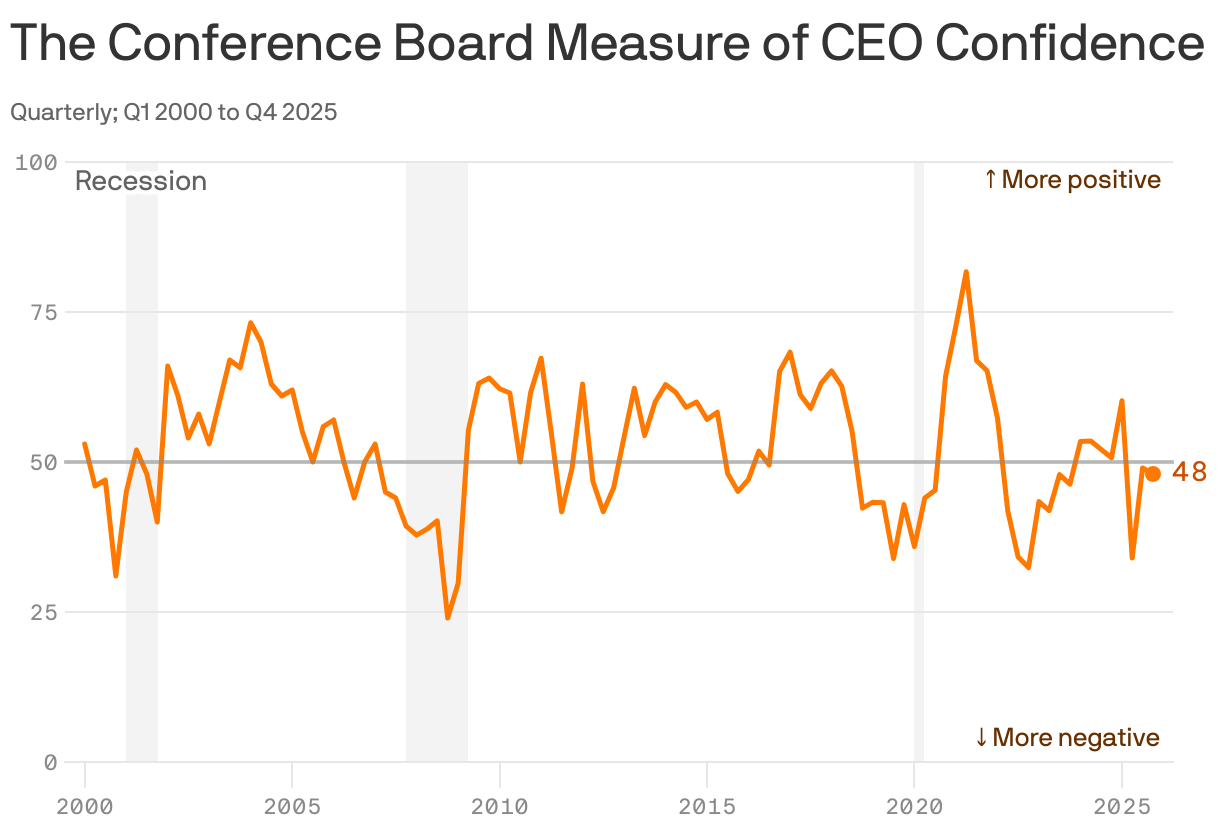
A key gauge of CEO confidence slipped into negative territory, Axios' Emily Peck writes from a survey of executives out this morning.
- Why it matters: It's a sign of the uncertain business environment, as leaders grapple with a constantly changing policy landscape, particularly around tariffs.
🧮 By the numbers: 64% of CEOs are preparing for a mild slowdown and higher inflation — a one-two punch known as stagflation.
- 81% expect AI to reshape most jobs in their company within 5 years.
- Only 22% said they were preparing for a "balanced economy with trend growth and gradual reduction in inflation pressure."
5. 📈 Trump economist: AI won't fuel inflation
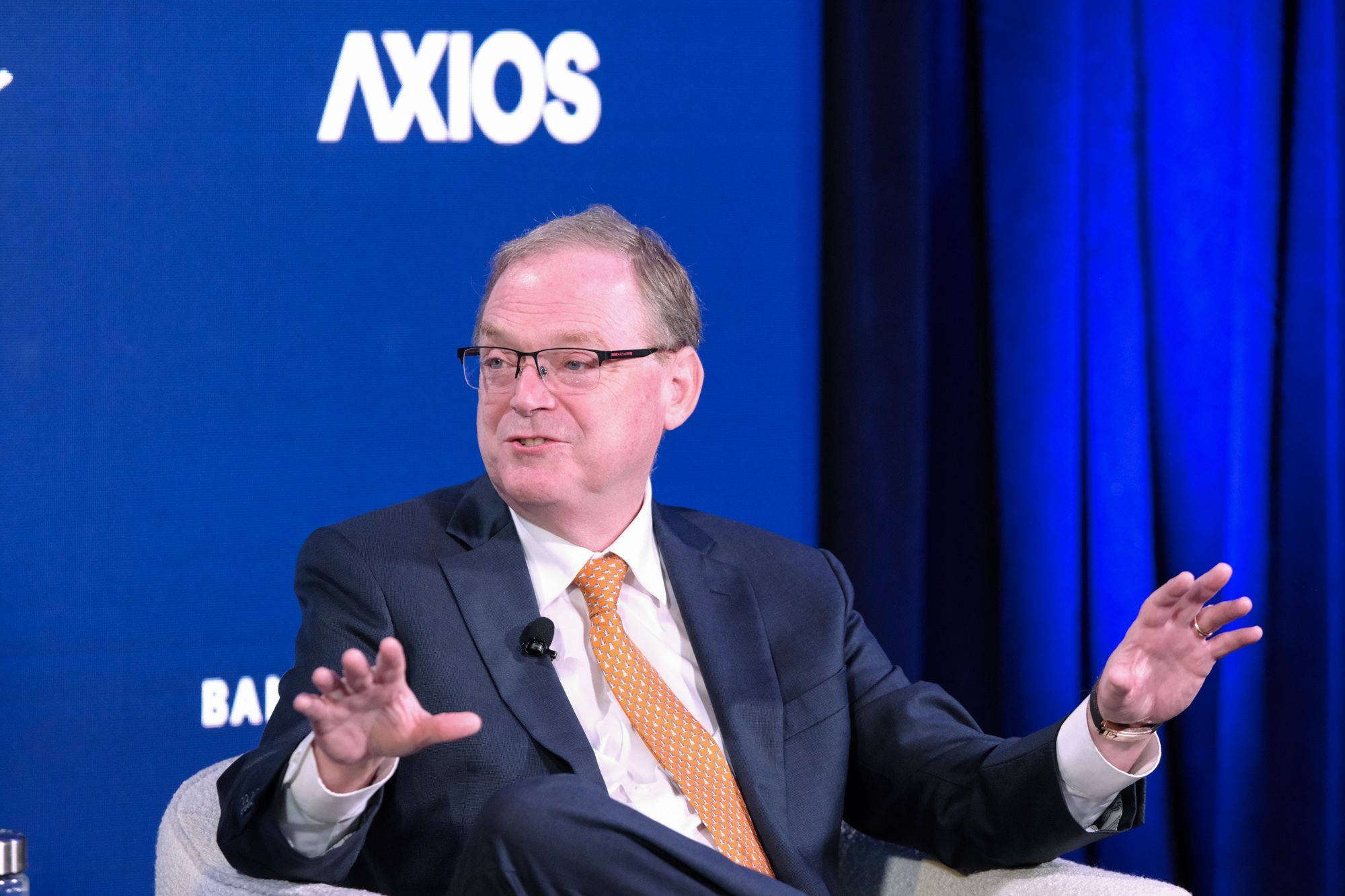
The AI-driven productivity surge is underway and will fuel growth without inflation, top White House economic adviser Kevin Hassett told Neil Irwin at an Axios News Shapers event yesterday.
- Why it matters: It's a signal that the Trump administration views AI's investment surge as an unqualified good, as it will mean a productivity boom not unlike the late 1990s.
Hassett seemed unconcerned about the risks that there could be a bubble in AI, data centers, and related investments.
- "My belief is that you don't have to think about something popping, or don't have to think it's a high probability because the productivity gains are so high," he said.
The intrigue: Hassett is said to be one of five finalists for the Fed chief job when chair Jay Powell's term is up in May.
6. 🍽️ Trump hosts donors for White House ballroom
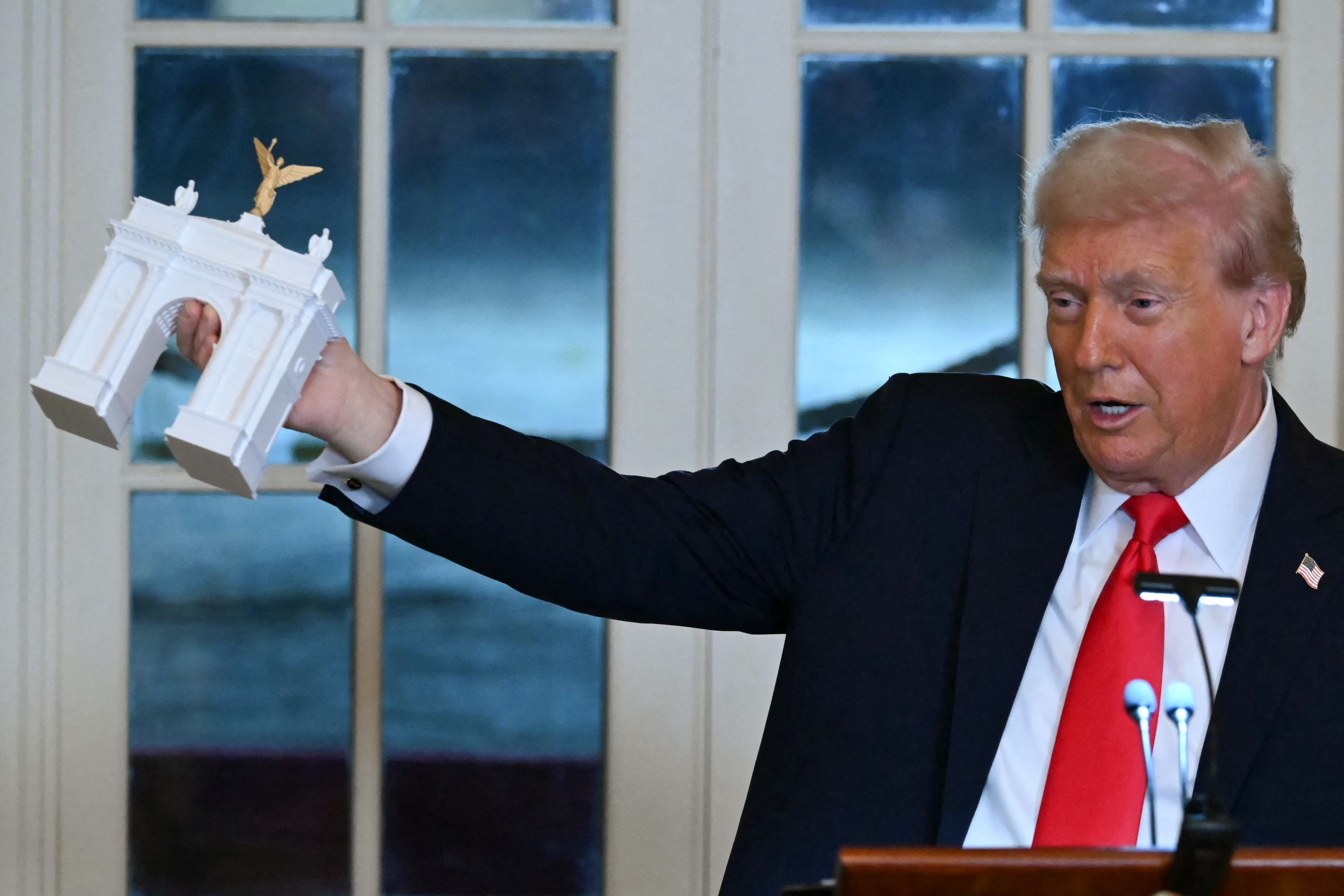
President Trump welcomed nearly 130 donors, allies and representatives of major companies to an East Room dinner last night to reward them for pledges to help fund a massive new White House ballroom, AP reports.
- The ballroom, with an estimated $250 million price tag, is the most significant renovation that Trump, a former real estate mogul, is undertaking during his second term at the White House.
All four sides of the ballroom — which Trump said will be grand enough to hold a presidential inauguration — will be made of bulletproof glass, with the color, window shape and molding in character with the White House.
- The 90,000-square-foot ballroom is planned for the area where the East Wing is located. The White House has said it'll have a 650-person capacity, but Trump last night said it'll hold up to 999.
- Trump said there are no zoning requirements for him as the president, and he can do what he wants with the construction.
✅ Among the companies represented at the "Ballroom Dinner," according to the White House, were Amazon, Apple, Booz Allen Hamilton, Coinbase, Comcast, Google, Lockheed Martin, Meta and T-Mobile. The Adelson Family Foundation, founded by GOP megadonors Miriam Adelson and her late husband Sheldon, was also represented.
- Oil billionaire Harold Hamm, Blackstone CEO Steve Schwarzman, SBA chief Kelly Loeffler and husband Jeff Sprecher, and crypto entrepreneurs Tyler and Cameron Winklevoss were all on the guest list.
Also attending were Chris LaCivita, co-manager of Trump's 2024 campaign; Reince Priebus, a White House chief of staff during Trump's first term; and Jason Miller, a longtime political adviser.

👀 At the dinner, Trump formally unveiled another project: an Independence Arch that will stand on the Virginia side of the Arlington Memorial Bridge, which crosses the Potomac River and connects Virginia and D.C.
- The president showed off miniature models, with Lady Liberty on top, in three sizes. Trump said the largest is his favorite.
More from The Wall Street Journal on the dinner to "Establish the Magnificent White House Ballroom" (gift link).
7. 🪖 Pentagon press turns in badges
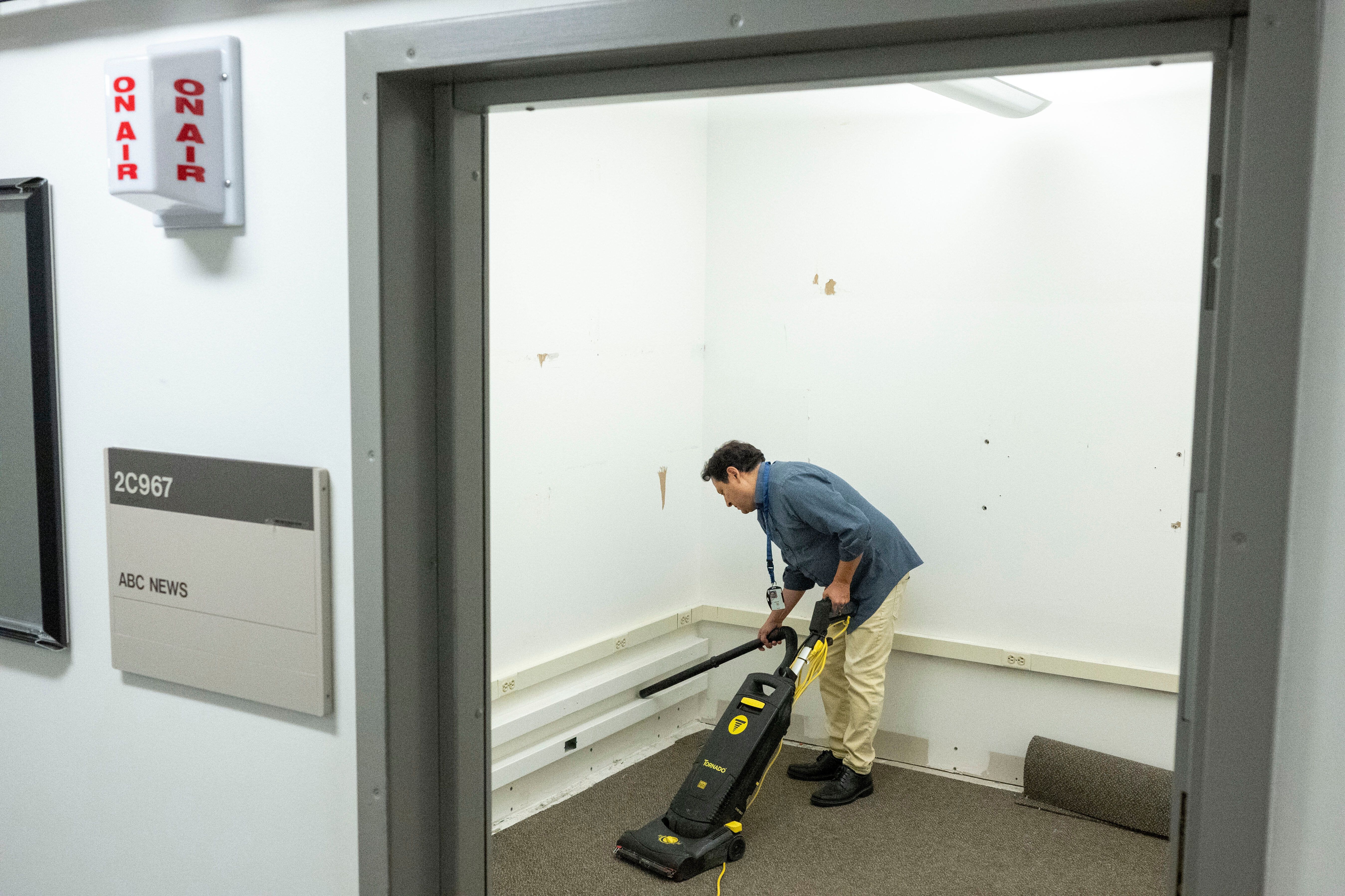
Nearly every Pentagon reporter, from almost every major media outlet, turned in their press badges yesterday after refusing to sign onto the Defense Department's new rules for journalists, Axios' Josephine Walker writes.
- Why it matters: Media companies broadly rejected the pledge, claiming it would criminalize national security reporting and expose those who sign the contract to potential prosecution.

The Pentagon Press Association said its members "are still committed to reporting on the U.S. military. But make no mistake, today, Oct. 15, 2025, is a dark day for press freedom."
- Chief Pentagon spokesman Sean Parnell said in a statement to Axios: "This has caused reporters to have a full-blown meltdown, crying victim online. We stand by our policy because it's what's best for our troops and the national security of this country."
What's in the new rules (N.Y. Times gift link) ... The backstory.
8. 🚔 1 for the road: Self-driving cop car

The Miami-Dade Sheriff's Office is testing a new autonomous police vehicle that's being hailed as the first self-driving patrol vehicle in the U.S., Axios Miami's Martin Vassolo writes.
- The autonomous vehicle, donated by the law enforcement nonprofit Policing Lab, will initially be limited to appearances at community events before the agency considers it for broader use.
How it works: The Police Unmanned Ground vehicle (PUG) Patrol Partner comes equipped with 360-degree cameras, real-time crime data integration, a license-plate reader and the ability to launch a drone from its roof.
- It won't be used in police chases, according to the Miami Herald.
- Its speed will be restricted and it won't be able to drive on highways.
Read the announcement ... Get Axios Local: Daily newsletters in 34 cities.
Axios AM