Axios AM

September 18, 2022

1 big thing: Trump's 2024 triumph
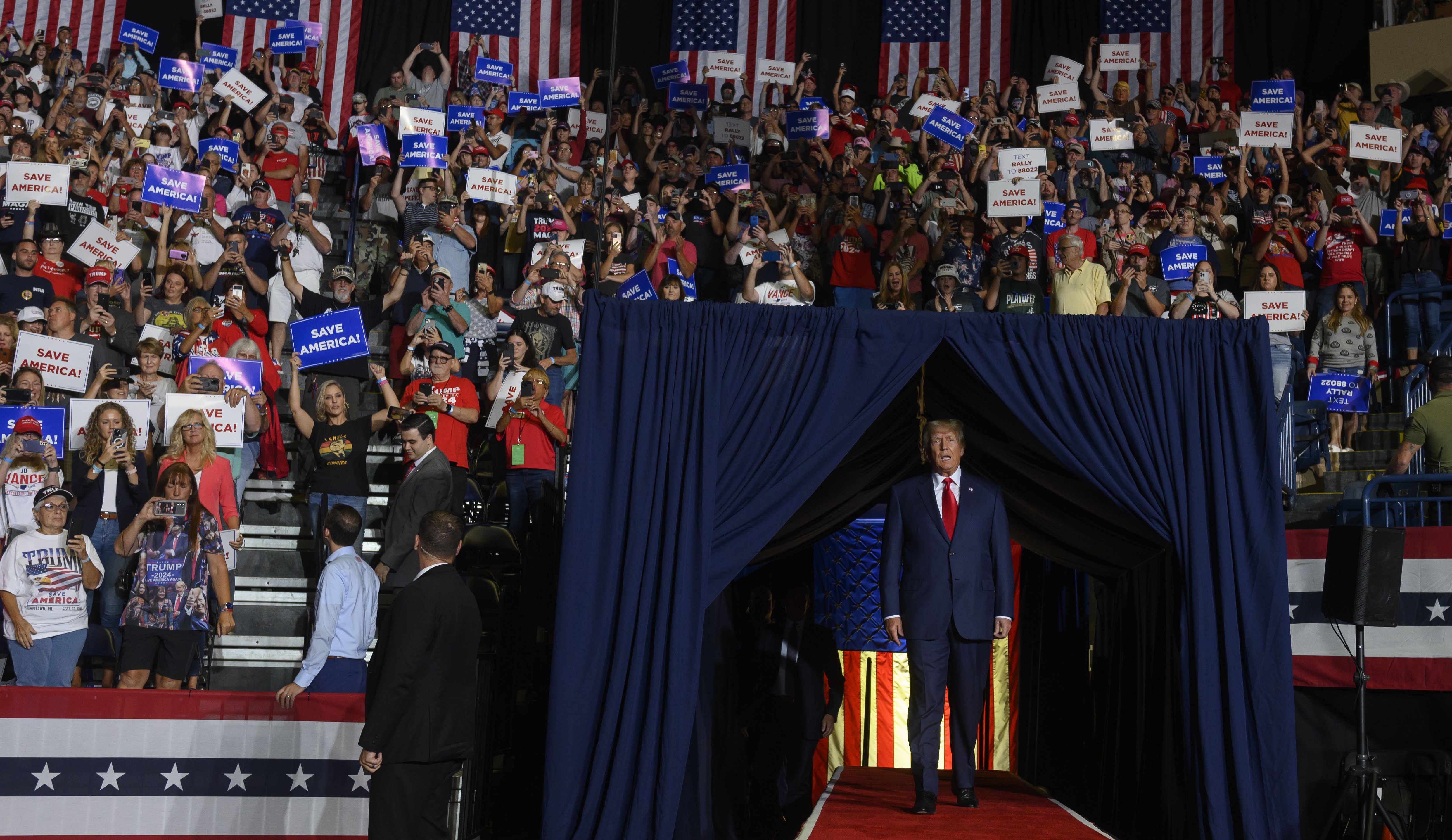
Amid his legal peril, former President Trump emerges from the midterm primary season with two trophies that show the extent to which he has reshaped the Republican Party in his image — and toward his obsessions:
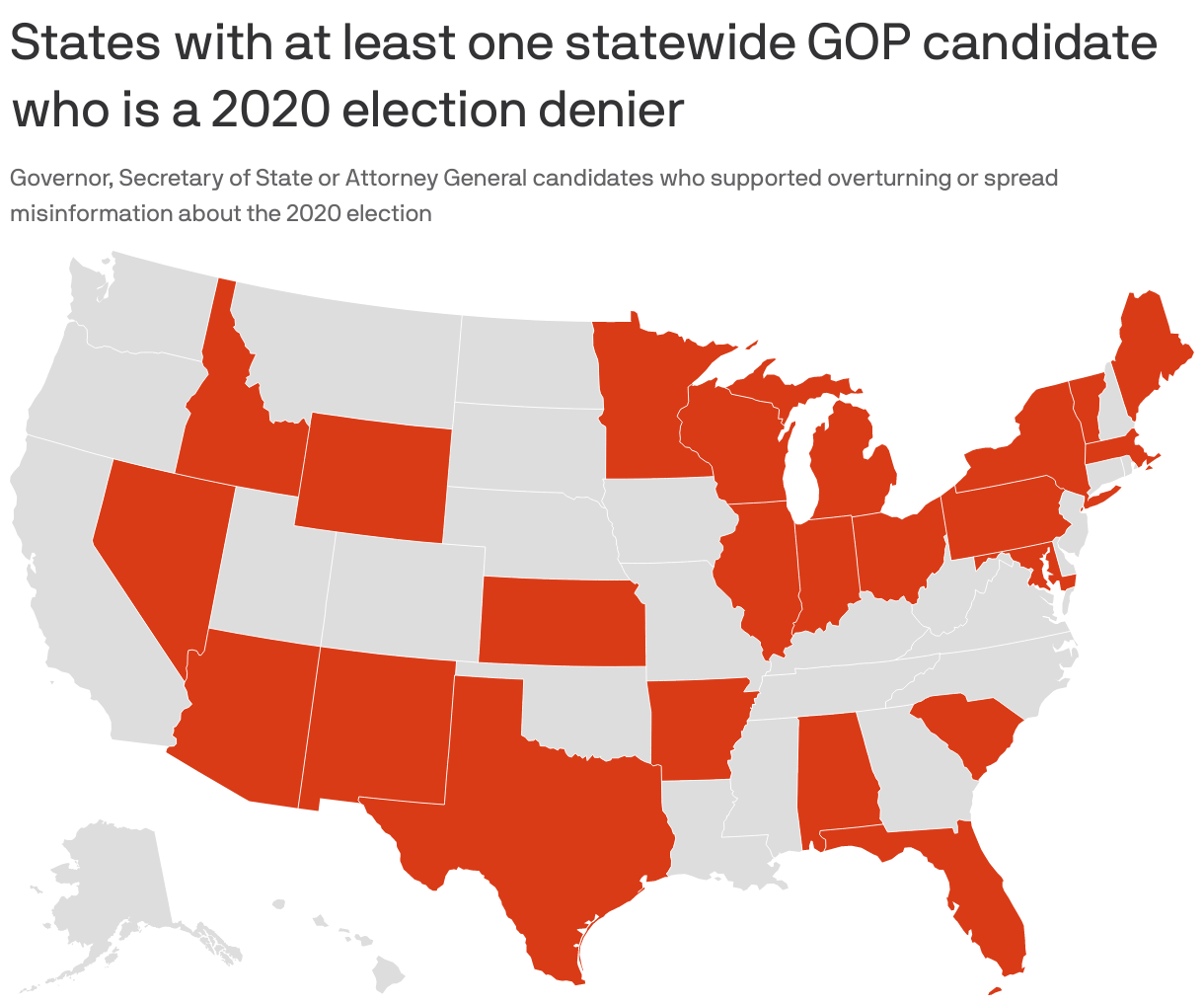
- In 24 states, across the map, Republicans are fielding 2020 presidential election deniers as November standard-bearers for statewide office — governor, secretary of state or attorney general. These candidates — nearly 1 in 3 GOP statewide candidates, according to AP — backed Trump's push to overturn the election, or spread lies about results.
- In the 26 notable GOP primaries where Trump made an endorsement, he went 21-5, according to a "Final Primary Report Card" by David Wasserman of The Cook Political Report with Amy Walter.
Why it matters: The implications for democracy in general, and the 2024 election in particular, are profound.
- If Trump has foot soldiers administering elections in ‘24 battleground states, he'd have a distinct advantage in the general election, regardless of his Democratic opponent, Axios' Jonathan Swan notes.
Between the lines: In the 26 Democratic primaries with an endorsement by Sen. Bernie Sanders, Sen. Elizabeth Warren or Rep. Alexandria Ocasio-Cortez, those progressives went just 15-11, Wasserman found.
💡 Reality check: Some Republicans are what Axios' Josh Kraushaar calls "pretenders" — they raised questions about the election to win the primary, but aren't hardcore denialists.
- Some have scrapped that talk since winning the nomination. For instance, Don Bolduc, running for U.S. Senate in New Hampshire, quickly abandoned stolen-election claims.
Most of the hardcore denialists are likely to lose in November, Kraushaar reports. A big exception is Kari Lake for Arizona governor.
- These nominees' underdog status underscores the fact that GOP voters have gone MAGA — but fringe views don't sell outside the party's primaries.
🔬 Zoom in: The election-denial midterm caucus extends to congressional races.
- Of 552 total Republican nominees, 201 (36%) fully denied the legitimacy of the 2020 election, FiveThirtyEight found. 61 more raised questions, bringing the percentage to 47% — roughly half.
The bottom line: 60% of U.S. voters will have an election denier on the ballot in November, per FiveThirtyEight.
- Go deeper: Bloomberg tally of 258 GOP deniers ... Share this story.
2. Biden to Putin: "Don't. Don't. Don't"
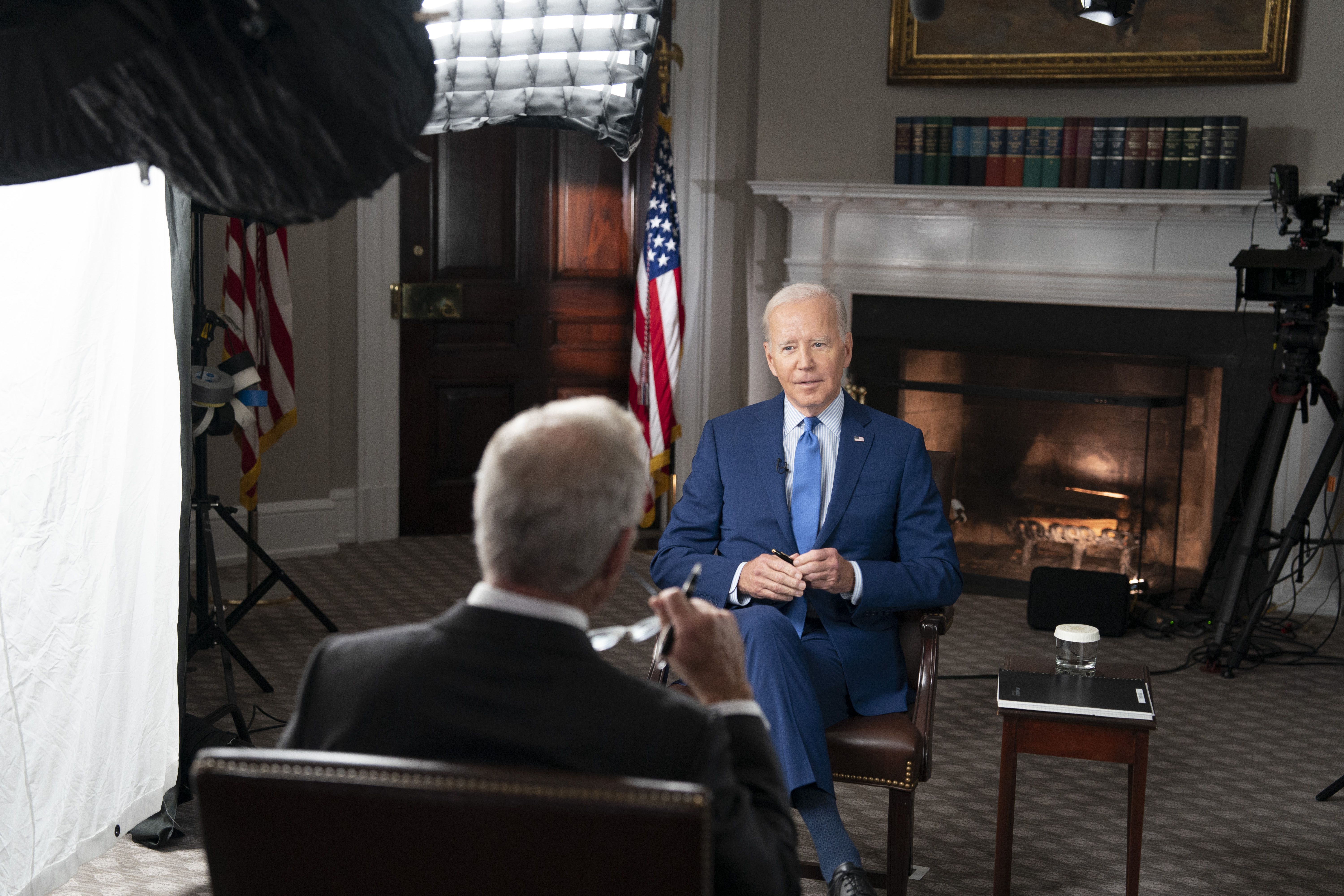
President Biden tells CBS News' Scott Pelley on tonight's "60 Minutes" what he would say to Vladimir Putin if he's considering using chemical weapons, or tactical nuclear weapons, in Ukraine:
"Don't. Don't. Don't. You will change the face of war unlike anything since World War II."
3. Call for criminal probes of Martha's Vineyard flights
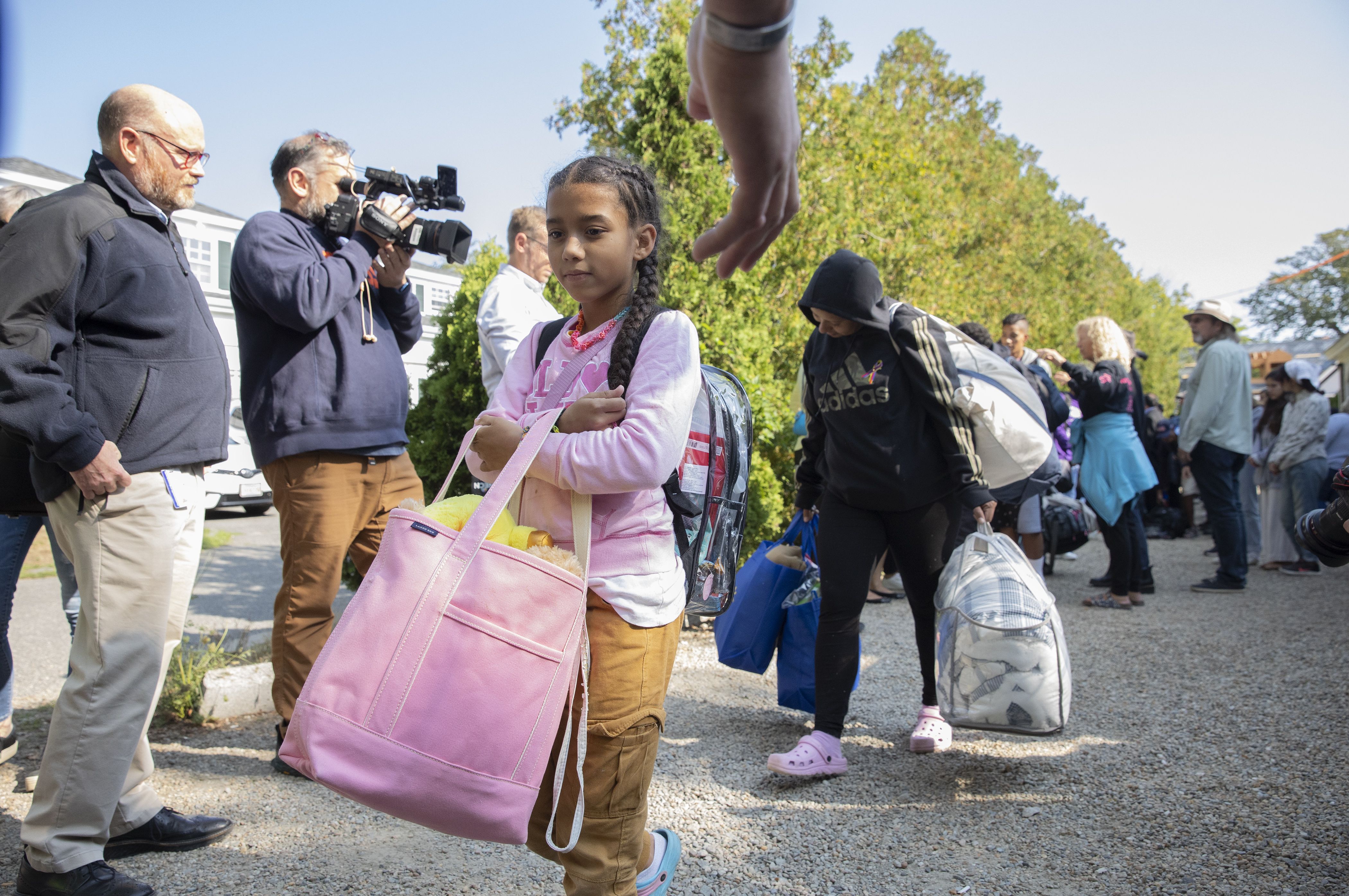
Lawyers representing around 30 immigrants recently flown to Martha's Vineyard from Texas asked the Massachusetts attorney general and the federal government to open criminal investigations into what they described as a "political stunt," Axios' Jacob Knutson reports.
- The lawyers say their clients "were induced to board airplanes and cross state lines under false pretenses" by people working with Florida Gov. Ron DeSantis (R).
5. 🎞️ Film shows cops training for '60s riots
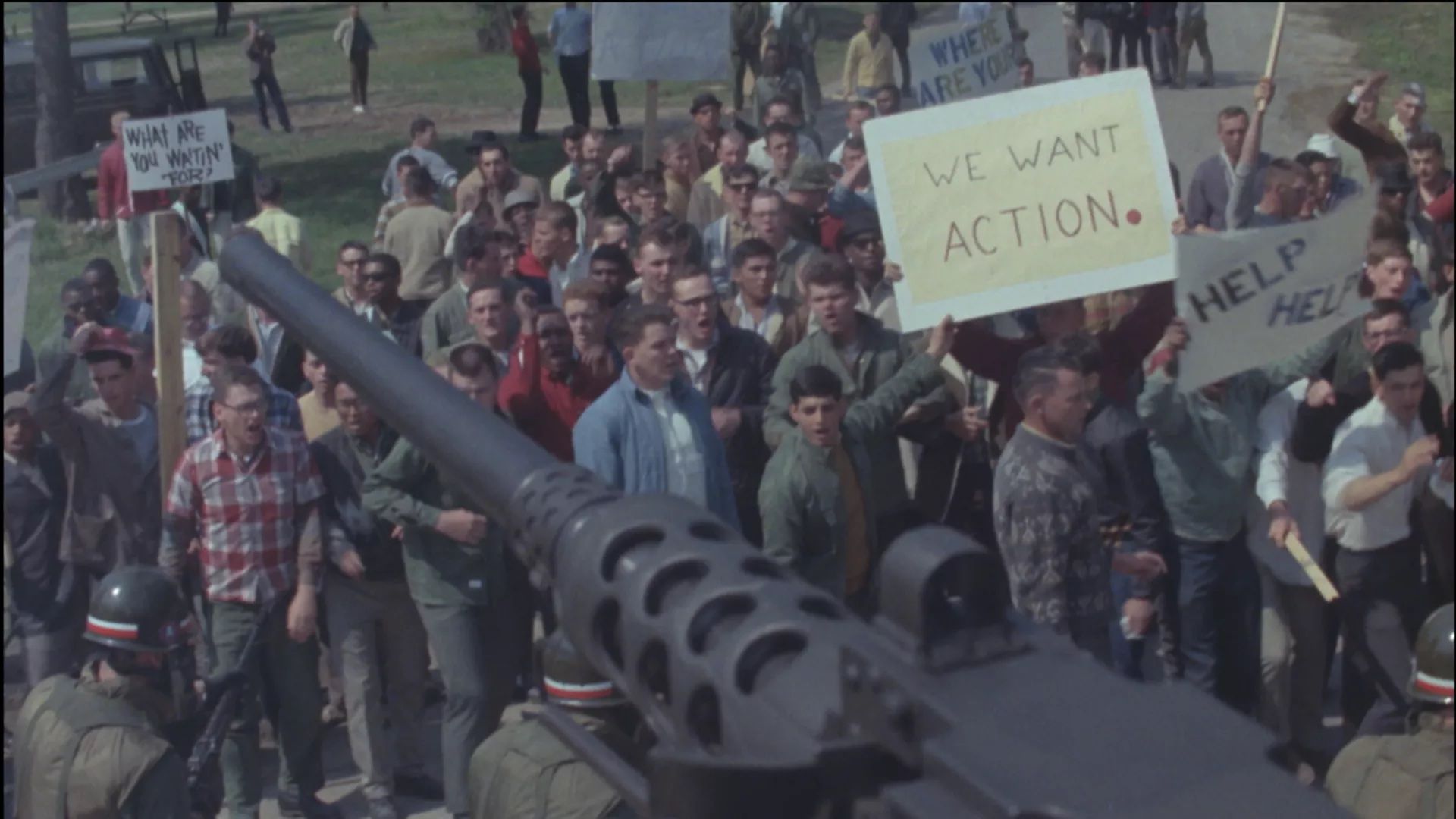
A new documentary examines how the U.S. military in the 1960s prepared police for unrest in cities by using a fictional town and soldiers as actors, Axios' Russell Contreras reports.
- "Riotsville, U.S.A.," released Friday in select theaters, shows militarization of police amid demands by poor communities of color to end police brutality — demands that continue today.
The film, from Magnolia Pictures, uses only archival footage from the military, newscasts and police.
- Filmmakers pieced together a story of how police departments in the U.S. came to use military tactics, mainly against Black and Latino residents, for decades — immediately after the civil-rights movement.
🔬 Zoom in: In the late 1960s, the U.S. Army built fake towns, known as "riotsvilles," on its bases to stage and film the military response to riots.
6. 🏠 New tool: Black Wealth Data Center
7. 🗞️ R.I.P., WashPost Outlook

Images by kind permission of The Washington Post.
8. 💰 Juicy details: How Texas wows football prospects
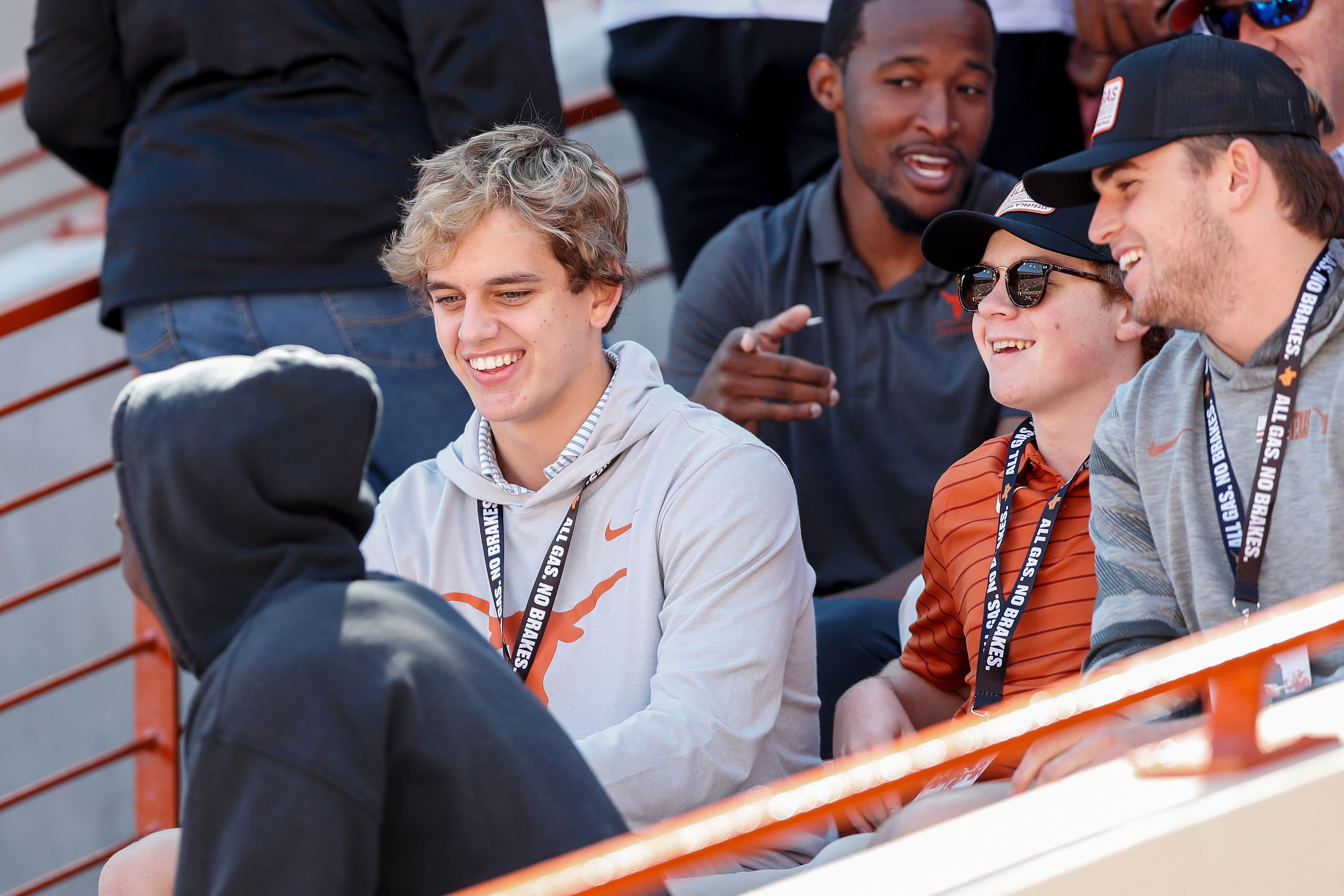
The University of Texas spent nearly $280,000 on a blowout weekend to impress nine potential football recruits and their families, according to receipts and invoices The Athletic obtained via open records requests.
- Under arcane college-recruiting rules, this was the players' "official" visit, which meant the school could roll out the red carpet — rooms at the Four Seasons ... a private chicken-tender bar and quesadilla station on arrival ... open bar and evening cruise for parents ... Top Golf.
🏈 Why it matters: The June weekend included Arch Manning — nephew of Eli and Peyton, and the most coveted quarterback recruit in decades, The Athletic's Sam Khan Jr. writes. Arch Manning committed to the Longhorns the next week, adding a "#HookEm" hashtag to his tweet.
- Texas unfurled a similar itinerary for another group of prospects the following weekend, for a combined tab of $630,000 for the two weekends, The Athletic reports.
- Of the 23 players across both weekends, 16 are now Longhorn commits — accounting for 72% of Texas' '23 recruiting class.
🥩 At III Forks, an upscale steakhouse, the Manning group ordered 46 lobsters, 34 bone-in rib-eyes, 26 filets, 17 New York strips, sea bass, chicken fried lobster and lobster mac and cheese
- One dad, who ordered a Tomahawk ribeye ($135), told The Athletic: "I've never had a Tomahawk before, so why not?"
His son remains uncommitted. Texas is in his top 5.
- Read the story (subscription).
Axios AM

Catch up with the most important news of the day