Axios AM

October 13, 2026

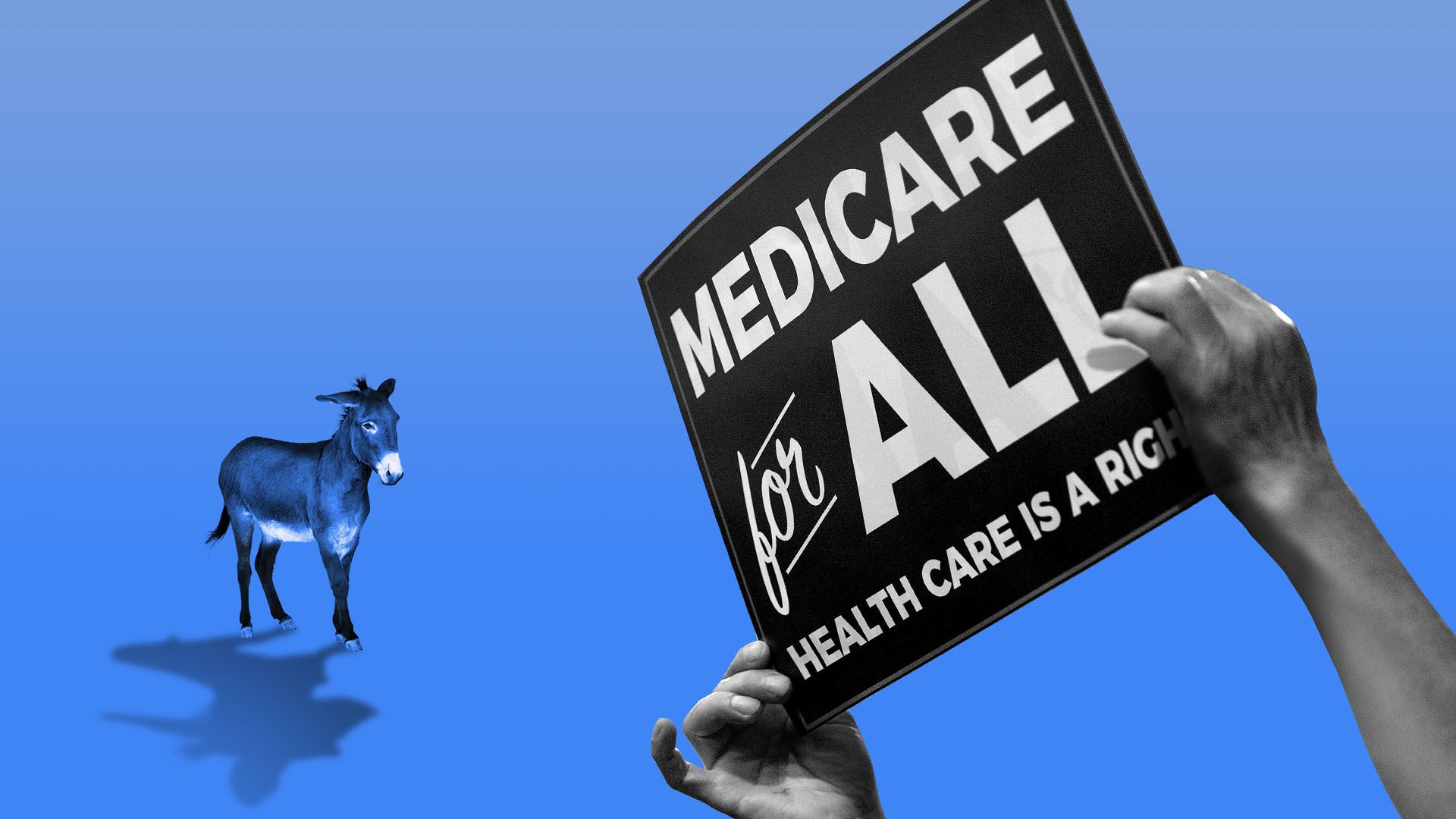
1 big thing: Single-payer shock poll
2. ⚠️ The new red swing states


Move over, Wisconsin and Arizona. With Democrats making Republicans sweat in a host of red-state Senate races, a new batch of swing states may be emerging, Axios' Mike Zapler writes.
- Why it matters: Some of the closest Senate races are in Nebraska, Ohio, Texas, Iowa and even Kansas. Sure, this could be a blip — or a reminder that it's a 50-50 moody nation, even in a bunch of red states.
🖼️ The big picture: Democratic and Republican Senate candidates are running margin-of-error races in red states that not long ago were thought to be forbidding, or even a wasted effort, to many Democrats.
- The Senate races in Kansas and Ohio are tied. So is Nebraska, where independent Dan Osborn is trying to knock off Sen. Pete Ricketts.
- Democrat James Talarico has consistently led polls in Texas, though that race appears to be tightening as money pours into the state on behalf of Republican Ken Paxton.
- ✈️ Reliably red Alaska is also a toss-up. President Trump is flying to Wasilla, Alaska, today to campaign for incumbent GOP Sen. Dan Sullivan.
- Trump won all those states by double digits in 2024.
👀 Zoom in: Republican operatives told Axios they're far from convinced that what's happening now will create a new slate of swing states in the 2028 race for the White House.
- Democrats say better-than-expected performances by their candidates in several red states would at least open the door to an expanded map — with a big "if."
- "An opening, yes," Obama's former chief strategist, David Axelrod, told Axios. "A guarantee, hardly."
🥊 Reality check: There's no certainty that Democrats will prevail in red states this year, much less set a path for 2028.
- The polling industry has had enough misses and challenges in recent elections to raise questions about whether we're getting an accurate picture of the political landscape.
3. 💰 Golden age for big biz
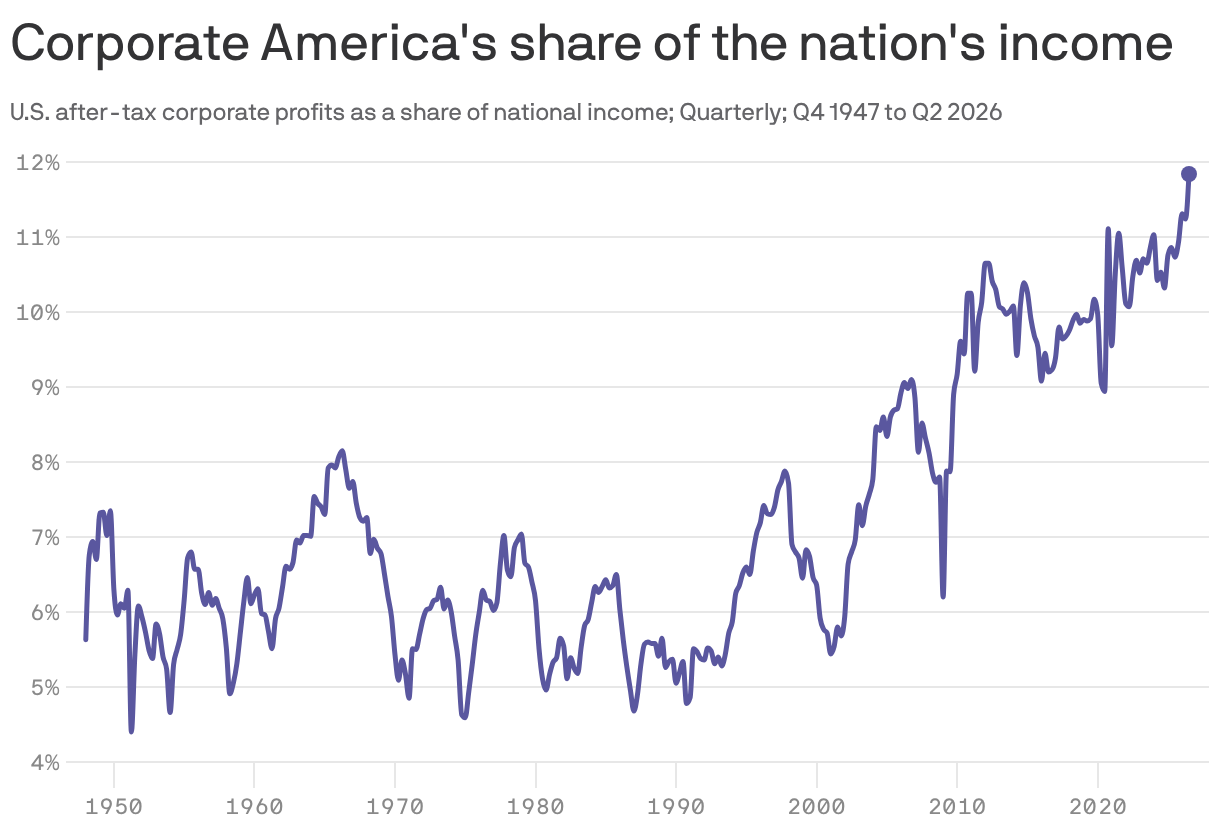
Corporate America is raking in record profits, luxuriating in luscious margins and capturing the largest chunk of the country's income on record, Axios Markets co-author Matt Phillips writes.
- Why it matters: The corporate bonanza is bolstering the stock market, but it may also be fueling Americans' sour mood.
Today is the unofficial start of third-quarter earnings season. Wall Street expects S&P 500 members will continue to make it rain.
👓 Between the lines: The market is still all about AI, but the gains are extremely concentrated.
- Ben Snider, chief U.S. equity analyst with Goldman Sachs, notes more than two-thirds of total growth in S&P 500 earnings is expected to come from just 10 stocks.
4. 🌾 Scoop: Kansas rescue mission
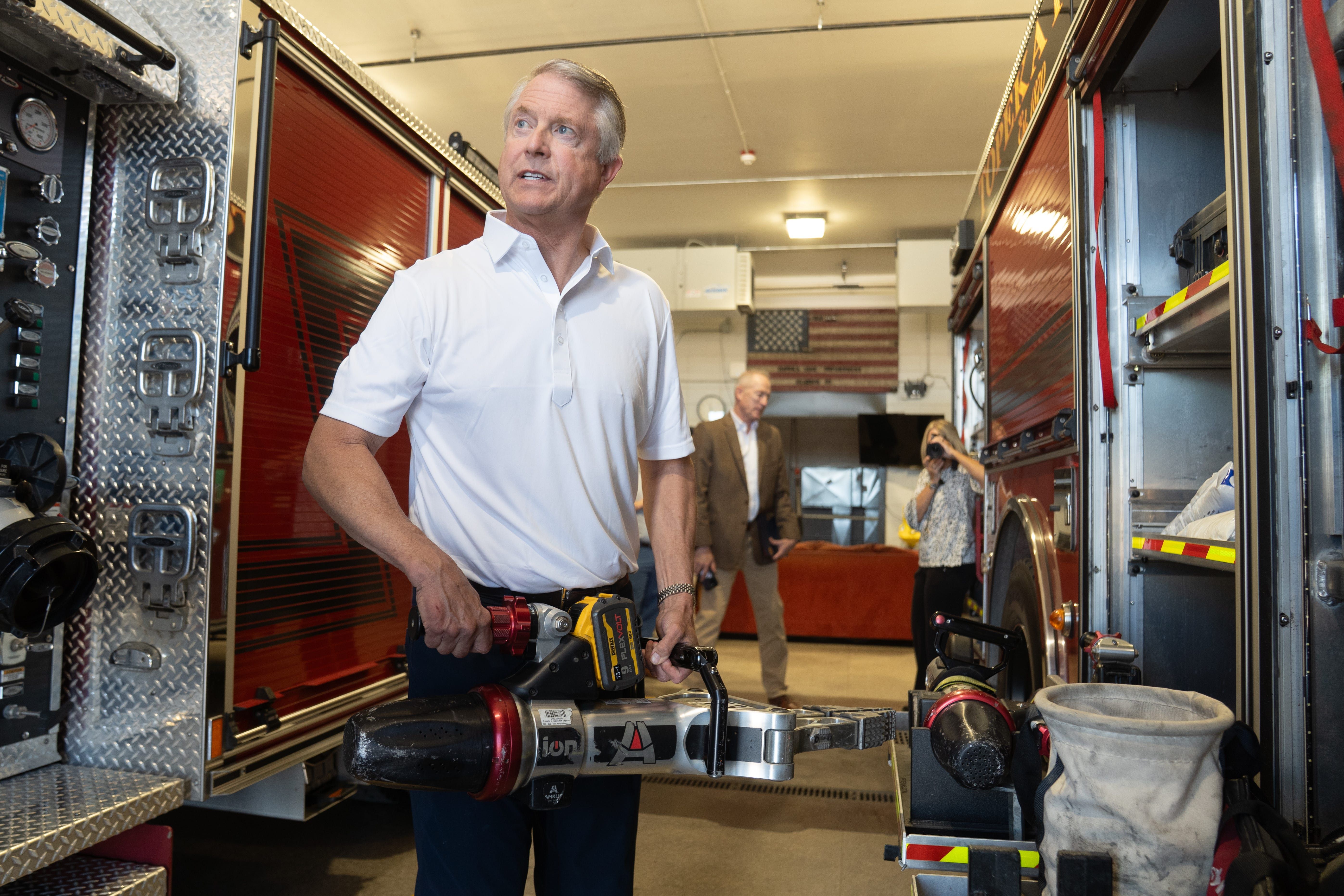
A top Trump political operative has been tapped to help boost Kansas Sen. Roger Marshall's campaign in the weeks before the Nov. 3 election — the latest sign of how Republicans are scrambling to defend the red-state seat, Axios' Alex Isenstadt writes.
- The hiring of veteran strategist Chris Grant reflects the GOP's growing anxiety over Kansas' Senate race. Marshall is running neck and neck with Democrat Adam Hamilton in a state President Trump won by 16 points in 2024.
Why it matters: Republicans fear losing Kansas could be a domino in costing them their Senate majority.
🔎 Zoom in: GOP operatives have become increasingly frustrated with Marshall's reelection campaign, which they believe hasn't been aggressive enough at a time when soaring fuel prices have particularly hurt farmers in Kansas and elsewhere in the Midwest.
- Grant, who helped lead the main pro-Trump super PAC in 2024 and has remained involved in Trump's political operation, will be a senior adviser to Marshall and help guide strategy in the final three weeks.
5. 🧠 What Big Tech could learn from Big Oil

6. 💸 Stat du jour: Musk's midterm millions
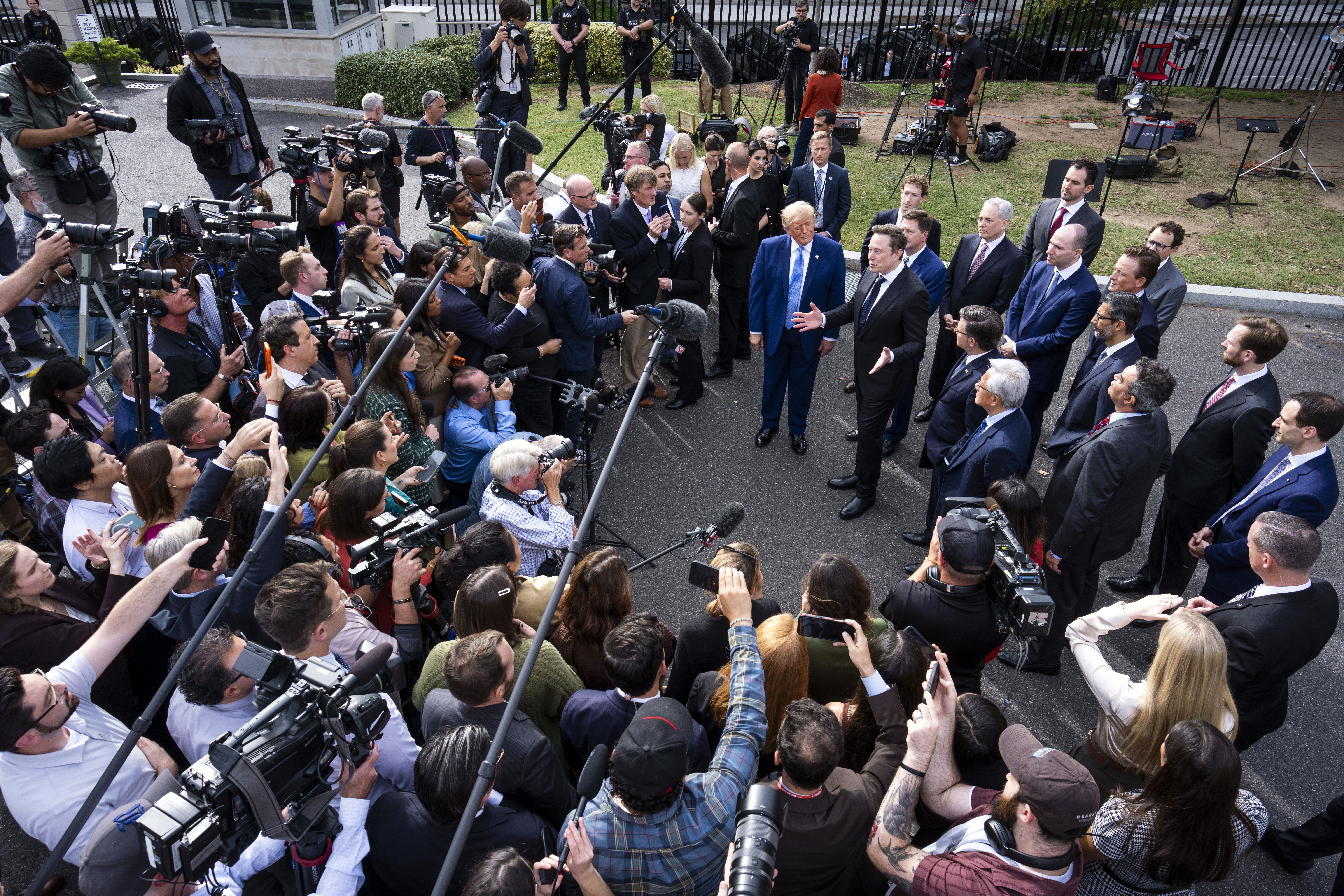
Elon Musk has quietly become the biggest known donor in this year's midterm elections, doling out more than $276 million since July to try to save Republican majorities in Congress.
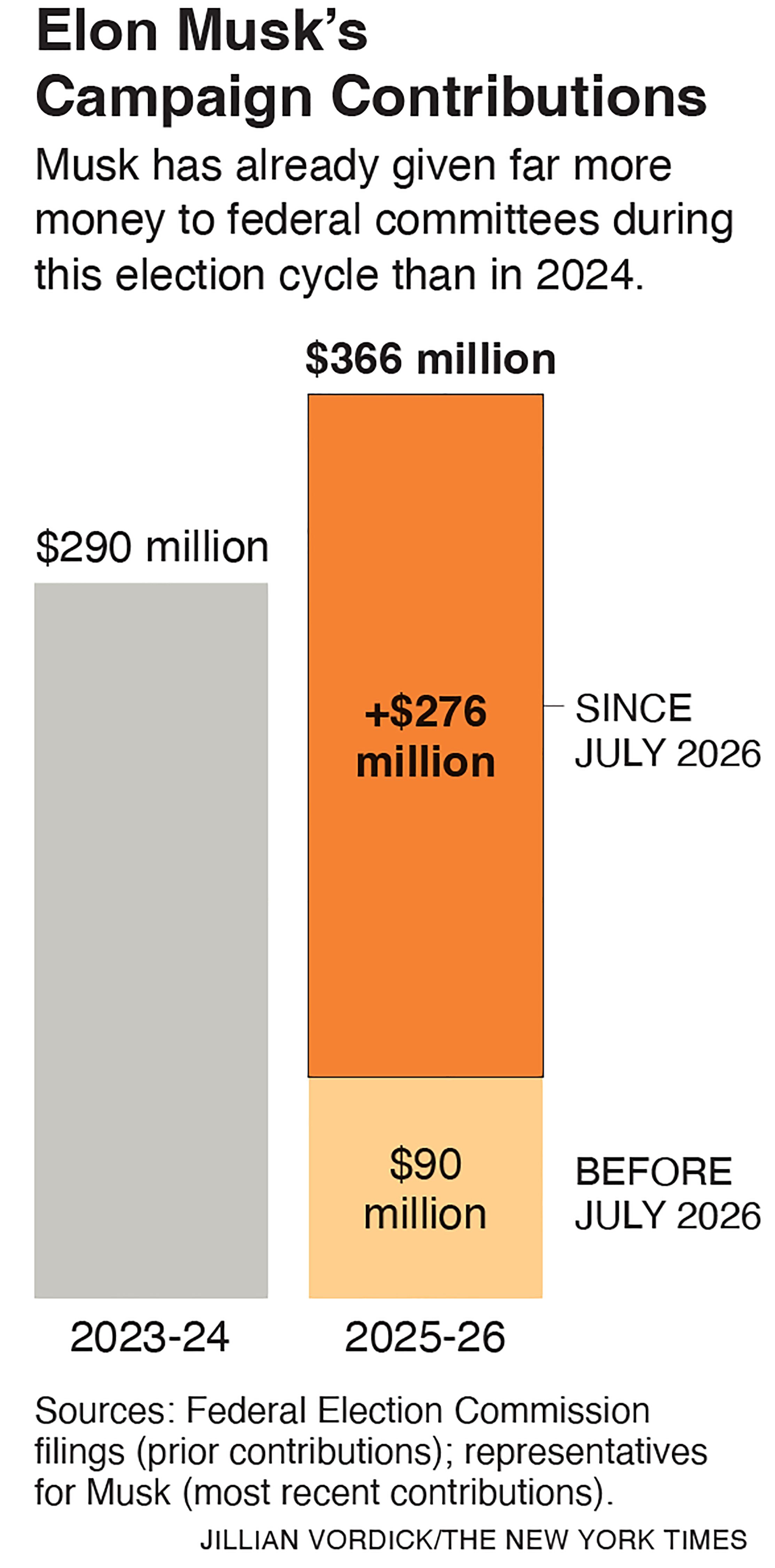
The money includes $158 million given to the Senate Leadership Fund, the main super PAC supporting Republican Senate candidates, one of the largest known political donations in American history, the N.Y. Times' Teddy Schleifer first reported.
7. 🚨 Scary supermarket hack
8. 🪓 "Tim-ber!" is the new "Fore!"
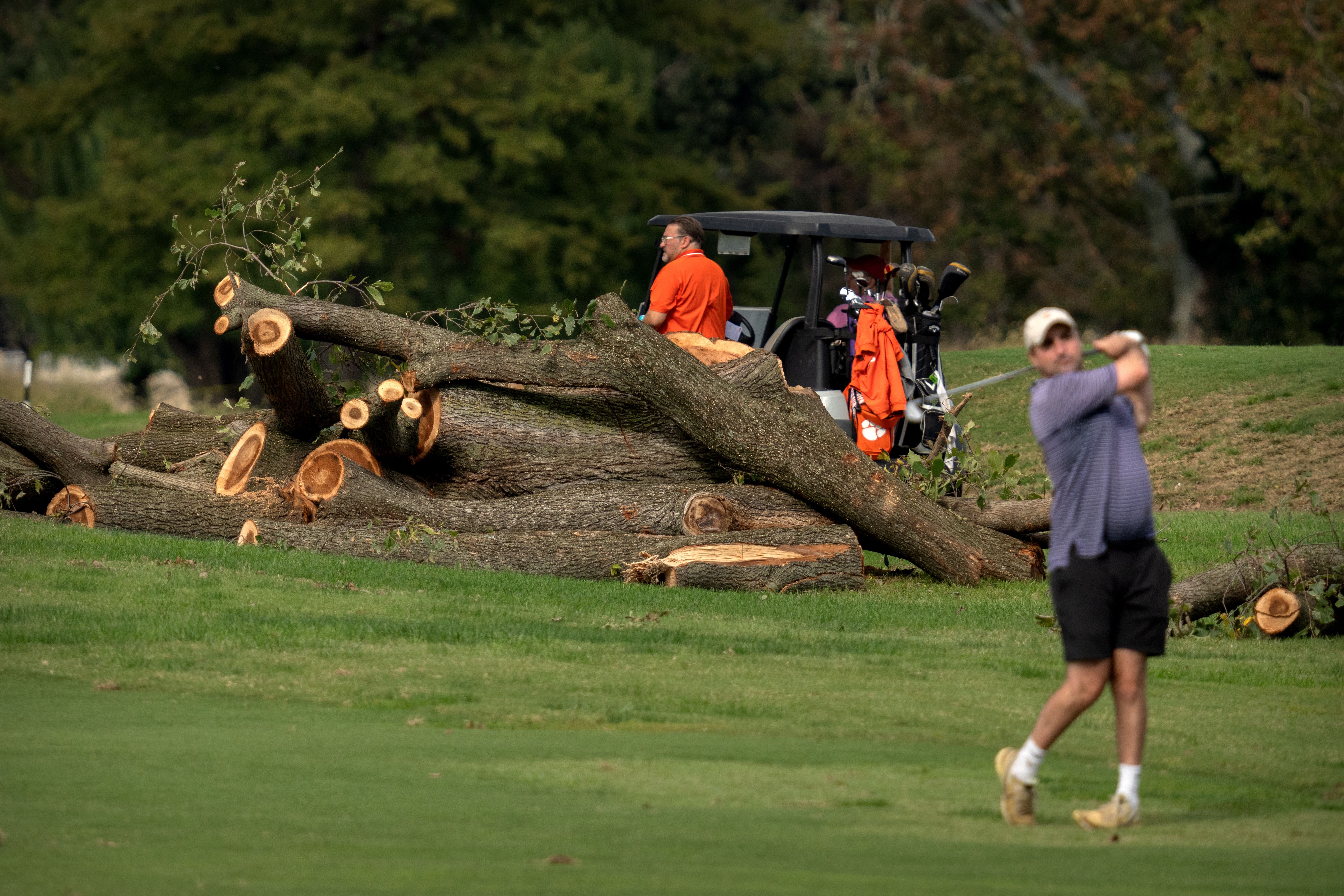
A "furious" district court judge ordered a 24-hour halt to a massive tree-cutting operation at the historic East Potomac Golf Course in D.C. that President Trump plans to overhaul.
- Government lawyers said at a holiday emergency hearing that about 430 trees were cut down on Saturday. 299 more are slated for removal.
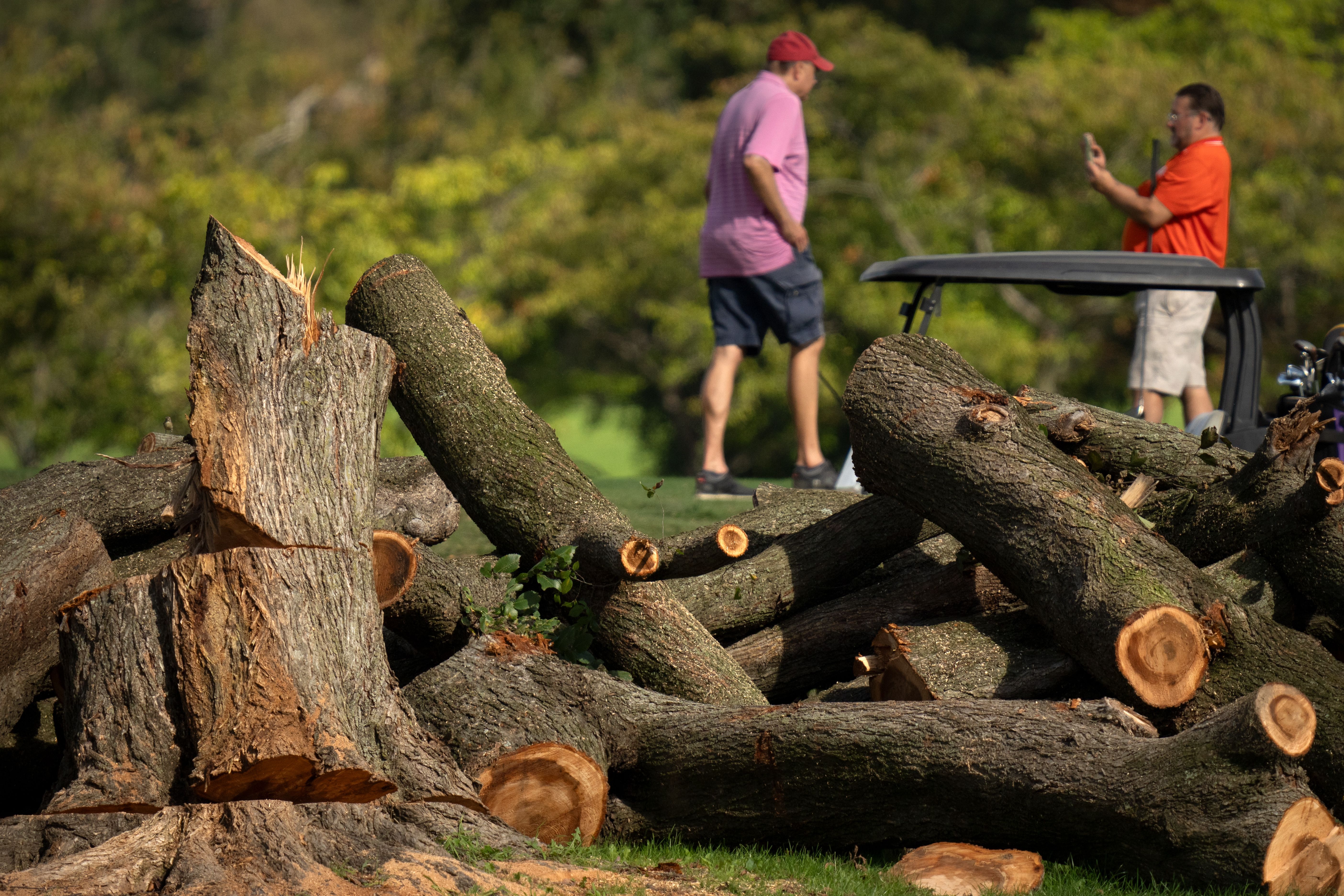
Kevin Griess, the superintendent of the National Mall and Memorial Parks, cited a 2019 National Park Service Cultural Landscape Report as the guide for the work, which he said was part of Trump's 2025 order to make D.C. safe and beautiful.
- Go deeper (WashPost gift link).
Axios AM