Axios AM

May 25, 2026

🇺🇸 It's Memorial Day, honoring the women and men who made the ultimate sacrifice for America's freedom. Thank you to those heroes and their families.
- Smart Brevity™ count: 1,388 words ... 5 mins. Thanks to Noah Bressner for orchestrating. Edited by Bill Kole.
1 big thing: Unrecognizable 2028 — our future foretold

🔮 Axios CEO Jim VandeHei pulls the camera way back in this synthesis for his weekly C-Suite newsletter:
Multiple disruptive forces will converge by 2028 — toxic political fragmentation, superintelligent AI and a platform shift bigger than social media — hitting simultaneously, not sequentially:
- 🗳️ Politics: Two wide-open, bitterly contested presidential primaries are nearly certain as both parties reimagine their platforms in real time. Old issues (jobs, inflation, the economy) will fuse with new ones (AI, growing anti-Israel sentiment, drones).
- 🤖 AI: The models will be exponentially more capable by 2028, and likely to be fully embedded in every job across every industry. It's difficult to imagine that no defining AI event has occurred — a cancer cure on the upside, a grid attack on the downside.
- ⚡️ Platform shift: Every major information platform of the last 30 years — from cable news to social media — created a new power structure. Winners got rich. Laggards got irrelevant. The shift from web to LLM-based information is potentially bigger than all of them. The next phase: hardware. Devices worn, carried or embedded will route nearly all information through AI interfaces. The smartphone made the web the default. The next devices will make the LLM the default.
- ⚖️ Inequality surge: By 2028, the top 10% will likely drive more than half of all U.S. consumer spending. The rich will get dramatically richer off AI. We may mint the first trillionaires with nation-state wealth in private hands. Imagine the politics of that.
- 💰 Debt: Based on government projections, we're staring at roughly $43 trillion in total gross national debt. Nearly 15% of all tax revenue will service debt — without being invested in anything. Congress won't act until a crisis hits.
- 🃏 Wildcards: China, an energy crunch, a new war, a climate shock. Any one of these could rewrite reality.
📈 If you're a CEO or on a CEO's team: Apply now to join Jim's new Axios C-Suite weekly newsletter. ... Share this story.
2. 🕊️ Pope urges humanity to slow down AI
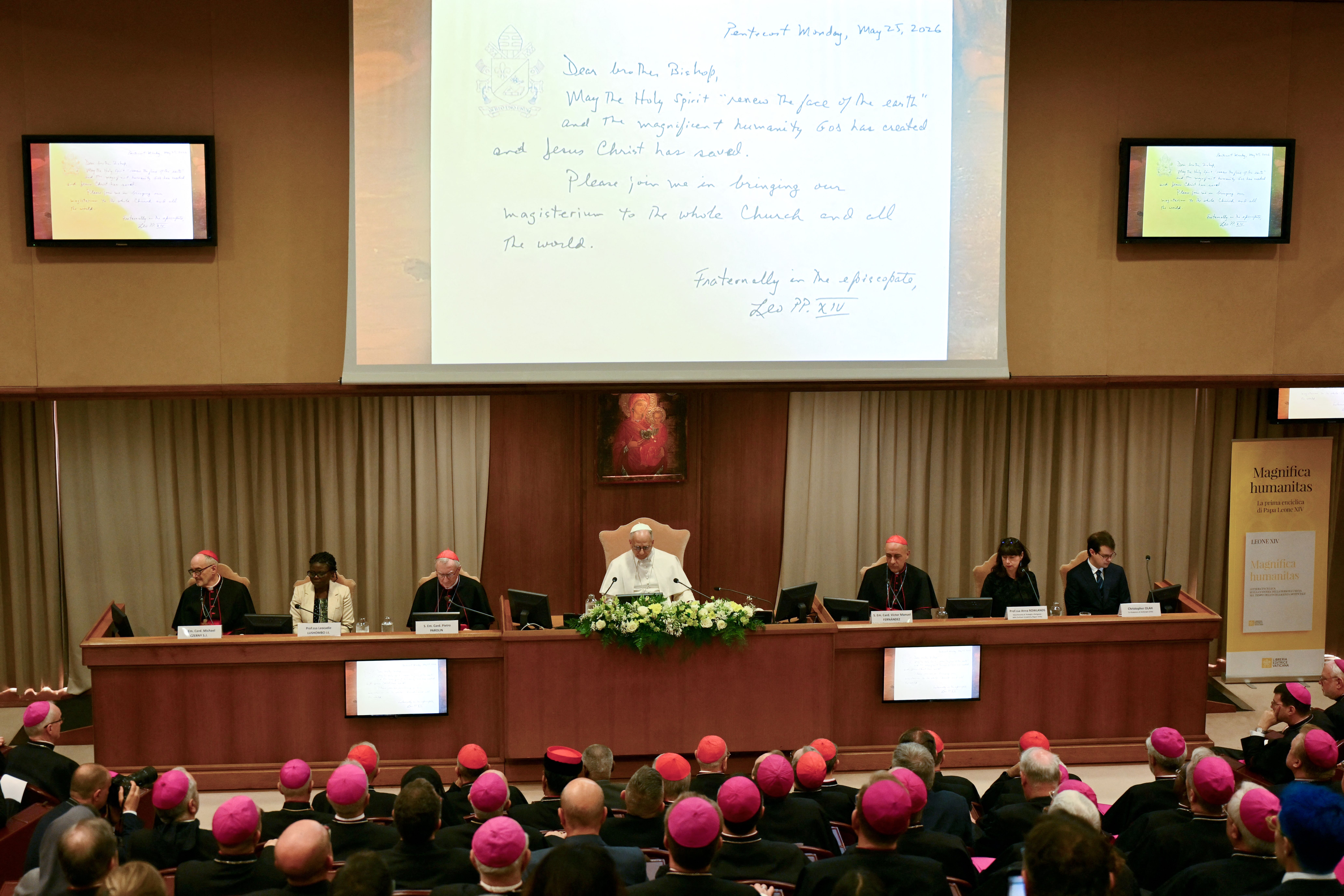
Pope Leo XIV, in his first encyclical, urged governments today to slow the development of AI systems, warning they can spread misinformation, prioritize conflict, and risk leading the world down a path of unending war.
- "What is needed is a more active political involvement that is capable of slowing things down when everything is accelerating," Leo writes in the 43,000-word text, "Magnifica humanitas" (Magnificent humanity).
- The subtitle: "Encyclical letter on safeguarding the human person in the time of artificial intelligence."
Why it matters: Leo, the first pope from the U.S., has adopted a more forceful tone in recent months. Today's manifesto made a range of impassioned appeals to world leaders, Reuters reports.
- Encyclicals are one of the highest forms of teaching from the leader of the Catholic Church's 1.4 billion members.
The pope says the biblical story of the Tower of Babel — where a human tribe, driven by pride, angers God by trying to create a tower tall enough to reach heaven — shows the risk of an enterprise that "aspires to reach heaven without God's blessing."
- "With the heart of a shepherd and a father, I ask everyone to abandon the construction of yet another Tower of Babel and to join forces in building up the common good," the pope said.
3. ⏱️ New Iran deal timeline
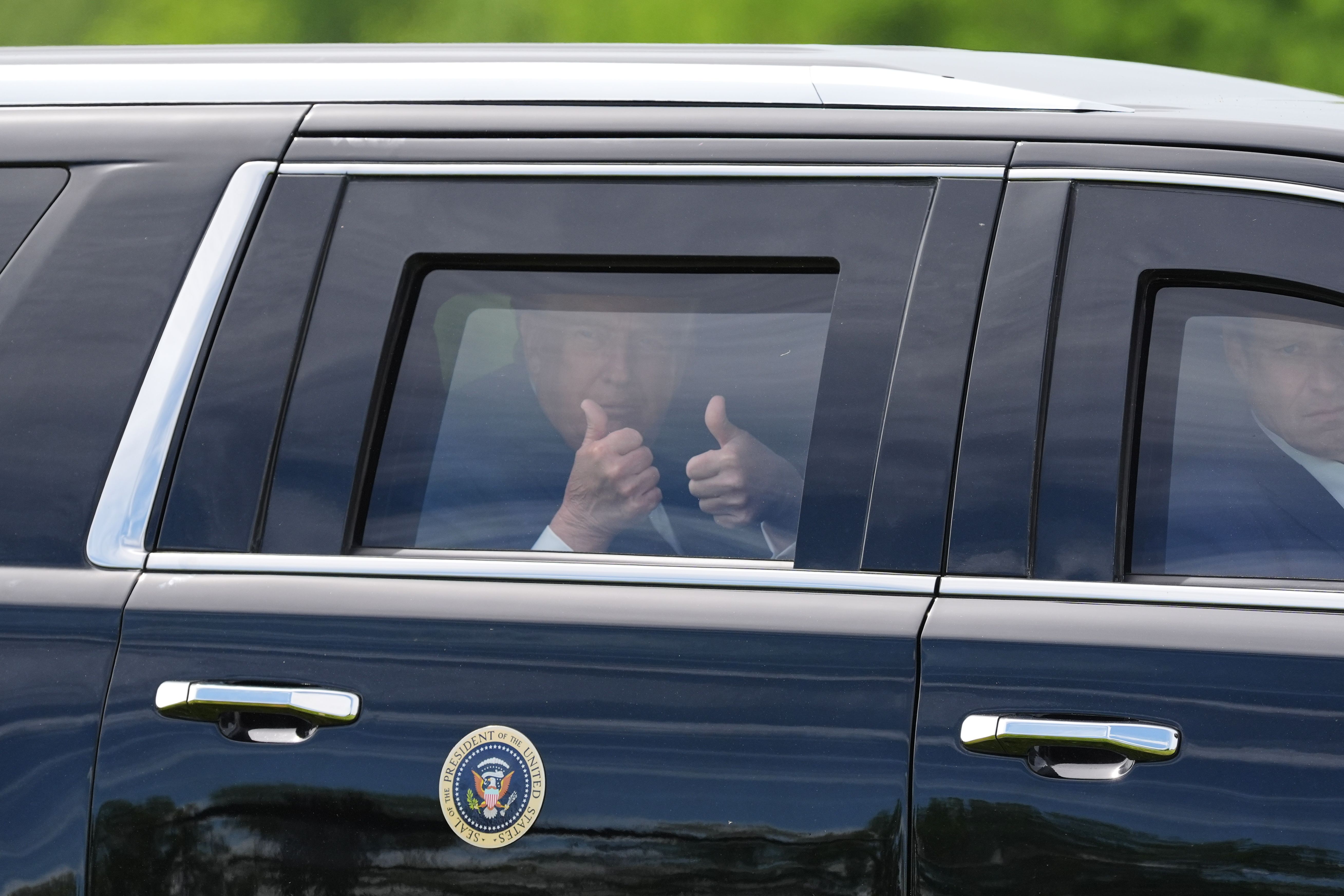
The White House thinks it could take several days for an agreement with Iran to be approved by the country's leadership, including Supreme Leader Mojtaba Khamenei, Axios' Barak Ravid reports.
- Why it matters: The deal would avoid an escalation of the war and decrease pressure on the oil supply. But it's unclear whether it will lead to a lasting peace agreement that also addresses Trump's nuclear demands.
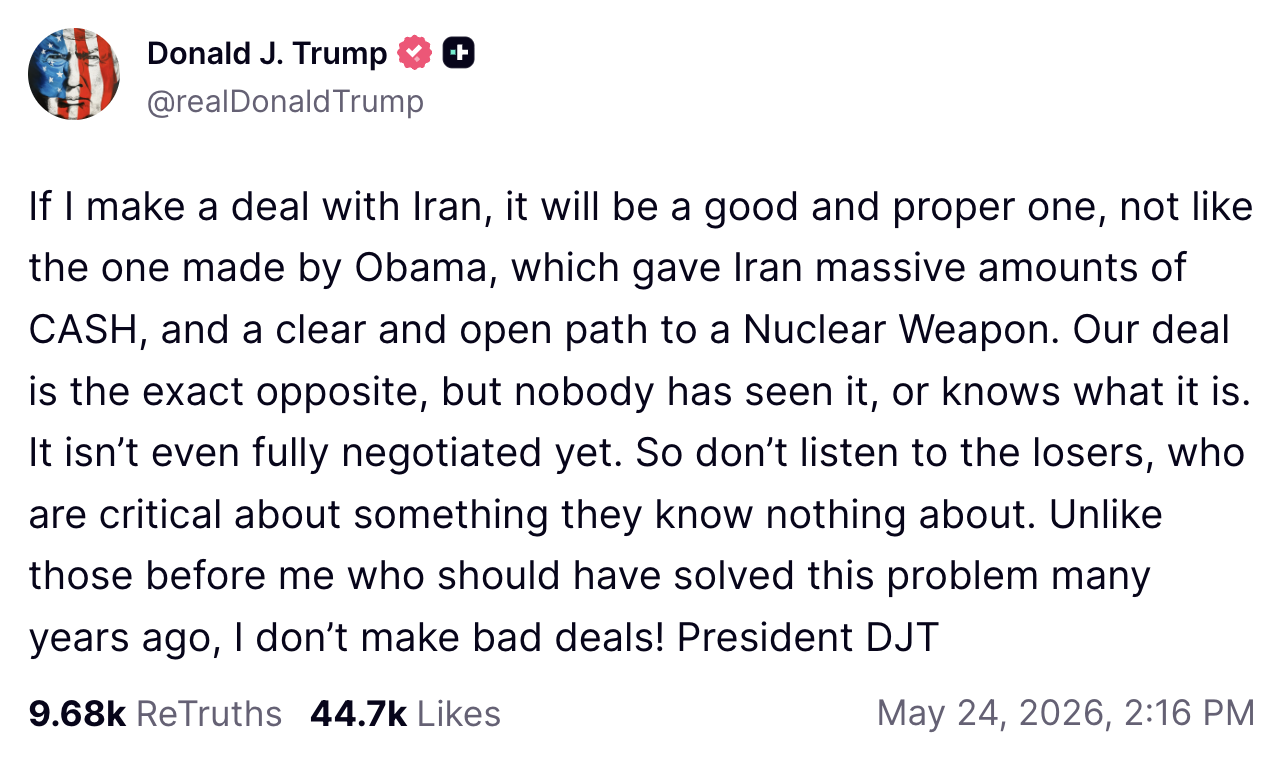
📱 President Trump said on Truth Social that he told his "representatives not to rush into a deal" to end the war.
- He said the U.S. naval blockade will "remain in full force and effect until an agreement is reached, certified, and signed."
A senior U.S. official said Iran's "slow and opaque" decision-making system could delay an agreement by another few days.
- "We are in a very good place — but there are ways in which the deal can be undermined," the official said.
👀 Behind the scenes: Trump told leaders of several Arab and other Muslim countries during a Saturday conference call that if a deal to end the Iran war is achieved, he wants their nations to sign peace agreements with Israel, per two U.S. officials with direct knowledge of the call.
- The call included the leaders of Saudi Arabia, UAE, Qatar, Pakistan, Turkey, Egypt, Jordan and Bahrain.
4. 🎖️ Oldest Pearl Harbor survivor
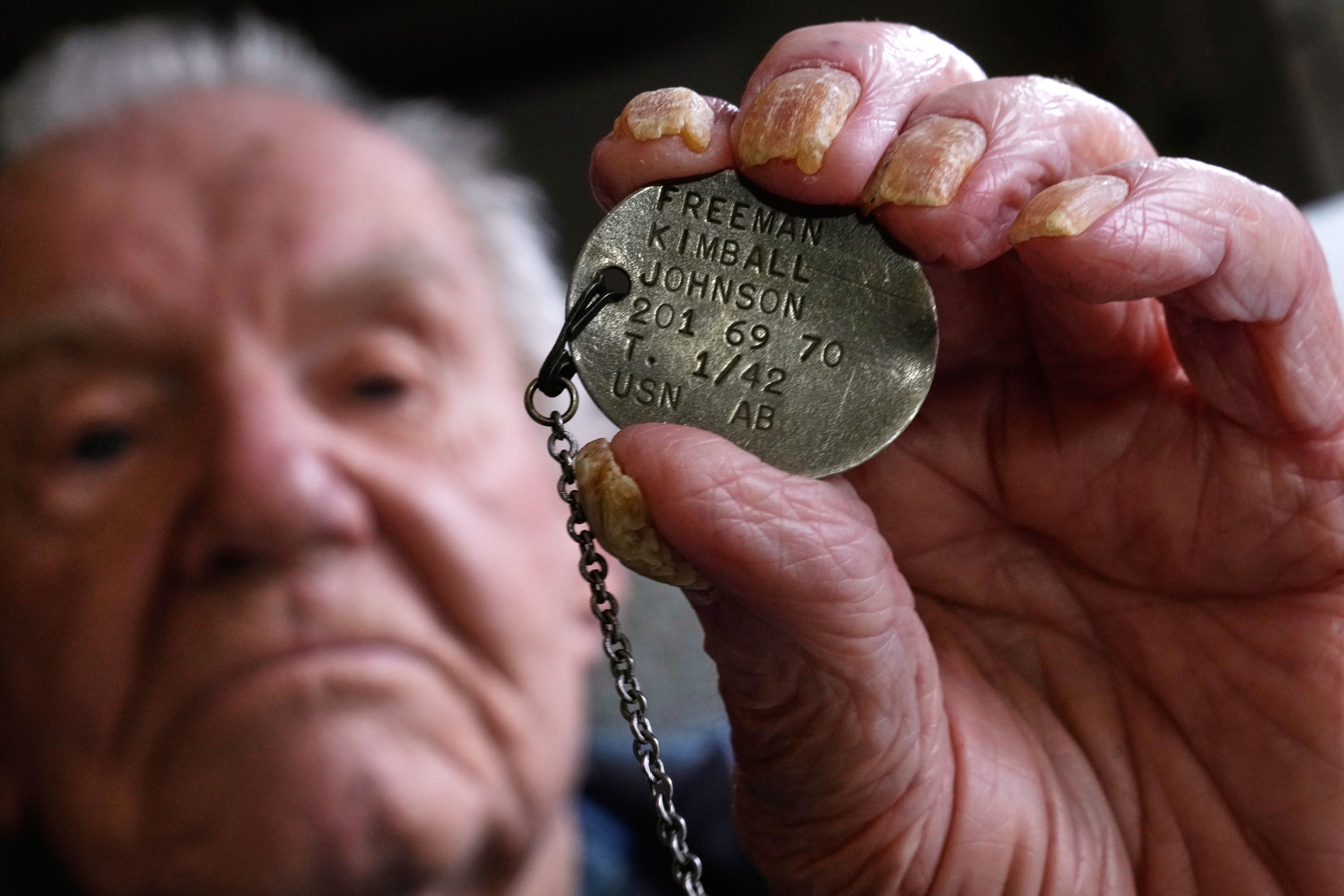
On Memorial Day, Freeman Johnson, the country's oldest living survivor of the Japanese attack on Pearl Harbor, Hawaii, is keeping the memory of the air raid alive after nearly 85 years.
- Why it matters: Johnson, who turned 106 in March, is one of just 11 remaining survivors of the surprise strike, which killed just over 2,400 Americans and propelled the United States into World War II.
Johnson — who lives in Centerville, Mass. — was far below deck helping repair one of the boilers of the USS St. Louis. By the time he was topside, the St. Louis, a light cruiser, had evaded midget submarines and safely set out to sea.
- "While all the rigmarole was going on topside, I was inside a steam drum. Couldn't see anything, absolutely nothing," Johnson said. "I was just a sailor, just a swabbie."
5. 💰 Hardest voters to reach
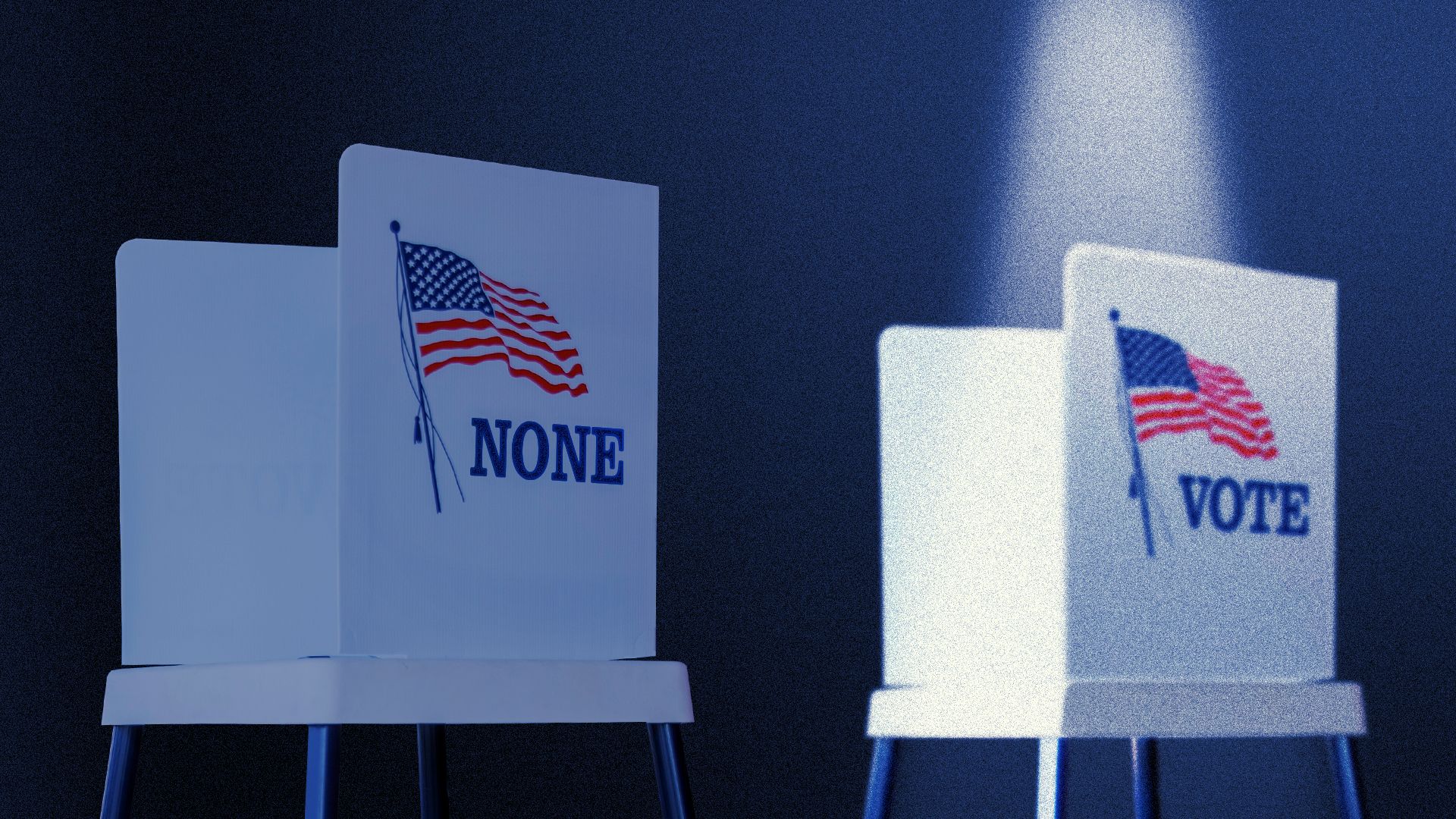
America's fastest-growing religious group is also one of the hardest, and costliest, to reach: the "nones," Axios' Russell Contreras writes.
- Why it matters: Religiously unaffiliated Americans now make up a large and growing share of the electorate. Without church-based networks, they're significantly more expensive for campaigns to reach and mobilize.
"Nones" are geographically and socially dispersed. Campaigns must rely on costly digital ads, canvassing and persuasion to reach them.
- Campaigns spent about $1.40 per nonreligious voter versus roughly 45 cents per religiously affiliated voter in 2024, Sisto Abeyta, a Democratic consultant with the Nevada-based firm TriStrategies, tells Axios.
🧮 By the numbers: A record 29% of Americans now identify as religiously unaffiliated — the largest single religious cohort, surpassing Catholics (19%) and evangelical Protestants (23%), Pew Research Center reports.
- Among Gen Z, it's even higher: 4 in 10 adults ages 18–29 are unaffiliated, according to the nonpartisan Public Religion Research Institute (PRRI).
6. 🦾 Quote du jour: AI is "underhyped"

John Doerr — iconic Silicon Valley investor and chair of the venture capital firm Kleiner Perkins — has seen it all in tech over the past 50 years, going back to the PC revolution. The Wall Street Journal asked him to finish the sentence: "The latest AI revolution is the biggest thing since … " His answer:
"Biggest thing ever. Since everything. It has been underhyped. We don't know how AI is going to shape the new world of education, employment, health care — life as we know it. ... My job as an investor is to help these entrepreneurs find, fund and accelerate their success."
Read the interview (gift link).
7. 🌯 Small vibecession splurges
Americans feeling pinched financially are splurging on small treats while economic anxiety and inflation jitters put off larger purchases, Axios' Rebecca Falconer writes.
- Why it matters: Expect lower-income households to opt for movies or staycations this Memorial Day weekend as economic conditions tighten.
🎟️ Theaters charge a national ticket average of $10.75, and $14–$20 for IMAX and premium formats. That can be an affordable splurge.
- Other vibecession winners include food-delivery services like DoorDash, which reported a 27% year-over-year increase in orders in the first quarter.
- Cosmetics are benefiting from the so-called "lipstick index" — the theory that shoppers swap big-ticket purchases for small, affordable indulgences in shaky economies.
8. 🍿 1 film thing: Big "Star Wars" opening
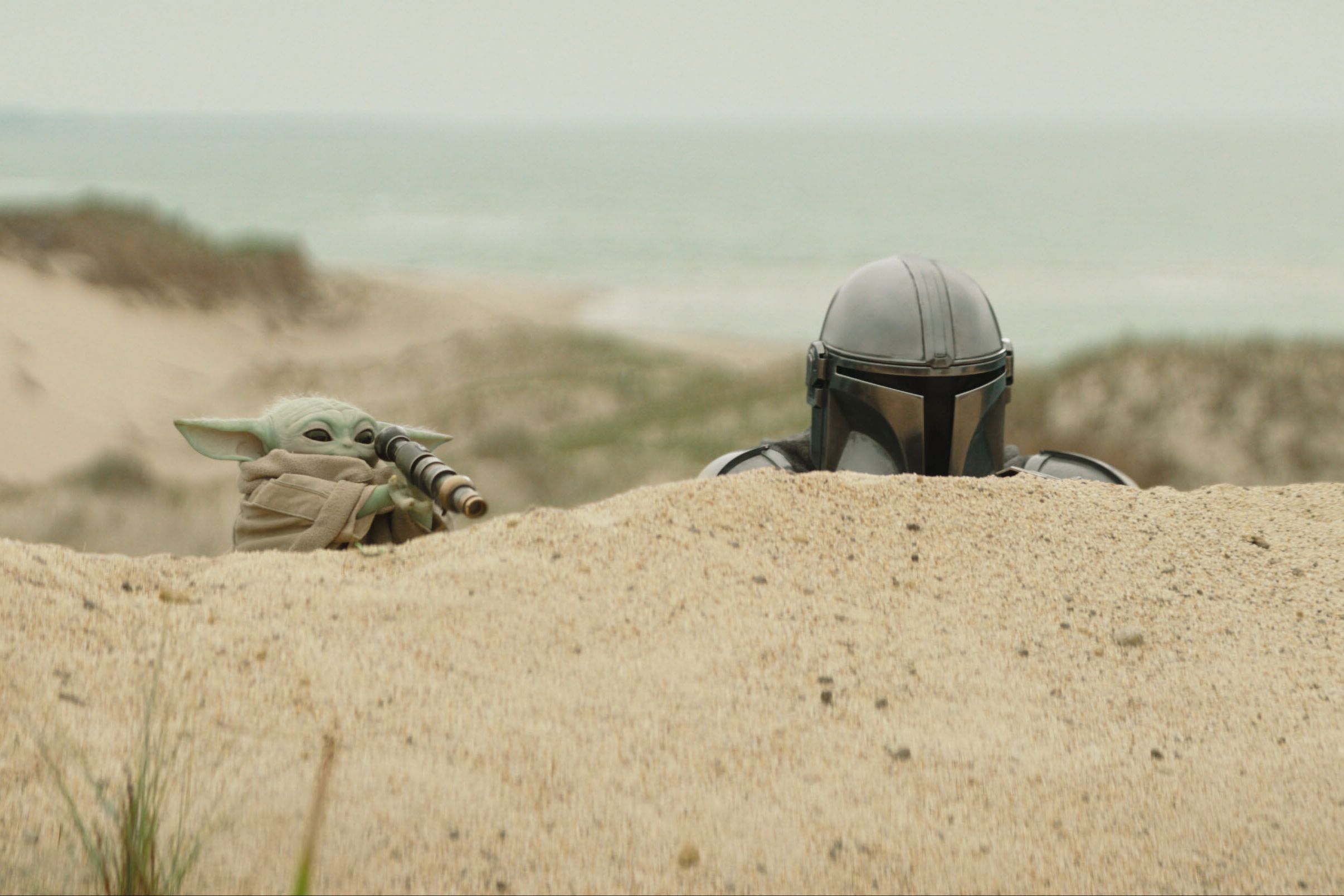
"The Mandalorian and Grogu" — the first "Star Wars" movie in nearly seven years — collected a strong $82 million in its opening weekend and an estimated $102 million through Memorial Day.
- While it's significant for any movie to debut above $100 million, "The Mandalorian and Grogu" is the worst start for a "Star Wars" since Disney bought the franchise in 2012, Variety notes.
The movie had a more modest budget than other recent "Star Wars" films.
📬 Thanks for reading! Please invite your friends to join AM.
Sign up for Axios AM