Axios AM

December 06, 2025

👋 Hello, Saturday! Smart Brevity™ count: 1,567 words ... 6 mins. Thanks to Erica Pandey for orchestrating. Edited by Andrew Pantazi.
1 big thing: How Trump flipped America's race conversation
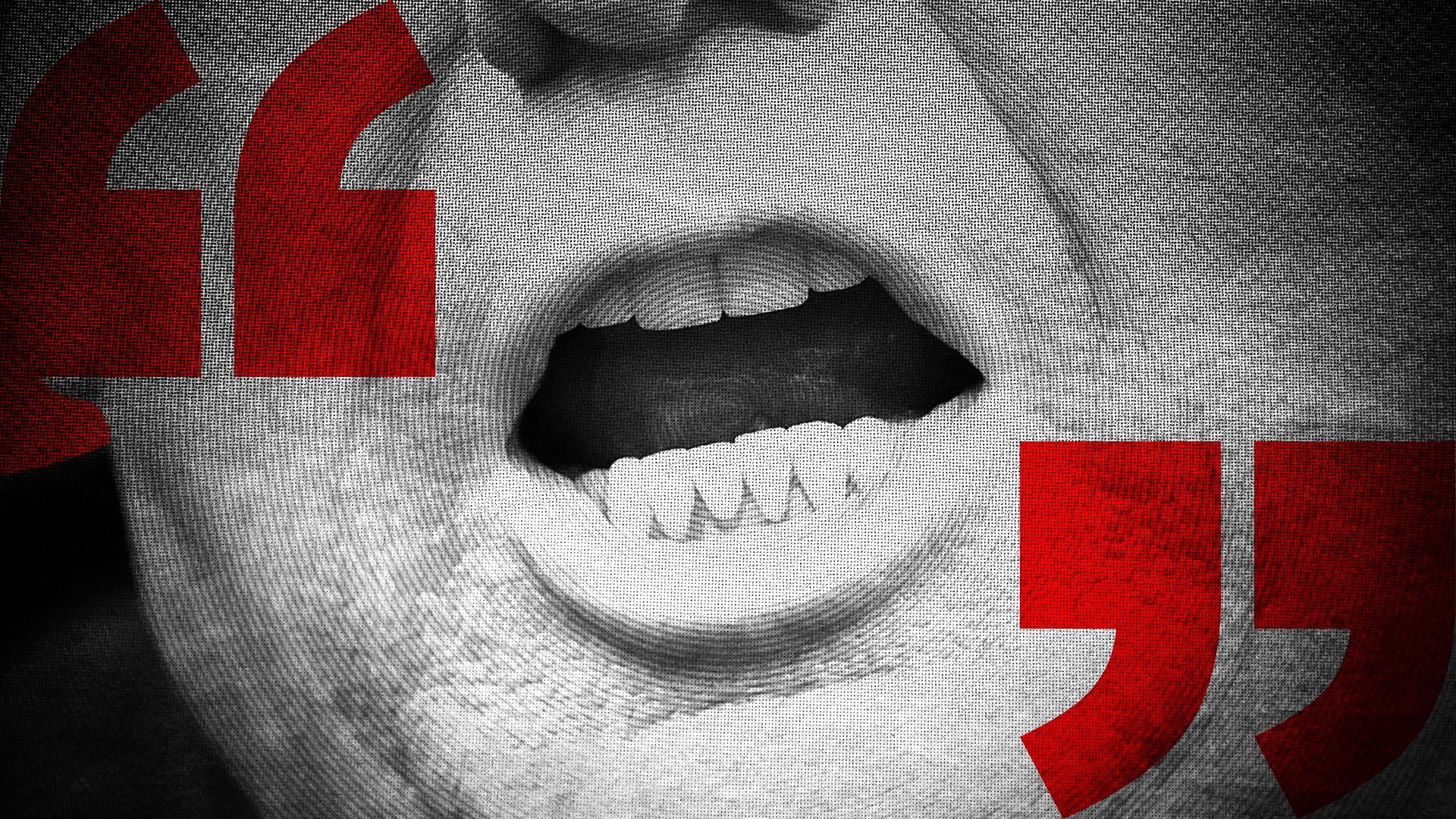
President Trump's Cabinet applauded him this week after he described Somali immigrants as "garbage" who "contribute nothing." He unapologetically condemned an entire community, with no fear of political backlash.
- Why it matters: Guardrails against racist, xenophobic or dehumanizing rhetoric have all but vanished on the American right. What was once disqualifying — or the exclusive domain of online trolls — is now a fixture of national political discourse, Axios' Zachary Basu and Russell Contreras write.
⚡ Flashback: Before Trump came on the scene in 2015, it was common in modern American politics for elected or appointed officials to face consequences for making racist or bigoted comments.
- In 2002, GOP Senate Majority Leader Trent Lott stepped down from leadership after praising Strom Thurmond's 1948 segregationist presidential campaign.
- Even during Trump's first term, Rep. Steve King (R-Iowa) was censured and removed from committees for questioning why terms such as "white nationalist" and "white supremacist" had become offensive.
But Trump himself has been largely impervious to those norms, with public outrage over his caustic language growing more muted year after year.
- Trump vaulted into political prominence by promoting the racist conspiracy theory that President Obama wasn't born in the U.S. — a playbook he revived in 2024 against other rivals of color.
- His 2016 campaign-opening claim that Mexico was sending "rapists" into the U.S. triggered weeks of national uproar, as did his leaked complaint in 2018 about immigration from "shithole countries."
🔎 Zoom in: Then came the 2024 election campaign, which blew open the Overton window on race and identity.
- Trump discarded any lingering restraint, declaring that unauthorized immigrants were "poisoning the blood of our country" (echoing a Nazi theme), and amplifying false claims that Haitian migrants in Ohio were eating pets.
Conservatives mobilized around backlash to the 2020 racial justice movement, the Biden administration's immigration policies and perceived censorship of political speech by the left.
- Trump's MAGA movement treated his 2024 win as a sweeping cultural mandate — and grew more explicit in its mission to "defend Western civilization" and preserve white Christian identity.
🔭 Zoom out: Nearly a year into Trump's second term, language that once led to denials, clarifications or resignations now circulates freely online and at the highest levels of government.
- GOP members of Congress reacted to New York Mayor-elect Zohran Mamdani's election by posting images of the 9/11 attacks and calling for the Ugandan-born Democrat to be denaturalized and deported.
- DHS and White House social media accounts now routinely mock immigrants targeted for deportation, deploying trollish memes on official channels.
- White nationalist Nick Fuentes has edged into the mainstream, with Trump defending the Holocaust denier's interview with Tucker Carlson as legitimate political dialogue.
White House Deputy Press Secretary Abigail Jackson told Axios: "It's not racist to want secure borders and to deport illegal aliens who are undermining our sovereignty and destroying our country. President Trump has never been politically correct, never holds back, and in large part, the American people re-elected him for his transparency."
2. 💥 Vaccine overhaul
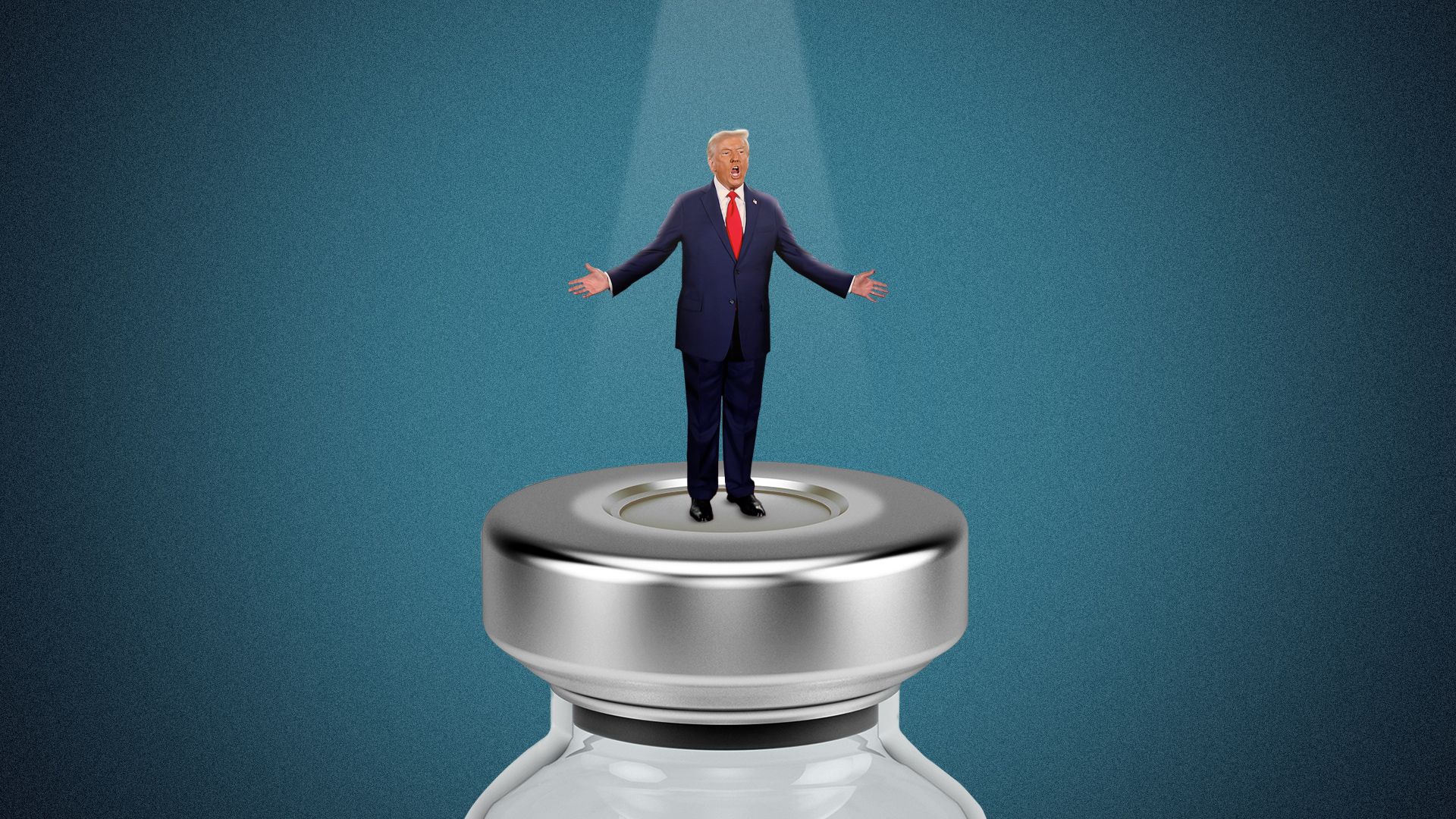
President Trump ordered his top health officials last night to review all U.S. childhood vaccination recommendations and align them with the "best practices" from other developed countries, Axios' David Nather reports.
- Why it matters: Health Secretary Robert F. Kennedy Jr. and his allies have gained the power to pursue sweeping changes in U.S. vaccine policies — driven by their embrace of discredited theories about vaccines' link to autism and other diseases.
💉 Trump's order is a vote of confidence in Kennedy's handpicked advisory panel on vaccines, which voted yesterday to drop the decades-old federal recommendation that all infants receive the hepatitis B vaccine at birth.
- The CDC panel "made a very good decision to END their Hepatitis B Vaccine Recommendation for babies, the vast majority of whom are at NO RISK of Hepatitis B," Trump wrote on Truth Social.
The American Medical Association's Sandra Adamson Fryhofer said the CDC panel's vote "undermines decades of public confidence in a proven, lifesaving vaccine."
3. 🪦 RIP billable hours
The days of lawyers and other professionals charging by the hour might soon be over.
- "As AI capabilities accelerate, the fundamental logic of charging for time spent rather than value delivered is becoming increasingly untenable," Rita Gunther McGrath of Columbia Business School writes for WSJ.
Catch up quick: Billable hours have been around since the '60s, but what began as a move to boost transparency has turned into a system that incentivizes people to rack up hours and maximize profits.
- Now, "when an AI system can review thousands of contracts in minutes rather than weeks, draft complex documents in seconds rather than hours or generate strategic analyses near-instantaneously ... the remaining human contribution shifts toward judgment, creativity and relationship management — the value of which bears little relationship to time expended."
Read on (gift link).
4. 💡 Energy milestone


More people around the world now work in producing and distributing power — making electricity from wind, solar and other sources — than in extracting and supplying fuels, like oil, gas or coal, the International Energy Agency says.
- Why it matters: It's a sign of what IEA calls the "age of electricity." Solar gigs in particular are rising quickly, Axios' Ben Geman reports.
5. 🌆 Sanctuary cities 2.0
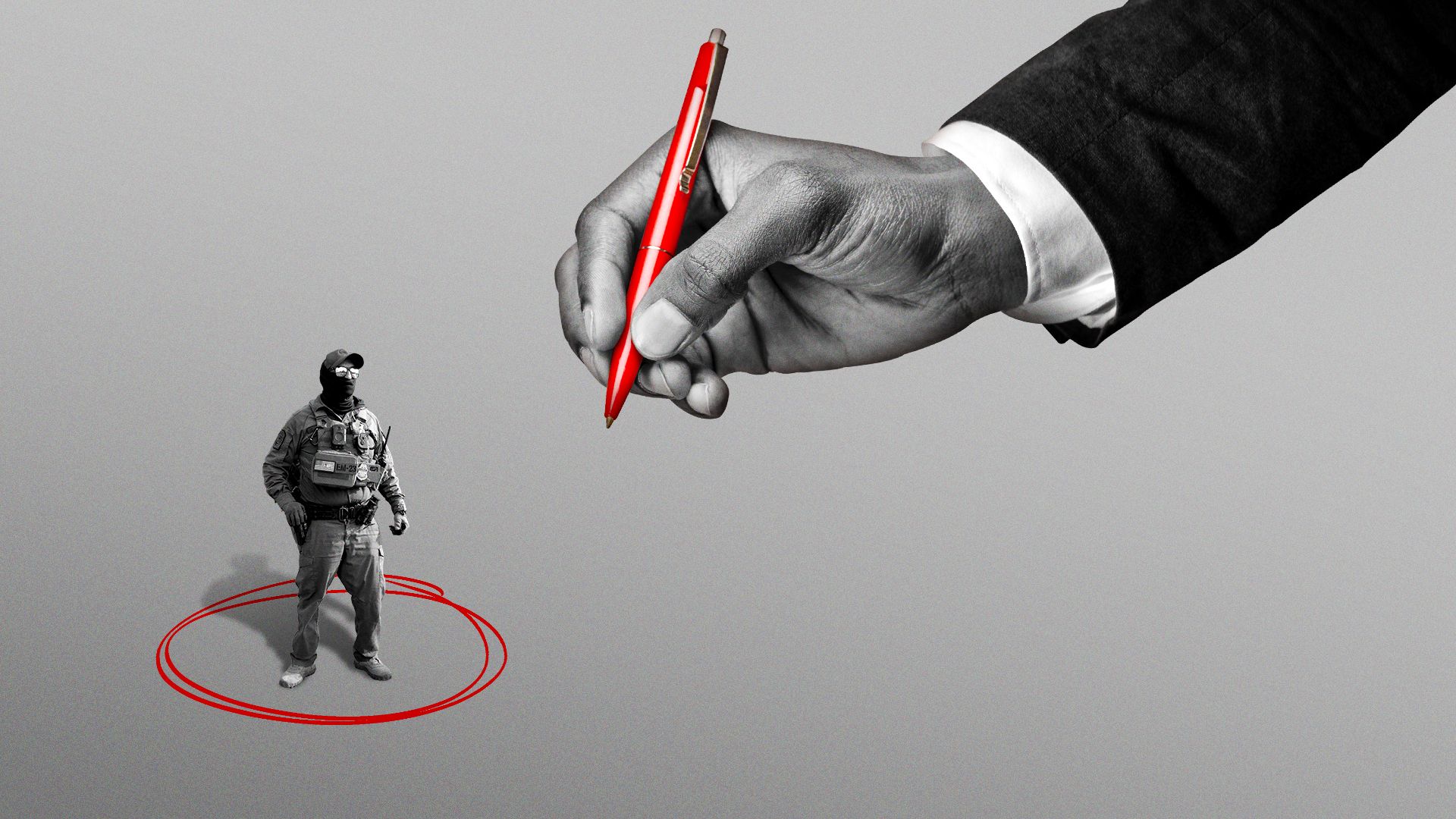
Mayors and local officials aren't just criticizing ICE raids in their cities: They're making life harder for federal law enforcement, while being careful not to go over the line.
- Why it matters: The law forbids local leaders from impeding or interfering with federal officers. But cities are finding ways to push back on unwanted immigration enforcement by the Trump administration, Axios' Brittany Gibson writes.
🔎 Homeland Security officials are getting a cold shoulder from local leaders as they decamp to New Orleans for "Operation Catahoula Crunch." The local sheriff's office won't allow ICE into its jails to make arrests or use the space for detention.
- In Minneapolis, which is bracing for an ICE operation targeting Somali immigrants over visa fraud, Mayor Jacob Frey signed an executive order this week that bans law enforcement agencies "from using any City-owned parking lots, ramps, garages, or vacant lots to stage civil immigration enforcement operations."
- In Chicago, Mayor Brandon Johnson issued a similar ban on using city-owned space for any immigration enforcement operations.
- LA County officials approved an emergency declaration that will cover living expenses for people who miss work because they fear immigration raids. It started accepting requests for aid this month.
6. 🌍 Europe's drone panic
The latest in a string of mysterious incursions into high-security European airspace: French forces responded Thursday night to unknown drones flying over a military base that hosts nuclear-armed submarines, Axios' Colin Demarest and Dave Lawler report.
- The big picture: The incidents have sparked suspicions of Russian hybrid warfare — but Moscow has not been directly implicated and little is known thus far about the incident in western France.
👀 Three days earlier, five large drones were spotted near Dublin Airport along the flight path of the arriving Ukrainian president, Volodymyr Zelensky, according to Irish media.
- Drone sightings forced airspace closures in Belgium in November and in Denmark, Norway and Germany in September.
Reality check: Critical infrastructure — military bases, power stations, airports and more — is largely unprepared for today's drone threat.
- Stateside drone mania this time last year underscored just how fragmented policy, communications and countermeasures are.
7. ⚾ Hall of Fame quest

Rick Klein, a baseball fan who also happens to be Washington bureau chief for ABC News, usually covers political campaigns. But recently he's been working on a different sort of campaign: He's trying to get his hero, Dale Murphy, elected to the Baseball Hall of Fame.
Why it matters: Murphy played for the Braves. But his fans are everywhere, in part because media mogul Ted Turner owned the Braves and broadcast their games nationally on TBS, the "superstation."
- "[F]or much of the '80s, American households with cable could watch more Braves games than those of any other professional franchise," Klein, who grew up in New York, writes.
- "He was the all-American good guy on some pretty bad Atlanta Braves teams, a superstar on the field and off."
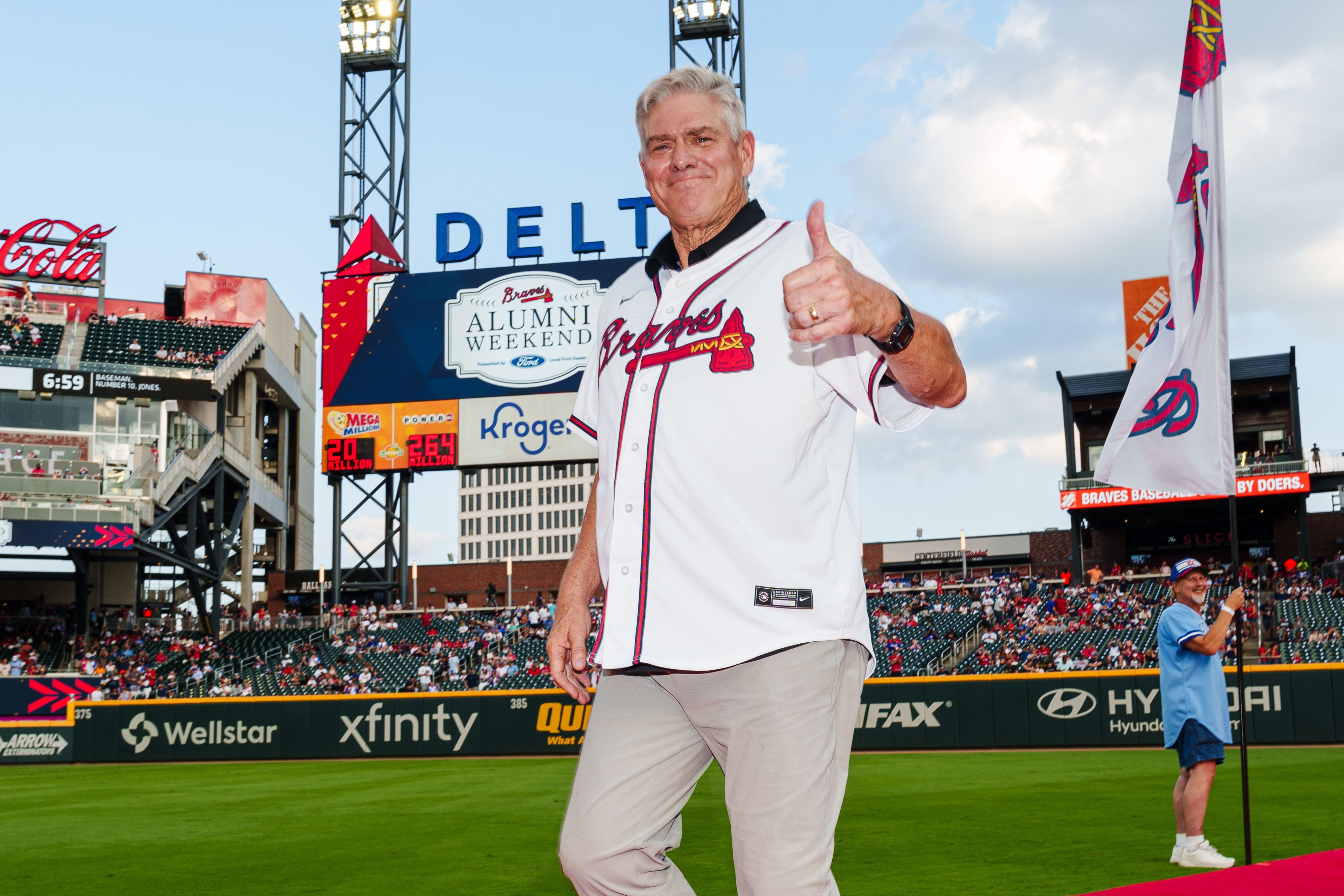
A vote tomorrow will decide if Murphy will claim his place in the Hall of Fame.
- Among those rooting for him: Govs. Brian Kemp of Georgia, Spencer Cox of Utah, and Ron DeSantis of Florida, Rep. Ro Khanna (D-Calif.), "House of Cards" actor Michael Kelly, rapper Killer Mike and country superstar Jason Aldean.
The bottom line: "No matter what happens in the final vote, [this effort has] already resonated in a way that's deeply meaningful for Murphy's countless fans, as well as the man himself," Klein writes.
- More on Klein's "fan campaign for baseball immortality."
8. 🎬 1 for the road: Best flicks of '25

2025 was a good year for moviegoers:
- Filmmakers working in and out of the studio system managed to make bold, personal, wildly imaginative and singular works, and audiences showed that they still crave the theatrical experience, AP film writers Lindsey Bahr and Jake Coyle write.
The movies that earned a spot on both of their "favorites" lists (with links to official trailers):
- "One Battle After Another" from Paul Thomas Anderson.
- "Marty Supreme" from Josh Safdie and Ronald Bronstein (Timothée Chalamet in a table-tennis tale; in theaters Christmas Day).
- "It Was Just an Accident" from formerly imprisoned Iranian filmmaker Jafar Panahi, who filmed in secret.
- "Sinners" from Ryan Coogler.
📬 Thanks for reading! Please invite your friends to join AM.
Sign up for Axios AM