Axios AM

March 08, 2025

1 big thing: Trump's Taiwan mystery
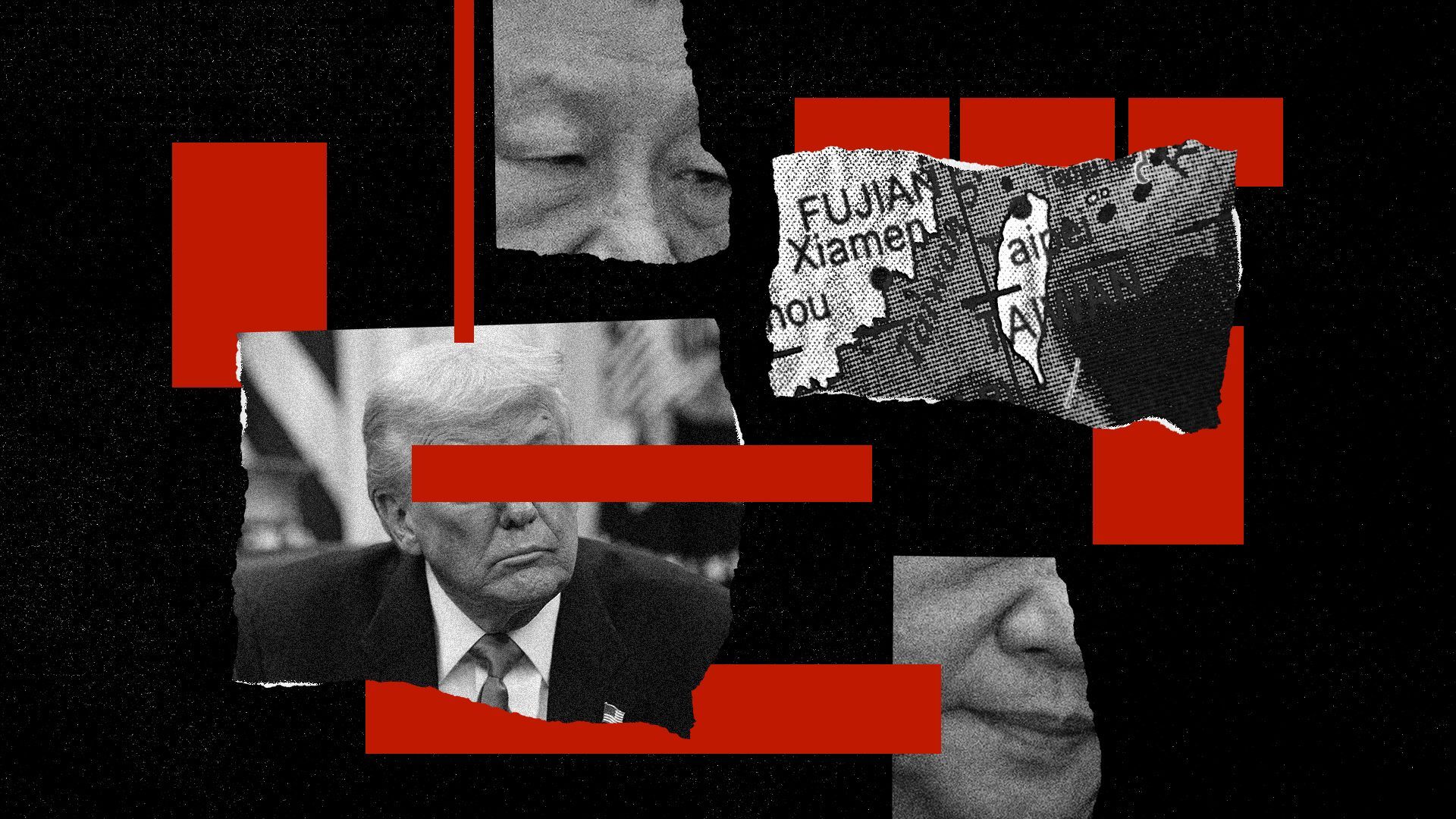
President Trump's dismantling of the U.S.-led global order has injected deep uncertainty — and perhaps fresh opportunity — into China's timeline for a potential invasion of Taiwan, Axios' Zachary Basu reports.
- Why it matters: U.S. officials have long been fixated on 2027 as the year Xi Jinping would be ready to move on Taiwan, citing military modernization goals tied to the 100th anniversary of the People's Liberation Army.
👀 Trump — while acknowledging a Chinese invasion would be "catastrophic" — has been purposely opaque about whether the U.S. would defend Taiwan in such a scenario.
- "I never comment on that," Trump said this week when asked if it was his policy that China will never take Taiwan by force. "I don't want to comment on it because I don't want to ever put myself in that position."
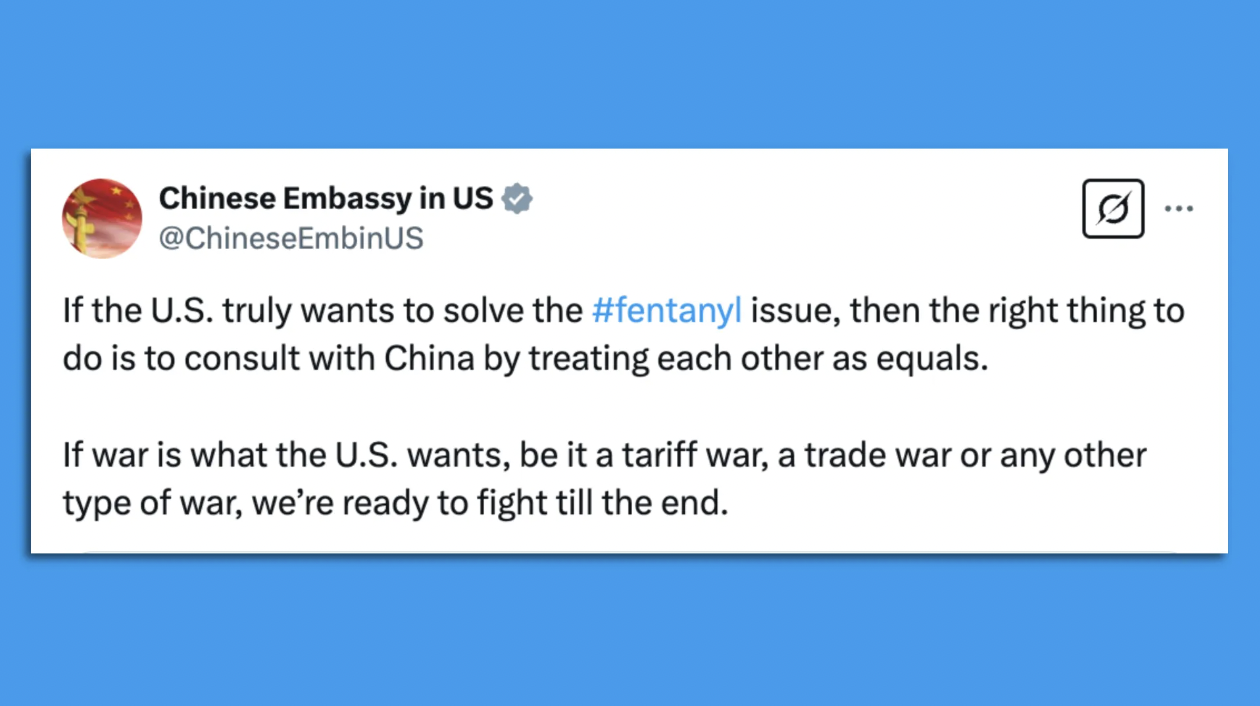
Beijing has stepped up its saber-rattling toward Taiwan, pledging at the annual National People's Congress this week to "firmly advance the cause of China's reunification" and boost defense spending by 7.2%.
- In a sign of mounting tensions, China's embassy in the U.S. warned this week that "if war is what the U.S. wants, be it a tariff war, a trade war or any other type of war, we're ready to fight till the end."
The big picture: U.S. presidents have had a long-running policy of "strategic ambiguity" on the question of military intervention to protect Taiwan. But under Trump 2.0, it has become a true mystery.
- Trump's approach toward Ukraine has dispelled the notion that he would defend Taiwan solely for the sake of shielding a democracy from authoritarian aggression.
💻 Zoom in: Unlike Ukraine, Taiwan plays a pivotal role in the global economy, with its crown jewel chip-maker, TSMC, manufacturing more than 90% of the world's most advanced semiconductors.
- Global dependence on TSMC has long been considered a powerful deterrent against Chinese aggression, but Trump has treated the company's dominance as a personal affront.
"Taiwan took our chip business away," Trump told reporters last month. "We had Intel, we had these great companies that did so well. It was taken from us. And we want that business back."
2. 💥 Stephen Miller's outside army
3. 🧪 Trump on truth serum ...
... plus Jim and Mike's latest thinking on Musk, AI and Dems.
- Subscribe here to get today's test of a members-only analytical memo as part of our Axios AM Executive Briefing.
4. 🤖 AI hotspots


New York, Seattle and San Jose had the most overall AI job openings this past January, a University of Maryland project finds.
- If you're looking for an AI job, the country's long-standing tech hotspots are hard to beat, but D.C. and Dallas are also promising, Axios' Alex Fitzpatrick writes.
5. 🚢 Trump is Ship Man
President Trump is ship obsessed, Axios' Colin Demarest reports.
- He's texting about rust into the wee hours of the morning, according to John Phelan, his pick to be Navy secretary.
- In Trump's address to Congress, he announced plans for a White House shipbuilding office, spanning both commercial and military sectors.
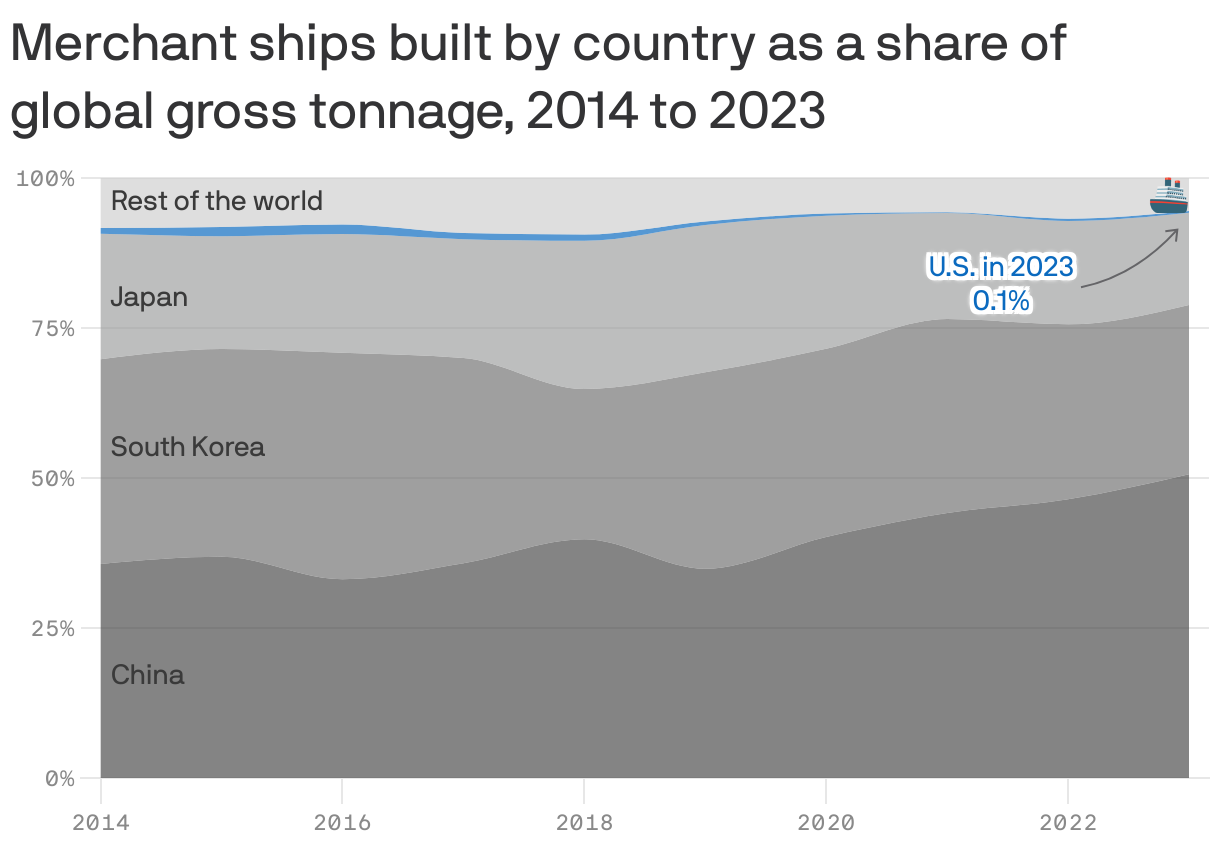
🇨🇳 Why it matters: Amid years of American atrophy — shuttered shipyards, workforce woes accelerated by the pandemic, abandoned guns and schedule overruns — China has cornered the market.
- Beijing's capacity is hundreds of times larger than Washington's.
- That spells trouble in the Indo-Pacific, a watery region where military leaders and Beltway diviners believe a war over Taiwan could erupt as soon as 2027.
Trump vowed in his address to "resurrect the American shipbuilding industry."
- "We used it to make so many ships," he said. "We don't make them anymore very much, but we're going to make them very fast, very soon."
- But details on the office — exactly how it would work and how far it would reach — are scarce. The president did mention tax incentives.
📉 Flashback: The U.S. built thousands of cargo ships during World Wars I and II, according to a 2023 congressional report.
- "In the 1970s, U.S. shipyards were building about 5% of the world's tonnage, equating to 15-25 new ships per year."
- "In the 1980s, this fell to around five ships per year, which is the current rate of U.S. shipbuilding."
6. 💰 Bessent's 41-min. marathon
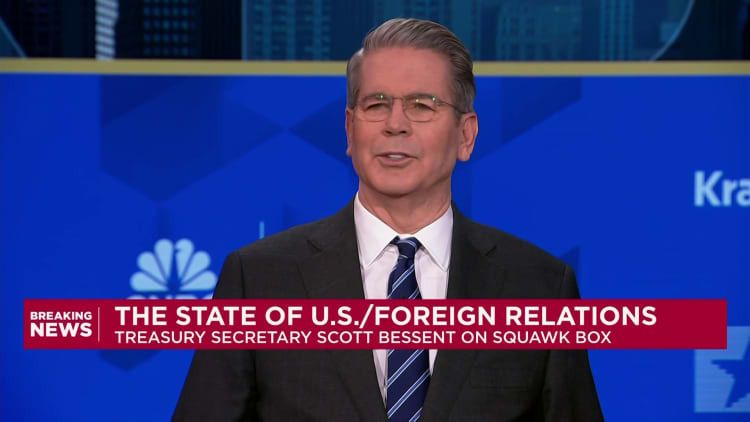
Treasury Secretary Scott Bessent talked with CNBC's "Squawk Box" yesterday for 41 minutes, with no commercial break, to try to reassure markets after President Trump's herky-jerky week of tariff reversals.
Why it matters: CNBC's Steve Liesman said after the interview that Bessent had been "calm and stabilizing and cogent ... with all of his answers."
- "There's a lot of concern out there — a lot of turmoil, a lotta chaos," Liesman added. "Tariffs are on, tariffs are off — tariffs are partly on, tariffs are partly off. You don't know what's going on. People are desperate for a little stability out there."
🗽 On Thursday, Bessent showed the administration's aggressive vision when he told the Economic Club of New York that Trump aims for both rebalancing the international economic system and "the re-privatization" of the U.S. economy.
- "The president has already begun a campaign to rebalance the international economic system ... to advance the interests of the American people," Bessent said, mentioning his small-town South Carolina roots.
Bessent spelled out three pillars of Trump's America First agenda that are all "linked by the primary vision of this Administration, that every decision and policy of the United States Government should serve the American people":
- "[R]esponsibly deregulating the financial sector to accelerate what I call the re-privatization of the economy."
- Bessent defended Trump's tariffs as part of an America First Trade Policy designed to reorient international economic relations: "To the extent that another country's practices harm our own economy and people, the United States will respond."
- Economic security and national security "are inseparable. At Treasury, our unique financial tools are a critical component of U.S. foreign policy."
Watch full "Squawk" interview ... CNBC transcript ... Read the New York speech.
7. 🕯️ 60 years since "Bloody Sunday"
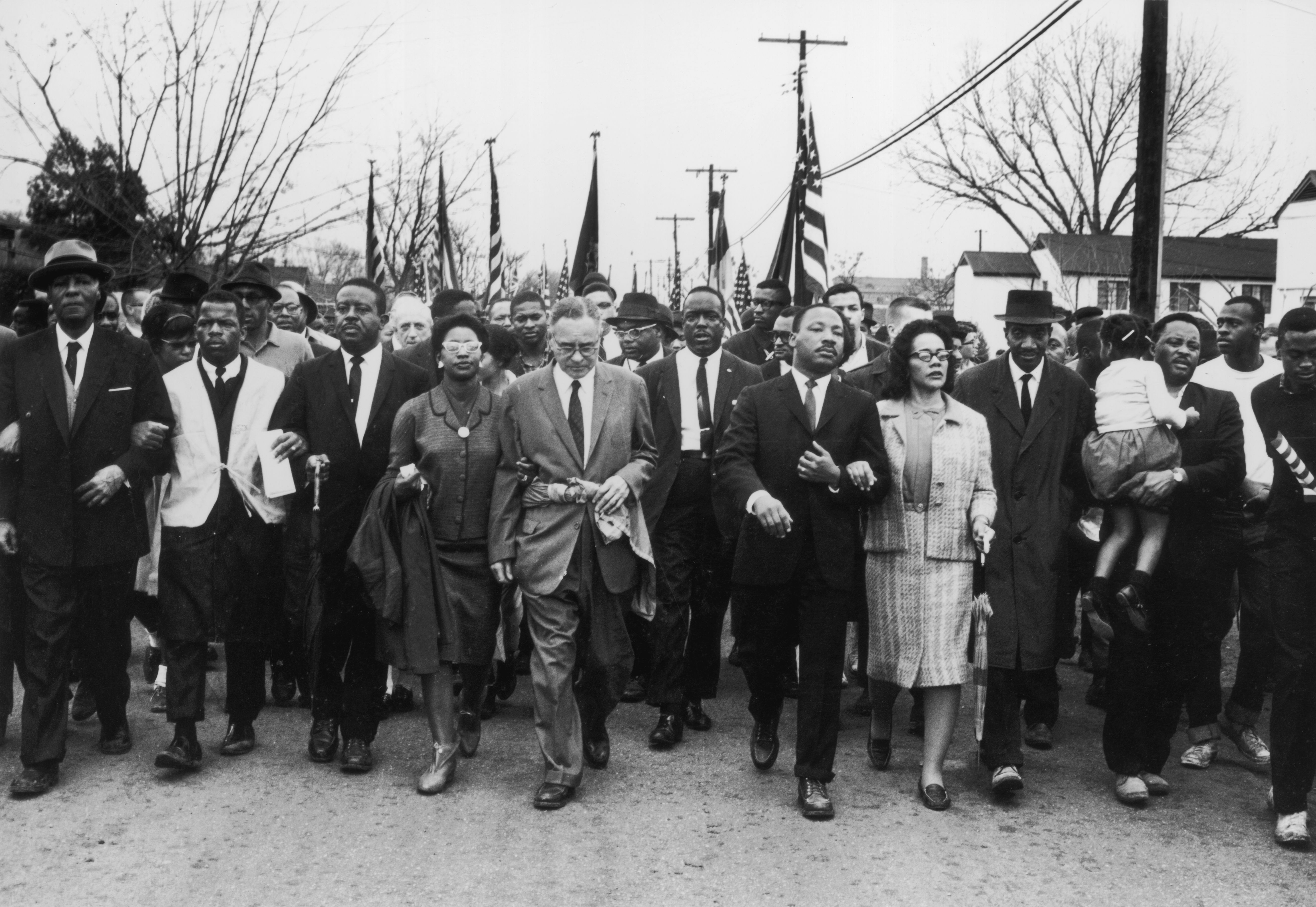
Advocates are gathering in Selma, Ala., this weekend to mark the 60th anniversary of "Bloody Sunday" amid fears of a rollback on voting and civil rights, Axios' Delano Massey and Russell Contreras write.
- Why it matters: The commemoration comes after President Trump gutted nearly all federal affirmative action programs while ordering agencies to dismantle diversity, equity and inclusion (DEI) initiatives.
- The once-routine reauthorization of the Voting Rights Act — a law initially inspired by the brutal beatings of protesters at the Edmund Pettus Bridge in Selma 60 years ago — remains stalled in Congress with little hope of passage under GOP control.
📈 Stat du jour: Since the events in Selma, the number of Black Americans elected in the U.S. has jumped from just a few in 1964 to about 9,000 today.
- Most Black elected officials are aligned with the Democratic Party, but Black Republicans have won high-profile races in Kentucky, New Mexico and California.
8. 🐆 1 fun thing: Unlikely BFFs

At the Metro Richmond Zoo, a cheetah's best friend and emotional support animal is a Labrador Retriever.
- Kumbali the cheetah and Kago the Lab-mix are celebrating their 10th birthdays — and a decade of being besties — in May, Axios Richmond's Sabrina Moreno writes.
The duo were paired together in 2015 because Kumbali needed a friend, and like most cheetahs, he's an anxious scaredy cat.
- Labradors are known for being chill, social and friendly, which is why U.S. zoos often bond them with cheetahs as puppies.
Axios AM