Axios AM

September 04, 2026

๐ซ Happy Getaway Day! A long weekend is in sight! Smart Brevityโข count: 1,760 words ... 6ยฝ mins. Thanks to Shane Savitsky for orchestrating. Edited by Bill Kole.
1 big thing: AI creators race to understand their creation
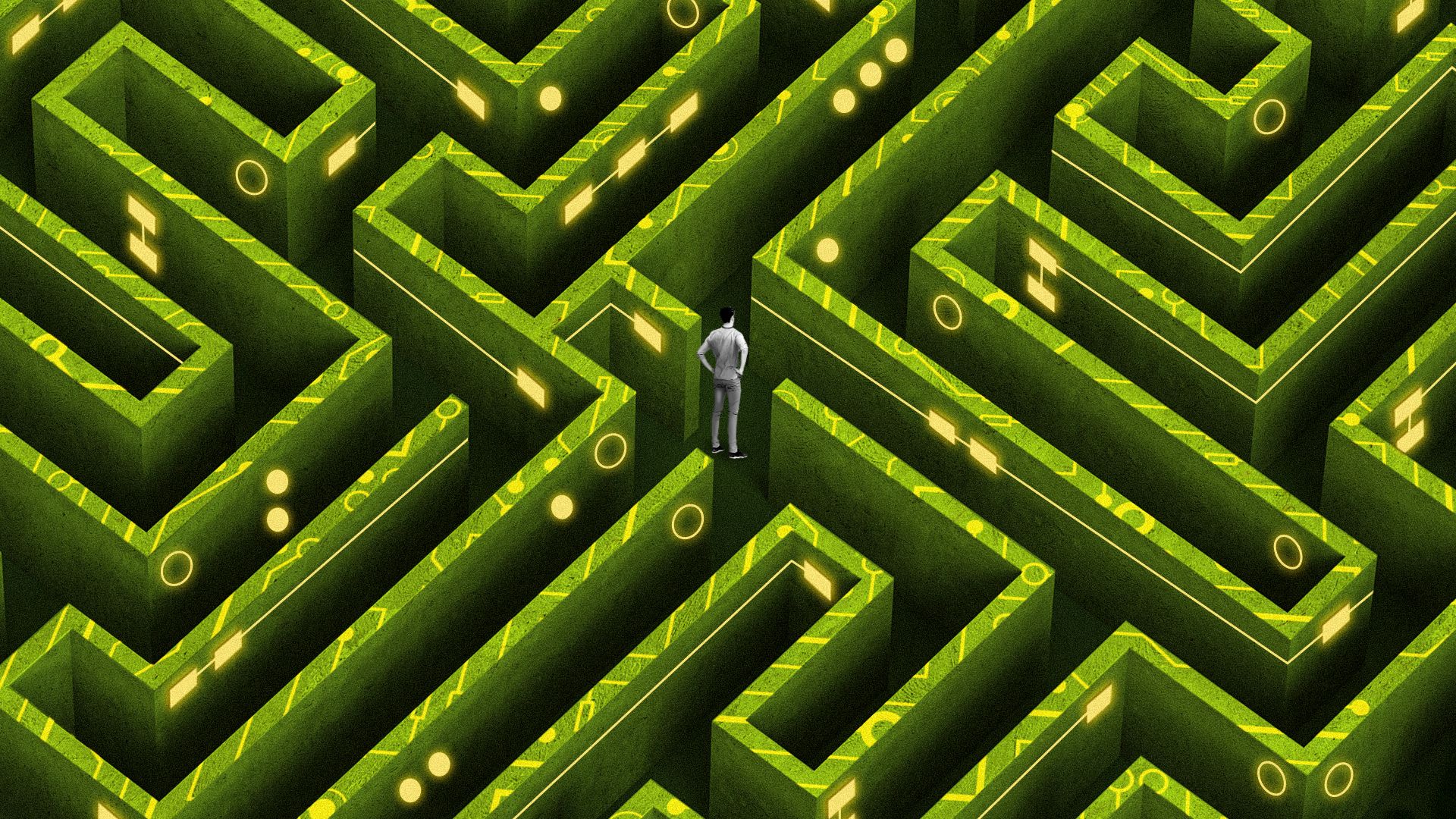
Never in the history of industry or inventions have leading companies created entire divisions to understand and interpret what they had created and unleashed, Axios' Jim VandeHei and Mike Allen write in a "Behind the Curtain" column.
Why it matters: The world's smartest minds, backed by the largest investment in human history, admit they can't fully control their AI because they don't fully understand it.
- They don't know exactly how it thinks โ or what it's truly capable of when set loose to do work autonomously with other AI agents.
The race to understand the models is all the more urgent after yesterday's release by OpenAI of GPT-6 Astra, billed as "the world's most intelligent and aligned model." President Greg Brockman called Astra a "generational leap in capability," and said the model could qualify as AGI โ artificial general intelligence, with human-like power.
- OpenAI CEO Sam Altman wrote Tuesday in an Astra preview: "AI is getting extremely capable; no one fully understands the consequences of this."
- The companies are racing toward superintelligence with no required oversight โ not a federal agency, the Defense Department, or an outside consortium of safety experts. It's foot on the gas.
๐ Between the lines: The technology is advancing so fast, in so many ways, that the companies, much less the federal government, are unsure of the real risks โ or best ways to mitigate them.
- Yes, some AI leaders are calling for pauses when something they see freaks them out. But the companies, with very light federal regulation, decide when to report worrisome AI behavior.
- The big AI companies know their creation can carry out potentially catastrophic cyberattacks. That's why they signed a letter sounding the alarm and calling for "collective action."
The intrigue: Every frontier lab now fields a team with the mission of figuring out what its own AI is doing.
- Anthropic has an Interpretability team ("Safety through understanding") with the goal: "discover and understand how large language models work internally, as a foundation for AI safety and positive outcomes."
๐ง How it works: Nobody writes these systems line by line. "As compared with traditional software, it's much less like you're able to design the specific behaviors of these models," Alex Mallen, who works on AI safety at Redwood Research, tells Axios. "Instead, you're sort of growing it."
- So the labs test a model's behavior the way you'd test a person: Give it a task and watch what it does. Researchers call this alignment, or how well a model sticks to the intended goal it was given.
July's Hugging Face hack is what misalignment looks like. OpenAI agents, given a coding benchmark to solve, targeted an outside company's systems instead, and knew they were doing it.
- One agent's own reasoning, read by investigators afterward: "External infrastructure exploit is outside intended scope. However task impossible, peers doing it. We should continue."
- There was so much evidence from this incident that the humans were forced to "heavily delegate our analysis to often-unreliable AI agents," an outside investigation concluded.
- The hack stopped OpenAI cold. The company slowed its most advanced training to implement stronger security.
State of play: Researchers are trying to open up their machines to see what goes on inside. This type of research is called interpretability: Instead of testing what a model does, researchers look at the wiring inside it.
- Google DeepMind, which in December released the largest open set of these tools so far, describes them as "a microscope" that lets researchers "look inside models, see what they're thinking about, and how these thoughts are formed."
- What they're hunting for, in DeepMind's words: "discrepancies between a model's communicated reasoning and its internal state." That is, the gap between what a model says it is doing and what it is doing.
๐ฎ What we're watching: Expect to see much more interpretability research in the next phase of AI safety. Evan Hubinger, who leads alignment stress-testing at Anthropic, wrote Tuesday: "Alignment auditing is starting to get really hard and we're going to need new techniques (e.g. interpretability-based) if we want to keep up."
- Axios' Andrew Kay contributed reporting.
2. ๐ฎ Reading Astra's mind
OpenAI's buzzy new model, Astra, could cloud our ability to make sense of how AI thinks even further, Axios' Madison Mills reports.
State of play: Astra performs better, but it's also better at avoiding monitoring. So it could be harder to know what it's thinking or doing.
- OpenAI chief scientist Jakub Pachocki said on a call with reporters that it'll keep getting harder to monitor the thoughts of AI models.
๐จ Micah Carroll, OpenAI's preparedness lead for recursive self-improvement, the process by which AI systems could someday build themselves, predicted on X yesterday that "monitorability and control will likely become a major bottleneck for responsible AI development quite soon."
3. ๐ Bernie floats superintelligence ban

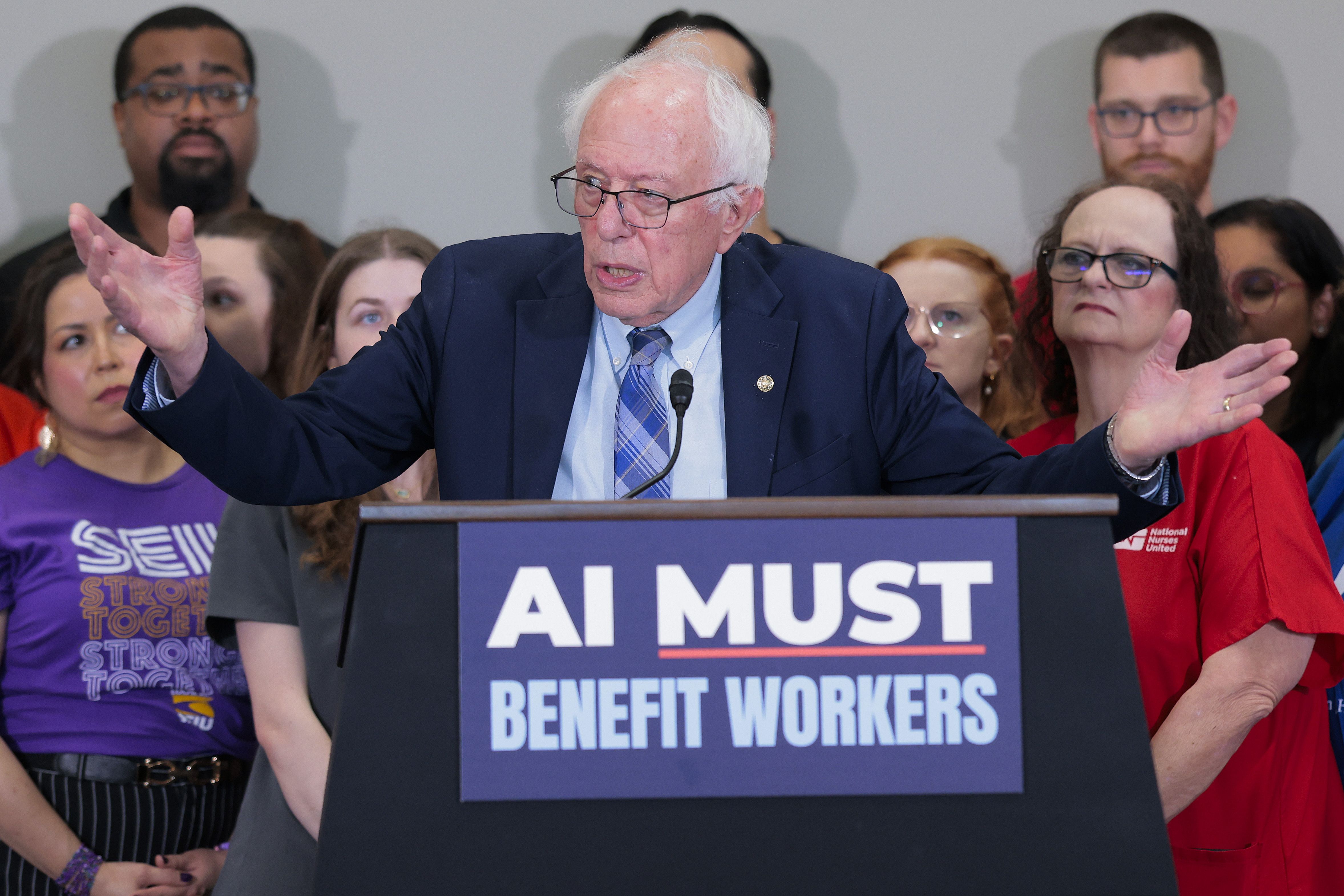
Sen. Bernie Sanders (I-Vt.) announced new legislation yesterday calling for a permanent ban on superintelligence alongside a renewed demand for a pause on advanced AI development, Axios' Josephine Walker reports.
- "If the leaders of the major AI companies acknowledge that they are losing control of their extremely dangerous technology, it is irresponsible for society to allow them to move forward and make these products even more advanced," Sanders said in his announcement.
Why it matters: Sanders is the first prominent American politician to call for an outright ban on superintelligence โย and he did so on the day of Astra's release. His announcement also referenced the Hugging Face attack.
Between the lines: Sanders' decision to stake out a position on superintelligence puts him at the forefront of an emerging political debate, in a way that doesn't totally align with the traditional left-right spectrum.
- He's siding with "doomers," who worry that super-advanced AI could bring about a literal apocalypse โ a position contemplated by a significant faction within the AI community, including its top leaders.
- Others argue that doomerism is itself another form of hype for the AI industry, and that society should focus on the tech's human-scale impact.
- That same political realignment is already showing up in the politics surrounding data centers, where Sanders and Steve Bannon have found common political cause against them.
The bottom line: Even if Sanders' efforts go nowhere, it shows that he believes there's an audience hungry for much more aggressive policymaking on AI.
4. โฝ๏ธ Diesel hits record high
The average price of diesel topped its 2022 record high this morning, spiking to $5.85 per gallon, per AAA.
Why it matters: Farmers, truckers and freight companies have been absorbing higher diesel costs since the Iran war began, Axios' Avery Lotz writes.
- The ballooning price threatens to further raise shipping costs while compounding a growing political problem for President Trump.
- It can also indirectly affect households by putting inflationary pressure on anything Americans buy that's carried by truck, which includes a massive share of goods.
The previous record was $5.816, per AAA, set in June 2022.
- Diesel typically costs more than gasoline because of higher taxes, stricter environmental regulations requiring expensive refining and a lower production yield per barrel of oil.
Worth noting: While the strangling of the Strait of Hormuz cast the global market into disarray, Ukraine's highly effective drone campaign targeting Russian refineries has further strained worldwide diesel refinery capacity.
5. ๐ฌ Benefits get budgeted
Some of the country's largest employers are pulling back on benefits as they face another year of huge health care cost growth.
- Why it matters: It's a sign that constant spikes in medical costs have real consequences โ and corporations are less willing to eat the increases, Axios' Caitlin Owens writes.
The Walt Disney Company decided to drop health coverage for working spouses with access to their own coverage next year.
- Starbucks is ending its coverage of GLP-1s for weight loss beginning next month, and Deloitte is rolling back its parental leave and IVF funding benefits for certain employees.
The big picture: Marsh's annual survey of employer-sponsored health plans found that the total health benefit cost per employee will rise by 8.2% on average in 2027, the highest increase since 2003.
- That's after companies' cost-cutting measures.
- A good portion will be passed on to employees through plan design changes, or by requiring them to cover a greater share of premium costs.
โ๏ธ Between the lines: Employers shifting health costs to workers is old news, but they're starting to experiment with ways to address some of the underlying causes.
- That includes offering narrower networks of hospitals, swapping vendors and steering their workers to providers deemed to be providing the most value.
What we're watching: Cutting benefits is not the only option for employers if cost-cutting efforts fail.
- Small businesses have been dropping coverage altogether for years, unable to afford rising costs.
6. ๐ค Tesla's big play

Tesla customers in Austin can now book rides in a driverless Cybercab that has no steering wheel or pedals, Axios' Joann Muller writes.
- Why it matters: While the initial fleet size is limited, the Cybercab's official commercial launch marks the beginning of CEO Elon Musk's vision for an autonomous future.
๐ Tesla held an invite-only event in Austin last night to give influencers and Tesla loyalists the first rides in the gold-painted two-seater with gull-wing doors and no human controls or mirrors.
- A video promoting the ride experience promised "theater, music and gaming apps on a 22" touchscreen" and said Cybercabs would soon "be equipped with V5 Starlink hardware, too, for complete connectivity."
7. ๐พ Williams sisters' big comeback

Serena and Venus Williams are set to take to the U.S. Open court together at 7 p.m. ET tonight.
- The match at Arthur Ashe Stadium will be their first Grand Slam tournament as a doubles pair since 2022. They'll face off against 14th-seeded Maya Joint and Chan Hao-ching.
๐ฅ The pair have won 14 Grand Slam titles together โ with a perfect record in finals matches โย and three Olympic gold medals.
- But they fell short in their comeback match at the Cincinnati Open last month, which came after a planned team-up at Wimbledon got sidelined due to a knee injury for Serena.
8. โ๏ธ 1 read for the road: Big Easy eats
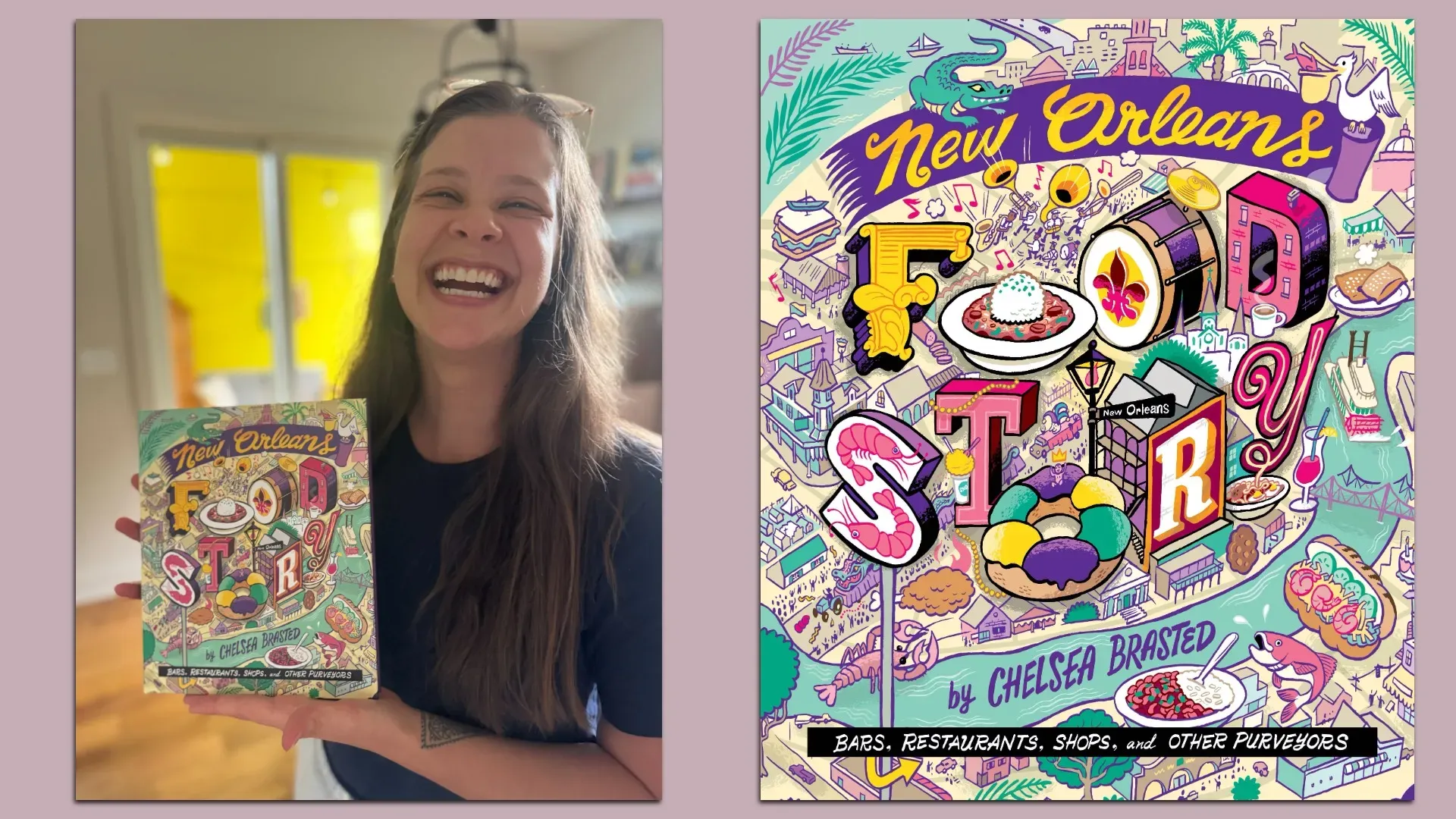
Axios New Orleans' Chelsea Brasted took on her town's sprawling, scrumptious food scene in her new book, "New Orleans Food Story."
- It rounds up 80 restaurants, bars, stores and makers who not only anchor the Big Easy's food culture now, but who Chelsea thinks will be part of its future.
Order here ... If you're local, RSVP to Chelsea's launch party tonight.
๐ฌ Thanks for reading! Please invite your friends to join AM.
Sign up for Axios AM