Axios AM

May 07, 2026

1 big thing: Intelligence explosion

Anthropic, the AI lab whose identity is wrapped around warning the world about AI risk, is claiming "early signs" of AI not just coding its own products but building itself, Jim VandeHei and Mike Allen write in a "Behind the Curtain" column.
- Why it matters: Anthropic co-founder Jack Clark predicted this week that there's a 60%+ chance of an AI model fully training its successor by the end of 2028. "What I'm looking at is a technological trend where, if anything, the speed will accelerate further," Clark told us.
In the new research agenda for The Anthropic Institute — first shared with us, and out today — the company says it's seeing signs of "AI contributing to speeding up the research and development of AI itself," a process known as recursive self-improvement. And Anthropic researchers think the world should know.
- "My prediction is by the end of 2028, it's more likely than not that we have an AI system where you would be able to say to it: 'Make a better version of yourself.' And it just goes off and does that completely autonomously," Clark, who heads the institute, told us from Anthropic headquarters in San Francisco.
- "It's always been the case that humans outside the technology need to come up with the ideas that they then put back into it. What happens if we have a technology that can generate ideas within itself for how to improve itself? That's a new concept."
🦾 The five-page document warns of a possible "intelligence explosion" — long a theoretical term confined to AI safety circles. Now it's in writing, in an official Anthropic document.
- Clark told us an intelligence explosion is when AI systems suddenly start improving at blinding speed. Lots of bad things can happen (cyber meltdowns and biological attacks). And lots of good:
- "What do you do with a tremendous amount of growth or a tremendous amount of abundance in many, many different fields of science all at once?" he asked. "Today's institutions have very, very narrow pipes through which you push new drug candidates. How do you massively broaden the size of those pipes in advance of this abundance?"
What's new: The Anthropic Institute is part research arm, part early-warning system. The research agenda focuses on four buckets:
- Economic diffusion: jobs, productivity, who captures the gains.
- Threats and resilience: cyber, bio, surveillance.
- AI systems in the wild: agents, governance.
- AI-driven R&D: the recursive self-improvement question.
The promise: Anthropic is committing to publishing more "detailed information about how our work at Anthropic has sped up as a result of new AI tools, and ideas about the implications of potential recursive self-improvement of AI systems."
- Translation: A frontier lab is on the record promising to tell the public when the machine starts building itself.
If AI is building itself, will we need AI companies? "We and the other companies are going to be taking this technology and trying to get it to do good in the world," Clark told us. "To help push forward things like biology or medicine or robotics."
Between the lines: The agenda asks how to run a "fire drill" for an intelligence explosion — a tabletop exercise that "actually tests the decision-making of lab leadership, boards, and governments."
- Labs don't draw up fire drills for problems they think are decades away.
- The institute notes that during the Cold War, the U.S. had a hotline to the Kremlin in case of a nuclear crisis. Similar geopolitical infrastructure could be needed for a crisis involving AI systems. "One of the lessons from the Cold War is that rival nations dealing with technology that has an existential impact on the human race found ways to talk to each other about it," Clark said. "And we are going to need to do the same here."
📊 What it means for jobs: Anthropic will publish monthly reports on how AI is reshaping work, designed as "an early warning signal for significant change and disruption."
- The document asks whether AI companies, "in partnership with government," might turn industrywide "dials" to throttle AI diffusion sector by sector, the way central banks throttle inflation.
- An AI lab publicly entertaining coordinated industrial-policy levers on its own technology — that's new. "We are planning for success here," Clark said.
Reality check: This is also a positioning play. Anthropic has built a brand on being the responsible frontier lab. An institute anchored to its safety trust extends that brand ahead of whatever model upgrade lands next.
- "The motivation has always been: Tell the whole story," Clark told us. "I'm just trying to get ahead of what I think of as the next big question and get Anthropic ahead of that."
The bottom line: That doesn't make the recursive self-improvement admission less real. It makes it more interesting that Anthropic chose to put it in writing.
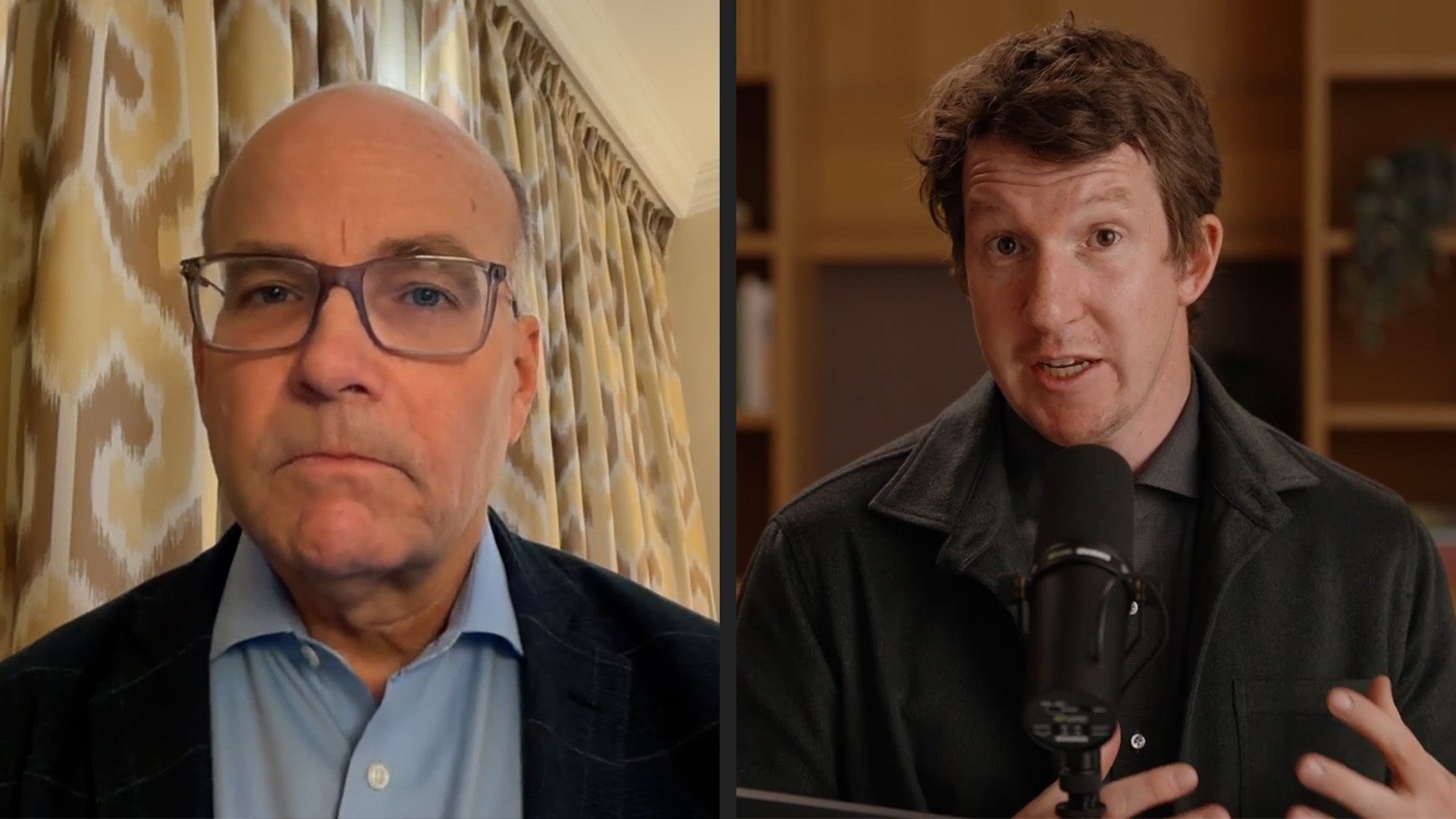
- Watch a video of Mike's interview with Jack … (Thanks to executive producer Jimmy Shelton for the lightning turn.) … Share this column.
2. 🐼 Iran deal countdown
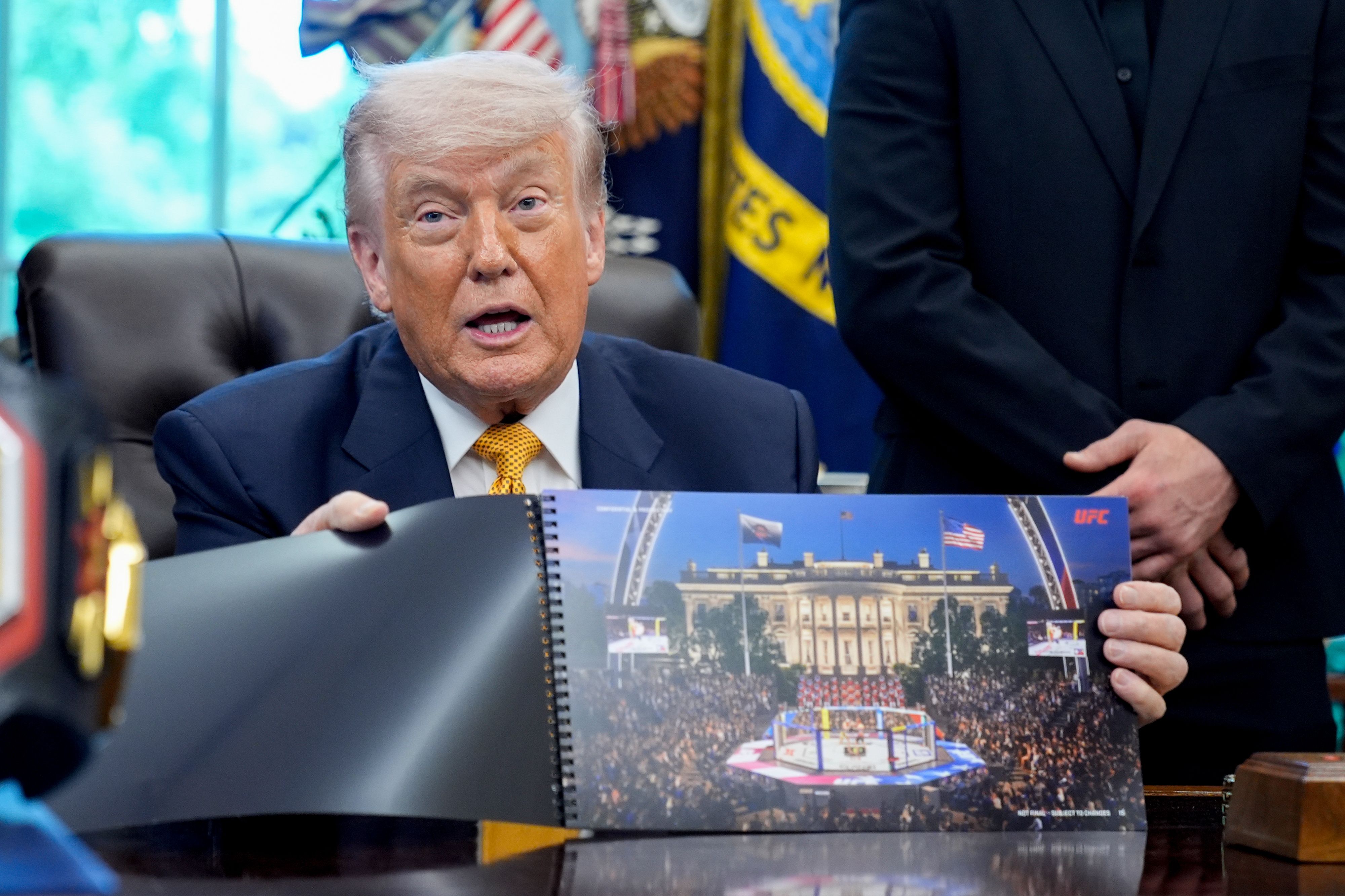
The White House wants a diplomatic breakthrough with Iran by the time President Trump wraps up his trip to China next Friday, officials tell Axios' Barak Ravid.
- If no deal is in hand by then, the president could again order military action.
Why it matters: The White House is waiting for Iran's response to a one-page memorandum of understanding to end the war and set up a framework for more detailed nuclear negotiations, as Barak scooped.
- President Trump said yesterday the U.S. and Iran have had "good talks over the last 24 hours" and expressed confidence a deal is possible in coming days.
U.S. officials said they expect a response from Tehran in the next 24-48 hours. "We are not far, but there is no deal yet," one U.S. official said.
- Other U.S. officials are skeptical a deal will come together.
3. 🤖 How Elon grew to love Anthropic

4. ⛽ Gas above $4 in 49 states


The average price of a gallon of regular gasoline — $4.56 this morning — is up more than 50% since the Iran war began, according to AAA data.
- Prices are above $4 in every state except Oklahoma ($3.99). D.C. is $4.61.
👀 What we're watching: Consumers have a long road ahead before prices return to the good old days of early 2026 — even if a U.S.–Iran deal is reached soon, Axios' Ben Geman writes.
- GasBuddy's Patrick De Haan tells us some price relief would come within days of the Strait of Hormuz truly reopening.
- It would then take until early- to mid-2027 for prices to return to prewar levels.
5. 💸 "Best earnings seasons in 20 years"

6. 🧠 Axios HQ: Companies' growing gaps
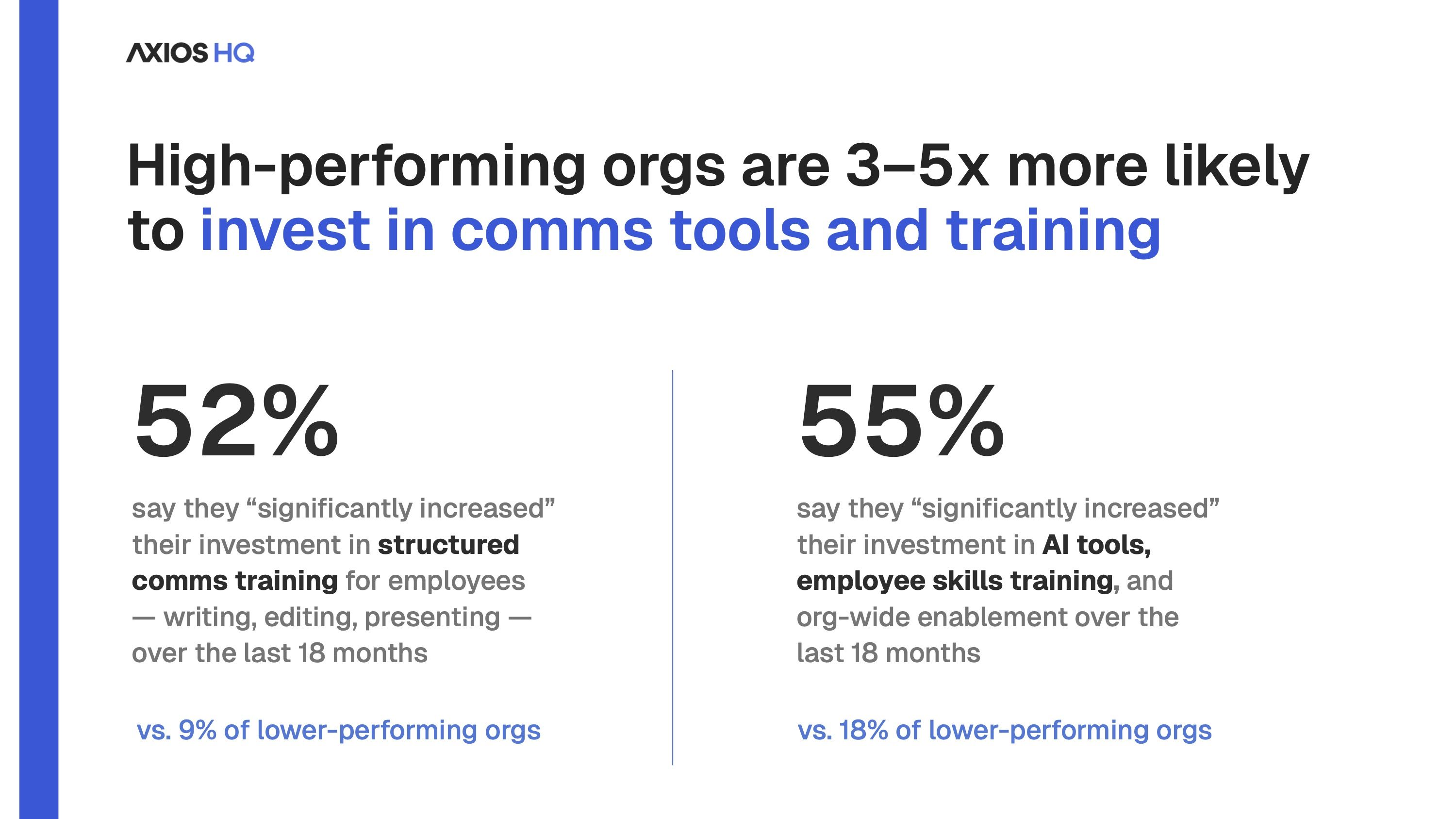
High-performing companies are much more likely to invest in AI tools and employee-empowering training than laggard organizations, Axios HQ finds in research out this morning, "The 2026 State of Internal Communication."
- Axios HQ offers software and services to help organizations communicate more effectively to boost trust, transparency and alignment.
Axios HQ's annual research, which includes 1,200+ U.S. executives and employees, focuses on attributes that separate organizations pulling ahead from those falling behind.
- Companies are considered high performers based on categories like customer retention, employee retention, culture, innovation, new business revenue, market share and reputation in the marketplace.
- "Orgs that invest in comms infrastructure and comms training outperform those that don't — on every metric," the report says.
🦾 Another big gap the report uncovers is how leaders perceive the clarity of their AI policies vs. how employees do.
- "Only 26% of staff say their org has clear, enforced AI use policies — and the shortfall of guidance is a top blocker to adoption," the report says.
- But get this: 43% of the bosses think they have clear AI policies.
⚠️ Another warning sign: The number of companies wrestling with the consequences of poor communication is up from last year.
- "The number of missed deadlines stemming from poor workplace communication has doubled year over year," the report adds.
The bottom line: "There's a direct line between comms quality → business performance."
7. 🚚 Robo-truck tipping point
8. 📺 How the "Mouth of the South" shaped the globe

Ted Turner — who died yesterday at 87 — parlayed his father's billboard company into one of the most influential media empires in American history with a string of bold bets that reshaped TV, news and sports:
TV and news: Turner pioneered satellite technology to distribute his local station nationally through cable, creating America's first national "superstation" — TBS.
- In 1980, he launched CNN as the first 24-hour national cable news network. That channel redefined how people consume news and provided real-time reporting on major global conflicts.
- Turner launched TNT, Cartoon Network and TCM.
⚾ Sports: Turner bought the Atlanta Braves and Atlanta Hawks, using their games to help turn TBS Superstation into a cable juggernaut.
- In 1988, Turner expanded into professional wrestling with WCW, which become the WWE's biggest rival for years in the '90s.
- At the height of the Cold War, Turner founded the Goodwill Games in 1986 to ease U.S.–Soviet tensions. Yahoo Sports' Jeff Eisenberg notes Turner then leveraged his Moscow ties to open the door for Eastern European stars to join the NBA, contributing to the league's transformation into a global powerhouse.
Full obit by Axios' Sara Fischer ... How Turner reshaped sports ... Global legacy.
Axios AM