Axios AM

January 04, 2026

1 big thing: Rubio's Venezuela moment
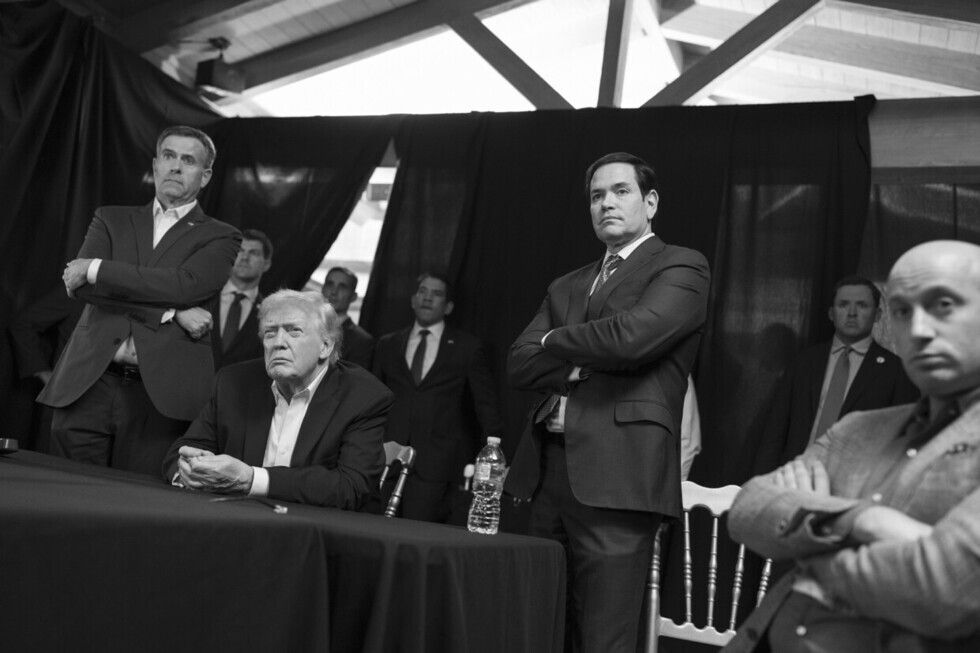
Marco Rubio is suddenly facing his most daunting puzzle in his 28 years in politics.
- The U.S. secretary of state didn't just help mastermind yesterday's ouster of Venezuela's dictator. Now he must ensure President Trump's risky move against Nicolás Maduro doesn't descend into chaos, Axios' Marc Caputo reports.
Why it matters: The U.S. is effectively laying claim to the country with the globe's largest proven oil reserves — a move that could threaten global stability and complicate relations with China, a major buyer of Venezuelan crude.
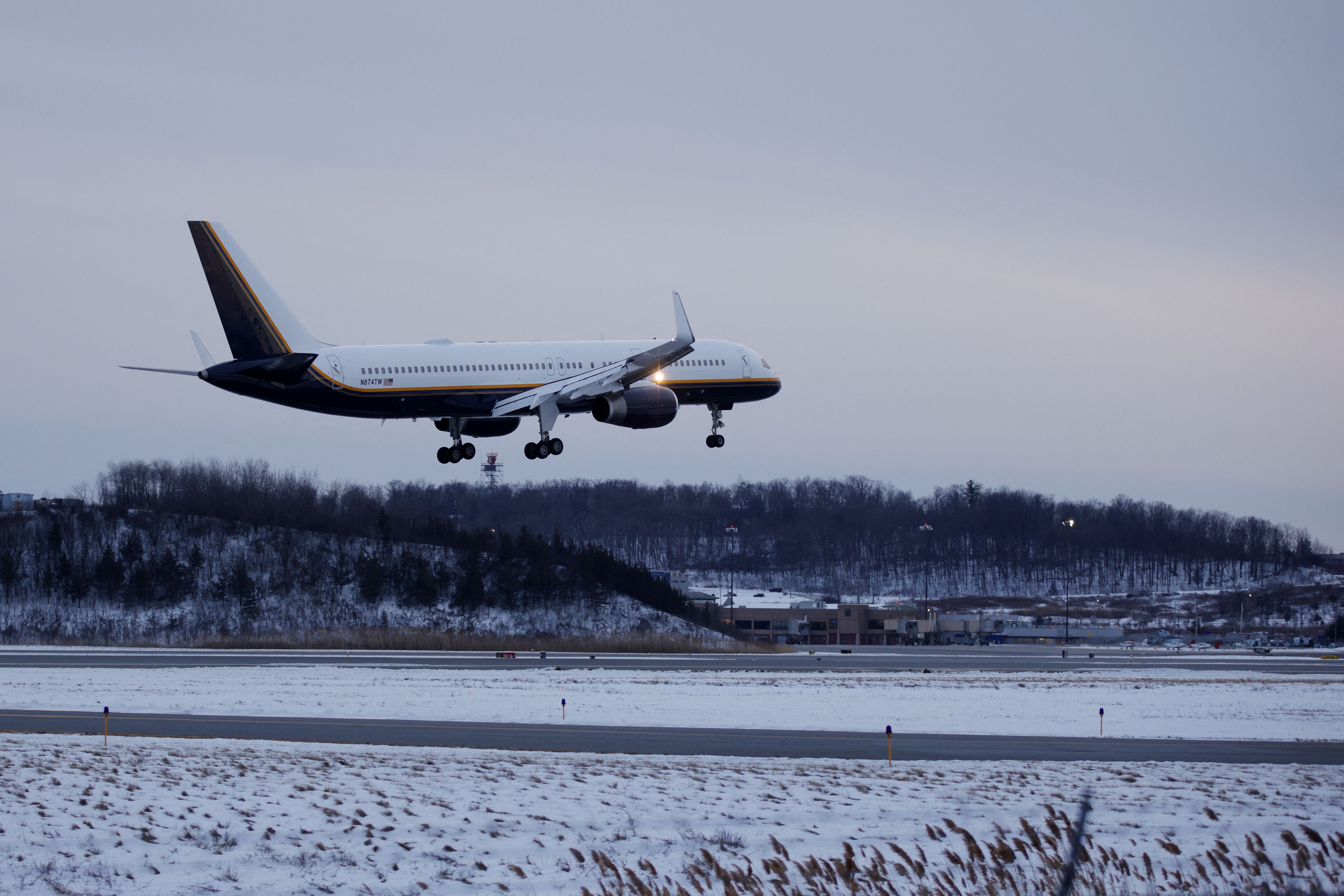
- Maduro is in U.S. custody at the Metropolitan Detention Center in Brooklyn. (He flashed a peace sign during a perp walk last evening).
- The world is watching whether Venezuela will suffer the same fate as the last country where the U.S. achieved regime change — Iraq, which fell into chaos shortly after the 2003 invasion.
🔭 The big picture: A child of Miami's anti-communist Cuban exile community, the 54-year-old Rubio built his political career denouncing Latin American socialist regimes hostile to the United States.
- Rubio's background and worldview meshed with Trump's desire for hemispheric dominance in Latin America. Trump also wants Venezuela's oil and blames Maduro for an unprecedented migration crisis.
- Rubio "knows the region, knows the politics. He speaks Spanish basically as a first language," a senior White House adviser said. "There's a reason the president chose him as secretary and as his national security adviser."
📞 The secretary of state flexed those bilingual skills yesterday, first by informing Congress of the U.S. military incursion, then by speaking in Spanish with Venezuela's vice president, Delcy Rodríguez.
- Rubio and Rodríguez could have daily calls, the adviser told Axios, as Trump decides what to do next with Venezuela. "It's going to be done by a small committee, led by Rubio, with the president heavily engaged."
The intrigue: Hours after Trump described the Rubio–Rodríguez call as friendly and productive, Rodríguez publicly denounced the snatching of Maduro and called him the rightful president.
- U.S. officials and experts brushed off her statements as domestic political pandering to hold together Venezuela's Chavista factions, the nickname given to the left-wingers who gained power under Maduro's predecessor, Hugo Chávez.
👀 Those factions include Diosdado Cabello, the interior minister accused by the first Trump administration of plotting to assassinate Rubio in 2017, when he was a U.S. senator and had emerged as first-term President Trump's top adviser on the Western Hemisphere.
- Cabello was charged in a second superseding indictment of Maduro that was released yesterday. Rubio allies say he wouldn't mind seeing Cabello snatched as well.
🔎 Between the lines: The fact that just Maduro was taken while Cabello, Rodríguez and her brother, National Assembly President Jorge Rodríguez, so far remain untouched is a sign Trump and Rubio want to keep Venezuela's government intact — for now.
- It's a break from the Bush administration's disastrous purge of Saddam Hussein's government in Iraq after the invasion, which led to an insurgency.
"This isn't de-Baathification," a Rubio ally told Axios. "This is intentional and methodical."
Zoom out: Trump and Rubio view Venezuela as one of the last major lifelines to communist Cuba, which has supplied intelligence services in return for free oil.
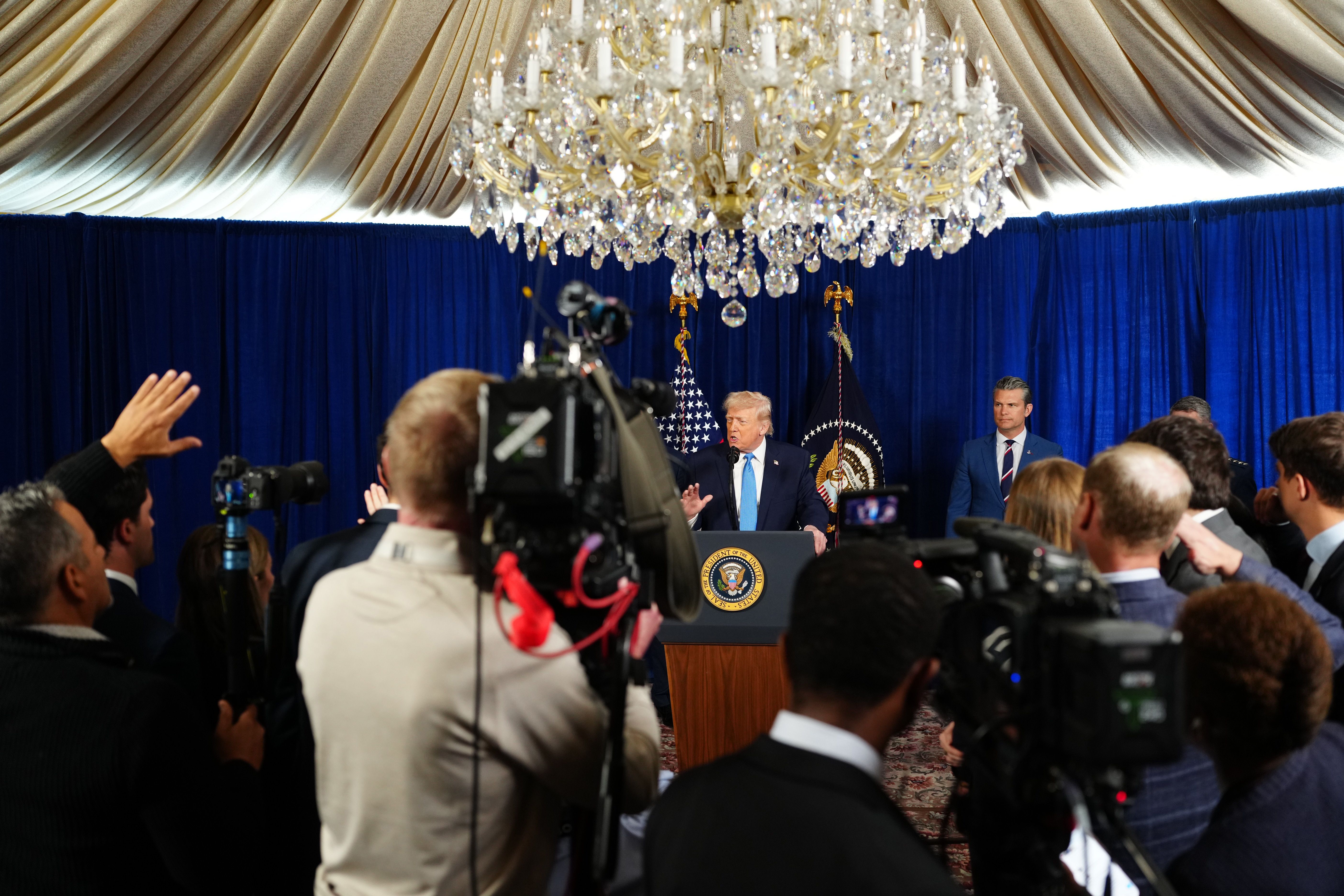
- "If I lived in Havana and I was in the government, I'd be concerned," Rubio said yesterday at Trump's Mar-a-Lago news conference.
💡 Trump administration officials quietly acknowledge they could be in for what one adviser called "some bumps in the road":
- Venezuela faces a financial crisis amid Trump's oil sanctions and his decision to seize and interdict tankers. When and how they're lifted is crucial.
- Venezuela also has a violent gang problem that could prove troublesome for U.S. peacekeepers if they're deployed.
- Tough decisions remain about when to call for free and fair elections. Maduro is widely viewed as having stolen his election in 2024. Trump's dismissive comments yesterday of Venezuelan opposition leader María Corina Machado, last year's Nobel Peace Prize winner, struck many supporters of the president as tone deaf and ill-placed.
🥊 Juan Gonzalez, who negotiated with Maduro's regime under Biden, told Axios: "This could come home to haunt them in the midterms and really blow up in their face ... For Trump, right now, he's looking great. And if it fails? Then it's Rubio's fault."
2. 🔎 How it happened
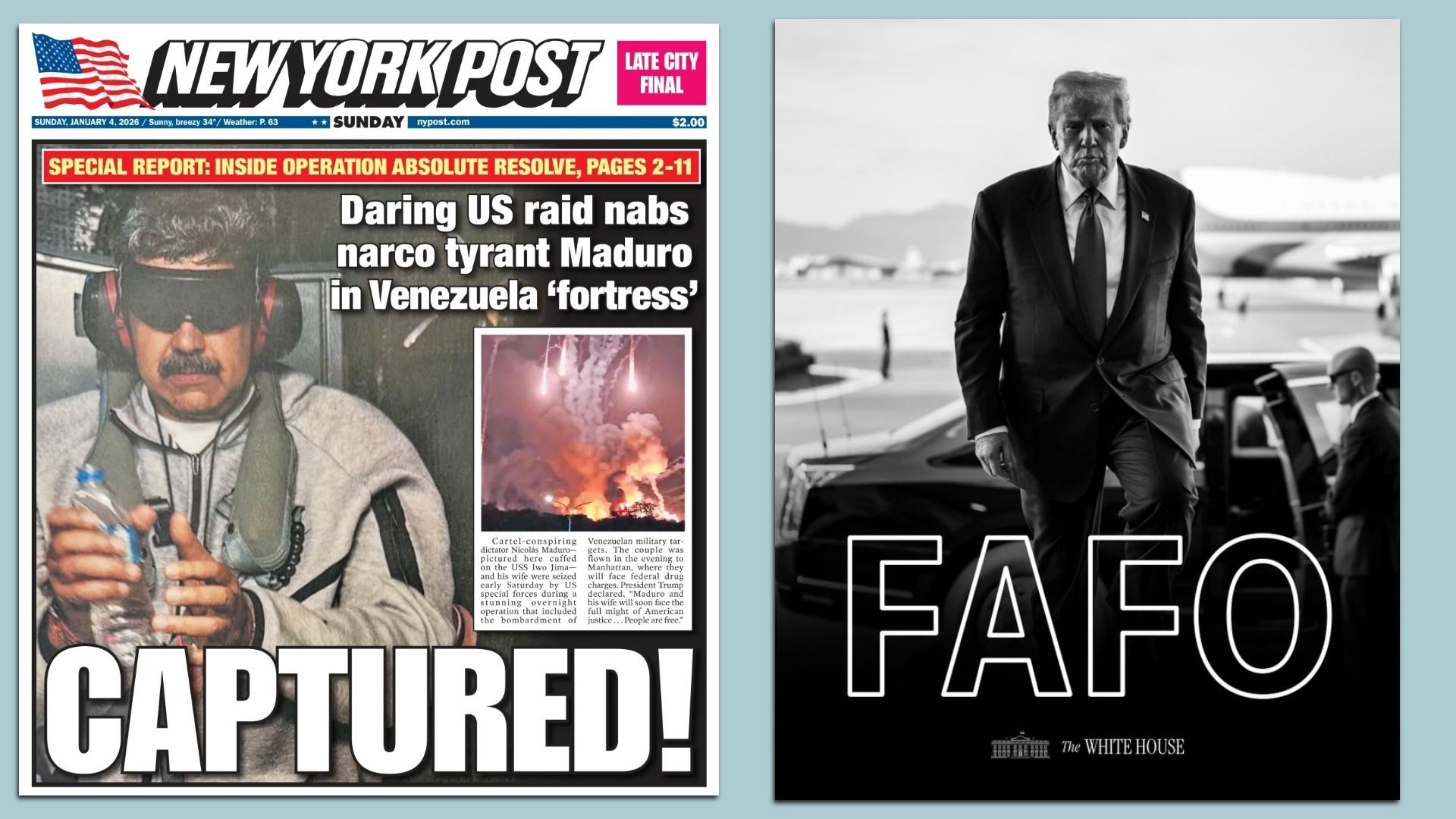
Axios reporters drew on conversations with officials and public comments from the Trump administration to chronicle the months of preparation leading up to yesterday's Operation Absolute Resolve, and construct an hour-by-hour account of how the night itself unfolded.
- Here's what we know:
The order came at 10:46 p.m. ET on Friday, with a message from President Trump to troops around the hemisphere: "Good luck and Godspeed."
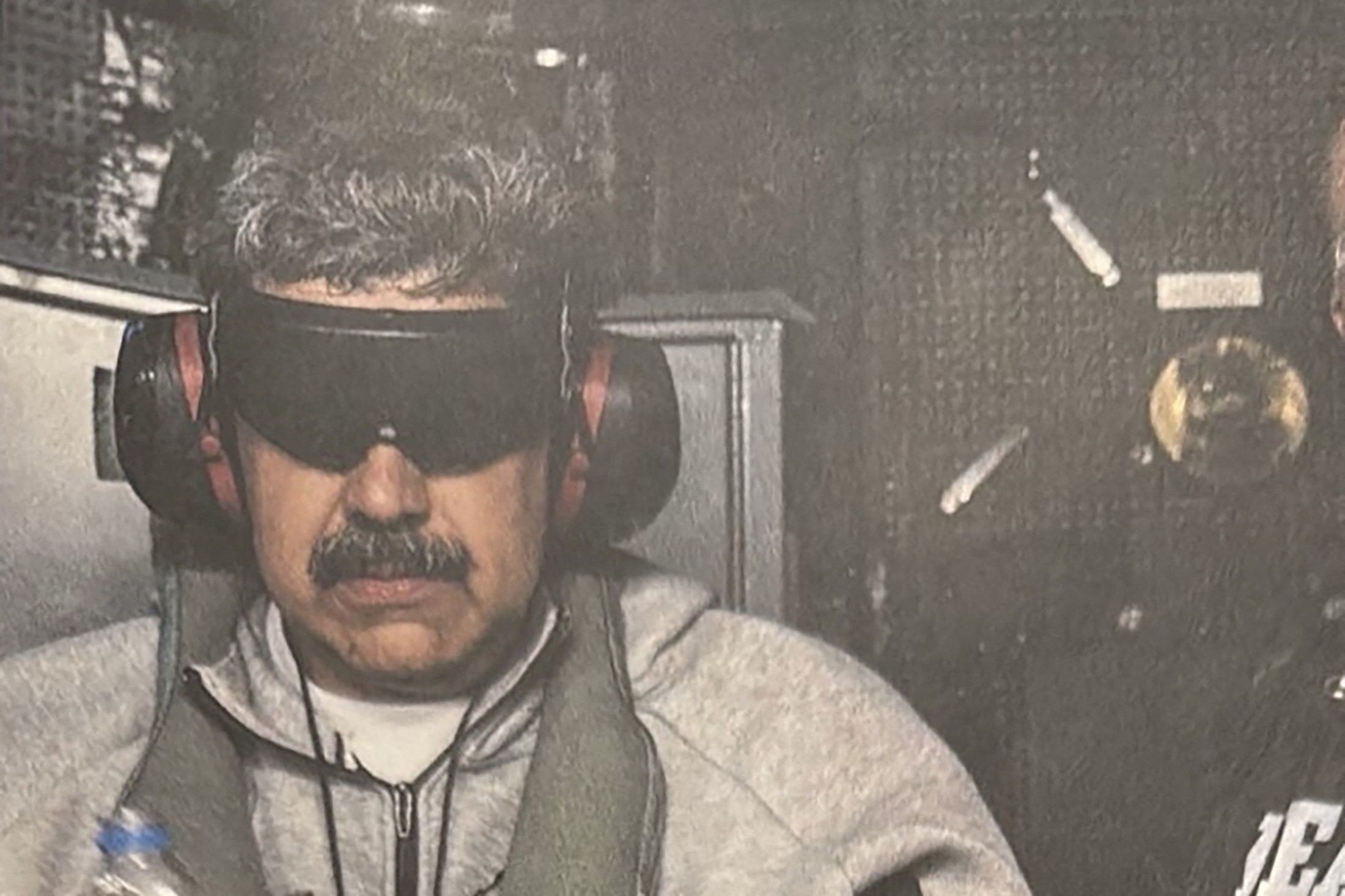
- Trump's order sent 150 aircraft into the sky ahead of the stunning raid on Nicolás Maduro's fortified compound on a military base. The mission ended with the Venezuelan leader blindfolded on a U.S. battleship and the uncertain future of his country seemingly in Trump's hands, Axios' Dave Lawler, Marc Caputo and Barak Ravid report.
🌊 On the night: Helicopters carrying an "extraction force" of U.S. special forces and FBI agents skimmed 100 feet over the Caribbean Sea, with fighter jets, bombers and drones overhead, launched from 20 bases on land and sea.
- As the choppers closed in on Maduro's compound, aircraft overhead took out air defense systems. Trump said the U.S. also cut the power, blanketing the area in darkness.
🪖 At 1:01 a.m., U.S. boots hit the ground.
- The extraction force had real-time intelligence from the ground and air as they closed in on Maduro.
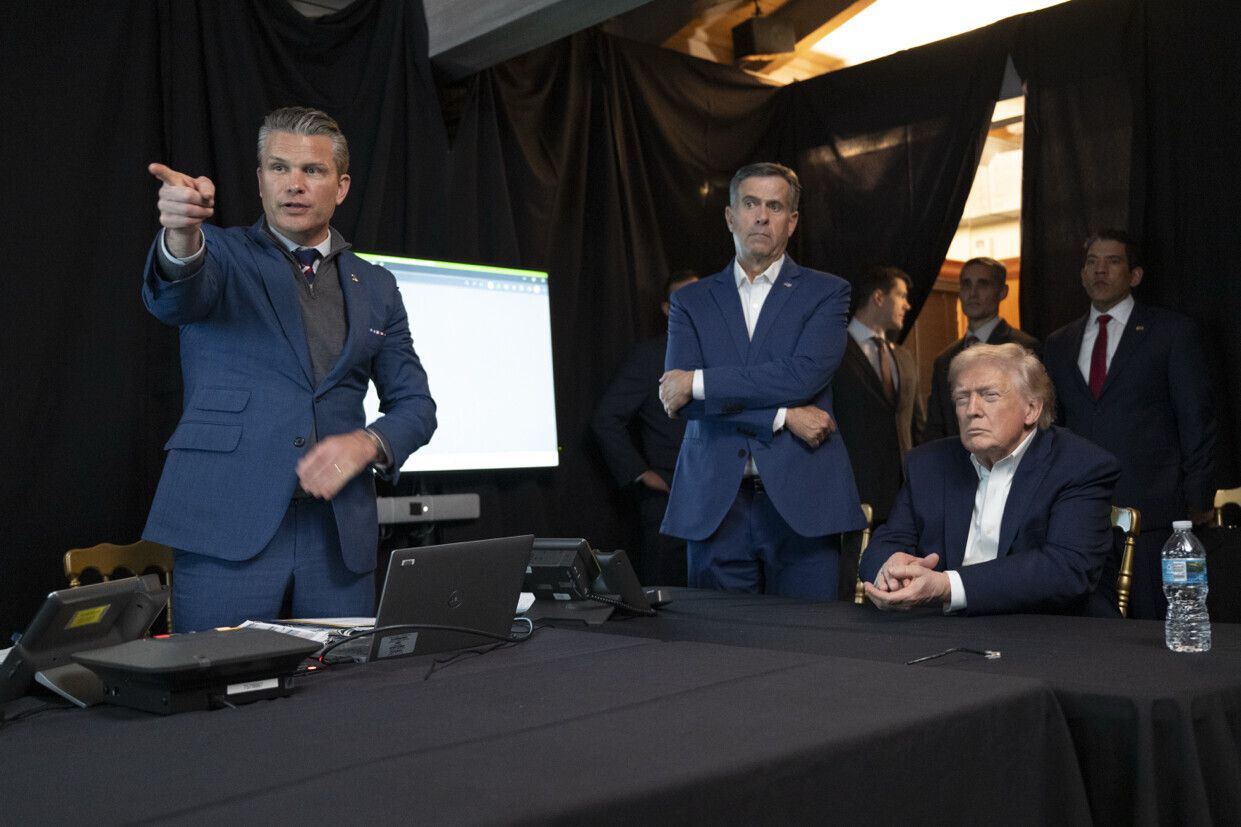
Trump was watching a live feed from Mar-a-Lago, with a team that included Joint Chiefs Chairman Gen. Dan Caine, Secretary of State Marco Rubio, Defense Secretary Pete Hegseth and CIA Director John Ratcliffe.
- Trump said Maduro and his wife, Cilia Flores, tried to flee to a steel-reinforced safe room but were apprehended before they could reach it. "We had ... massive blow torches and everything else that you need to get through that steel, but we didn't need it," Trump told "Fox & Friends Weekend" in a phone interview just hours after the mission.
🚁 Now it was time to get out. More helicopters arrived to aid the exfiltration. Fighter jets and drones "provided overhead coverage and suppressive fire," Caine said.
- No U.S. troops were killed, but Trump confirmed "a few" were wounded. The Venezuelan casualties aren't yet known. A senior Venezuelan official told the N.Y. Times that at least 40 people were killed in the attack.
"The force was over the water at 3:29 a.m.," per Caine.
- At 4:21 a.m., Trump took to Truth Social to inform the world.
The preparations: A small CIA team spent months in Venezuela tracking Maduro's locations and habits, a source familiar with the operation told Axios.
- Caine said the U.S. knew "where he lived, where he traveled, what he ate, what he wore... his pets."
🏡 Meanwhile, according to Trump, U.S. special forces practiced on a replica of Maduro's "fortress."
- "They actually built a house which was identical to the one they went into, with all the safes, all the steel all over the place," he told Fox News.
For months, plan A was for Maduro to step down voluntarily, multiple Trump advisers told Axios.
- Maduro was prepared to negotiate but not evacuate. Trump gave the order.
3. 🌴 Miami's Venezuelans celebrate
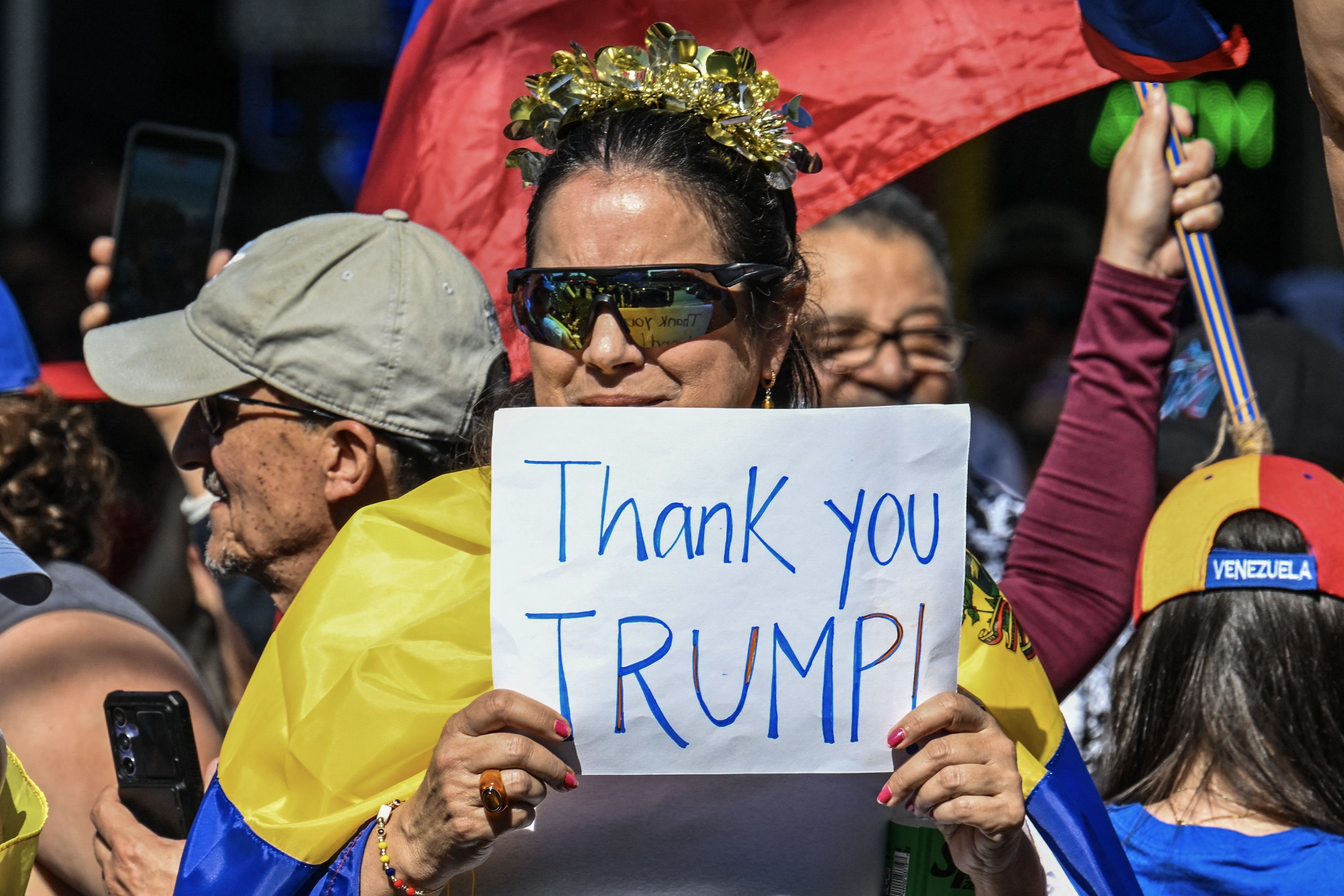
Miami's Venezuelan community welcomed Maduro's capture with a day-long rally that drew hundreds, Axios Miami's Martin Vassolo reports.
- Greater Miami has the largest Venezuelan diaspora in the U.S.
In Doral, a Miami-Dade city nicknamed "Doralzuela" for its large Venezuelan population, police closed roads outside restaurant El Arepazo as crowds waved flags, honked horns and snapped photos.
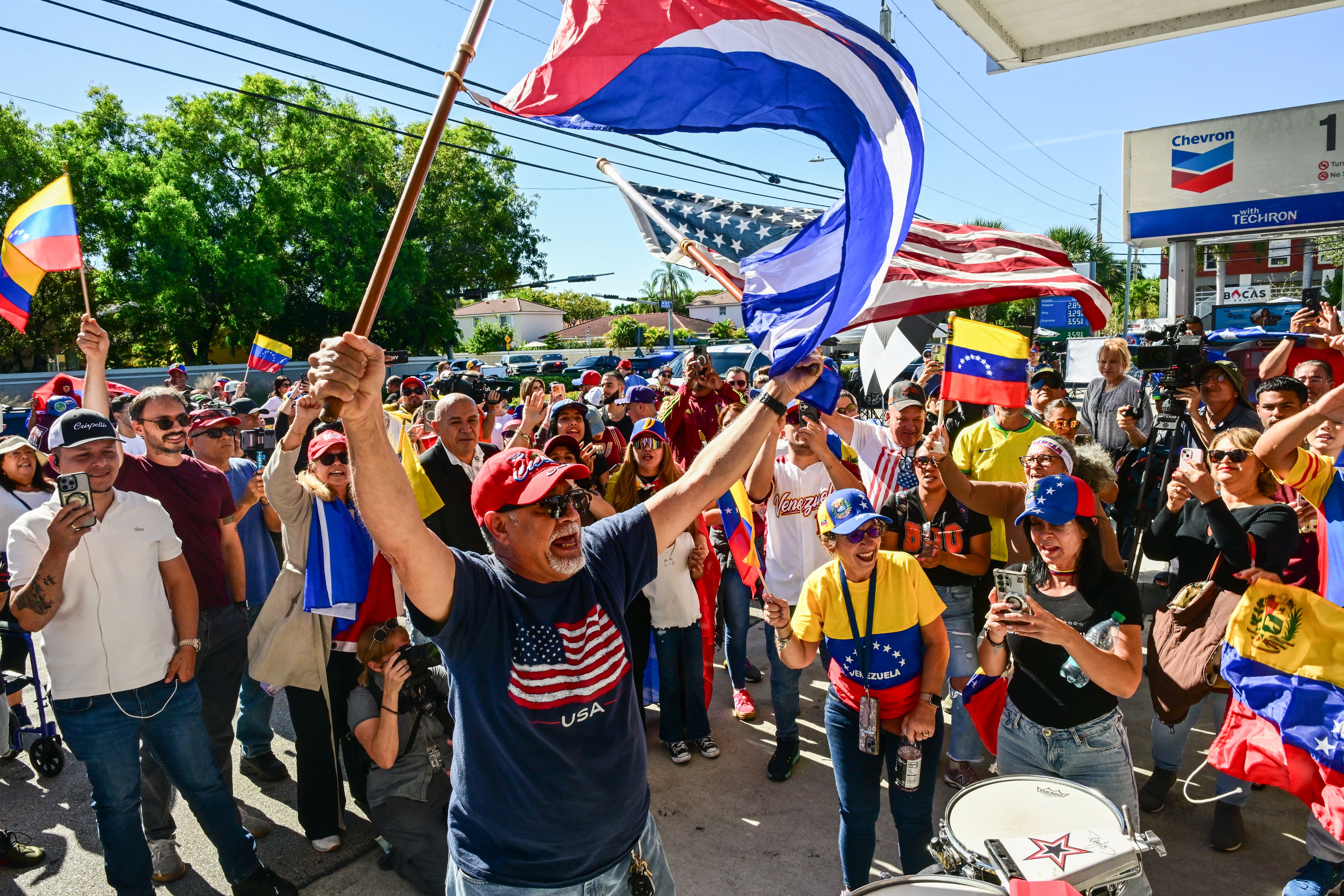
Elking Cadenas, a 49-year-old exiled Venezuelan, waved a Venezuelan flag he said he used during anti-government protests in the country in 2016 and 2017.
- "I had friends get shot, I have friends still in jail [following the protests]," he told Axios.
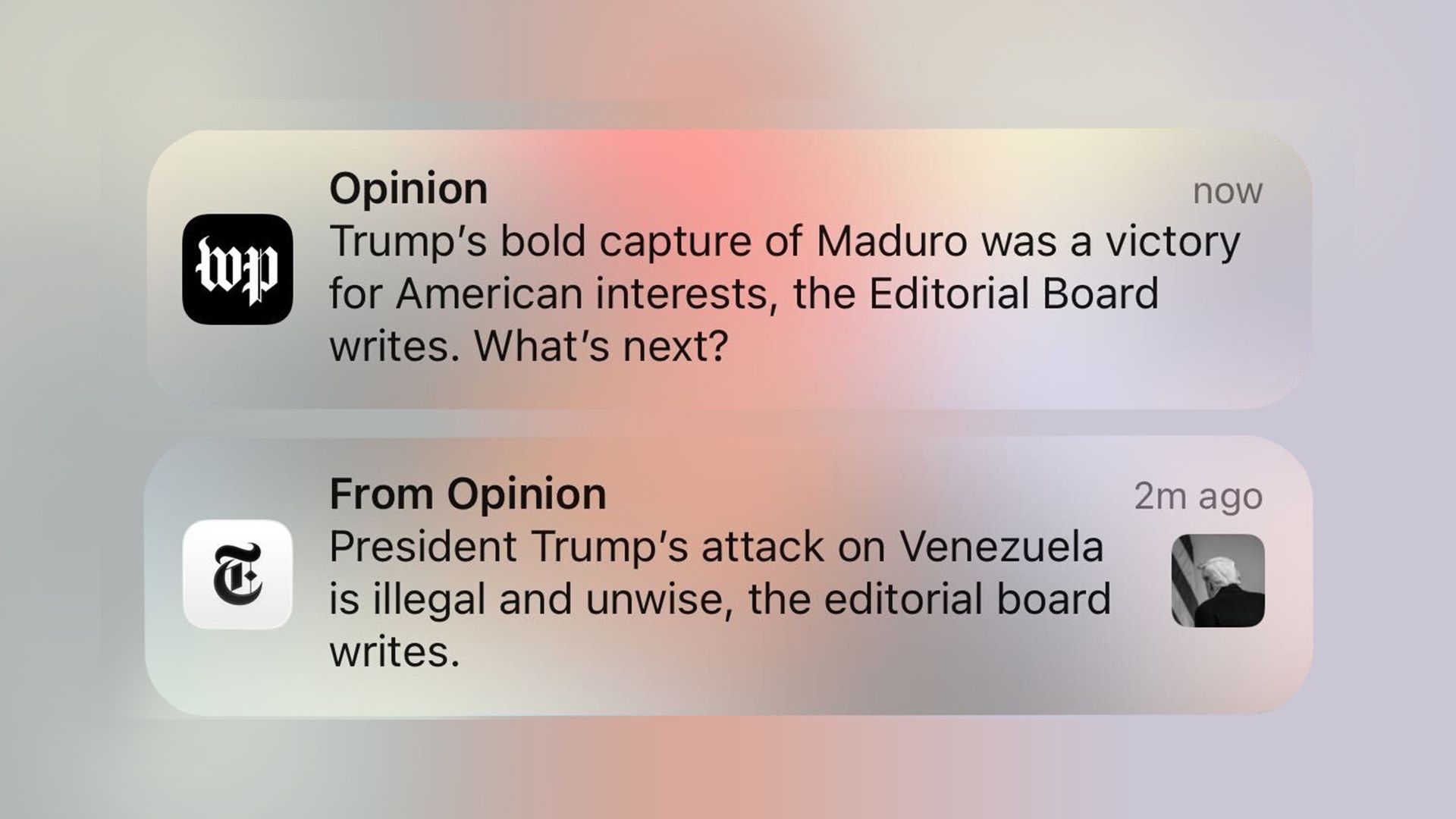
4. 📱 Split screen
5. 🎬 Sluggish box office


The North American box office fell short of the $9 billion analysts projected for 2025, thanks to underperforming sequels and superhero movies, Axios' Sara Fischer and Kerry Flynn report.
- Why it matters: Domestic entertainment tends to thrive amid inflation as people pull back from international travel. But while concerts and theme parks boomed last year, theaters struggled.
Zoom in: The domestic box office brought in roughly $8.6 billion last year — a big dip from the pre-pandemic highs of $11.9 billion and $11.4 billion in 2018 and 2019.
- PG-rated films dominated ticket sales. 2025's top domestic performer was "A Minecraft Movie."
6. 🎒 Mapped: Kids' vaccination rates
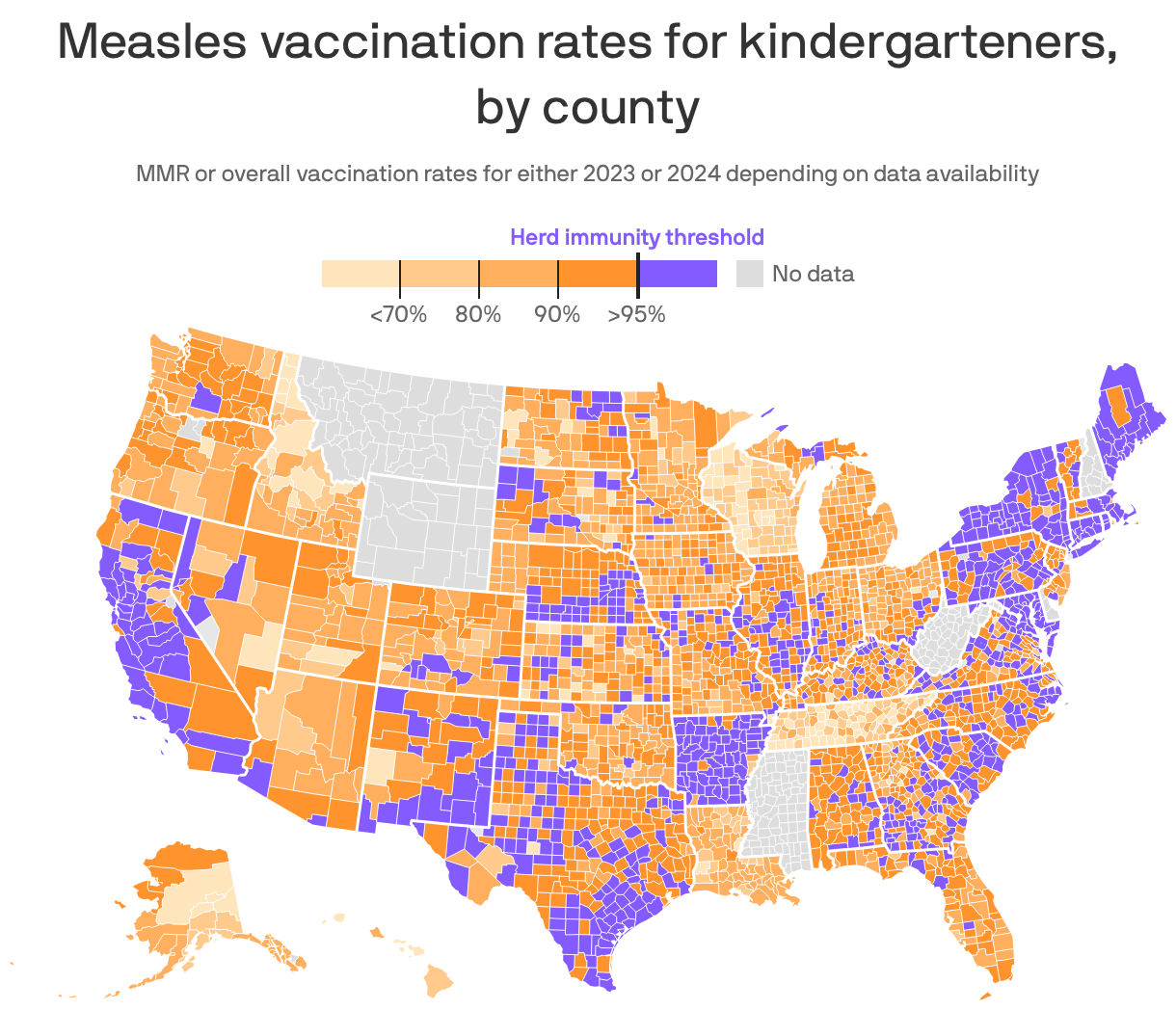
The battle against infectious diseases like the flu and measles has taken a hit, with sinking vaccination rates for children in many parts of the U.S., Axios' Herb Scribner writes from new data collected and analyzed by The Washington Post.
- At least 5.2 million kindergarten-age kids live in counties where vaccination rates are below herd immunity levels.
Plunging vaccination rates have contributed to a spike in measles cases and may cost the U.S. its coveted elimination status for the first time in decades.
7. 🗣️ Words we can't stand

8. 👟 1 for the road: Shoes off
Axios AM